
• KGS/USD = 0.01144 0%
  • KZT/USD = 0.00212 0%
  • TJS/USD = 0.10456 0.19%
  • UZS/USD = 0.00008 0%
  • TMT/USD = 0.28490 0%
  • KGS/USD = 0.01144 0%
  • KZT/USD = 0.00212 0%
  • TJS/USD = 0.10456 0.19%
  • UZS/USD = 0.00008 0%
  • TMT/USD = 0.28490 0%
  • KGS/USD = 0.01144 0%
  • KZT/USD = 0.00212 0%
  • TJS/USD = 0.10456 0.19%
  • UZS/USD = 0.00008 0%
  • TMT/USD = 0.28490 0%
  • KGS/USD = 0.01144 0%
  • KZT/USD = 0.00212 0%
  • TJS/USD = 0.10456 0.19%
  • UZS/USD = 0.00008 0%
  • TMT/USD = 0.28490 0%
  • KGS/USD = 0.01144 0%
  • KZT/USD = 0.00212 0%
  • TJS/USD = 0.10456 0.19%
  • UZS/USD = 0.00008 0%
  • TMT/USD = 0.28490 0%
  • KGS/USD = 0.01144 0%
  • KZT/USD = 0.00212 0%
  • TJS/USD = 0.10456 0.19%
  • UZS/USD = 0.00008 0%
  • TMT/USD = 0.28490 0%
  • KGS/USD = 0.01144 0%
  • KZT/USD = 0.00212 0%
  • TJS/USD = 0.10456 0.19%
  • UZS/USD = 0.00008 0%
  • TMT/USD = 0.28490 0%
  • KGS/USD = 0.01144 0%
  • KZT/USD = 0.00212 0%
  • TJS/USD = 0.10456 0.19%
  • UZS/USD = 0.00008 0%
  • TMT/USD = 0.28490 0%

Viewing results 559 - 564 of 3202

Uzbekistan’s Pharma Pivot: Strategic Gains or Growing Dependence on China

Since 2016, Uzbekistan has steadily deepened its partnership with China across multiple sectors. Energy, infrastructure, agriculture, and the digital economy have long been the pillars of this cooperation. Yet recent discussions showed that the pharmaceutical sector will be another critical area for cooperation in the long term. Much like renewable energy and critical minerals, the pharmaceutical sector is now viewed in Tashkent as a strategic domain where Chinese expertise and investment could accelerate development and add value to the domestic economy. The Compelling Logic of Partnership China's strength lies in its ability to produce high-quality, affordable medicines and distribute them globally at scale. For Uzbekistan - whose growing population and rising demand for advanced healthcare have placed pressure on its system - this makes China a natural partner. At present, the Uzbek pharmaceutical market remains heavily import-dependent: by the end of 2024, imported drugs accounted for 87% of retail sales in monetary terms and 63% in physical volume. This reliance not only exposes vulnerabilities but also highlights the untapped potential for local production. Recognizing this, Tashkent has moved to create favorable conditions for investment. The country has established specialized pharmaceutical Special Economic Zones (SEZ) such as Parkent-Pharm and Andijan-Pharm. These SEZs offer investors an attractive package of incentives, from exemptions on customs duties and VAT for raw materials and equipment, to a 20% preference in government procurement for local products. Such regulatory incentives, combined with a growing domestic market, have already begun to draw interest from Chinese pharmaceutical firms. Strategic Priorities Recently, Uzbekistan has signed a series of memorandums of understanding with Chinese firms such as Zhendong Health Industry, Guojo Medical Technology, and Langtian Pharma Group, signaling a stronger bilateral focus on the pharmaceutical sector. These agreements align closely with Uzbekistan’s strategic goal of building a robust domestic pharmaceutical industry with an emphasis on access to capital and technology, localization, and human capital development. One of Uzbekistan’s key priorities is securing access to capital and expertise. Without investment and collaboration with experienced companies, the state cannot establish modern laboratories and production facilities. In this regard, the Uzbek company, Ozwell, has signed an MoU with Zhendong Health Industry Group to jointly implement a modern pharmaceutical laboratory. The partnership involves a total investment of $9.5 million, with $4.5 million allocated toward creating a world-class laboratory facility and $5 million designated for establishing and scaling up a production complex. This agreement reflects Tashkent’s desire to tap into Chinese technical knowledge and experience, while simultaneously building domestic capacity and developing local talent in the long term. Another critical priority is the localization of drug production. By reducing dependency on imports, Uzbekistan is aiming to strengthen supply chain resilience, meet domestic demand, and create new opportunities for regional exports. In this regard, the MoU established with Langtian Pharma Group and Guojo Medical Technology is designed to investigate opportunities for domestic production while promoting technological collaboration and knowledge transfer within the pharmaceutical industry. The final priority is the development of human capital. In this regard, Uzbekistan...
Kyrgyzstan Seeks German Investment in Green Energy, Logistics, and Tourism

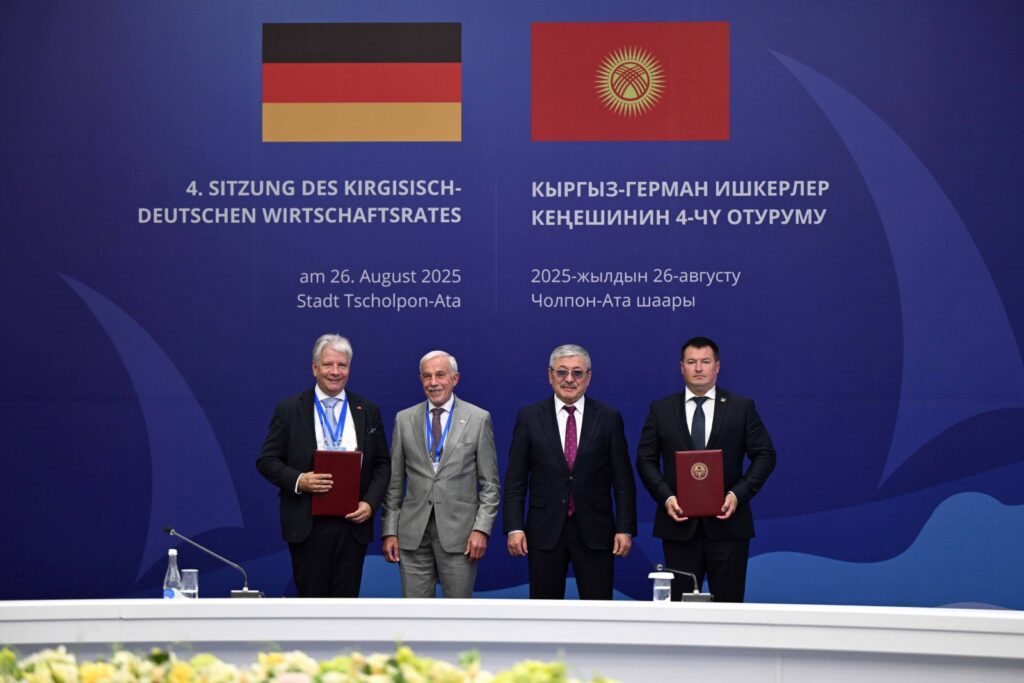
On August 26, the resort city of Cholpon-Ata on Lake Issyk-Kul hosted the Day of German Economy in Kyrgyzstan, alongside the 4th meeting of the Kyrgyz-German Business Council. Opening remarks were delivered by Adylbek Kasymaliyev, Chairman of the Cabinet of Ministers of Kyrgyzstan, and Professor Reinhold Krämmel, Honorary Consul of Kyrgyzstan in Bavaria and Thuringia and Deputy Co-Chairman of the Business Council. Calls for Green Investment and Innovation Kasymaliyev highlighted Kyrgyzstan’s interest in attracting German investment and advanced technologies to modernize its industries, create jobs, and strengthen export potential. He identified key areas for cooperation, including renewable energy, green technologies, transport and logistics infrastructure, and the financial sector. Environmental issues featured prominently in the discussions. Kasymaliyev further emphasized the threat of rapidly melting glaciers, which he said "requires the consolidation of efforts and joint initiatives." “We know Germany as one of the most active defenders of nature. Unfortunately, environmental problems are worsening each year. Glaciers in our mountains are melting and shrinking drastically. Addressing such critical issues requires joint efforts,” he said. Youth and Education as Bridges of Cooperation Kasymaliyev also underlined the importance of youth in Kyrgyzstan’s development and in strengthening bilateral ties. He noted a growing interest among young Kyrgyz citizens in the German language, culture, and vocational education, elements he described as forming the foundation for long-term partnership. While acknowledging current progress, Kasymaliyev stressed that Kyrgyz-German economic relations have significant untapped potential. New Agreements and Sectoral Priorities Following the meeting, a memorandum of cooperation was signed between Kyrgyz Temir Jolu, the national railway company, and Rhenus SE & Co. KG to jointly explore logistics and transit infrastructure opportunities. Kasymaliyev also held bilateral talks with Michael Harms, Executive Director of the Eastern Committee of the German Economy. He underscored Germany’s growing importance as a trade partner, noting that bilateral trade had nearly quadrupled between 2020 and 2024. The Kyrgyz side presented several promising areas for German investment, including the IT sector, data center and logistics hub development, renewable energy and green hydrogen production, and mining. “Kyrgyzstan is fully committed to supporting German companies interested in launching investment projects in our country,” Kasymaliyev stated. Tourism Growth Highlighted Tourism was also spotlighted as a rising sector of bilateral engagement. Germany is now among Kyrgyzstan’s top tourism partners, with more than 23,000 German visitors recorded in 2024, and over 10,000 arriving in the first half of 2025 alone.

Kazakhstan Looks East: What’s at Stake at the SCO Summit in China?

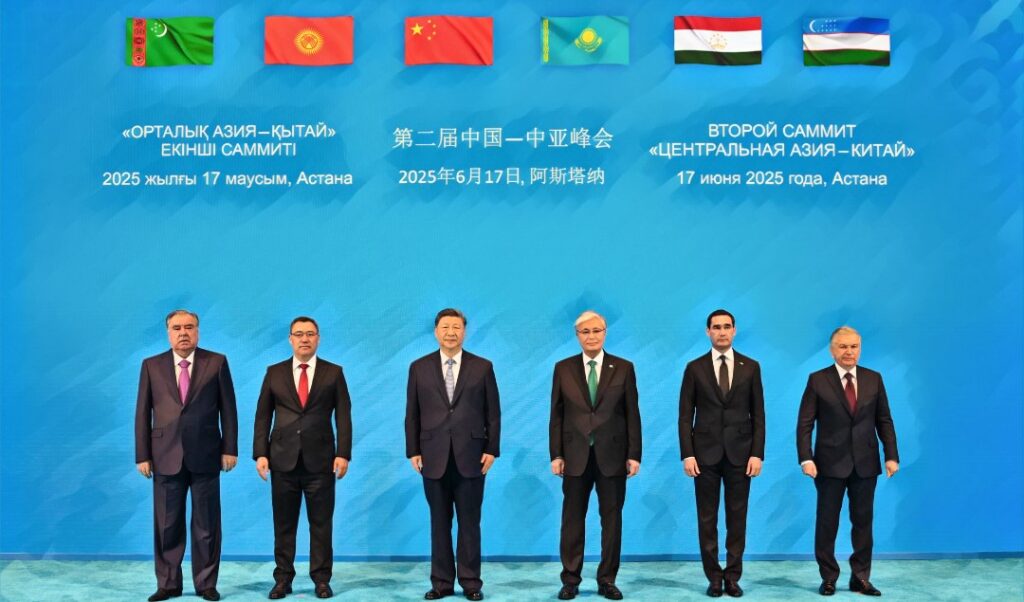
On Saturday, Kazakhstan’s President, Kassym-Jomart Tokayev, along with other Central Asian leaders, will travel to China for the Shanghai Cooperation Organization (SCO) summit. The visit comes amid China’s accelerating influence in the region, highlighting the summit’s growing geopolitical significance. Four Strategic Days in China Tokayev will visit China from August 30 to September 3 at the invitation of President Xi Jinping. High-level talks are planned, during which the two leaders will discuss deepening the Kazakh-Chinese strategic partnership. Tokayev will also attend the SCO Plus summit in Tianjin from August 31 to September 1. On September 2, he will speak at a meeting of the Kazakhstan-China Business Council in Beijing and hold talks with the heads of major Chinese companies. On September 3, he will take part in commemorations marking the 80th anniversary of Victory in World War II. Who Will Attend the Tianjin Summit? This year’s gathering marks the 25th anniversary of the SCO. Leaders from over 20 countries and representatives from ten international organizations are expected to participate. The SCO currently includes ten member states: Kazakhstan, China, Kyrgyzstan, Belarus, India, Iran, Pakistan, Russia, Tajikistan, and Uzbekistan. Particular attention is focused on Indian Prime Minister Narendra Modi, whose visit to China will be his first in seven years. Russian President Vladimir Putin also plans to attend. Leaders from Turkey, Malaysia, Indonesia, Mongolia, Azerbaijan, Armenia, Turkmenistan, and several other countries are also expected. According to China’s Foreign Ministry, this will be the largest SCO summit since the organization’s inception. Why Tianjin? A Strategic Choice Chinese analysts describe Tianjin as a strategic hub for the Belt and Road Initiative. They note its position where sea and land routes converge, the starting point of the China-Mongolia-Russia corridor, and a key link in the New Eurasian Land Bridge connecting China, Central Asia, and Europe. Its advanced infrastructure, experience in hosting international events, and open policies are seen as transforming it into a “super-hub.” Tianjin has long contributed to SCO activities, particularly through the “Lu Ban Workshop” international education initiative. Currently, ten such workshops operate across SCO countries, training skilled technical personnel in fields aligned with labor market demands. Analysts' Perspectives Western analysts quoted by Reuters say the summit will project a message of “Global South solidarity” and offer Russia an opportunity to achieve a “diplomatic coup” amid ongoing sanctions. “Xi Jinping will want to use the summit to demonstrate how the American-led international order is weakening,” said Eric Olander, editor-in-chief of The China-Global South Project. “It’s a moment to show that all the White House’s efforts since January to counter China, Iran, Russia, and now India have not had the desired impact.” China's Expanding Role in Central Asia On June 16-17, President Xi Jinping visited Kazakhstan, where leaders of the five Central Asian states, Kazakhstan, Kyrgyzstan, Uzbekistan, Tajikistan, and Turkmenistan, signed the Astana Declaration at the second China-Central Asia summit. They also concluded an agreement on eternal good-neighborliness, friendship, and cooperation. In total, over 35 memoranda worth more than $17 billion were signed. According...

Rising Cost of Private Education in Central Asia Widens Wealth Gap

The cost of private education in Central Asia continues to rise sharply, increasingly making it an option reserved for the region’s wealthiest families, according to a report by Akchabar. Once a rarity, private schools have proliferated across the region over the past decade, driven by parental demand for smaller class sizes, enhanced discipline, improved safety, and individualized learning. Many institutions now offer full-day programs that include lessons, supervised homework, and extracurricular activities ranging from robotics and IT to sports and languages. In cases of academic decline, private tutors are assigned to help students catch up, services rarely available in the public sector. Kyrgyzstan The number of private schools in Kyrgyzstan has risen from 152 in 2020 to 224 in 2024. Annual fees vary widely: Smart School charges approximately $2,861 per year, while Indigo Sapat starts at $4,500. Tensai International School costs up to $9,600 annually, and BIS ranks among the most expensive at $15,000. More affordable options include Avenir International, with monthly fees between $423 and $480. To address overcrowding in public schools, particularly in Bishkek and Osh, the government has begun easing licensing procedures for private institutions. Kazakhstan In Almaty, tuition rates also span a wide range. Baiterek School charges $274 per month, while Koula.kz costs $443. Tamos Space School offers an annual program for nearly $4,900. Premium institutions such as Miras International School Almaty charge between $9,600 and $12,927 per year, while Galaxy International starts at $8,319. Uzbekistan Uzbekistan’s private education market is expanding rapidly. Artel TS charges $358 per month, while Diplomat International reaches up to $628. Wise School costs $437 per month, and Oxbridge International remains among the most affordable at $752 per year for primary classes. At the top end, CIS Tashkent stands as the region’s most expensive school, with tuition ranging from $19,000 to over $24,000 annually. Tajikistan Private school fees are particularly high relative to average incomes. At Empire of Knowledge, annual tuition starts at $2,362 for lower grades and rises to $2,545 for upper grades. Ruyo School offers separate programs: English-language instruction costs $2,899 per year, while the Russian-language track is around $2,577. Meanwhile, Shakhsiyat School charges approximately $1,610 annually for Tajik- or Russian-language instruction, and nearly $1,933 for the English-language track. A Growing Divide Despite the range of offerings, private school costs remain out of reach for most families. In Uzbekistan, where the average monthly wage is about $476, even mid-tier private schools amount to several months of income, while top schools charge more than $20,000 per year. In Tajikistan, where average monthly wages stand at around $279, tuition starting at $1,600 is unaffordable for the vast majority of households. For wealthier families, however, private education has become both an investment and a marker of social status, with the choice of school often carrying as much weight as profession or income.

Tajikistan Average Salary Rises but Trails Behind Central Asia

Tajikistan has recorded a rise in both nominal and real average wages, yet the country continues to report the lowest salary levels in Central Asia. The income gap with Kazakhstan and Russia remains especially pronounced. Nominal and Real Wages In June 2025, the average nominal monthly wage in Tajikistan reached 3,136.12 somoni ($314), marking a 21.4% year-on-year increase, according to the Statistics Agency under the President of Tajikistan. However, the minimum wage remained unchanged at 800 somoni ($88). Adjusted for inflation and purchasing power, real wages grew by 17.2% compared to June 2024. Economists stress the importance of distinguishing between nominal and real wages: while nominal wages reflect contractual earnings, real wages indicate actual purchasing capacity. Agricultural workers remained the lowest-paid group, with an average income of 1,082.31 somoni ($119). In contrast, employees in financial intermediation and insurance earned the highest wages, averaging 7,703.32 somoni ($847) per month. Regional Comparisons Despite the wage increases, Tajikistan lags behind its neighbors. In Kyrgyzstan, the average salary between January and June 2025 was 42,020 soms ($481), a 19.6% increase over the previous year. In Uzbekistan, the average wage reached 5.98 million soums ($484) by mid-year, up 17.2% from the same period in 2024. Kazakhstan reported an average monthly salary of 423,133 tenge ($790) in the first quarter of 2025, reflecting a 10.7% increase. Meanwhile, in Russia, average wages stood at 99,422 rubles ($1,231) as of May 2025. Tajikistan’s average salary is nearly four times lower than Russia’s and less than half of Kazakhstan’s, highlighting its continued economic disparity within the region.

ArtSkin: Prosthetics with a Sense of Touch from Kyrgyzstan

The Kyrgyz startup ecosystem is still in its nascent stages and can’t boast an endless number of founders pursuing their dreams. But those focused on building hardware startups, which is generally significantly more challenging, are even a rarer breed. Despite all of that, there is an ambitious attempt to build artificial skin for prosthetics. Meet ArtSkin. Not like a human hand “Since childhood, I was mad about science and tech, and the first big thing that I made was a prototype of the first airplane by the Wright brothers. I dropped it from the second floor, and it was crushed after flying four meters. Later, when I was twelve, I saw a TV program about robot battles, and it was crazy! Since then, I have wanted to be able to make any kind of robots, and my dream has come true,” says Iliias Dzheentaev’s biography on LinkedIn. Dzheentaev is the CEO and Founder of ArtSkin.  ArtSkin is a hardware startup from Kyrgyzstan that develops artificial skin for prosthetic limbs. It was launched by Dzheentaev in 2024. Before that, he spent three years studying how human skin, the nervous system, and receptors work to understand how to design a device allowing proper touch sensations. The process was time-consuming and challenging due to the lack of relevant information. “My initial prototype was a robotic arm manipulator. I encountered a challenge with grasping flexible objects – figuring out how to make the robot recognize when its claw had squeezed tightly enough to hold the object securely. To solve this, I developed a mechanism that overcomes the resistance of different materials, enabling the robot to firmly grasp objects of various shapes, textures, and densities. Although the mechanism was simple, it made me realize how important this problem is for robotics. This insight then led me to thinking about people who use prosthetics and whether they actually feel anything when wearing them”, Dzheentaev tells The Times of Central Asia. He was not happy with the contemporary prosthetic solutions – basic body-powered mechanical prosthetics rely on physical motions, and more advanced bionic prosthetics translate electrical signals generated by muscle activity into movements, both of which lack feedback. And without the latter, control is incomplete, while with a human hand, one can easily understand its position as well as feel touch and pressure. With this in mind, Dzheentaev built his prototype with a single sensor to test the device on himself. First steps Things got serious when Dzheentaev visited the High Technology Park of the Kyrgyz Republic (HTP), where he was inspired by other founders pitching and raising funds for their startups. At the time, unfamiliar with this environment, Dzheentaev was using his salary to buy electronic components, order materials, and do designs. Not long after, Dzheentaev took part in HTP’s two programs: Dive into Silicon Valley and Unicorn from KG. The finalists for the first one were selected in February 2024. Dive into Silicon Valley in an entry-level incubation program, which sends founders to spend two...
