• KGS/USD = 0.01144 0%
  • KZT/USD = 0.00211 0%
  • TJS/USD = 0.10554 -0.09%
  • UZS/USD = 0.00008 0%
  • TMT/USD = 0.28530 0%
  • KGS/USD = 0.01144 0%
  • KZT/USD = 0.00211 0%
  • TJS/USD = 0.10554 -0.09%
  • UZS/USD = 0.00008 0%
  • TMT/USD = 0.28530 0%
  • KGS/USD = 0.01144 0%
  • KZT/USD = 0.00211 0%
  • TJS/USD = 0.10554 -0.09%
  • UZS/USD = 0.00008 0%
  • TMT/USD = 0.28530 0%
  • KGS/USD = 0.01144 0%
  • KZT/USD = 0.00211 0%
  • TJS/USD = 0.10554 -0.09%
  • UZS/USD = 0.00008 0%
  • TMT/USD = 0.28530 0%
  • KGS/USD = 0.01144 0%
  • KZT/USD = 0.00211 0%
  • TJS/USD = 0.10554 -0.09%
  • UZS/USD = 0.00008 0%
  • TMT/USD = 0.28530 0%
  • KGS/USD = 0.01144 0%
  • KZT/USD = 0.00211 0%
  • TJS/USD = 0.10554 -0.09%
  • UZS/USD = 0.00008 0%
  • TMT/USD = 0.28530 0%
  • KGS/USD = 0.01144 0%
  • KZT/USD = 0.00211 0%
  • TJS/USD = 0.10554 -0.09%
  • UZS/USD = 0.00008 0%
  • TMT/USD = 0.28530 0%
  • KGS/USD = 0.01144 0%
  • KZT/USD = 0.00211 0%
  • TJS/USD = 0.10554 -0.09%
  • UZS/USD = 0.00008 0%
  • TMT/USD = 0.28530 0%

Viewing results 115 - 120 of 876

500 Meters of Illegal Fishing Nets Seized in Lake Issyk-Kul

Inspectors from the Issyk-Kul Department of the Environmental and Technical Supervision Service have confiscated approximately 500 meters of synthetic fishing nets during a recent raid on Lake Issyk-Kul. Large-scale efforts to clean and protect the lake have been underway since 2023. Ahead of this year’s tourist season, Kyrgyz President Sadyr Japarov issued a decree banning the import and use of synthetic fishing nets nationwide. He later participated in a raid on the lake himself, publicly criticizing officials for failing to fully implement the ban. Despite the government’s strict measures, poaching continues to pose a threat. According to inspectors from the Ministry of Natural Resources, although the latest seizure is not the largest on record, it is still substantial enough to harm the lake’s delicate ecosystem. Raids have been conducted almost continuously throughout the summer. Just days earlier, divers from the Kyrgyz Ministry of Emergency Situations retrieved 1,500 meters of nets from the lake and rescued 114 fish caught in them. Since the beginning of the year, authorities have removed a total of 80,900 meters of illegal fishing nets from Issyk-Kul. The State Customs Service also reported intercepting a large shipment of synthetic nets at the border with China. During a routine inspection of freight trucks, 750 kilograms of fishing nets were discovered and subsequently destroyed. Authorities warn that synthetic fishing nets are especially hazardous because they often contain lead, which can release toxic substances into the water. These toxins poison fish and destabilize the lake’s aquatic ecosystem.

European Banks to Allocate up to $1 Billion for Kambarata-1 Hydropower Project in Kyrgyzstan

Kyrgyzstan’s Minister of Energy, Taalaibek Ibraev, has signed agreements with European financial institutions to advance the construction of the Kambarata-1 hydropower plant, a flagship regional energy project on the Naryn River. The deals were concluded in Brussels during the Global Gateway Forum, organized by the European Union to mobilize sustainable investment in partner countries. According to an official EIB statement, the EU and the European Investment Bank (EIB) signed €900 million in memoranda of understanding with Kyrgyzstan, Kazakhstan, and Uzbekistan to support the project, which aims to strengthen regional energy security and accelerate the green transition in Central Asia. The European Bank for Reconstruction and Development (EBRD) also signed parallel agreements with the three governments and is assessing a financing package worth up to €1.3 billion. At the Brussels forum, Ibraev met with his counterparts from Kazakhstan and Uzbekistan to discuss coordination on implementation, following last year’s intergovernmental agreement establishing the Kambarata-1 project as a trilateral initiative. Under that framework, the countries will cooperate on construction, power-sharing, and environmental safeguards, with additional technical support from the World Bank. The World Bank’s project brief describes Kambarata-1 as a key step toward integrated energy and water management in the region. The 1,860-megawatt facility - one of the largest planned in Central Asia - will supply clean power domestically and to neighboring markets through regional transmission links. The EIB and EBRD agreements were signed by Minister Ibraev, EIB Global Director General Andrew McDowell, and EBRD Regional Director Hüseyin Özhan. It was reported that each institution has preliminarily earmarked up to $500 million in financing as part of its broader engagement. European Commission President Ursula von der Leyen said during the forum that the EU’s Global Gateway initiative will mobilize more than €400 billion by 2027 to strengthen sustainable infrastructure worldwide, including renewable energy projects in Central Asia. “This is a great opportunity for Europe, and this year, together with our partners, we are turning this demand into real action,” she said.

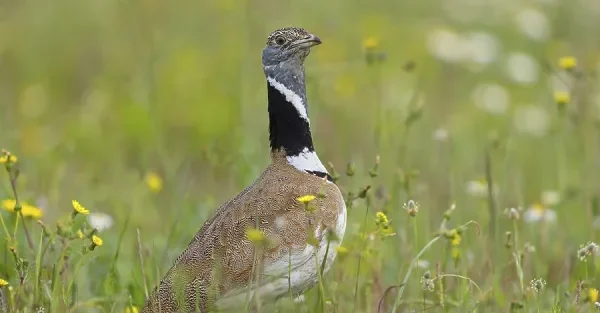
Once Lost from Kyrgyzstan, Little Bustard Population Soars in Northern Valleys

The Little Bustard, a pheasant-sized bird native to Asia and southern Europe, has reached a nesting population of around 1,900 individuals in Kyrgyzstan this year. This marks a remarkable recovery, as the species was nationally extinct in the country less than 20 years ago. The Little Bustard was listed as extinct in the Red Book of Kyrgyzstan in 2006. However, recent ornithological surveys have discovered breeding populations in the Chuy and Talas valleys in the north of the country, thought to be between 1,400 and 1,900 individuals. Signs of a wider recovery first appeared in 2009, with the discovery of four nests in the Talas valley. In 2019 a nest outside Bishkek suggested that Little Bustards were returning to the Chuy valley. Once common throughout the country, the species' decline was caused by the industrialization of Soviet Kyrgyzstan's agriculture industry in the 1950s, which destroyed the birds’ natural habitat. By the 1970s only a few residual groups remained, in the non-cultivated steppe areas near the Kazakh border. In recent years, surveys by the Ornithological Society of the Middle East (OSME) each spring have tracked their breeding activity, using listening points spaced through known and potential habitats. While Little Bustards' migratory and wintering patterns eastwards remain mostly unknown, recent observations suggest numbers in wintering areas may also be rising. Despite the strong growth of its population, the bird remains vulnerable in Central Asia. Current threats to their habitats are a consequence of modern changes in farming, including increased use of pesticides, and the turning of traditional steppe into irrigated crops. Illegal hunting of Little Bustards is also a problem. The species is currently classified in the national Red Book as Near Threatened. The Little Bustard is also considered Near Threatened by the International Union for Conservation of Nature (IUCN).  

Environmental Review of Sea Breeze Uzbekistan Resort at Charvak Still in Progress

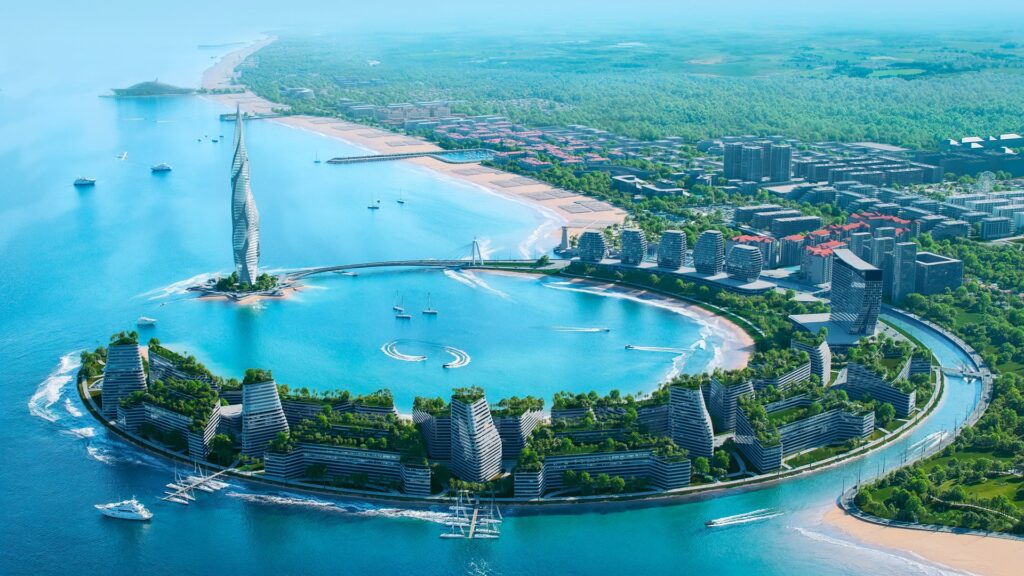
The environmental review for the multi-billion-dollar Sea Breeze Uzbekistan resort on the shores of the Charvak Reservoir is still in progress, Spot.uz reported, citing the press service of Sea Breeze Uzbekistan. According to the company, initial site preparations, including land clearing and waste removal, are underway. “As for the environmental assessment, this process is not yet complete. We are awaiting the results and remain open to any inquiries from the Ministry of Ecology, Environmental Protection, and Climate Change of Uzbekistan,” the company said in a statement. Emin Agalarov, president of Azerbaijan’s Agalarov Development and the main investor behind the project, addressed the status of construction in a recent interview. He noted that the primary challenges involve infrastructure, specifically access to water, gas, and electricity. “We have gone a long way to secure our project and make sure that nothing will be discharged into the environment. Wastewater will be collected in special facilities. Ecology is a fundamentally important issue. We are now going through all the required procedures in Uzbekistan, at Charvak,” Agalarov said. As previously reported by The Times of Central Asia, Agalarov plans to develop Sea Breeze Uzbekistan as a $5 billion all-season tourist complex spanning 500-700 hectares along Charvak Lake in the Tashkent region. The project is set to include hotels, villas, swimming pools, sports and leisure zones, retail spaces, restaurants, and a bridge linking both sides of the reservoir. The resort is also expected to host cultural events, festivals, and concerts year-round. Despite mounting public scrutiny and criticism from environmental activists, the Uzbek government has approved the project. In August, Prime Minister Abdulla Aripov signed Cabinet Resolution No. 490, granting Sea Breeze Uzbekistan LLC a 25-year direct lease on 577 hectares of land for development. Environmental experts note that the results of the ecological review will be pivotal in determining the project's future, as Charvak remains one of Uzbekistan’s most vital freshwater and recreational assets.  

Kyrgyzstan Releases Its First Climate Action Transparency Report

On October 7, Kyrgyzstan’s Ministry of Natural Resources, Environment, and Technical Supervision unveiled its first Biennial Climate Action Transparency Report, marking a key step in aligning with international climate obligations. The report was developed with contributions from government agencies, academic institutions, the private sector, and civil society, with support from the United Nations Development Programme (UNDP). It outlines the country’s progress in addressing climate change, current greenhouse gas (GHG) emissions, climate risk preparedness, and the external support it has received. According to the report, Kyrgyzstan’s total GHG emissions in 2023 amounted to 19.38 million tons of CO₂ equivalent. At the same time, the country’s forests, soils, and other ecosystems absorbed 10.31 million tons, resulting in net emissions of 9.07 million tons of CO₂ equivalent. The report notes that this “climate safety net” provides a valuable natural buffer that should be protected and expanded. The energy sector remains the largest source of emissions, accounting for more than half of the total. However, emissions from transport, electricity generation, and heating have declined significantly since the early 1990s, largely due to the adoption of cleaner technologies and improved energy efficiency. Agriculture is the second largest contributor to emissions, primarily driven by livestock farming, with levels remaining relatively stable over recent decades. The submission of the transparency report is a requirement under the Paris Agreement, the international climate treaty signed by Kyrgyzstan in 2016. Beyond fulfilling a global commitment, transparent reporting is also a pathway to unlocking funding from international financial institutions, climate funds, and private investors. According to the report, improved transparency can help attract investment in energy efficiency, renewable energy, sustainable water management, climate-smart agriculture, and disaster risk reduction, critical elements in Kyrgyzstan’s strategy to achieve carbon neutrality by 2050.

Opinion: Uzbekistan’s Winds of Change – A Blueprint for Renewable Energy Transformation in Central Asia

For much of its post-Soviet history, Uzbekistan’s energy system has been defined by natural gas. Its abundant domestic reserves provide a cheap and reliable source of electricity generation, export revenues, and industrial growth. However, this reliance has come at a cost, including vulnerability to fossil fuel volatility, carbon emissions inconsistent with global climate commitments, and an energy profile increasingly at odds with international investment trends. Today, a new landscape is emerging in Uzbekistan’s energy sector. The vast steppes and desert plateaus of the Karakalpakstan and Navoi regions have emerged as some of the most promising areas for wind turbines and energy sector development. This transformation could redefine not only Uzbekistan’s energy security but also the regional energy map of Central Asia. A Decade in the Making: From Pilot to Pioneer This story begins in 2020, when the United Arab Emirates’ renewable energy developer Masdar signed an agreement to construct the Zarafshan Wind Farm in the Navoi region. Initially, this was not a pilot project, as its proposed capacity was about 500 MW, making it the largest wind project among the Central Asian countries at the time. Its symbolism pulsed with an energy no less powerful than the current itself. For Uzbekistan, which had no operating commercial wind capacity, the project marked a significant shift from concept to execution. The Zarafshan Wind Farm reached financial close in 2020, commenced construction in 2022, and was officially inaugurated in December 2024 by Uzbekistan’s President Shavkat Mirziyoyev. Developer reports describe it as one of the largest operational wind farms in Central Asia. It represented a step forward toward sustainability and a message of resolve for energy resilience. In a region where fossil fuels still dominate, Uzbekistan has positioned itself as a regional leader in large-scale wind energy production.. Scaling Beyond Zarafshan: Kungrad and Nukus The breakthrough at the Zarafshan Wind Farm signaled the dawn of a larger journey. Subsequently, Saudi Arabia’s ACWA Power, a giant in renewable energy, agreed to set up the Kungrad Wind IPP. This project includes a transformative complex of three 500 MW wind farms with a total capacity of 1.5 GW of power generation. According to project plans, it will also be accompanied by a 300 MW battery energy storage system (BESS) and roughly 1,450 kilometers of new transmission infrastructure. This single project surpasses Uzbekistan’s earlier renewable efforts and, when completed, will represent one of the most significant clean energy undertakings in the region. Similarly, the Nukus II wind farm-plus-storage project, which secured financing from the Asian Development Bank (ADB) and other partners in mid-2025, seeks to expand renewable energy use, reduce reliance on fossil fuels, cut greenhouse gas emissions, and strengthen energy security. It includes building and operating a 200 MW wind power plant, a 100 MWh battery storage system, a 44 km transmission line, and an upgrade of the 220 kV Beruniy substation. This integration of renewables with flexible storage represents a new phase of Uzbekistan’s energy transition, one where renewables are not simply added to the grid...