• KGS/USD = 0.01144 0%
  • KZT/USD = 0.00211 0%
  • TJS/USD = 0.10438 0%
  • UZS/USD = 0.00008 0%
  • TMT/USD = 0.28490 0%
  • KGS/USD = 0.01144 0%
  • KZT/USD = 0.00211 0%
  • TJS/USD = 0.10438 0%
  • UZS/USD = 0.00008 0%
  • TMT/USD = 0.28490 0%
  • KGS/USD = 0.01144 0%
  • KZT/USD = 0.00211 0%
  • TJS/USD = 0.10438 0%
  • UZS/USD = 0.00008 0%
  • TMT/USD = 0.28490 0%
  • KGS/USD = 0.01144 0%
  • KZT/USD = 0.00211 0%
  • TJS/USD = 0.10438 0%
  • UZS/USD = 0.00008 0%
  • TMT/USD = 0.28490 0%
  • KGS/USD = 0.01144 0%
  • KZT/USD = 0.00211 0%
  • TJS/USD = 0.10438 0%
  • UZS/USD = 0.00008 0%
  • TMT/USD = 0.28490 0%
  • KGS/USD = 0.01144 0%
  • KZT/USD = 0.00211 0%
  • TJS/USD = 0.10438 0%
  • UZS/USD = 0.00008 0%
  • TMT/USD = 0.28490 0%
  • KGS/USD = 0.01144 0%
  • KZT/USD = 0.00211 0%
  • TJS/USD = 0.10438 0%
  • UZS/USD = 0.00008 0%
  • TMT/USD = 0.28490 0%
  • KGS/USD = 0.01144 0%
  • KZT/USD = 0.00211 0%
  • TJS/USD = 0.10438 0%
  • UZS/USD = 0.00008 0%
  • TMT/USD = 0.28490 0%

Viewing results 307 - 312 of 864

Railway Relocation Project Aims to Decongest Traffic and Improve Air Quality in Bishkek

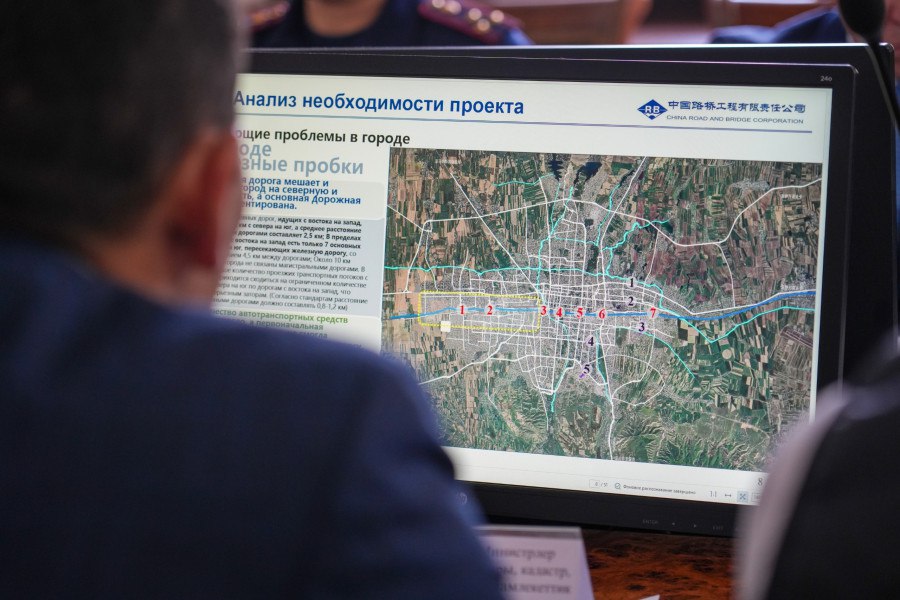
On January 16, the China Road and Bridge Corporation (CRBC) presented Bishkek Mayor Aibek Junushaliev with several proposals for a project to relocate the city’s railway tracks outside the capital’s limits, the Bishkek municipality’s press service reported. The railway, originally built during the Soviet era, runs through Bishkek from east to west, dividing the city nearly in half between its northern and southern parts. These tracks, used for cargo and passenger transport, pass through the central parts of the city and intersect with numerous strategic streets and roads. This setup has long been a major contributor to traffic congestion, especially during morning and evening peak hours. At the end of 2024, Kyrgyzstan’s Cabinet of Ministers approved a memorandum of cooperation with CRBC, focusing on a large-scale upgrade of Bishkek’s railway and road infrastructure. The ambitious project includes relocating the existing railway tracks to bypass the city, constructing a new railway line outside Bishkek, and transforming the current railway corridor into a high-speed roadway. Junushaliev explained that the new railway line will bypass the city to the north. The vacated area from the old railway tracks will be redeveloped with a new highway with high-rise residential buildings and shopping malls along its route. The total cost of the railway relocation project is estimated at $585 million. It is expected to address two major urban challenges: traffic congestion and air pollution. Traffic congestion in Bishkek has been a persistent issue, with vehicles frequently backing up at intersections where the railway intersects major city roads. This not only delays commuters but also significantly worsens air quality. Exhaust emissions from idling vehicles in traffic jams are considered one of the leading contributors to the city's air pollution. By relocating the railway tracks and introducing a high-speed roadway, the project is anticipated to streamline traffic flow, reduce congestion, and improve Bishkek’s air quality.
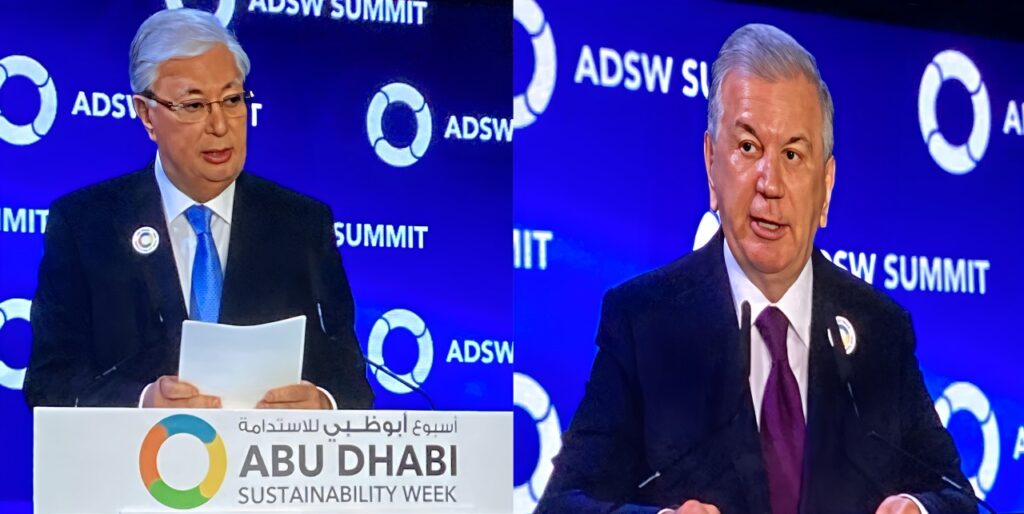
Mirziyoyev: Central Asia Can Become a Global Green Energy Hub

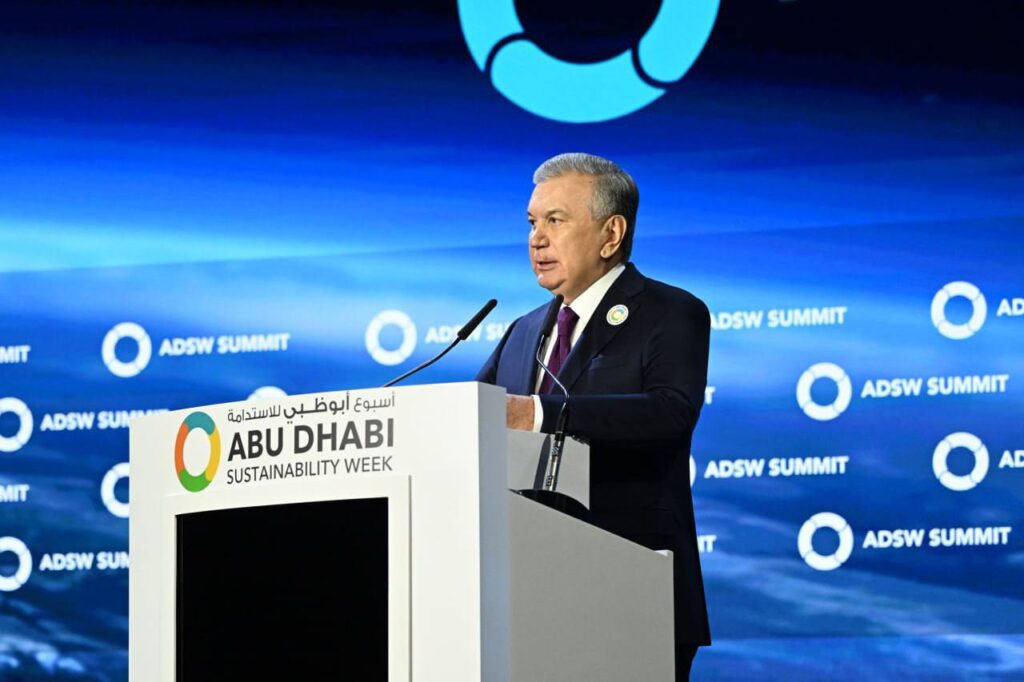
President Shavkat Mirziyoyev of Uzbekistan delivered a keynote address at the Sustainability Week Summit in Abu Dhabi on January 14. The event, hosted by UAE President Sheikh Mohammed Al Nahyan, gathered global leaders, including the presidents of Azerbaijan and Kazakhstan, the prime ministers of Italy, Malaysia, and Finland, as well as heads of international organizations and financial institutions. The Urgency of Transitioning to a Green Economy In his speech, Mirziyoyev emphasized the critical need for a green economic transition, stating: “The diversification of energy sources and a drastic reduction of hydrocarbons are now critical conditions for mitigating climate change and ensuring global security.” Mirziyoyev noted that Uzbekistan has declared 2025 as the “Year of Environmental Protection and Green Economy.” The country’s strategic goal, under the "New Uzbekistan" framework, is to achieve sustainable economic growth through environmental sustainability and resource conservation. Low-Carbon Development Goals Outlining Uzbekistan’s low-carbon development strategy, Mirziyoyev announced plans to integrate green finance into 50% of investment projects over the next five years; reduce greenhouse gas emissions by 35% by 2030; "Green" at least 30% of urban areas; and ensure that 100% of agricultural lands adopt water-saving technologies. Mirziyoyev also highlighted Uzbekistan’s achievements in renewable energy, stating: “In the past five years, we have attracted almost $20 billion in foreign investments, commissioning modern energy capacities of 9.6 gigawatts. This includes 14 solar and wind power plants with a total capacity of 3.5 gigawatts.” Uzbekistan is currently collaborating with foreign partners on over 50 major energy projects worth $26 billion, aiming to reach a total energy capacity of 24 gigawatts by 2030. By that time, renewable energy is expected to account for 54% of the country’s total energy generation. Regional Collaboration and Global Ambitions Mirziyoyev underscored the importance of regional cooperation, saying: “We aim to turn Central Asia into one of the global centers for green economy and clean energy.” He highlighted a multilateral agreement with Kazakhstan and Azerbaijan to export green energy to Europe and restore the Great Silk Road through energy connectivity. The president shared success stories of partnerships with companies like Masdar, which have generated 1.5 gigawatts of renewable energy in Uzbekistan. Additional projects are underway to create 1.6 gigawatts of generating capacity and build energy storage systems with a capacity of about 520 megawatts per hour. He also noted Uzbekistan’s untapped renewable energy potential, citing the ability to produce 500 gigawatts of solar, 100 gigawatts of wind, and 10 gigawatts of hydro energy. Advancing Green Research and Innovation Mirziyoyev referenced the establishment of the Green University in Tashkent - which will serve as a hub for global scientific collaboration - and proposed creating an international research network focused on combating land degradation and desertification. He also reiterated Uzbekistan’s initiatives introduced at COP-28 and COP-29, including the creation of an International Center for Damage and Loss Assessment and a regional hub for water-saving technologies. “We are ready to begin practical work in these areas with all our partners,” he stated. A Nationwide Green Movement Concluding his address,...

Fossil-Fuel Rich UAE Drives Central Asia’s Green Energy Transition

Central Asian nations, especially Kazakhstan and Uzbekistan, are seeking to develop closer ties with the oil-rich United Arab Emirates. What they need from the Gulf state is not fossil fuels, but renewable energy technology and investment in their green energy sectors. Despite being a significant oil-exporter, the UAE has managed in recent years to position itself as a regional leader in solar energy and photovoltaic solar projects. As a result, it now has global aspirations in the renewable energy industry. The Gulf country, through its semi-government-owned company, Masdar, has already invested billions of dollars in the construction of wind farms and solar plants all over the world – from the Bahamas and Barbados to Australia, as well as several African and European nations. Central Asia is no exception. In the region, the green energy giant is particularly active in Uzbekistan and Kazakhstan. It is, therefore, no surprise that, on January 14, two regional leaders, Shavkat Mirziyoyev and Kassym-Jomart Tokayev, were major guests at the Abu Dhabi Sustainability Week, a global platform focused on accelerating sustainability efforts. [caption id="attachment_27597" align="aligncenter" width="1280"] President Tokayev of Kazakhstan speaking at the Abu Dhabi Sustainability Week; image: TCA, Nikola Mikovic[/caption] Their visit to the UAE signals a strong push for a green energy transition at home. For Tashkent and Astana, cooperation with Abu Dhabi in the field of green energy can help them to achieve their ambitious goals and reduce reliance on fossil fuels, despite both being significant producers of natural gas and oil. “Together with our foreign partners, we are currently implementing more than 50 large energy projects worth a total of $26 billion,” Mirziyoyev stressed, pointing out that by 2030, the share of renewable energy sources in the country will reach 54%. [caption id="attachment_27593" align="aligncenter" width="2560"] President of Uzbekistan, Shavkat Mirziyoyev backstage at the Abu Dhabi Sustainability Week; image: TCA, Nikola Mikovic[/caption] In his view, Central Asia should turn into a “center of green economy.” The Director-General of the International Renewable Energy Agency (IRENA), Francesco La Camera, seems to share this stance. “Central Asia can play a stronger and leading role in the global energy transition. I’m confident this new partnership can accelerate the pipeline of renewable energy projects and drive green industrialization,” La Camera said at the 15th session of the IRENA Assembly, held in the UAE capital two days prior to the meetings Mirziyoyev and Tokayev had with the UAE’s leaders. According to the Uzbek President, Tashkent is interested in jointly realizing the potential of Central Asia in solar, wind, and hydro energy, as well as in developing the production of green hydrogen. Fully aware of the Central Asian state’s green energy potential, Masdar is committed to investing $2 billion in Tashkent’s clean energy projects with a total capacity of more than two gigawatts. In the most populated Central Asian nation, the UAE’s semi-state-owned company is already involved in the construction of both solar plants and wind farms. [caption id="attachment_27594" align="aligncenter" width="2560"] Abdulaziz Alobaidli, Masdar’s Chief Operating Officer, at the Abu...

Kazakhstan Increases Water Levels in North Aral Sea by 42%

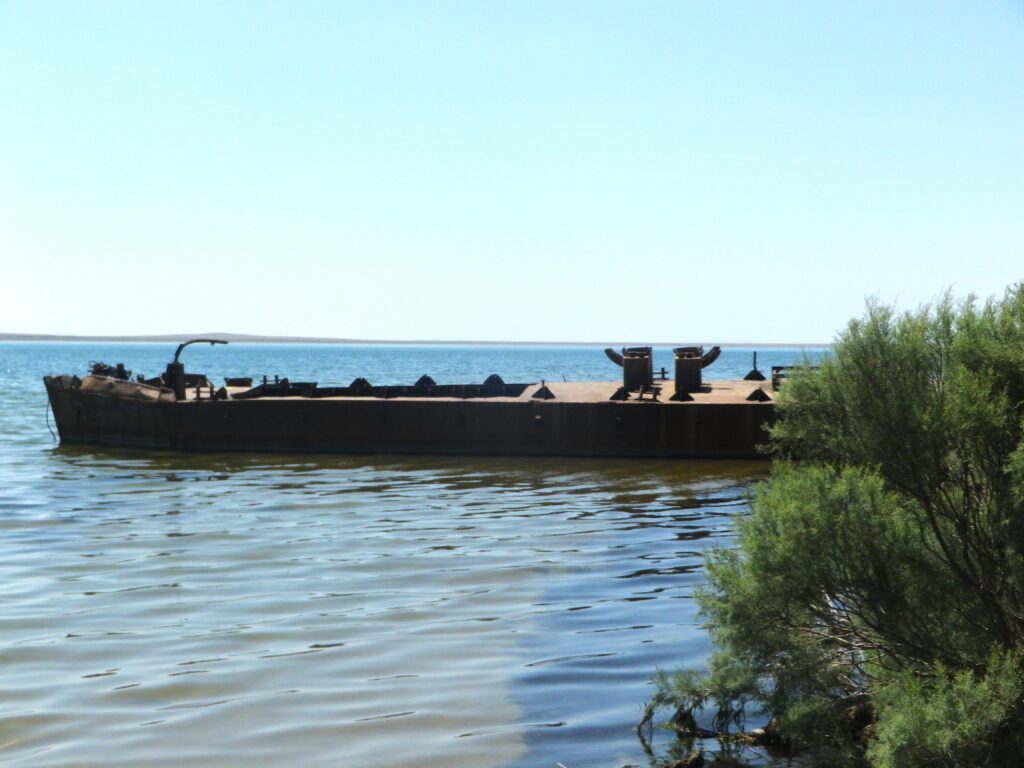
Kazakhstan’s efforts to restore the North Aral Sea have yielded significant results, with the water volume increasing by 42% to 27 billion cubic meters. The salinity of the sea has decreased nearly fourfold, and annual fish catches have risen to 8,000 tons. These achievements were highlighted by Minister of Water Resources and Irrigation Nurzhan Nurzhigitov during a meeting with residents of the Aral district in the Kyzylorda region on January 13. The North Aral Sea restoration project, initiated in response to the catastrophic shrinkage of the Aral Sea, focuses on the portion of the sea fed by the Syr Darya River. The North Aral Sea separated from the South Aral Sea in 1987-1988 due to declining water levels caused by extensive water diversion for agriculture. During the meeting, Nurzhigitov discussed plans for the second phase of the project, which aims to: Further increase water levels in the North Aral Sea; Improve water accumulation and management; Expand fisheries and promote ecotourism; Enhance the region’s overall ecological health. In 2024, Kazakhstan directed approximately 2.6 billion cubic meters of water into the Aral Sea, a dramatic increase compared to 816 million cubic meters in 2022. Nurzhigitov attributed the project’s success to the efficient distribution of water from the transboundary Syr Darya River, achieved through close cooperation with upstream countries. "These figures are the result of systematic work over the past two years. We [Kazakhstan] have reached a mutual understanding with neighboring countries on the conservation and fair distribution of water resources in transboundary rivers,” Nurzhigitov said. The minister emphasized that the project’s ultimate goal is to improve the region’s ecology, boost fisheries and tourism, and enhance the quality of life for local communities. The restoration of the North Aral Sea has become a symbol of Kazakhstan’s commitment to addressing ecological challenges while fostering sustainable development. By prioritizing cooperation with regional partners and implementing systematic water management strategies, the initiative offers hope for reversing decades of environmental degradation and improving economic opportunities for communities in the region.

Differentiated Tariffs Lead to Significant Drop in Water Consumption Across Kazakhstan

Water consumption has significantly decreased in eleven regions of Kazakhstan following the implementation of differentiated tariffs for water supply in 2024. The new tariff system, introduced at the start of last year, applies an increasing coefficient based on the principle of “the more you consume, the more you pay.” The system features four levels of tariffs for individuals: Up to 3 cubic meters per month: Consumers continue to pay the original tariff, which varies by region but averaged 82.66 KZT ($0.16) per cubic meter nationwide when the system was introduced. This group accounts for 49% of the population in the eleven regions. 3 to 5 cubic meters per month: A 20% increase in the tariff applies, covering 20% of the population. 5 to 10 cubic meters per month: The tariff rises by 50%, affecting another 20% of the population. Over 10 cubic meters per month: The tariff doubles, impacting 11% of the population. The introduction of these “social norms of consumption” has led to an average water savings of 1.65 million cubic meters per month in six regions — Akmola, Aktobe, Turkestan, Ulytau oblasts, and the cities of Almaty and Shymkent. According to official data, the average monthly water consumption in these regions dropped from 21.1 million cubic meters to 19.5 million cubic meters after the implementation of the new tariff system. As of December 1, 2024, the “social consumption norms” were extended to the Zhambyl region, with plans to roll out the system in Mangistau, East Kazakhstan, West Kazakhstan, and North Kazakhstan regions in 2025. “Additional funds generated from increased tariffs for high-consumption users will be directed toward the modernization and reconstruction of water supply and wastewater infrastructure,” stated the press service of the anti-monopoly committee. These investments aim to improve service quality and enhance the sustainability of the water supply system. The Ministry of the National Economy estimates the additional revenue from the tariff increases at approximately 13 billion KZT (around $25 million) annually. Previously, The Times of Central Asia reported that nearly 10 million people, or 14% of Central Asia's population, lack reliable access to safe drinking water. The Eurasian Development Bank (EDB) has estimated that addressing this issue will require over $12 billion between 2025 and 2030, or roughly $2 billion per year.

Uzbekistan to Launch “Eco-Active Citizen” Project for a Greener Future

The Ministry of Ecology, Environmental Protection, and Climate Change of Uzbekistan, in collaboration with the Ministry of Digital Technologies, has announced plans to launch the “Eco-Active Citizen” project by June 1, 2025. This initiative is part of the nationwide “One Million Green Families” movement and integrates with the “Healthy Lifestyle” platform. It is outlined in the draft Presidential Decree “On the State Program for the Implementation of the Strategy ‘Uzbekistan – 2030,’” which places significant emphasis on environmental protection and fostering a “green economy.” The project seeks to promote an ecological lifestyle and enhance environmental awareness among the population. Citizens will be encouraged to take actions such as planting trees, using public transportation, walking 10,000 steps daily, reducing waste, and transitioning to electric vehicles. Additional recommended measures include installing solar panels, utilizing energy-saving materials, and conserving electricity, gas, and water. Active participation in public environmental activities will also be key. Participants in the “Eco-Active Citizen” program will qualify for public service discounts, lower interest rates on consumer loans, and may even receive environmentally friendly vehicles such as bicycles or scooters. Families in which all members achieve “eco-active” status will be recognized as “Green Families” and will have the opportunity to participate in an annual lottery to win an electric car. Neighborhoods (mahallas) with over 50% of households classified as “Green Families” will earn the title of “Green Neighborhoods” and will receive additional environmental benefits, such as designated waste collection sites, tree planting initiatives, and green public parks. Cities or villages with more than 50% “Green Neighborhoods” will be officially recognized as “Green Cities,” “Green Villages,” or “Green Auls” (fortified villages). The Ministry of Ecology underscored the environmental impact of individual actions. For instance, one car emits an estimated 4.6 tons of carbon dioxide annually, whilst walking 10,000 steps per day can prevent up to 1.5 tons of waste. Additionally, conserving 100 cubic meters of natural gas can prevent 2 tons of carbon dioxide emissions. These efforts aim to establish sustainable “green cities” while promoting environmentally responsible tourism. In a related development, The Times of Central Asia previously reported that Uzbekistan is preparing a draft national program to reduce plastic pollution for 2025-2027.