• KGS/USD = 0.01144 0%
  • KZT/USD = 0.00208 0%
  • TJS/USD = 0.10391 -0.48%
  • UZS/USD = 0.00008 0%
  • TMT/USD = 0.28571 0%
  • KGS/USD = 0.01144 0%
  • KZT/USD = 0.00208 0%
  • TJS/USD = 0.10391 -0.48%
  • UZS/USD = 0.00008 0%
  • TMT/USD = 0.28571 0%
  • KGS/USD = 0.01144 0%
  • KZT/USD = 0.00208 0%
  • TJS/USD = 0.10391 -0.48%
  • UZS/USD = 0.00008 0%
  • TMT/USD = 0.28571 0%
  • KGS/USD = 0.01144 0%
  • KZT/USD = 0.00208 0%
  • TJS/USD = 0.10391 -0.48%
  • UZS/USD = 0.00008 0%
  • TMT/USD = 0.28571 0%
  • KGS/USD = 0.01144 0%
  • KZT/USD = 0.00208 0%
  • TJS/USD = 0.10391 -0.48%
  • UZS/USD = 0.00008 0%
  • TMT/USD = 0.28571 0%
  • KGS/USD = 0.01144 0%
  • KZT/USD = 0.00208 0%
  • TJS/USD = 0.10391 -0.48%
  • UZS/USD = 0.00008 0%
  • TMT/USD = 0.28571 0%
  • KGS/USD = 0.01144 0%
  • KZT/USD = 0.00208 0%
  • TJS/USD = 0.10391 -0.48%
  • UZS/USD = 0.00008 0%
  • TMT/USD = 0.28571 0%
  • KGS/USD = 0.01144 0%
  • KZT/USD = 0.00208 0%
  • TJS/USD = 0.10391 -0.48%
  • UZS/USD = 0.00008 0%
  • TMT/USD = 0.28571 0%

Viewing results 355 - 360 of 840

85-Million-Year-Old Dinosaur Fossils Discovered in Tajikistan’s Sughd Region

Dinosaur fossils estimated to be 85 million years old have been discovered in Tajikistan's Sughd region. The excavation took place in the village of Kansai, a renowned paleontological site known for its rich array of prehistoric animals, including ancient lizards, turtles, crocodiles, amphibians, and fish from the Cretaceous period. The expedition, organized by Russian and Tajik scientists, builds on Kansai’s long-standing significance in paleontology. In the 1960s, Soviet scientist Anatoly Rozhdestvensky and his team uncovered numerous dinosaur remains, including a therizinosaur femur. In the 1980s, Lev Nesov identified traces of mammals from the Cretaceous period. This year, a team led by Associate Professor Pavel Skuchas from St. Petersburg State University has expanded research in Kansai, focusing on smaller vertebrates. Tajik researchers, including Umed Nabiev, a master’s student in paleontology, and ecologist Gafurjon Karimov, joined the excavation. The fossils were excavated from the walls of a large canyon containing Upper Cretaceous sediment layers, where the team found remains of lizards, salamanders, frogs, and fish. “We used a washing technique to carefully extract even the smallest bones and teeth,” Nabiev explained, noting that a special adhesive was applied to the rock to protect these fragile finds. Among the larger discoveries were crocodile and turtle shells, as well as the bones of an 85 million-year-old dinosaur. Further research will determine which parts of the dinosaur’s body these bones belonged to. The excavation is set to resume next May, and scientists plan to explore new canyon sections previously mined for cement production. “Previously, the remains of large animals have been studied quite well, while the remains of smaller animals, such as amphibians and reptiles, have been neglected. In our next expedition, we will also search for small vertebrates,” Nabiev added. Tajikistan has seen several significant archaeological discoveries in recent years. In 2023, artifacts unearthed at the Oshkhon site in the Eastern Pamirs indicated human presence dating back about 14,000 years. In 2021, a joint Tajik-German expedition in the village of Khushdilon (Torbulak) near Danghara district uncovered the remains of a Hellenistic sanctuary dating from the 3rd to 1st centuries B.C. These findings continue to expand the historical and cultural understanding of the region.
Kazakhstan’s Lake Balkhash Receives 13.5 billion Cubic Meters of Water in 2024

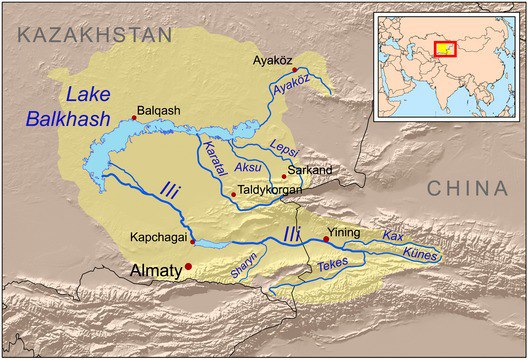
The Ministry of Water Resources and Irrigation of the Republic of Kazakhstan announced on November 8 that 13.5 billion cubic meters of water had been sent to Lake Balkhash via the Ili River from the Kapchagay Reservoir this year, raising the lake’s average water level to 341.6 meters above sea level. The trans-boundary Ili River, originating in China, supplies about 70% of Lake Balkhash’s water. According to the ministry, this year’s average water flow at the Kazakhstan-China border was 384 cubic meters per second, a 17% increase from last year. Lake Balkhash, located 280 kilometers northwest of Almaty, Kazakhstan’s largest city, is the world’s fifteenth-largest lake. In May, reports indicated that Balkhash’s water level had risen by 23 centimeters since the start of the year, largely due to increased rainfall and snowmelt-related floods this past spring. Earlier this month, The Times of Central Asia reported that Kazakhstan and China have initiated negotiations on the joint management and allocation of water from shared rivers. A key goal for Kazakhstan in these talks is to maintain optimal water levels in Lake Balkhash. Three major rivers in Kazakhstan — the Irtysh, Ili, and Emel — originate in China, making trans-boundary water management critical for the country. In late August, The Times of Central Asia also reported that the Kapchagay Reservoir near Almaty had filled to capacity for the first time in a decade. The reservoir collects water from the Ili River and regulates its flow to Lake Balkhash.

CAREC Ministers Approve Climate Action Plan and Launch Regional Climate Fund

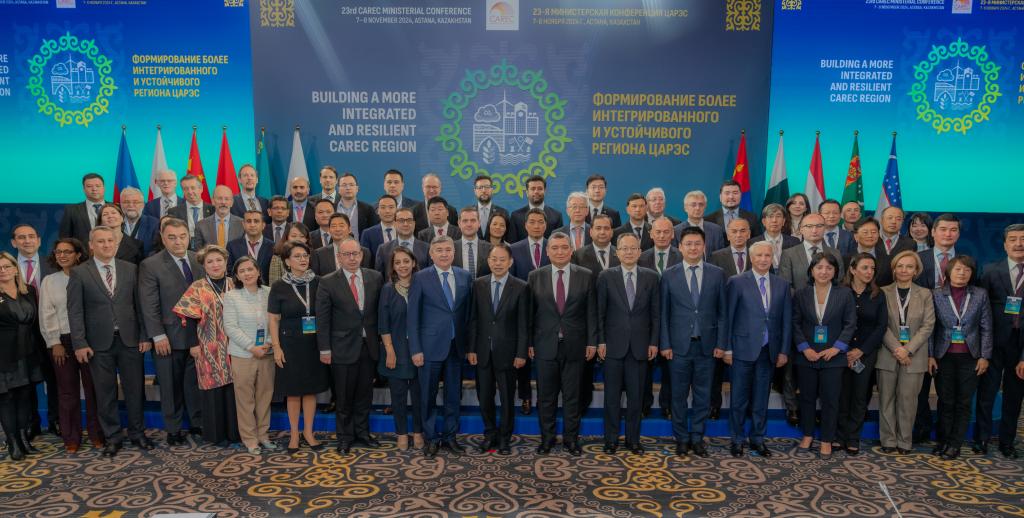
At the 23rd CAREC Ministerial Conference held in Astana on November 8, member countries of the Central Asia Regional Economic Cooperation (CAREC) Program—Afghanistan, Azerbaijan, China, Georgia, Kazakhstan, Kyrgyzstan, Mongolia, Pakistan, Tajikistan, Turkmenistan, and Uzbekistan—endorsed a new Climate Change Action Plan (CCAP) and launched the CAREC Climate and Sustainability Project Preparatory Fund (CSPPF). These initiatives aim to strengthen regional collaboration on climate resilience, low-carbon growth, and sustainable development. The CAREC Program is a partnership of 11 countries and development partners that promotes sustainable development through regional cooperation, with the Asian Development Bank (ADB) hosting the CAREC Secretariat. In his address at the conference, ADB President Masatsugu Asakawa stated, “The approval of the CAREC Climate Change Action Plan and the establishment of the Climate and Sustainability Project Preparatory Fund are significant milestones in our collective efforts to address climate change. By working together, we can build resilient infrastructure, develop early warning systems, and create a greener future powered by renewable energy.” The CCAP, covering the period from 2025 to 2027, prioritizes initiatives aligned with the CAREC Climate Change Vision and focuses on four main areas to address climate challenges in the region. It aims to enhance climate risk preparedness, strengthen the water-energy-food nexus, promote low-carbon growth by reducing emissions and expanding renewable energy, and create a CAREC climate platform. The CSPPF will support CAREC countries in developing viable regional climate projects that align with their commitments under the Paris Agreement. On November 8, ADB signed fund contribution agreements with China’s Ministry of Finance and South Korea’s Ministry of Economy and Finance, generating an initial $5 million in funding for the CSPPF. Speaking at the Ministerial Conference, Kazakhstan’s Prime Minister Olzhas Bektenov highlighted the CAREC Program’s significance for Central Asia, noting that over the past 20 years, it has mobilized about $51 billion for the region, with more than $9 billion invested in Kazakhstan. During his visit to Kazakhstan, ADB’s Asakawa met with President Kassym-Jomart Tokayev to discuss ongoing cooperation and future initiatives. From 1994 to 2024, ADB financed projects in Kazakhstan valued at approximately $7 billion. Notably, ADB participated in the construction of the Western Europe–Western China highway corridor and the reconstruction of the Aktobe–Kandyagash road.

World Bank Report Outlines Path to Drive Tajikistan’s Green Transition and Economic Growth

On November 7, the World Bank Group published the Tajikistan Country Climate and Development Report (CCDR), highlighting the transformative potential of climate action for Tajikistan's economy. The report suggests that addressing climate risks can drive economic renewal, create jobs, and enhance resilience against the rising frequency of extreme weather events caused by climate change. Ozan Sevimli, World Bank Group Country Manager for Tajikistan, emphasized the urgency of a strategic shift: “Tajikistan urgently needs an economic reset to tackle its numerous development challenges and the growing impacts of climate change that threaten future progress. The CCDR provides a roadmap for accelerating the transition to a green economy, supporting long-term growth.” A key finding of the report is the importance of mobilizing private-sector financing to supplement Tajikistan's limited public resources. This financing will be crucial in securing the nation’s green transition and ensuring water, food, and energy security. Despite ranking 130th globally in greenhouse gas emissions, Tajikistan is highly vulnerable to climate change impacts, notes Bahodur Sheralizoda, Chair of the Environmental Protection Committee under the Tajik government: “Although our contribution to global emissions is minimal, we are one of the most climate-vulnerable countries in the world. The CCDR advises the government to improve production efficiency, foster innovative technologies, and create green jobs to reduce our susceptibility to climate-related challenges.” The report warns that Tajikistan already faces high risks of floods, earthquakes, and landslides, with potential infrastructure and agricultural losses that could lower GDP by 5-6% by 2050. The strategic Vakhsh River Basin, which produces 90% of the country’s electricity, underscores the dual challenges of climate and development. Annual costs of land degradation are estimated at $325 million, with further increases anticipated. Additionally, air pollution remains a major health risk, accounting for 84 deaths per 100,000 people—Central Asia’s second-highest rate. A green transition could deliver substantial benefits. By 2050, reduced healthcare costs from lower air pollution, fewer road accidents, and improved road conditions could save over $3.5 billion. Investments in renewable energy, including hydro, solar, and geothermal, as well as in energy efficiency, promise new employment opportunities across sectors. The report advises the Tajik government to fast-track low-carbon development to strengthen economic growth, energy security, export potential, and job creation, all while enhancing air quality. Achieving these goals will require significant investments: Tajikistan needs around $17 billion, in addition to the $79 billion required for the government’s reform agenda from 2025 to 2050. Private sector investments, particularly in energy, industry, and agriculture, will be essential. Recognizing that the financial needs for this transformation exceed domestic resources, the report underscores the importance of external support. Tajikistan will need substantial technical and financial assistance from international bodies, climate funds, and development partners to fulfill its climate and development goals.

Turkmenistan Pushes for UNESCO World Heritage Status for its Unique Mud Volcanoes

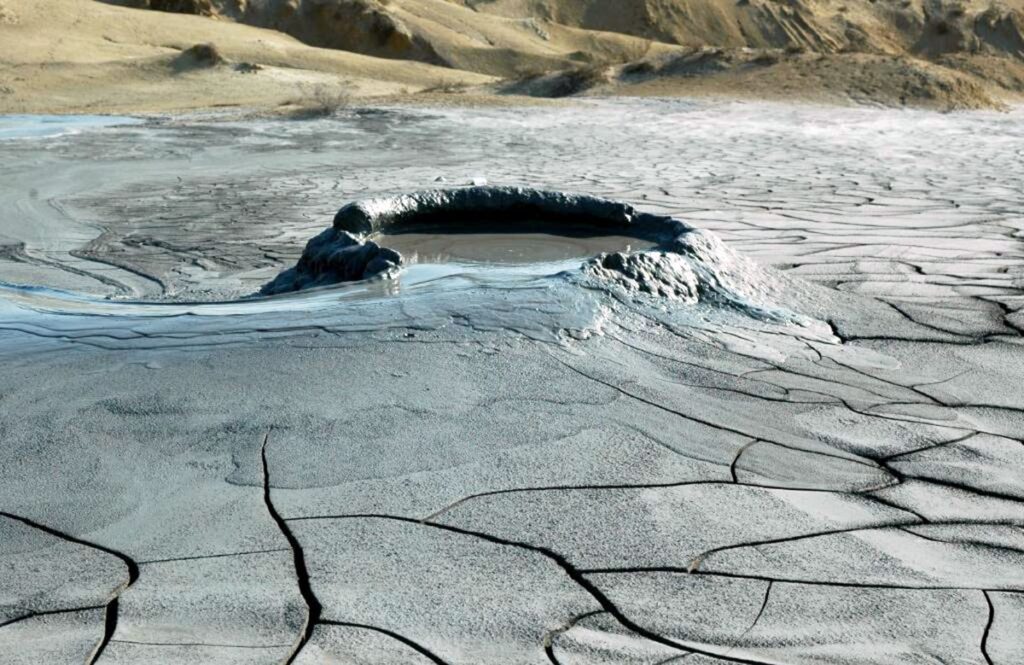
Turkmenistan has launched an in-depth study and documentation project focusing on its extraordinary geological landmarks, especially the ancient mud volcanoes that line the western Caspian Sea coast. This effort aims to compile the necessary scientific and cultural documentation to nominate these unique mud volcanoes for inclusion in the UNESCO World Heritage list. The recent initial expedition was attended by members of the Turkmenistan National Commission for UNESCO, along with biologists, geographers, and geologists from various scientific organizations. These specialists examined multiple mud volcanoes along the Caspian coast, primarily within the Esenguly district of the Balkan region. Over several days, the team meticulously surveyed active, dormant, and long-extinct volcanoes, documenting their findings through photography and soil sampling. They noted that though activity has decreased, this does not mean many volcanoes have stopped completely. Among the most notable formations are the Akpatlavuk and Gokpatlavuk mud volcanoes. Akpatlavuk, located on a prominent hill along the southern part of the Caspian's eastern coast, showcases a dome with numerous mud outcrops and deep channels carved by flowing streams. At its base lies an expansive mud lake, adding to its remarkable landscape. Gokpatlavuk, towering 70 meters above the northern plains near Ekerem, features steep, eroded slopes and gullies through which streams of carbonated mud steadily flow, creating a striking visual of natural forces at work. The nomination process will require updated imagery and refreshed data to supplement the national atlas of mud volcanoes. As part of their preparation, researchers will review studies conducted by Azerbaijani scientists in the 1970s, given that the mud volcanoes of Turkmenistan, Azerbaijan, and Iran form an interconnected geological complex representing nearly half of the world’s mud volcanoes.

Uzbekistan Aims to Develop Agriculture with Smarter Water and Energy Use

Uzbekistan's President Shavkat Mirziyoyev recently held a meeting on the efficient use of water and energy in agriculture. More than 1,600 pumping stations currently use 6.8 billion kilowatts of electricity to irrigate 2.5 million hectares. Through the partnership, electricity consumption can be reduced by 20% by upgrading pumps and solar panels. For example, 92 farmers installed modern pumps in the Khorezm region, saving 20% of electricity. Some sold excess solar energy to the state and received an additional monthly income of 7-8 million UZS ($548-626). Water-saving technologies have helped Uzbekistan save 2 billion cubic meters of water in an area of more than 2 million hectares, and more than 50 local companies are producing these devices. However, some drip irrigation systems are still not working, and the 10 billion UZS ($780,000) subsidy allocated for laser leveling in Karakalpakstan hasn’t been used. Khorezm was also instructed to extend the subsidy for laser leveling to 1 million UZS ($78.00) per hectare and improve control over these technologies. Next year, 700 billion UZS ($54 million) in subsidies and 2.5 trillion UZS ($195 million) in credit will be used for water-saving technology. Additionally, flood reservoirs will be built in 13 districts, improving the water supply for 50,000 hectares. Mirziyoyev emphasized that real change requires digitization. About 1,700 online monitoring devices and 12,000 smart water devices are already in place, but Uzbekistan needs a system to collect and analyze this data. To address this, a Water Management Digitization Center will be set up to manage a new unified system for tracking water use.