• KGS/USD = 0.01144 0%
  • KZT/USD = 0.00210 0%
  • TJS/USD = 0.10563 0%
  • UZS/USD = 0.00008 0%
  • TMT/USD = 0.28530 0%
  • KGS/USD = 0.01144 0%
  • KZT/USD = 0.00210 0%
  • TJS/USD = 0.10563 0%
  • UZS/USD = 0.00008 0%
  • TMT/USD = 0.28530 0%
  • KGS/USD = 0.01144 0%
  • KZT/USD = 0.00210 0%
  • TJS/USD = 0.10563 0%
  • UZS/USD = 0.00008 0%
  • TMT/USD = 0.28530 0%
  • KGS/USD = 0.01144 0%
  • KZT/USD = 0.00210 0%
  • TJS/USD = 0.10563 0%
  • UZS/USD = 0.00008 0%
  • TMT/USD = 0.28530 0%
  • KGS/USD = 0.01144 0%
  • KZT/USD = 0.00210 0%
  • TJS/USD = 0.10563 0%
  • UZS/USD = 0.00008 0%
  • TMT/USD = 0.28530 0%
  • KGS/USD = 0.01144 0%
  • KZT/USD = 0.00210 0%
  • TJS/USD = 0.10563 0%
  • UZS/USD = 0.00008 0%
  • TMT/USD = 0.28530 0%
  • KGS/USD = 0.01144 0%
  • KZT/USD = 0.00210 0%
  • TJS/USD = 0.10563 0%
  • UZS/USD = 0.00008 0%
  • TMT/USD = 0.28530 0%
  • KGS/USD = 0.01144 0%
  • KZT/USD = 0.00210 0%
  • TJS/USD = 0.10563 0%
  • UZS/USD = 0.00008 0%
  • TMT/USD = 0.28530 0%

Viewing results 445 - 450 of 876

Greek Reports: Captain of Boat Carrying Kazakhs Says Hydra Fire Was His Fault

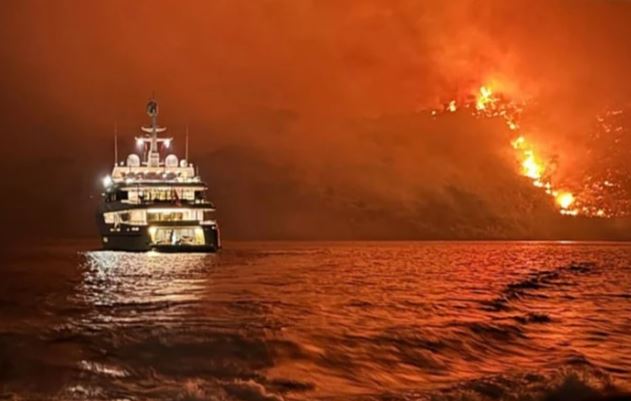
The captain of a luxury boat that was carrying Kazakh tourists when it was linked to a forest fire on the Greek tourist island of Hydra in June has taken responsibility for the blaze, according to Greek media. While some circumstances surrounding the fire remain unclear, the statement by the captain undercuts suspicion that initially fell on the group of tourists including Daniyar Abulgazin, who has shares in multiple Kazakh companies and is one of Kazakhstan’s wealthiest business executives. Abulgazin, who rented the boat, had denied wrongdoing in connection with the fire and said he had left Greece as previously scheduled on June 22 after speaking with “representatives of the Greek authorities.” The captain, who is in detention and faces arson charges, said he launched fireworks, one of which landed in the forest and started the wildfire, protothema.gr reported last week. The acknowledgement reversed his earlier account that no fireworks were set off from the vessel. The Greek media outlet did not identify the captain. A dozen other crewmembers were arrested after the fire. Most were released on bail. Prosecutors also filed charges of complicity in arson against the Kazakh passengers, Greek media have said. But the captain’s new testimony, delivered early this month, exonerates “the other crew members and the foreign multimillionaire charterers of the yacht,” ekathimerini.com reported. Abulgazin had referred to “incorrect and misleading” media reports, expressing regret about the fire and promising to cooperate with the Greek investigation.

World Bank Considers Loan for Tajikistan’s Rogun Hydropower Plant

Tajikistan's Deputy Minister for Finance, Yusuf Majidi, has announced that the World Bank will consider financing the development of the Rogun hydroelectric power plant. According to him, the bank can allocate $650 million for this project in September this year. $250 million has been allocated as preferential loans; starting in 2025, the station's construction will be financed by other investments. Majidi specified that the construction of the hydroelectric power plant (HPP) is also financed by the Islamic Development Bank and Arab funds; according to preliminary data, this is about $550 million. When the Rogun HPP reaches full capacity, about 70% of the electricity produced will be exported to other Central Asian countries. According to the Eurasian Fund for Stabilization and Development (EFSD), financing the Rogun HPP is one of the main risks to Tajikistan’s budget and debt sustainability. The EFSD notes that a possible increase in the cost of hydropower construction could reduce funding for other critical infrastructure projects and social spending. Rogun is located 110km from Dushanbe on the Vakhsh River, and is the largest in the region. Its construction began in 1976, but it was destroyed after the collapse of the USSR. Later, Tajikistan continued work on the construction of hydroelectric power plants at its own expense and with the help of international funds and organizations, and so far, two of the six units with a capacity of 600 MW provided for in the project have been put into operation. The third is scheduled for 2025.

Solar-Powered Irrigation System Launched Outside Tashkent

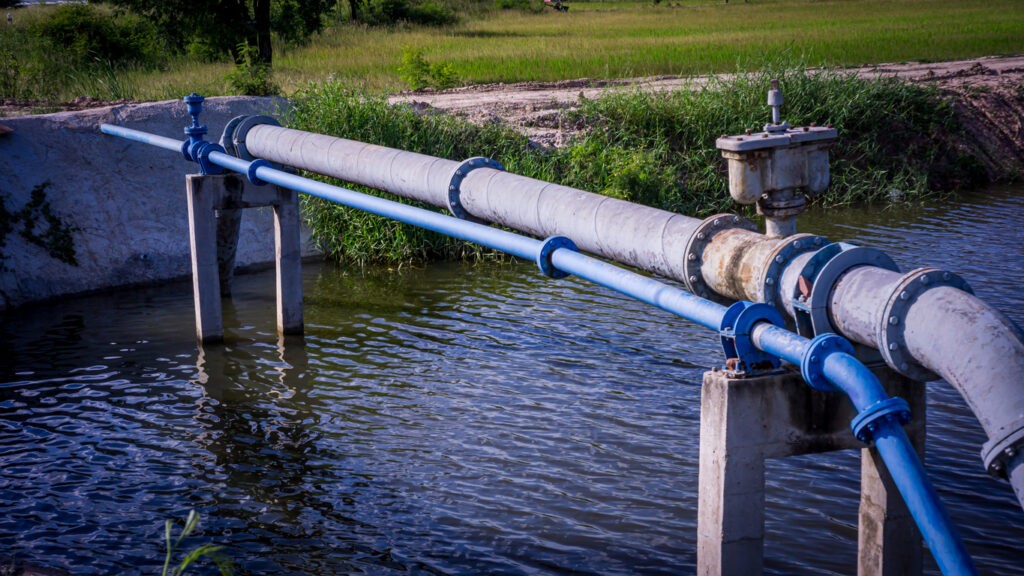
A new drip irrigation system that runs on solar power has been introduced in the Akkurgan district outside Uzbekistan's capital Tashkent. The irrigation system is being funded by the European Union, and is part of a project between the United Nations Development Programme (UNDP) and the Uzbek Ministry of Agriculture. Increasing water scarcity is a serious challenge in rural Uzbekistan. Many families rely on their backyard gardens to grow vegetables, and better irrigation will help rural communities to become more economically sustainable. The system includes a water pump that extracts water from a vertical well at a depth of 180 meters, supported by solar panels. The system irrigates 0.8 hectares of land, benefiting 10 households and saving nearly 60% of water compared to traditional irrigation methods. The excess electricity generated by the solar panels is sold to the State Electricity System, and the revenue is used to manage and operate the irrigation well and the drip irrigation network. Mr. Wim Riepma, Head of Cooperation of the European Union's Delegation to Uzbekistan, commented: "This solar-powered drip irrigation system not only addresses water scarcity but also paves the way for more sustainable agriculture in Uzbekistan. Most importantly, it directly benefits local families by increasing their access to electricity and water for irrigation, thus enhancing food security and incomes."

Bishkek’s Iconic Elm and Poplar Trees Suffering From Beetle Infestation

The larvae of the longhorn beetle (Aeolesthes sarta), commonly known as the woodcutter beetle, are destroying green spaces in Kyrgyzstan's capital Bishkek. The beetle appeared in the city ten years ago, but biologists have explained that its population has recently increased to worrying levels. The situation is being aggravated by the shortage of irrigation water in Bishkek, a result of faulty irrigation facilities. Trees in the capital are beginning to dry out, and their immunity to the effects of larvae infestation is weakening. The longhorn beetle lays its larvae in the bark of a tree, and as it matures, it eats the tree from the inside. The larvae's favorite trees, the elm and poplar, are the most common trees in Bishkek. Unlike other pests, the beetle cannot be irradicated with chemical treatments. Infested spaces must be destroyed completely. The Bishkek Zelenkhoz municipal enterprise, responsible for maintaining the city's green spaces, has reported that 90% of all adult elm trees and half of all poplars in the capital have become infected with longhorn beetle larvae. "Trees with signs of infestation remain green, and do not die immediately. After a while, the top dries up, and then the entire trunk follows. The death process takes about five years," Yuri Borvinok, head of the laboratory for woody and bush plants at the Kyrgyz Academy of Sciences, told The Times of Central Asia. Kyrgyz authorities are having difficulty controlling pests because of current laws. In Kyrgyzstan's populated areas, chemical treatment of greenery is prohibited to prevent harm to people, and burning plant debris such as leaves and branches is also forbidden. "When we used to burn plants and foliage, these measures deterred the miner moth, woodcutter beetles, and other pests; today, nothing prevents the mass spread of beetles," Borvinok said. Municipal officials are looking for an effective method to control the beetles. "Some trees we cut down, take out of town, and burn there. In addition to the elm trees, the woodcutter attacks poplars. There is a danger that it will move to other trees. This beetle can not be taken down by anything. That's why we are planting new species, linden, maple, and acacia," said Zhanybek Zhumaliyev, head of the Zelenkhoz enterprise's planning department.

Uzbekistan to Supply Extra Water to Kazakhstan for Irrigation

Kazinform has reported that following a  meeting in Astana between Kazakh  Minister of Water Resources and Irrigation, Nurzhan Nurjigitov, and Uzbek Minister of Water Management Shavkat Hamroev, Uzbekistan is to provide Kazakhstan with an additional 500 million cubic meters of water until the end of the irrigation season. Since April 1, Uzbekistan has supplied more than 4 billion cubic meters of water to Kazakhstan through the Syr Darya. It had been previously agreed that Uzbekistan would provide Kazakhstan with 3.7 billion cubic meters of water within six months but the Uzbek side fulfilled its obligation in just 4 months. The report states that the key goal was to fully satisfy the demand for irrigation water from farmers of  Kazakhstan's southern regions and today, the Shardara Reservoir holds 1.5 billion cubic meters of water, almost 500 million more than last year. A total of 4 billion cubic meters of water entered the Shardara reservoir. Commenting on the success of the project, the official representative of the Ministry of Water Resources and Irrigation of Kazakhstan, Moldir Abdualieva stated, “Due to the preliminary agreement with our neighbors on the working order of the Toktogul and Bahri-Tajik reservoirs, water regularly flows to the Kazakh part of the Dostlik interstate canal. Now, 90 cubic meters of water per second comes to the country through this channel. This is enough to fully supply the farmers of the Turkestan region with irrigation water,”

Is Kazakhstan Preparing to Take on the Oil Consortium “Whales”?

The filed lawsuits and environmental claims totaling $159.6 billion against the consortiums operating the Kashagan and Karachaganak fields reflect the Kazakhstani government’s intention to revise the largest oil & gas contracts.   Kazakhstan, due to drought in Central Asia and a drop in oil production after the expiration of major oil & gas contracts by 2040, will likely look like Arrakis, the fictional desert planet from Dune: Part Two over whose valuable commodity the Great Houses struggle. Meanwhile, the Dune sandworms, which produce the spice needed by all the planets, resemble the consortiums developing the Tengiz, Karachaganak, and Kashagan fields – just as huge and just as rare, with almost no such production sharing agreements (PSAs) with 40-year stabilization contracts left in the world. In Kazakhstan, the three operators are known as the “three whales.”   What’s going on At the beginning of April 2024, Bloomberg published an article about the claims exceeding $16.5 billion brought forward by Kazakhstan, through PSA LLP, against the consortiums North Caspian Operating Company (NCOC), which is developing the offshore Kashagan field, and Karachaganak Petroleum Operating (KPO). The environmental regulator for the Atyrau region has additionally filed a claim for $5.1 billion against NCOC, while another lawsuit for $138 billion of lost revenue has been launched. Consortium Amount of PSA claim Environmental fine Total NCOC $13 billion + $138 billion $5.1 billion $156.1 billion KPO $3.5 billion $3.5 billion   The total amount is possibly the largest in the world for the oil & gas sector. Since 2016, PSA LLP has been the authorized state institution in the production sharing agreements for NCOC, KPO, and the Dunga project (previously owned by Total E&P Dunga GmbH; in November 2023, the state-owned KazMunayGas bought the TotalEnergies stake for an estimated $300 million). Kazakhstan’s Ministry of Energy is currently entrusted to run PSA LLP, while the stakes in Karachaganak and Kashagan are held by KazMunayGas (KMG) and the sovereign wealth fund Samruk-Kazyna (SK). The international arbitration claims followed inspections in 2013-20 that revealed costs not agreed upon with the Kazakhstani government (costs are reimbursed from oil revenues), along with failure to hit planned oil production targets and violations during tenders, etc. The initial amount of the lawsuit against NCOC was raised from $13 billion to $15 billion. The new claim for $138 billion relates to lost revenue “reflecting the calculation of the value of oil production that was promised to the government but not delivered by the field developers,” Bloomberg reported, citing sources familiar with the matter. The $5.1 billion fine levied by regional environmental regulators against NCOC has to do with the storage of excessive amounts of sulfur on site (more than a million tons more than permitted), as well as 10 other Administrative Code violations. Later, however, a court partially satisfied the consortium’s appeal. Deputy General Director of PSA LLP Nurlan Serik has made clear that Kazakhstan intends to challenge the consortium’s costs and failure to fulfil plans only through courts. According to various estimates, about $60...