
• KGS/USD = 0.01144 0%
  • KZT/USD = 0.00210 0%
  • TJS/USD = 0.10563 0%
  • UZS/USD = 0.00008 0%
  • TMT/USD = 0.28530 0%
  • KGS/USD = 0.01144 0%
  • KZT/USD = 0.00210 0%
  • TJS/USD = 0.10563 0%
  • UZS/USD = 0.00008 0%
  • TMT/USD = 0.28530 0%
  • KGS/USD = 0.01144 0%
  • KZT/USD = 0.00210 0%
  • TJS/USD = 0.10563 0%
  • UZS/USD = 0.00008 0%
  • TMT/USD = 0.28530 0%
  • KGS/USD = 0.01144 0%
  • KZT/USD = 0.00210 0%
  • TJS/USD = 0.10563 0%
  • UZS/USD = 0.00008 0%
  • TMT/USD = 0.28530 0%
  • KGS/USD = 0.01144 0%
  • KZT/USD = 0.00210 0%
  • TJS/USD = 0.10563 0%
  • UZS/USD = 0.00008 0%
  • TMT/USD = 0.28530 0%
  • KGS/USD = 0.01144 0%
  • KZT/USD = 0.00210 0%
  • TJS/USD = 0.10563 0%
  • UZS/USD = 0.00008 0%
  • TMT/USD = 0.28530 0%
  • KGS/USD = 0.01144 0%
  • KZT/USD = 0.00210 0%
  • TJS/USD = 0.10563 0%
  • UZS/USD = 0.00008 0%
  • TMT/USD = 0.28530 0%
  • KGS/USD = 0.01144 0%
  • KZT/USD = 0.00210 0%
  • TJS/USD = 0.10563 0%
  • UZS/USD = 0.00008 0%
  • TMT/USD = 0.28530 0%

Viewing results 439 - 444 of 876

Better Buses Help Air Quality in Bishkek to Improve

Officials claim that the air quality in Kyrgyzstan’s capital, Bishkek, has significantly improved over the last two years due to the ongoing renewal of the municipal transport fleet, switching residential heating from coal to natural gas, and extinguishing the sanitary landfill near Bishkek that had burned for decades. Chyngyzbek Abdymalik Uulu, an atmospheric air specialist at the Kyrgyz Ministry of Natural Resources, Ecology, and Technical Supervision, told Birinchi Radio that the primary sources of air pollution in Bishkek were low-quality coal, exhaust gases from motor transport, and the burning of municipal solid waste at the city landfill. The official says that, in large part, the air quality has improved due to the decreasing number of minibuses on Bishkek streets. Over the past 30 years, "markhrutka" minibuses — mainly aged Mercedes minivans — have been the primary type of municipal transport in Bishkek, vastly surpassing in number the limited fleet of large buses and trolleybuses. Running on diesel, these old marshrutkas spew harmful gases into the atmosphere and congest city traffic, since they stop anywhere on demand. Abdymalik Uulu said more than 3,000 minibuses ran in the capital until 2022. After their number was reduced over the last two years, diesel fuel consumption decreased by 100 tons daily. The Bishkek municipality has now removed the minibuses from the central part of the city and replaced them with large buses running on liquefied natural gas. In 2023, Bishkek purchased a thousand large buses from China, which have been arriving in the capital city in batches over the past year. Today, the municipal fleet has 1,200 buses. In addition, by the end of 2024, the city will receive 100 12-meter-long buses, and 120 electric buses will arrive in the second quarter of 2025. Both officials and analysts agree that renewing the municipal transport fleet will improve the air quality in Bishkek. Abdymalik Uulu added that gasification is another reason for the improved air quality. To date, about 20,000 households have been connected to natural gas networks, which has decreased coal burning by 58,000 tons. Also, he said, all of Bishkek’s 74 large boiler houses that used to burn large amounts of coal daily have now been converted to electricity and natural gas. Finally, the Bishkek sanitary landfill, which burned for decades and released large volumes of harmful emissions, has been completely extinguished.
Free Solar Panels for Uzbekistan’s Low Income Households

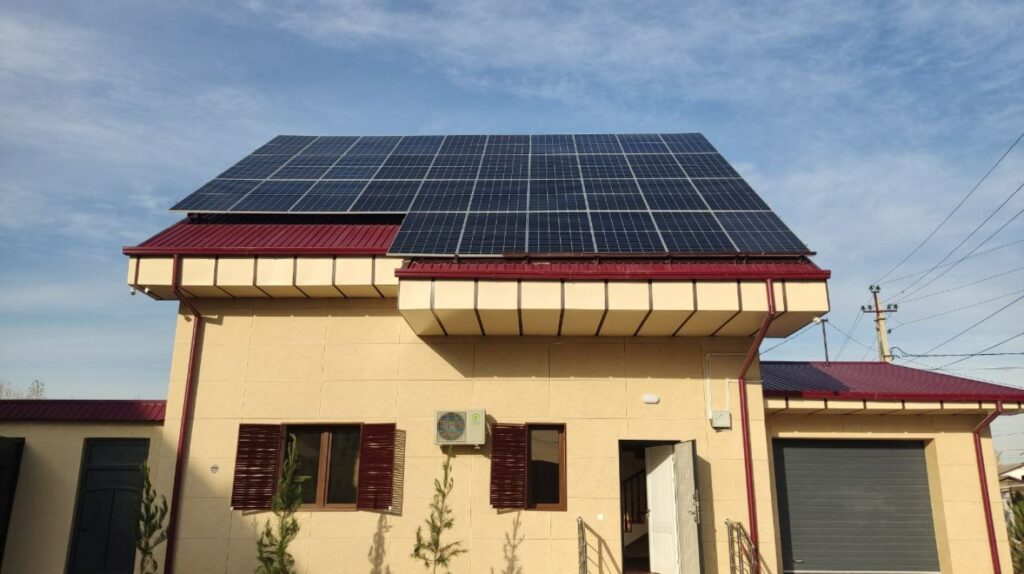
Uzbekistan has launched a program to install solar panels  in the homes of low-income families in the Tashkent Oblast. The key aim of the initiative, implemented with the participation of ACWA Power, an enterprise engaged in regional energy projects, is to reduce electricity costs for vulnerable sectors of the population. Under the plan, some 20,000 low-income households, especially those with air conditioning, will receive free photovoltaic panels with a 1.5 to 2 kW capacity, to reduce energy costs during the summer. The project is part of the government's broader strategy to transition to renewable energy. The country has already taken steps in this direction, including the construction of solar and wind farms, which in recent years, have enabled Uzbekistan to reduce its electricity imports from more than 4 billion kWh to less than 3 billion kWh and even begin to export electricity. The initiative is also a continuation of the Solar Home Program which was introduced in 2023 to encourage the installation of solar panels in private households across the country.

UN Launches Projects to Improve Health and Environment in the Aral Sea Region

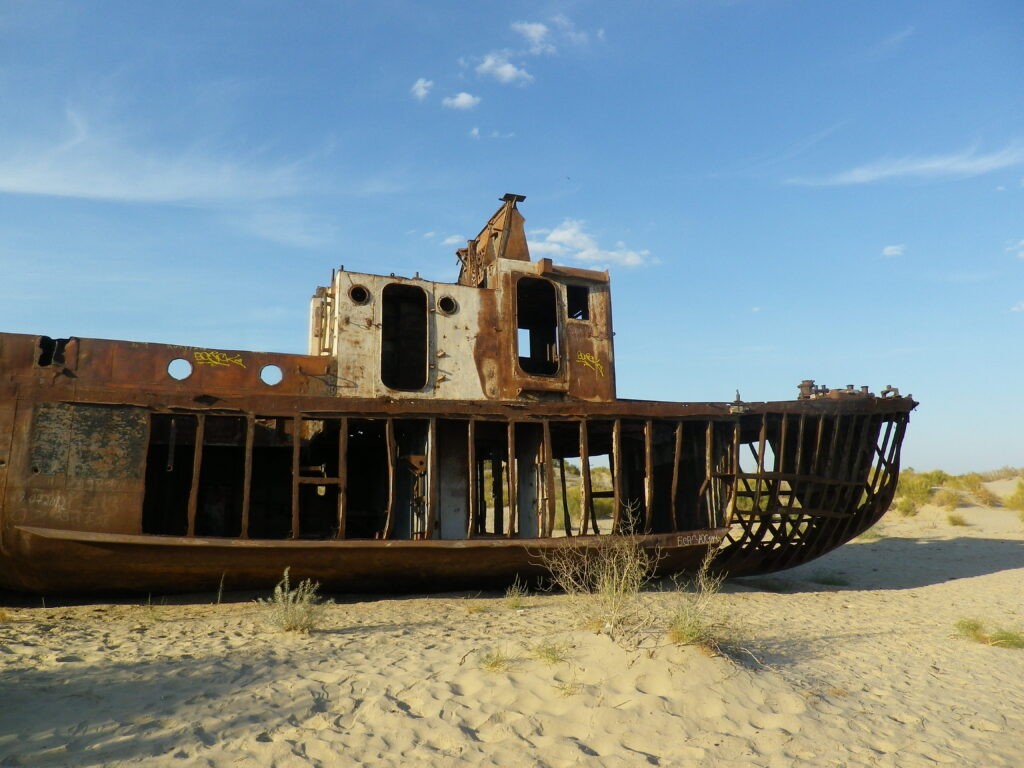
The UN has launched two new projects to address environmental and health issues in Karakalpakstan, Uzbekistan. These projects are “Enhancing Climate-Resilient and Safe Water, Sanitation, Hygiene, and Health Services for the Most Affected Communities in Four Districts of Karakalpakstan,” and the joint project between its development programme (UNDP) and its food and agriculture organization (FAO), "Building Knowledge and Skills of Local Partners and Communities to Address Environmental Insecurities through Innovative Air, Land, and Water Management Solutions in the Aral Sea Region.” “The launch of these projects marks a significant milestone in our collective efforts to address the Aral Sea Region's profound environmental and health challenges," said Sabine Machl, the UN's Resident Coordinator in Uzbekistan. "By fostering resilience through innovative solutions in water management, health services, and community empowerment, we are laying the groundwork for a sustainable future in Karakalpakstan.” The project between the UNDP and FAO aims to increase the knowledge and skills needed by local partners and communities to solve environmental security problems. It also aims to develop practical solutions for managing air, land and water, enabling communities to adapt to and mitigate climate change. In addition, within the project's framework, special attention will be paid to introducing new approaches to water treatment, forest restoration, and soil stabilization in the region. These activities have the potential to directly benefit over 376,000 residents of the three northern districts of Moynaq, Kungrad, and Takhtakupir in Karakalpakstan, particularly women in at-risk communities. The indirect impact will extend to 200,000 more people and build on the results of the previous projects. On 16 August, the UN programme “Laying the Foundations for People-Centered, Climate-Resilient Primary Health Care and Water, Sanitation, and Hygiene Practices at Healthcare Facilities and Schools” was officially completed. During his visit to Karakalpakstan on August 19, Uzbek President Shavkat Mirziyoyev announced the establishment of the Aral Sea Region International Innovation Center to improve the ecosystem and create new varieties and seeds in a saline, water-less environment. $80 million will be allocated to mitigate the consequences of climate change in the Aral Sea region. The Times of Central Asia has published several articles about the problems arising from the drying up the Aral Sea and the work being done to combat this.

Tajik President: Accelerated Melting of Glaciers Threatening Central Asia’s Water Resources

Over the past few decades, more than a thousand of Tajikistan’s 13,000 glaciers have completely melted—a threatening trend given that Tajikistan's glaciers are the main source of up to 60% of Central Asia’s water resources. Tajik President Emomali Rahmon announced this on August 17 at the third Voice of Global South Summit, which was held virtually under the chairmanship of Prime Minister of India, Narendra Modi. In his speech, Rahmon said that Tajikistan's initiative to declare 2025 the International Year of Glacier Preservation has received the full support of the international community. According to a UN General Assembly resolution, March 21 will be celebrated annually as World Glaciers’ Day from next year. Based on this resolution, in 2025, Tajikistan will host the International High-Level Conference on Glaciers’ Preservation. President Rahmon continued that with 93% of its territory covered by mountains, Tajikistan is considered one of the most vulnerable countries of the Global South in terms of adverse climate change impacts. Every year, the country faces floods, landslides, avalanches, and other natural disasters that cause great material damage, and, in many cases, human casualties. Earlier this month TCA reported that the head of Tajikistan’s committee for emergency situations and civil defense, Rustam Nazarzada, said at a press conference that the economic damage caused by natural disasters in the country this year has amounted to over $12 million. The government of Tajikistan is therefore implementing a National Strategy for Adaptation to Climate Change until 2030, with the goal of reducing the negative impacts of climate change on the country's social and economic spheres. Regarding green energy production, Rahmon stated that Tajikistan currently produces 98% of its electricity from hydropower. “We have decided to increase this figure to 100% by 2032, that is, to produce electricity entirely from green energy resources, and to turn Tajikistan into a ‘green country’ by 2037,” the Tajik leader stated.

UN General Assembly Adopts Uzbekistan-Initiated Resolution on Forest Management

The UN General Assembly last week adopted Uzbekistan's proposed resolution on “Fostering sustainable forest management, including afforestation and reforestation, in degraded lands, including drylands, as an effective solution to environmental challenges.” The resolution is based on the concept of Uzbekistan’s nationwide program, Yashil Makon (Green Space), which aims to preserve and restore biodiversity through the greening of urban and rural areas. Launched by Uzbekistan's President Shavkat Mirziyoyev in November 2021, the Yashil Makon initiative allows the planting of one billion trees and shrub saplings across the country over five years. The resolution reflects the key proposals on effectively countering climate change and combating land degradation, voiced by Mirziyoyev during the 78th session of the General Assembly and the 28th UN Climate Change Conference. The resolution discloses the economic, social, and environmental benefits of sustainable forest management and tree planting, emphasizing their contribution to increasing biodiversity, mitigating the effects of climate change and air pollution, and achieving the Sustainable Development Goals, including poverty eradication and food security. The resolution gives specific recommendations to UN member states regarding tree planting to preserve and increase biodiversity using nature-saving and ecosystem methods.

Uzbekistan and UAE to Build Modern Wastewater Facility

The United Arab Emirates company “Sustainable Water Solutions” (SWS) is to cooperate with Uzbekistan on the construction of a modern wastewater facility in Tashkent. The project includes building a facility with a daily capacity of 1.0 million cubic meters of water and a 42-kilometer wastewater collector in the territory of the Surum mahalla, an administrative centre in Tashkent's  Lower Chirchik district. Regarding the scheme, Ahmed Al-Shamsi, head of the SWS company announced: “Our next initiative will prevent water wastage in Uzbekistan. The capacity of the joint facility will be 1,000,000 cubic meters per day at the first stage and 1.5 million cubic meters later. The estimated project cost is one billion dollars." According to reports, the quality of wastewater service provided to 1.5 million people will increase, and more than 500,000 residents and over a hundred enterprises and organizations will be provided with centralized wastewater service. The construction of a 42-kilometer collector allows efficient collection and transportation of wastewater for further treatment. SCADA, a data management and collection system, and GIS,a geographic information system, will be introduced, ensuring effective monitoring and management of cleaning and transportation processes. As a result of this large-scale project, 10 million kilowatts of electricity will be saved, and the sanitary-epidemiological and ecological situation in the Sergeli, Bektemir, and Yangi Hayot districts of Tashkent city will be improved.
