• KGS/USD = 0.01143 -0%
  • KZT/USD = 0.00192 -0%
  • TJS/USD = 0.10820 0.19%
  • UZS/USD = 0.00008 0%
  • TMT/USD = 0.28575 0%
  • KGS/USD = 0.01143 -0%
  • KZT/USD = 0.00192 -0%
  • TJS/USD = 0.10820 0.19%
  • UZS/USD = 0.00008 0%
  • TMT/USD = 0.28575 0%
  • KGS/USD = 0.01143 -0%
  • KZT/USD = 0.00192 -0%
  • TJS/USD = 0.10820 0.19%
  • UZS/USD = 0.00008 0%
  • TMT/USD = 0.28575 0%
  • KGS/USD = 0.01143 -0%
  • KZT/USD = 0.00192 -0%
  • TJS/USD = 0.10820 0.19%
  • UZS/USD = 0.00008 0%
  • TMT/USD = 0.28575 0%
  • KGS/USD = 0.01143 -0%
  • KZT/USD = 0.00192 -0%
  • TJS/USD = 0.10820 0.19%
  • UZS/USD = 0.00008 0%
  • TMT/USD = 0.28575 0%
  • KGS/USD = 0.01143 -0%
  • KZT/USD = 0.00192 -0%
  • TJS/USD = 0.10820 0.19%
  • UZS/USD = 0.00008 0%
  • TMT/USD = 0.28575 0%
  • KGS/USD = 0.01143 -0%
  • KZT/USD = 0.00192 -0%
  • TJS/USD = 0.10820 0.19%
  • UZS/USD = 0.00008 0%
  • TMT/USD = 0.28575 0%
  • KGS/USD = 0.01143 -0%
  • KZT/USD = 0.00192 -0%
  • TJS/USD = 0.10820 0.19%
  • UZS/USD = 0.00008 0%
  • TMT/USD = 0.28575 0%
14 December 2025

Viewing results 733 - 738 of 2337

Culture, Climate, and Clean Water: Summit Outlines New Efforts to Restore the Aral Sea Region

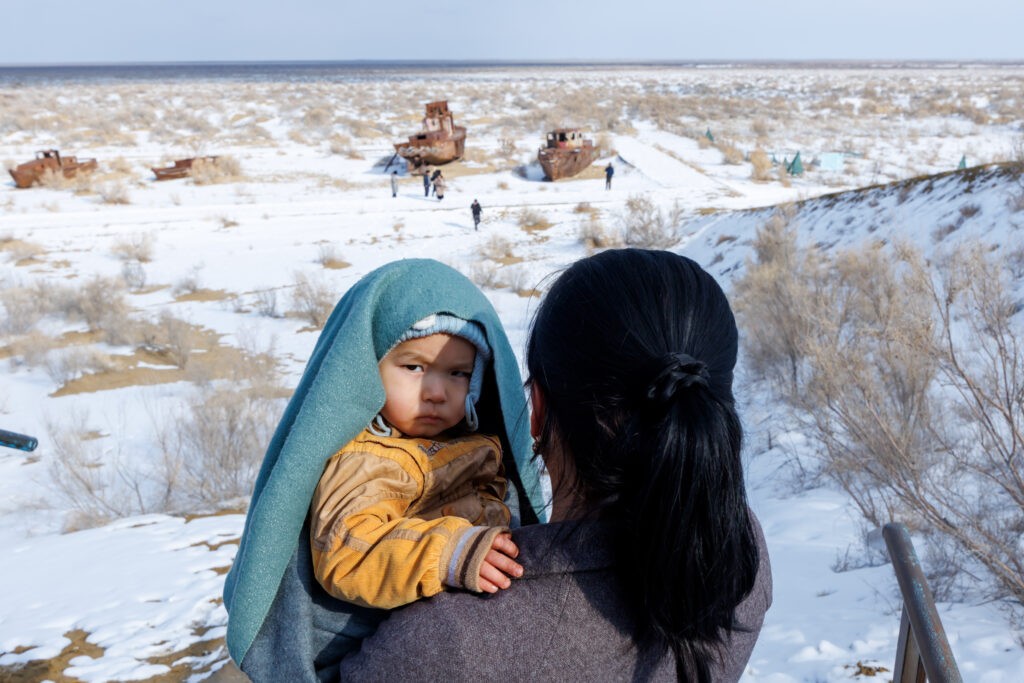
From April 4 to 6, the first Aral Culture Summit took place in Karakalpakstan, bringing together local and international scientists, artists, and activists. Their goal: to find creative ways to support the social and environmental recovery of the Aral Sea region. The summit is the first in a series of global cultural initiatives taking place throughout 2025 and supported by Uzbekistan Art and Culture Development Foundation. Scheduled to be held every 18 months, the summit is designed to act as a space for exchanging ideas and building new solutions. This year’s program included panels, cultural events, and a pop-up market featuring local artists and businesses. It focused on how art, design, and science can help Karakalpakstan grow in sustainable ways and attract new eco-friendly businesses. [caption id="attachment_30519" align="aligncenter" width="1280"] Summit opening in Samarkand; image: ACDF[/caption] The first day of the summit was linked with the Samarkand International Climate Forum, which was attended by over 2,000 foreign guests, including top officials from the European Union, the United Nations, and Central Asian governments. They discussed urgent climate problems in the region, including desertification, water shortages, and rising temperatures. Uzbekistan’s President Shavkat Mirziyoyev spoke about steps being taken to slow land degradation. “To reduce the area of degraded lands and mitigate the consequences of climate change, Uzbekistan has been carrying out large-scale greening in the framework of the Yashil Makon project. Additionally, over two million hectares of the deserted Aral Sea region is now covered with drought-resistant plants,” he said. Mirziyoyev also warned that water shortages will increase in the region by 2040 and stressed the need for stronger cooperation, telling those assembled, “We urge our partners to join the efforts and launch a Regional Program for Implementation of Water Saving Technologies in Central Asia.” Kazakhstan’s President Kassym-Jomart Tokayev also shared concerns about climate challenges, pointing out that the "temperature in the region is rising twice as fast as the global average.” Tokayev highlighted joint efforts with Uzbekistan to green the dried bottom of the Aral Sea. “Central Asia is profoundly affected by the global climate crisis,” Gayane Umerova, Chairperson of the Uzbekistan Art and Culture Development Foundation (ACDF) told those in attendance. “Rising temperatures, altered rainfall patterns, and intensified droughts are severely impacting agriculture, water resources, and livelihoods across our region. No example illustrates this better than the tragedy of the Aral Sea. But healing the land goes hand in hand with healing communities.” [caption id="attachment_30521" align="aligncenter" width="2560"] Desert ship, Moynaq; image: TCA, Stephen M. Bland[/caption] A striking example of the shrinking of the Aral Sea is the forgotten hamlet of Moynaq. At its peak, the town was home to 60,000 people, mostly fishermen and their extended families, with the Aral Sea producing up to 30% of the Soviet catch and saving Russia from widespread famine in the 1920s. Accessible only by air and ferry well into the 1970s, Moynaq also served as a popular beach resort for well-heeled bureaucrats, its airport hosting fifty flights a day at its peak. By the...
Why Europe Is Betting Big on Kazakhstan’s Future

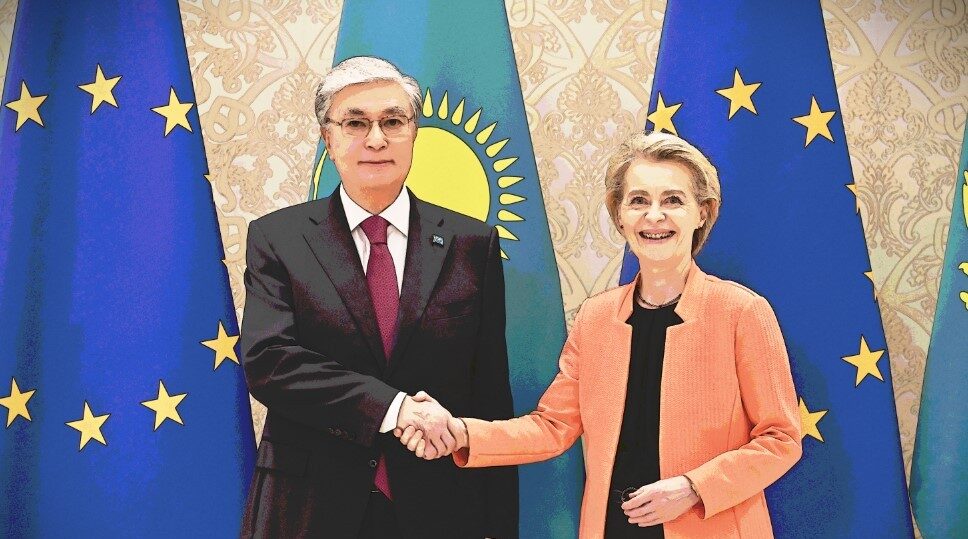
On April 3, Kazakhstan’s President Kassym-Jomart Tokayev met with European Commission President Ursula von der Leyen in Samarkand, ahead of the Central Asia–European Union summit. Although the meeting was brief, it came at a key moment, bringing into focus a set of shared economic and technological priorities that both sides increasingly treat as strategic. Tokayev made his position plain: Kazakhstan is looking to push forward in four core areas of cooperation with the EU: energy, industrial infrastructure, transport and logistics, and digital technology. Each of these lines up with the country’s broader goals for economic modernization. The two leaders also acknowledged recent steps toward a simplified EU visa regime for Kazakhstani nationals, which would ease movement for businesses and professionals in both directions. The meeting itself fits into a growing pattern. It builds on the first five-country Central Asia–EU leaders’ summit held in Astana back in October 2022. That gathering marked a turning point, putting the EU’s regional engagement on firmer institutional footing. It went beyond symbolic gestures and aimed at unlocking concrete investment opportunities. Since then, the EU has moved quickly to back up its commitments with financial and logistical support. Much of this has flowed through the Global Gateway initiative, a flagship program designed to channel European investment into infrastructure projects in developing and strategically situated economies. The European Bank for Reconstruction and Development (EBRD) has had a visible role in this process, running studies and financing projects across the transport, energy, and trade connectivity sectors. One EBRD-backed report, published in 2023, offered a striking projection: around €18.5 billion would be needed to scale container transport between the EU and Central Asia by a factor of eight. The goal was to go from fewer than 100,000 TEUs per year to roughly 865,000 by 2040. In response, the EU and the EBRD convened an Investors' Forum in early 2024, bringing in more than €10 billion in early-stage pledges. A second forum is now scheduled for 2025, with new focus areas, including mining, supply chains, and processing industries. During the Samarkand discussion, von der Leyen underlined the strategic significance of the Middle Corridor, also known as the Trans-Caspian International Transport Route (TITR). This project has been gaining traction in EU planning circles as an alternative to routes running through Russia or the Gulf. The corridor promises not only economic returns but greater resilience in east–west supply chains. Kazakhstan, by geography and by political posture, is positioned at the center of this shift. Its participation is not just beneficial but also structurally important. The timing of the meeting was also notable. Just a day earlier, Kazakhstan’s Ministry of Industry and Construction had announced a major find: a substantial deposit of rare earth elements at the Kuirektykol site. State-supported geological teams working in that region reported an estimated one million tons of potential material. Preliminary surveys from two zones, Irgiz and Dos 2, showed mineral content exceeding 0.1%, with some samples reaching as high as 0.25%. This level is a strong signal...

Mirziyoyev Champions a Flourishing Central Asia by Enhancing Collaboration With the European Union

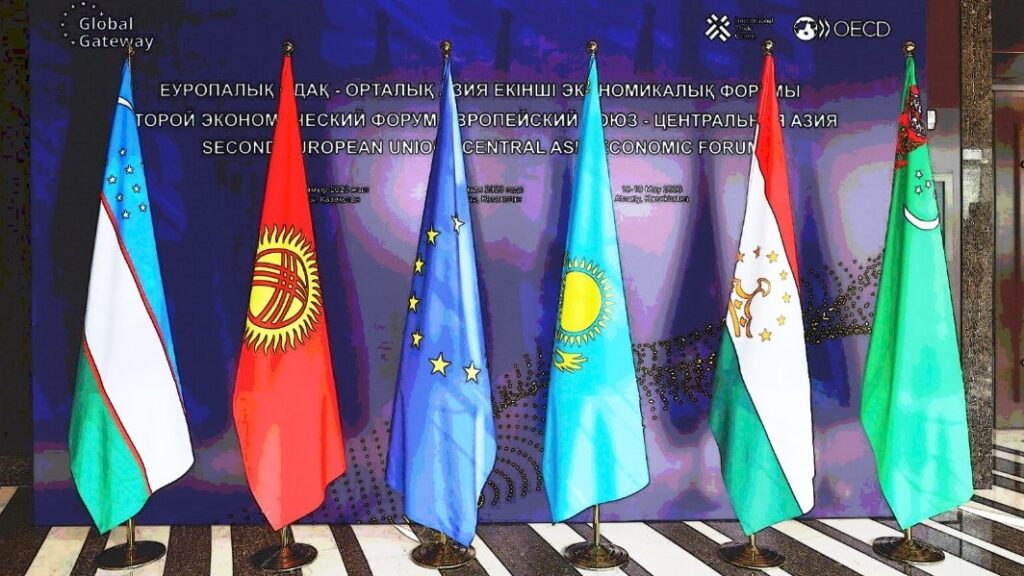
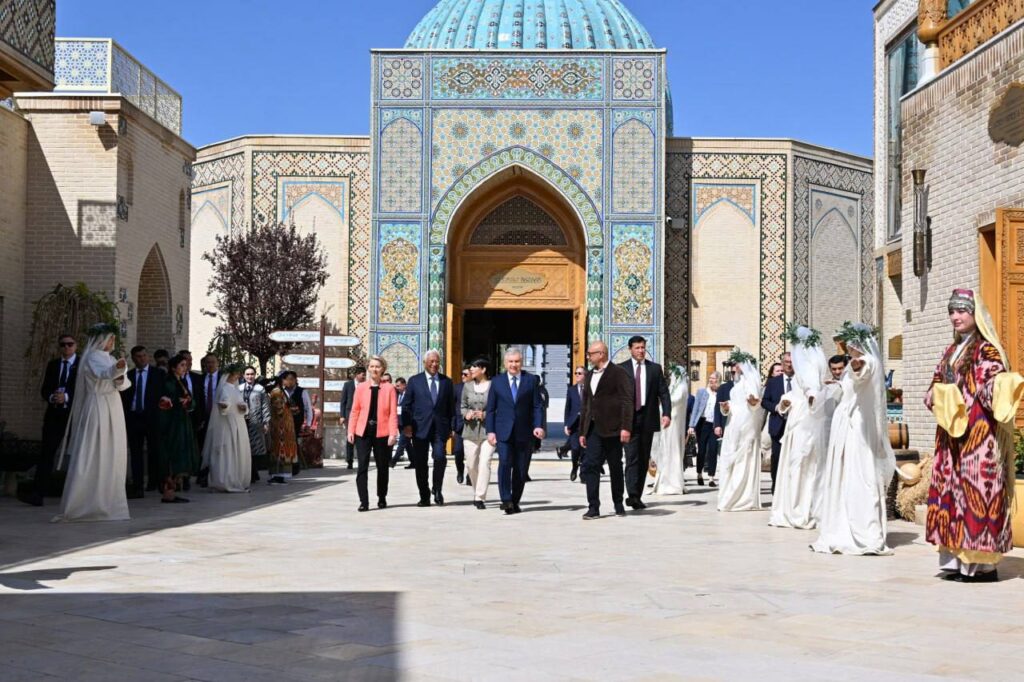
The global landscape is transforming, driven by geopolitical instability, economic uncertainties, and climate-related challenges. These dynamics are fostering innovative forms of international collaboration. A notable example of this shift is the remarkable fourfold increase in trade between Central Asia and the European Union over the past seven years, culminating in an impressive €54 billion. This surge highlights a growing interest among European businesses in the diverse markets of Central Asia, strategically situated at the intersection of crucial global trade routes. Against this backdrop, the Central Asia-EU summit was held over two days in Samarkand, the "Eternal City", on April 3-4, 2025. During his inaugural address on April 3, 2025, Uzbekistan's President Shavkat Mirziyoyev articulated the summit's significance, stating his view that this gathering represented a transformative moment that could redefine regional partnerships. Mirziyoyev reflected on the deep historical connections and shared interests driving the momentum toward closer ties with the EU. The choice of Samarkand — renowned for its rich historical legacy as a center of trade, science, and diplomacy — as the venue for this significant meeting was particularly poignant, as it symbolizes the intersection of cultures and ideas. Mirziyoyev evoked the historical interactions between Amir Temur and European monarchs, underscoring Samarkand as a melting pot of diversity and intellectual exchange. He introduced the notion of the “Samarkand spirit,” which he described as a symbol of unity and interconnectedness that could serve as the foundation for a new chapter in international relations. The President emphasized the sweeping transformations occurring in Central Asia, reinforcing Uzbekistan’s dedication to nurturing good-neighborly relations built on mutual benefit. Miriyoyev candidly acknowledged the region's history of conflicts and disputes but expressed hope for a shift toward constructive dialogue and trust, pointing to the recent resolution of border disputes between Kyrgyzstan and Tajikistan as a concrete example of this positive trajectory. Furthermore, he elaborated on ongoing initiatives to establish border trade zones, joint investment funds, and transportation corridors that could enhance connectivity and economic collaboration. Mirziyoyev outlined several key priorities: fortifying regional security, advancing economic integration, and promoting environmental sustainability. He conveyed a sense of optimism, proclaiming, "We are facing a historic chance to make our region not only sustainable but also prosperous." The President discussed Uzbekistan's comprehensive economic reforms to create a conducive business environment and liberalize the foreign exchange market. He expressed optimism that the Enhanced Partnership and Cooperation Agreement (EPCA) with the EU would significantly enhance trade and investment relations and proposed aligning the EU's Global Gateway strategy with regional transport initiatives to support this. He also advocated for developing an Action Plan for the Trans-Caspian Transport Corridor. Additionally, he believes there is potential to establish Tashkent as a financial center similar to Hong Kong, as the initial conditions meet the necessary criteria. On energy matters, Mirziyoyev positioned Central Asia as a dependable partner for Europe, highlighting the region's potential to contribute to energy stability and decarbonization efforts. He cited the ambitious Green Strategic Corridor project and the prospect of a Central Asia-EU...

Samarkand Declaration Paves the Way for a Stronger Central Asia–EU Partnership

The inaugural Central Asia-European Union Summit, held in Samarkand on April 3-4, marked a significant milestone in strengthening ties between the two regions. According to Sherzod Asadov, press secretary to Uzbekistan's President Shavkat Mirziyoyev, the summit's most significant outcome is the adoption of the Samarkand Declaration, which is expected to provide strong momentum for expanding constructive dialogue and cooperation across all sectors. In a statement, the EU reaffirmed its "commitment to deeper cooperation in an evolving global and regional geopolitical landscape [and] upgrade relations between the European Union and Central Asia to a strategic partnership." The EU declaration also committed the bloc to respect the "sovereignty and territorial integrity of all states within the framework of all international and regional fora" and expressed readiness to "address common security challenges." Strengthening Economic Ties Economic cooperation featured prominently on the agenda. Since 2020, trade between Uzbekistan and the EU has doubled, now exceeding €6 billion. Uzbek exports to the EU have quadrupled, and the number of joint ventures has surpassed a thousand. European investment projects in Uzbekistan, meanwhile, are now valued at over €30 billion. A key development was the agreement to open a regional office of the European Investment Bank (EIB) in Tashkent. Established in 1958, the EIB is the EU’s primary financial institution, and its new office is expected to attract greater investment in green energy, modern infrastructure, and digitalization. The European Bank for Reconstruction and Development (EBRD) has also deepened its engagement in Uzbekistan, investing over €5 billion to date. “We must work together to simplify trade procedures and ensure that Central Asian products gain greater access to European markets. Only through joint efforts can we build a strong and resilient economic partnership,” Mirziyoyev told Euronews. "Over the past seven years, the trade turnover between Central Asian countries and the EU has quadrupled, amounting to 54 billion euros... The signing of the Samarkand Declaration will reflect the common aspiration of the parties to establish a strategic partnership and lay the foundation for deepening ties between our regions." During the summit, Mirziyoyev met with European Commission President Ursula von der Leyen and European Council President António Costa. Discussions focused on trade, investment, green energy, and digital development, with the EU’s "Global Gateway” strategy, a counterpart to China’s Belt and Road Initiative, a central topic. The initiative is seeking to enhance global infrastructure and connectivity while promoting sustainability and transparency. “The EU and Central Asia are becoming closer partners, and this summit marks the beginning of a new phase in our cooperation,” von der Leyen stated. An Enhanced Partnership and Cooperation Agreement between Uzbekistan and the EU is also under negotiation. Regional Dialogue Among Central Asian Leaders The Summit also offered a platform for Central Asian heads of state to hold bilateral discussions. Mirziyoyev met with his counterparts from Kazakhstan, Kyrgyzstan, Tajikistan, and Turkmenistan. Talks centered on increasing trade, improving border security, and advancing major infrastructure projects. A recent landmark border agreement between Uzbekistan and Kyrgyzstan was lauded as a breakthrough. Uzbekistan...

EU-Central Asia Summit Opens New Opportunities for Kazakhstan

The first-ever summit between the European Union and the five Central Asian countries opened on April 3 in Samarkand, Uzbekistan. The meeting marks a milestone in regional diplomacy, as both sides seek to deepen cooperation amid growing geopolitical shifts. Kazakhstan, in particular, is entering the summit with growing international clout, thanks to its stable economic performance and balanced foreign policy approach. European Council President António Costa and European Commission President Ursula von der Leyen are representing the EU at the summit, which is being chaired by Uzbek President Shavkat Mirziyoyev. According to official sources, the summit aims to demonstrate mutual geopolitical interest and expand collaboration between Europe and Central Asia across key areas. The agenda includes strengthening multilateral ties, addressing shared security threats, enhancing economic and investment cooperation, and advancing collaboration under the EU’s Global Gateway initiative. Focus areas also include energy, climate neutrality, connectivity, and green transition, along with mobility and cultural exchange. The EU is already the region’s second-largest trading partner, accounting for 22.6% of Central Asia’s total foreign trade in 2023. It is also the largest source of foreign investment, responsible for over 40% of the region’s total inflows. Kazakhstan's President Kassym-Jomart Tokayev is attending the summit, following a bilateral meeting with President Mirziyoyev in Almaty on March 29. Also expected to participate are Kyrgyz President Sadyr Japarov, Tajik President Emomali Rahmon, and Turkmen President Serdar Berdimuhamedov. At the summit, the EU is set to unveil a substantial investment package for Central Asia, with priority sectors including transportation infrastructure, critical raw materials, energy transmission, and digitalization. European Commission President von der Leyen emphasized that Central Asia’s significant natural resources and industrial potential align with Europe’s sustainability goals. “Europe aims to create a complete value chain, not merely purchase raw materials. This is vital for generating local employment and upholding high environmental and social standards,” she said. Additional EU funding will be directed toward green energy projects and improvements to Uzbekistan’s water infrastructure. According to Tair Nigmanov, an international relations expert, the EU’s increased engagement stems from heightened geopolitical rivalry. “We are situated between major powers like Russia and China. The EU, as another global player, wants Central Asia to remain neutral and not gravitate toward any single power center,” Nigmanov told Inform.kz. “To that end, it is offering investment, trade opportunities, and political assurances.” For Kazakhstan, the summit presents a strategic platform to attract investment, reinforce its non-aligned stance, and leverage its growing geopolitical relevance in an increasingly multipolar world.

Trump’s Tariff Blitz Targets Global Imports, Kazakhstan Faces Harshest Impact in Central Asia

U.S. President Donald Trump has announced sweeping new tariffs on all goods imported into the United States, citing the need to protect American industry and jobs. Speaking at a White House press conference, Trump outlined a base tariff rate of 10% that will apply to 185 countries. However, several nations and blocs face significantly higher rates: China will see a 34% tariff, the European Union 20%, Switzerland 31%, and Israel 17%. The steepest tariffs were imposed on Vietnam (46%), Cambodia (49%), and Laos (48%). Notably absent from the list are Russia, Belarus, Mexico, Iran, Canada, and Belarus. Ukraine, however, will face the base 10% rate. Kazakhstan Hit with 27% Tariff The new U.S. duties also target Central Asian nations. According to a comparative chart published by the White House, Uzbekistan, Turkmenistan, Tajikistan, and Kyrgyzstan will face 10% tariffs on their exports to the U.S. Meanwhile, Kazakhstani goods will be subject to a much higher rate of 27%. The White House document notes that Kazakhstani imports currently face a 54% tariff in Kazakhstan, figures that surprised local analysts, who have questioned the methodology behind the calculations. The rationale for the elevated rate on Kazakhstan remains unclear. However, the country's Ministry of Trade and Integration has initiated consultations with his U.S. counterparts to explore options for exempting certain goods. According to a preliminary analysis, many of Kazakhstan’s key exports fall under exceptions outlined in U.S. regulations. “In 2024, trade turnover between Kazakhstan and the United States amounted to $4.2 billion,” the ministry stated. “Kazakhstan's primary exports to the U.S. - crude oil, uranium, silver, and ferroalloys - constitute 92% of total exports and are included in the exemption list under the U.S. President’s decree on reciprocal tariffs.” Turning Tariffs Into Opportunities Despite the steep new tariffs, some experts believe the impact on Kazakhstan will be limited. Financial analyst Rasul Rysmambetov argues that Kazakhstan’s marginal role in global trade dynamics shields it from major economic fallout. “The real battle is between the U.S. and the world’s largest economies, China and the EU,” Rysmambetov wrote on his Telegram channel. “Our trade with the U.S. accounts for less than 1% of Kazakhstan’s total foreign trade. Even with a 27% tariff, the effect will be negligible.” Rysmambetov noted that Kazakhstan exported over $2 billion worth of goods to the U.S. in 2024, while imports totaled $1 billion, maintaining a trade surplus for the tenth consecutive year. “We’re on the tariff list, but it’s mostly symbolic,” he added, emphasizing that Kazakhstan’s exports largely consist of strategic materials. Rysmambetov also sees potential upsides: countries facing new duties may seek alternative markets, possibly offering Kazakhstan better terms on imports such as equipment, metals, vehicles, and construction materials. “Global trade tensions can open windows of opportunity, for strategic borrowing, better equipment deals, and expanded exports. But quick action is key,” he concluded. International Backlash The U.S. move drew swift condemnation from European Commission President Ursula von der Leyen, who called the policy a “severe blow to the global economy.” “Uncertainty will...