
• KGS/USD = 0.01144 0%
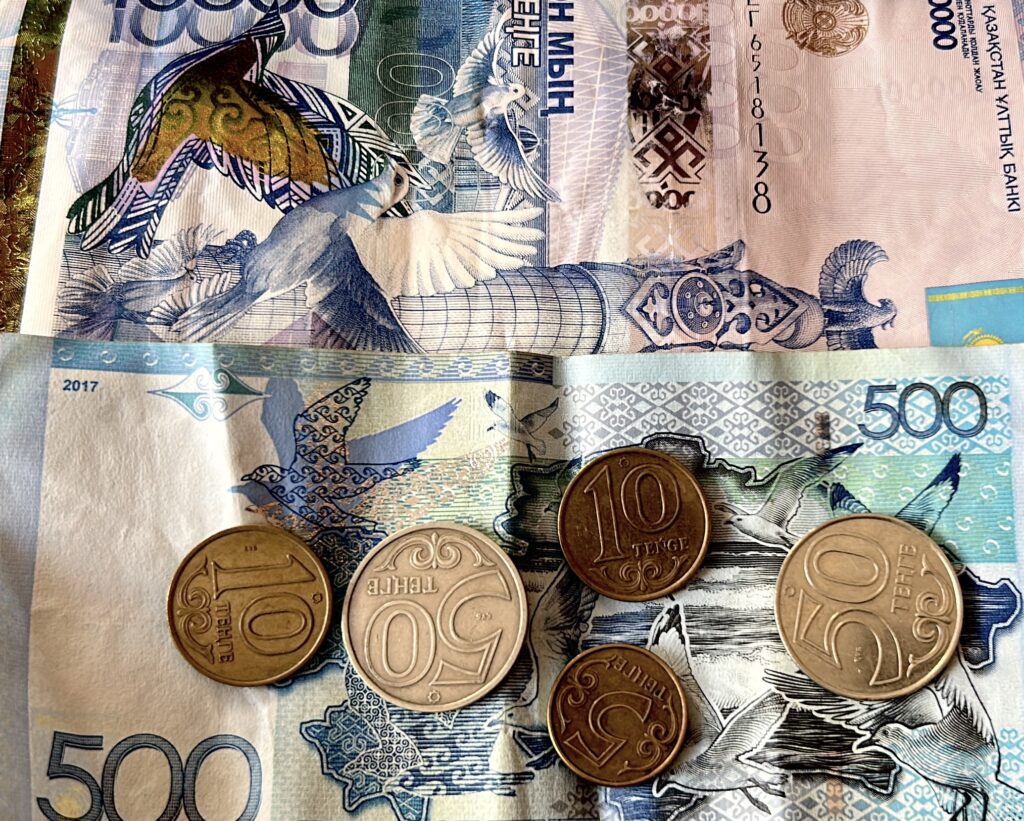
  • KZT/USD = 0.00209 0%
  • TJS/USD = 0.10431 0.1%
  • UZS/USD = 0.00008 0%
  • TMT/USD = 0.28571 0%
  • KGS/USD = 0.01144 0%
  • KZT/USD = 0.00209 0%
  • TJS/USD = 0.10431 0.1%
  • UZS/USD = 0.00008 0%
  • TMT/USD = 0.28571 0%
  • KGS/USD = 0.01144 0%
  • KZT/USD = 0.00209 0%
  • TJS/USD = 0.10431 0.1%
  • UZS/USD = 0.00008 0%
  • TMT/USD = 0.28571 0%
  • KGS/USD = 0.01144 0%
  • KZT/USD = 0.00209 0%
  • TJS/USD = 0.10431 0.1%
  • UZS/USD = 0.00008 0%
  • TMT/USD = 0.28571 0%
  • KGS/USD = 0.01144 0%
  • KZT/USD = 0.00209 0%
  • TJS/USD = 0.10431 0.1%
  • UZS/USD = 0.00008 0%
  • TMT/USD = 0.28571 0%
  • KGS/USD = 0.01144 0%
  • KZT/USD = 0.00209 0%
  • TJS/USD = 0.10431 0.1%
  • UZS/USD = 0.00008 0%
  • TMT/USD = 0.28571 0%
  • KGS/USD = 0.01144 0%
  • KZT/USD = 0.00209 0%
  • TJS/USD = 0.10431 0.1%
  • UZS/USD = 0.00008 0%
  • TMT/USD = 0.28571 0%
  • KGS/USD = 0.01144 0%
  • KZT/USD = 0.00209 0%
  • TJS/USD = 0.10431 0.1%
  • UZS/USD = 0.00008 0%
  • TMT/USD = 0.28571 0%

Viewing results 1123 - 1128 of 3295

Opinion: Tengiz, Karachaganak, and Kashagan: Kazakhstan Asserts Contract Stability Amid Lawsuits Exceeding $170 Billion

Following statements by President Kassym-Jomart Tokayev, the intrigue surrounding the PSA agreements for Kashagan and Karachaganak and the stabilized contract for Tengiz have taken on new dimensions. Previously, in the articles, Breaking Down Kazakhstan’s Claims Against International Oil Consortiums and Is Kazakhstan Preparing to Take on the Oil Consortium “Whales?, TCA examined the ongoing lawsuits filed by the government and the authorized body, PSA LLC, against the North Caspian Operating Company N.V. (NCOC) and Karachaganak Petroleum Operating B.V. (KPO), noting that the Ministry of Energy and KazMunayGas have not raised any claims against the joint venture Tengizchevroil LLP (TCO). While shares in NCOC and KPO are managed by PSA LLC, those in TCO are controlled by the national company, KazMunayGas. What did President Tokayev say? On January 28, President Tokayev held an expanded government meeting addressing the public and political debate surrounding PSA agreements. "Reforms in the subsoil use sector must continue, no matter what," Tokayev stated. "This is a fundamental position that the government should firmly adhere to. The implementation of production-sharing agreements (PSAs) for major oil fields has allowed Kazakhstan to become a reliable supplier of energy resources to the global market. These projects make a significant contribution to the country’s socioeconomic development. However, large investments require a long-term planning horizon. Therefore, the government must intensify negotiations on extending PSA contracts, possibly on updated and more favorable terms for our country." This statement sparked discussions among experts; who exactly was the president referring to? The major PSAs in Kazakhstan are the Karachaganak and Kashagan projects, with contracts expiring in 2038 and 2041, respectively. In contrast, Tengiz does not operate under a PSA but rather a stabilized contract, which is set to expire much sooner, in 2033. I have repeatedly emphasized the need for an audit of Tengiz before the contract expires and have proposed that it should not be extended. Kazakhstan can independently, or with the involvement of foreign oil service companies, develop this highly profitable field under more advantageous conditions. On January 29, Kazakhstan's Minister of Energy, Almassadam Satkaliyev, provided clarification, confirming that the president's directive was specifically about Tengiz. "The directive was given quite openly within the framework of international agreements and international law to conduct consultations with consortium participants. Given the development timelines, the most relevant project for us is Tengizchevroil, which operates the Tengiz field in partnership with Chevron, ExxonMobil, and Lukoil. We plan to start certain preliminary consultations with them, and once we are ready for negotiations, we will proceed with them. The government will first develop an agenda and a list of its demands. One possible demand is an increase in Kazakhstan’s stake in these projects." So, is Tengiz the primary target? Or is Kazakhstan preparing for a broader offensive on all three fronts? “There are Hardliners in the Government” On February 16, the international industry portal Upstream Online published an extensive article titled Kazakhstan Seeks Shake-Up at Crucial Foreign-Led Oil Projects. The article primarily focuses on the production-sharing agreements (PSAs) for Karachaganak...

How the Middle Corridor Is a Game-Changer for Uzbekistan

Uzbekistan has been working to enhance its role in the Middle Corridor, also known as the Trans-Caspian International Transport Route (TITR). This push reflects Uzbekistan’s strategic aim to diversify trade routes and reduce dependence on Russia. However, it is not just a diversification effort. It is an aspirational strategic pivot whereby Tashkent seeks to recalibrate its position and enhance its resilience within the ongoing geoeconomic restructuring of Eurasian trade. In January 2025, President Shavkat Mirziyoyev outlined a five-year plan to upgrade infrastructure and streamline trade. The measures enumerated in the decree include improving road and rail connectivity, expanding truck stops, and enhancing border-crossing efficiency at key points.  Uzbekistan’s infrastructural investments, diplomatic realignments, and institutional relations with regional stakeholders reinforce one another. Moreover, they are co-dependent mechanisms in a larger recalibration of Eurasian trade. Azerbaijan is a case in point. The diplomatic realignment under way was exemplified in August 2024, when Uzbekistan and Azerbaijan signed their bilateral Treaty on Allied Relations, which supports infrastructure projects and the amelioration of trade coordination. In this connection, Uzbekistan is currently investing $18 million in construction of logistics terminal in the Poti Free Industrial Zone in Georgia, an initiative that could streamline transit to Europe, provided that regulatory alignment keeps pace. The country’s increased reliance on Georgian ports has paralleled efforts to coordinate rail administration across multiple transit states. So in September 2024, Uzbekistan took a decisive step by co-founding the Eurasian Transport Route Association along with Austria, Azerbaijan, China, Kyrgyzstan, Tajikistan, and Turkey. These partners are converging on a framework to standardize freight policies, minimize regulatory unpredictability, and optimize throughput along the corridor. As a demonstration of the corridor’s expanding logistical reach, Uzbekistan dispatched its first block train to Brazil in December 2024, demonstrating the potential for new international market connections through modular trade integration. The container train carried 28 tons from Tashkent through Turkmenistan, Azerbaijan, and Georgia before reaching Brazil by sea. Following a similar strategy, earlier this year, at the end of January in Ankara, Uzbekistan participated in its second trilateral meeting with Turkey and Azerbaijan, focusing on developing trade, investment, and transport links through the Middle Corridor. A set of interdependent “adaptive constraints” (in systems-theory language) constrains the Middle Corridor’s long-term viability. For example, infrastructure bottlenecks do more than cause delays. They exacerbate cost unpredictability, instilling hesitation among investors, who remain wary of investment to an unpredictable transit network. Such reluctance to commit capital in turn limits the very infrastructure improvements needed to resolve the said bottlenecks. To overcome these challenges, Uzbekistan is investing in infrastructure improvements, in the expectation that these will help attract foreign direct investment while also improving trade efficiency over time. Yet beyond the standard geopolitical risks of political instability in transit countries, shifting geoeconomic alignments, and competition from other routes, there are infrastructural and operational challenges. Broadly summarized, these include bottlenecks (such as just mentioned), regulatory inconsistencies, and environmental concerns. External assessments nevertheless suggest long-term structural advantages for Uzbekistan’s deeper engagement in the Middle Corridor. A...

Kazakh Government Prepares for Battle with Big Business Over Tax

Kazakhstan's government is entering a critical phase of its tax system overhaul, which is set to conclude by Nauryz, the country’s most significant Turkic holiday, beginning on March 21. The deadline for the ultimatum issued by Prime Minister Olzhas Bektenov to major businesses, accused of exploiting tax loopholes, will expire in the second half of March. The question remains: What happens next? Tax Reform: Eliminating Preferences The government has been pushing for tax reform, aiming to abolish a range of tax benefits, some of which date back to 2008 during the global financial crisis. However, the main point of contention now is the Special Tax Regime (STR), a more recent initiative. The STR was introduced in 2021 as a response to the economic crisis caused by the COVID-19 pandemic. Today, 2.3 million taxpayers in Kazakhstan operate under this system, yet only 8% (137,000 entities) are value-added tax (VAT) payers. Additionally, 81% of registered entities use the simplified tax declaration regime, with 85% reporting annual incomes of up to 15 million KZT ($30,000). Ultimatum to Developers Following a report by Minister of Finance Madi Takiyev on tax evasion practices, Prime Minister Bektenov singled out two of Kazakhstan’s largest construction companies, BI Group and BAZIS, accusing them of using legal loopholes to avoid paying fair taxes. “Unscrupulous entrepreneurs are exploiting various tax optimization schemes and paying amounts that do not match their billion-dollar revenues. We have a full list of such companies, including major developers like BI Group, BAZIS, and others, as well as well known restaurant chains, fitness clubs, and businesses across multiple industries,” Bektenov said. He then issued a demand: companies must voluntarily submit revised tax declarations within two weeks and pay appropriate taxes. Shortly afterward, it was revealed that BI Group was ordered to pay 11.9 billion KZT ($23.8 million) in additional taxes, while BAZIS must pay 4.6 billion KZT ($9.2 million) for 2022 and 2023. Developers Deny Allegations In response, both companies denied the accusations. BAZIS stated that its subsidiary structure was created to comply with Kazakhstan’s equity participation laws, not for tax evasion. “This is a legal requirement under Kazakhstani legislation, and we fully comply with it,” the company said. BAZIS also emphasized that it is regularly monitored by tax authorities and expressed concern over Bektenov’s remarks. BI Group, for its part, insisted that its tax deductions are audited annually by both state bodies and independent international firms such as KPMG and Ernst & Young. “The company has been audited annually for the last 10 years by KPMG and Ernst & Young, and no violations have been found,” BI Group stated. Ties to the Government BI Group has had close ties to the Kazakh government. In 2020, the company was tasked with building modular hospitals during the COVID-19 crisis. However, in 2021, the project came under corruption investigation, though the company was ultimately cleared. BI Group’s owner, Aidyn Rakhimbayev, remains a highly influential businessman. He is ranked 11th on Forbes Kazakhstan’s list of the country’s wealthiest individuals,...

The Journeys of Kazakh Fairy Tales to the United States

The Kazakh people have always been dedicated to preserving and advancing their culture and literature and sharing them with the world. Over the thirty-plus years since independence, the Kazakh state has actively sought valuable historical records and archival materials about its people. It is remarkable to discover that during the Soviet era, numerous Western travelers explored Kazakhstan’s territory, documenting their observations on traditions, daily life, religion, and political perspectives in books that were later published in English. In the fall of 2023, with funding from the Bolashak program, I started a project to research the history of the Kazakh people and steppe based on the English-language accounts of Western travelers who visited the steppe in the late 19th and early 20th centuries. Although I started this project when I was working as a newspaper reporter in Kazakhstan, there was no way to access the database of large libraries abroad. Nineteen Kazakh Fairy Tales and Mary Lou Masey Kazakh-American relations did not begin solely after the collapse of the Soviet Union but can be traced back to the late 19th century. This is evident from old books written in English and printed by major American publishers, which I discovered in archival collections. While exploring the catalogs at George Washington University’s Gelman Library, I came across an intriguing book titled Stories of the Steppes, retold by Mary Lou Masey and illustrated by Helen Basilevsky. Published in 1968 by the David McKay Company, Inc. in New York, this book reflects Masey’s fascination with Central Asian culture. Having traveled to the region with her husband, Jack, she introduced American readers to its rich heritage through this collection. The book features 19 folktales from Russian sources, not as literal translations but as engaging retellings that remain faithful to the original plotlines. [caption id="attachment_29332" align="aligncenter" width="207"] The cover of Stories of the Steppes, retold by Mary Lou Masey [/caption] In this work, Masey presents traditional Kazakh folktales, including fairy tales, satirical stories about daily life, humorous tales and stories about animal, as well as narratives about both wise and foolish individuals. In the preface, she notes that while some reflect Russian cultural influence and others share common elements with global folklore, the collection remains distinctly Kazakh. It captures a unique way of life and showcases the remarkable artistry of the wandering storytellers who passed these tales down through the generations. [caption id="attachment_29333" align="aligncenter" width="490"] Illustration of the fairy tale "The One-Eyed Giant" from the book by Mary Lou Masey, 1968[/caption] As I flipped through the pages of this book, I became curious about its author. A writer and researcher with a background in International Studies, Masey earned her B.A. from Ohio State University with a major in Russian. She authored four children’s books published by David McKay: Branislav the Dragon (1967), Stories of the Steppes (1968), The Picture Story of the Soviet Union (1971), and Teddy and the Moon (1972). In adapting Kazakh folktales for Western readers, particularly children, Masey prioritized preserving the essence and richness...

Recovering Assets: Kazakhstan’s Prosecutors Expand Network to Moldova, Bulgaria

Kazakh prosecutors who focus on reclaiming national assets are sharing ideas and experiences with counterparts from Moldova and Bulgaria, two eastern European countries where anti-corruption investigators have faced big challenges. The Asset Recovery Committee of the Prosecutor General’s Office of Kazakhstan signed agreements in those nations in February, increasing the international collaboration that is essential to tracking down stolen wealth. Kazakhstan is building ties with foreign jurisdictions and institutions such as Interpol as it seeks to get back illegally acquired assets valued in the billions of dollars, much of it funneled out of the Central Asian country by powerful business and political figures over many years. “Strengthening partnerships in asset recovery plays a crucial role in combating illicit enrichment and ensuring transparency and accountability in financial systems worldwide,” said the Kazakh committee, which held a ceremony with the National Anti-Corruption Center of Moldova in Chișinău, the Moldovan capital. The Moldovan side discussed its national digital platforms, legal framework, and procedures for asset seizure, freezing, and management. The Kazakh side explained Kazakhstan’s asset recovery law and how recovered funds are being reinvested in social projects. Some money has been earmarked for facilities such as schools and medical facilities. Kazakh prosecutors also signed a deal with the Commission for Illegal Asset Forfeiture of Bulgaria in Sofia, the Bulgarian capital, allowing for “active collaboration in the tracing, identification, seizure, and repatriation of assets,” the Kazakh asset recovery committee said. Kazakhstan’s 2023 asset recovery law, described by the government as in line with “international standards,” has aided the country in successful efforts to repatriate some lost wealth. Partners such as the United Nations Office on Drugs and Crime have encouraged Kazakhstan to be transparent about how the recovered funds are used as a way to build confidence among Kazakh citizens who are worried about corruption. There have also been concerns that the law could be used selectively, targeting some suspects and sparing others, but Kazakhstan’s international outreach has received high marks in many circles. Bulgaria has made some progress against graft, but still has a lot of work ahead. In a report published last month, the Council of Europe’s anti-corruption body said Bulgaria had fully implemented seven of its 28 recommendations to prevent corruption and promote government integrity. Of the other 21 recommendations, 11 have been partly implemented and 10 have not been implemented. Moldova´s chief anti-corruption prosecutor, Veronica Dragalin, announced her resignation last month because of a governing party bill that would merge her office with the office of organized crime prosecutors. Dragalin, who previously worked as a U.S. federal prosecutor, said the change would undermine national security and benefit people involved in crime. Bulgaria is in the European Union; Moldova has applied for membership. A 2024 index compiled by Transparency International ranks countries by perceived levels of public sector corruption – 0 is very corrupt and 100 is very clean. Kazakhstan scored 40, up one point since 2023; Bulgaria scored 43 points, down two points since 2023; and Moldova also scored 43, up...

Development of a Maritime Fleet in a Landlocked Country

It may come as a surprise to some, but despite being a landlocked country far from any ocean, Kazakhstan is actively developing its maritime fleet. The country recognizes that to play a significant role in maritime transport across the Caspian Sea, Kazakhstan must enhance the competitiveness of its commercial fleet, alongside improving coastal infrastructure and services. This initiative not only generates revenue for Kazakh transport companies and contributes to the national budget but also safeguards the country's foreign trade. Kazakhstan has set an ambitious goal to establish a regional transit hub based on its Caspian Sea ports, Aktau and Kuryk. It is attracting major international players to develop its logistics services and integrate Kazakhstan into the global trade and transport network. However, the development of the national commercial fleet is lagging. The shortage of a strong fleet means Kazakhstan struggles to compete with the maritime industries of other Caspian nations. It is no secret that most maritime transport between the ports of Aktau/Kuryk and Baku is currently handled by the Azerbaijan Caspian Shipping Company, one of the largest maritime transport operators in the region. The company owns more than 50 transport vessels and over 110 specialized ships and plans to implement a large-scale investment program to modernize its fleet by 2029. Meanwhile, according to Kazakhstan’s Bureau of National Statistics, 263 maritime vessels are registered in the country. However, more than 70% of these vessels are over 25 years old. The aging fleet and weak presence in the maritime transport market prevent Kazakhstan from increasing its share in global supply chains, meaning most of the profits from freight transport go to foreign carriers. The longstanding principle discussed in Kazakhstan’s transport sector — “Our Cargo – Our Port – Our Fleet”— could enable domestic transport companies to earn up to 30% more through logistics-related revenue. According to World Bank estimates, by 2030, cargo transportation via the Trans-Caspian International Transport Route is expected to reach 11 million tons. The Concept for the Development of Kazakhstan’s Transport and Logistics Potential until 2030 forecasts that the volume of containerized transit cargo along this corridor from China will grow by at least 40,000 TEU (twenty-foot equivalent units) in the next five years. Over the past decade, Kazakhstan’s domestic tanker fleet has significantly reduced its oil transport operations, as most of the country's crude oil is now transported via pipelines. However, a recent drone attack on the Caspian Pipeline Consortium's (CPC) largest oil pumping station and a subsequent statement from “Transneft” warning that this could lead to a 30% reduction in Kazakhstan’s oil exports highlight the urgent need for an alternative maritime route for oil transport. This would help maintain stable oil production in the country’s fields. Accelerating the modernization and expansion of Kazakhstan’s national fleet will integrate the country into the regional transport and logistics system, reduce dependency on foreign vessels, and protect foreign trade from volatile freight market conditions — especially given ongoing geopolitical uncertainties in the region. A key initiative expected to strengthen Kazakhstan’s...
