• KGS/USD = 0.01144 0%
  • KZT/USD = 0.00212 0%
  • TJS/USD = 0.10456 0.19%
  • UZS/USD = 0.00008 0%
  • TMT/USD = 0.28490 0%
  • KGS/USD = 0.01144 0%
  • KZT/USD = 0.00212 0%
  • TJS/USD = 0.10456 0.19%
  • UZS/USD = 0.00008 0%
  • TMT/USD = 0.28490 0%
  • KGS/USD = 0.01144 0%
  • KZT/USD = 0.00212 0%
  • TJS/USD = 0.10456 0.19%
  • UZS/USD = 0.00008 0%
  • TMT/USD = 0.28490 0%
  • KGS/USD = 0.01144 0%
  • KZT/USD = 0.00212 0%
  • TJS/USD = 0.10456 0.19%
  • UZS/USD = 0.00008 0%
  • TMT/USD = 0.28490 0%
  • KGS/USD = 0.01144 0%
  • KZT/USD = 0.00212 0%
  • TJS/USD = 0.10456 0.19%
  • UZS/USD = 0.00008 0%
  • TMT/USD = 0.28490 0%
  • KGS/USD = 0.01144 0%
  • KZT/USD = 0.00212 0%
  • TJS/USD = 0.10456 0.19%
  • UZS/USD = 0.00008 0%
  • TMT/USD = 0.28490 0%
  • KGS/USD = 0.01144 0%
  • KZT/USD = 0.00212 0%
  • TJS/USD = 0.10456 0.19%
  • UZS/USD = 0.00008 0%
  • TMT/USD = 0.28490 0%
  • KGS/USD = 0.01144 0%
  • KZT/USD = 0.00212 0%
  • TJS/USD = 0.10456 0.19%
  • UZS/USD = 0.00008 0%
  • TMT/USD = 0.28490 0%

Viewing results 1705 - 1710 of 3334

Kazakh journalist Aidos Sadykov died in Kyiv

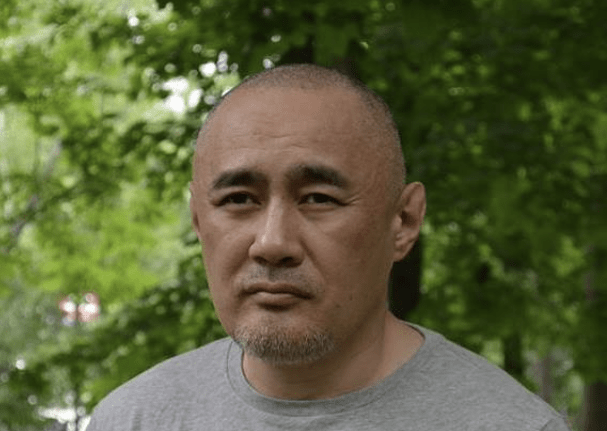
After 13 days in intensive care following an attack in Kyiv, Kazakh journalist Aidos Sadykov has died. This was confirmed by his wife Natalia Sadkykova on her Facebook page. Sadykov and his wife were authors of the YouTube channel “Base” which has been consistently critical of Kazakhstan’s government, starting with President Nazarbayev’s term and continuing under the new President, Kassym-Jomart Tokayev. On 18 June, Sadykov was shot next to his wife in a parked car in the Shevchenkovsky district of Kyiv, not far from the house where the couple lives. Aidos was wounded in the head, Natalya was not injured. The office of the Prosecutor General of Ukraine named two citizens of Kazakhstan, Altai Zhakanbaev and former Kazakhstan police officer Meiram Karataev (dismissed in January 2019), as suspects in the case. On 19 June, President Tokayev of Kazakhstan said that “the official bodies of the Republic of Kazakhstan are ready to join the investigation.” On 21 June, Kazakhstan’s Prosecutor General’s Office released an official statement concerning the attack: "Yesterday, the Prosecutor General of Kazakhstan addressed the Prosecutor General of Ukraine with a proposal to provide all possible assistance in solving this crime, involving the most experienced Kazakhstani investigators. The course of the investigation of the criminal case by the Prosecutor General's Office has been taken under special control." On the same day, Altai Zhakanbaev turned himself in to Kazakhstan authorities, according to the Office. The murder of Sadykov has raised questions about motive. Kazakhstani parliamentary deputy Ermurat Bapi has suggested that the attack was due to “third forces” who want to create a “quarrel between Kazakhstan and some countries”. Sadykova has held President Tokayev responsible for her husband’s death. To date, no evidence has been made public to substantiate these claims.

A Greater Role for Kazakhstan’s Media

On June 27, in the lead-up to Mass Media Workers' Day, Kazakhstan’s President Kassym-Jomart Tokayev took to the stage to address a gathering of journalists and media professionals. His engagement underscored the government’s response to the public’s increasing attention to a more liberalized media landscape. Western observers, having taken a renewed interest in former Soviet states amidst Russia’s invasion of Ukraine, are pushing these countries for progress, particularly on press freedoms. The European Center for Press Freedoms criticized the passage of Georgia’s foreign agent law that drove of tens of thousands of citizens to protest in the streets. Amnesty International condemned raids of journalists’ offices and homes in Kyrgyzstan. Reporters Without Borders downgraded Uzbekistan’s position in its State of Press Freedom Index to “very serious”. Kazakhstan has also received its fair share of Western criticism about freedom of the country’s media. Human Rights Watch reports that “although Kazakhstan’s new mass media law has some amendments that should improve the status quo, its ambiguity and the restrictive nature of other provisions threaten to create obstacles to the work of local and foreign journalists”. Government attitudes towards the media vary widely along the periphery of Russia and the former Soviet Union. In Kazakhstan, despite ongoing challenges and shortcomings, it is increasingly seen as the fourth estate, providing citizens with the information they need to check the government’s power. Increasing media influence on society and elected officials Indeed, Tokayev referred to the media as the “fourth estate” in his address, expanding on its growing roles and responsibilities in building “a just and fair Kazakhstan”. He acknowledged the media provides a “pluralism of opinion (which) is exactly what we strived for from the beginning, (and) is our fundamental achievement,” noting that it can “criticize the activities of the authorities”. He called it the “voice of the people, the messenger of the nation, and the spiritual support of society,” adding that it can “shape the legal culture”. A recent example of the media’s influence in the legal realm in Kazakhstan can be seen in the aftermath of Saltanat Nukenova’s murder by her husband, who is a former Minister of the Economy. This tragic story garnered an enormous reaction in Kazakhstani media and resulted in calls for legislation to protect women against domestic violence. Consequently, in April 2024, the President signed what became known as “Saltanat’s Law”, and the former minister was sentenced to 24 years in prison. A burgeoning media space, but some challenges remain According to the TCA’s count, over a hundred independent media outlets operate in Kazakhstan through sites and social media channels. They express a wide range of opinions, including criticizing government activities. On the other hand, the government maintains the right to revoke their license to operate inside Kazakhstan. In the last year, for instance, the Ministry of Culture and Information has blocked digital currency platform, Coinbase.com, as well as an LGBTQ+ site for children called Selftanu.kz, and the Russian news portal Sputnik24. In this environment, the June 27 ceremony did...

SCO Summit in Astana: Will the West Accept the Role of the “Middle Powers”?

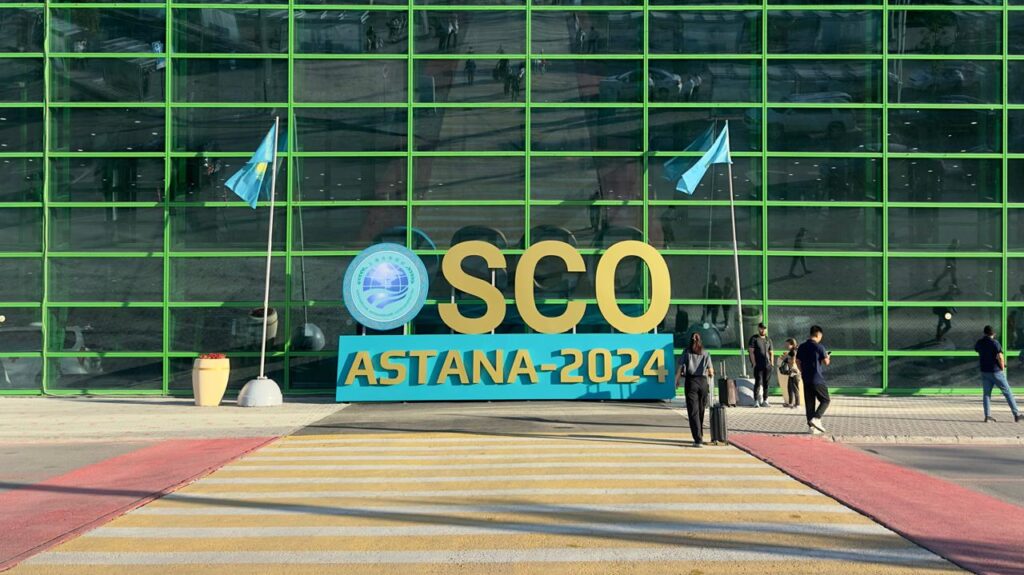
Kazakhstan will chair the Shanghai Cooperation Organization (SCO) summit in Astana on July 3-4. During the event, significant global initiatives are expected to be proposed. Will Modi attend? Kazakhstan has been chairing the SCO since July 2023, and following this summit the organization's presidency will pass to China. The SCO was founded in 2001 by the leaders of China, Russia, Kazakhstan, Tajikistan, Kyrgyzstan, and Uzbekistan. In 2017, India and Pakistan became members of the organization, whilst Iran joined in 2022, and Belarus is expected to join the SCO in the summer of 2024. The association's main tasks are to strengthen stability, fight terrorism and drug smuggling, develop economic cooperation and energy, and promote scientific and cultural partnerships. The summit in Astana is expected to be attended by heads of state and government of 15 countries: Kazakhstan, Iran, China, Kyrgyzstan, Pakistan, Russia, Tajikistan, Uzbekistan, Belarus, Mongolia, Azerbaijan, Qatar, UAE, Turkey and Turkmenistan. U.N. Secretary-General Antonio Guterres will also participate. According to foreign media, Indian Prime Minister Narendra Modi intends to avoid the summit. In particular, The Federal reports that the main reason for his decision is an unwillingness to be surrounded by anti-American attitudes. "Although it has not been officially announced yet, unofficially, Indian diplomats have confirmed that Modi will not attend the SCO summit. Foreign Minister, S. Jaishankar will represent India in Kazakhstan instead," the publication reported. Since the SCO includes China, Russia, and Iran, whose relations with the U.S. remain strained, anti-American statements are possible, even likely, during the summit, and Modi does not want to be associated with them. Nevertheless, in his conversation with President Tokayev, he expressed support for the activities of the SCO and his intention to cooperate. Solving global problems The SCO unites countries with a combined population of about 3.5 billion people, so its members face the full range of contemporary problems: terrorism, geopolitical tensions, environmental pollution, climate change, and underdeveloped logistics. In particular, Kazakh President Kassym-Jomart Tokayev has emphasized that Afghanistan's situation deserves close attention during the upcoming summit. According to Tokayev, it is essential to continue efforts to prevent a humanitarian crisis in Afghanistan and create the conditions for its long-term stabilization. Political analysts say that Kazakhstan is making quite an effort to bring stability to Afghanistan. The republic is supplying food so that a real controlling force can begin to build a relatively stable government and further reduce the risks from terrorist activity and migration. In his policy statements, President Tokayev called on countries like Kazakhstan to actively promote their role as participants in global processes as responsible players on the world stage. "In today's world, gripped by increased geopolitical turbulence and ongoing conflicts, multilateral solutions are in demand more than ever. Armed clashes in Europe, the Middle East, and Africa are claiming the lives of hundreds of thousands of people at a time when global challenges such as climate change have left millions hungry, unprotected, and displaced. These conflicts appear intractable, and the hope of overcoming them is fading. Against...

SCO Summit in Astana: Correspondents from China Global Television Network, Times of Central Asia Discuss Upcoming Meeting

National leaders and other dignitaries from over 20 countries will be in the Kazakh capital of Astana this week for the annual summit of the Shanghai Cooperation Organization (SCO). The Times of Central Asia will be covering the SCO Summit live on 3 and 4 July from the city’s Palace of Peace and Reconciliation. The SCO is a political, security and economic alliance in the wider Eurasia region. This year’s Summit host Kazakhstan was a founding member of the Organization in 2001, alongside China and Russia, and its Central Asian neighbors Kyrgyzstan, Tajikistan and Uzbekistan. The last time the Summit was held in Astana, in 2017, India and Pakistan became full members. There are currently nine full member states, four observer states, and 14 dialogue partners, covering half of the world’s population, and almost a third of global GDP. This year's Summit will have significant implications for regional and global affairs. It is likely to produce initiatives aimed at reducing trade barriers, and promoting investments between SCO member states. High on the agenda will be the Belt and Road Initiative (BRI) – a crucial framework for enhancing connectivity and economic ties between China and its Central Asian partners. Other anticipated outcomes include new initiatives on climate change and sustainable development, as well as strengthened cultural and educational exchanges. Upon the initiative of Kazakhstan’s President Kassym-Jomart Tokayev, 2024 has been named the SCO “Year of Ecology”. Ahead of the Astana Summit, The Times of Central Asia’s senior editor Jonathan Campion spoke with an anchor from China Global Television Network, Mr Zhong Shi, about the role of the Shanghai Cooperation Organization plays in the Central Asia region. Their talk can be viewed in full in the videos below. In response to The Times of Central Asia’s question about what makes the SCO different from other alliances that the countries of Central Asia are aligned with, Mr Zhong explained that: “The SCO has been truly effective in combatting what we call the three enemies of all members, namely terrorism, extremism and separatism. There have been joint military drills conducted to enhance the coordination among armed forces”. Listen to Mr Zhong’s full response below: [video width="1920" height="1080" mp4="https://timesca.com/wp-content/uploads/2024/06/fullscreen-Zhong-Shi-answer-2-questions.mp4"][/video]   [video width="1920" height="1080" mp4="https://timesca.com/wp-content/uploads/2024/06/tw0-windows-Zhong-Shi-answer-2-questions.mp4"][/video] In turn, Mr Campion gave The Times of Central Asia’s perspective on the upcoming Summit. Asked about the impact that the Belt and Road Initiative has had on Central Asia, he replied: "Central Asia is evolving as a land bridge component to the Belt and Road Initiative linking China to the Caspian Sea. We’re seeing that investments in transport infrastructure are unlocking the region’s vast natural resources. With the world making a green transition, Kazakhstan stands out, as it has an abundance of critical materials – or green metals as they are known – that are used in the components of green technologies.” Listen to Mr Campion’s full response below: [video width="1920" height="1080" mp4="https://timesca.com/wp-content/uploads/2024/06/Jonathon-answer-Q2.mp4"][/video]   [video width="1920" height="1080" mp4="https://timesca.com/wp-content/uploads/2024/06/Jonathon-answer-Q3.mp4"][/video]  

Pakistan Can Become a Transport Hub for Central Asian Countries

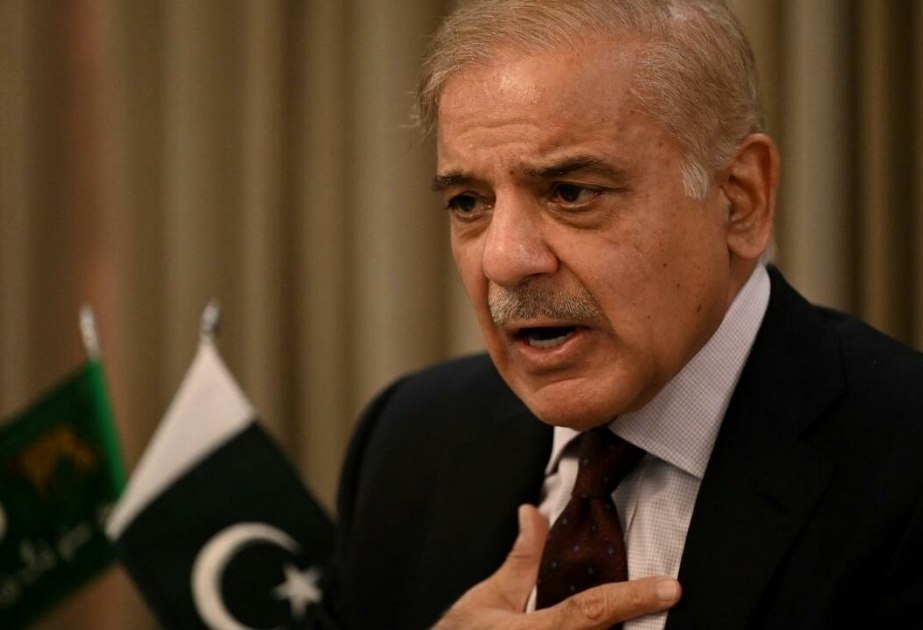
The Prime Minister of Pakistan, Shahbaz Sharif has chosen Tajikistan for his first foreign visit after being re-elected as the head of government. On July 2, he will hold talks with Tajik President Emomali Rahmon in Dushanbe, before traveling with him to the SCO summit in Astana. The head of Tajikistan and Sharif are expected to discuss the implementation of agreements reached during Rahmon's visit to Pakistan two years ago. Pakistan's capital, Islamabad, is interested in speeding up the start of the CASA-1000 energy project and expanding cooperation in transport and security. In exchange, Tajikistan is seeking access to Pakistan’s ports of Karachi and Gwadar. In December 2022, Rahmon visited Islamabad, where eight documents were signed at the end of negotiations with Sharif. “The fact is that Tajikistan’s intelligence services have historically not had warm relations with Pakistan, whose intelligence services have supported various militant groups in Afghanistan. But times are changing. In addition, it should be noted that today, Pakistan is closely cooperating with China economically and politically in the same way that active cooperation between China and Dushanbe is taking place,” said Alexander Vorobyov, a researcher at the Institute of Oriental Studies of the Russian Academy of Sciences and head of the Center for Public Diplomacy and World Policy Analysis. According to Vorobyov, improving relations between Tajikistan and Uzbekistan, whose authorities are actively promoting a project to create the Trans-Afghan railway “Termez–Mazar-i–Sharif–Kabul—Peshawar,” will help improve Tajikistan’s transport connectivity with the outside world and offer the possibility of access to South Asia. The shortest route from Tajikistan to the sea passes through Afghanistan to Pakistan. It is approximately 2,720 kilometers from Dushanbe to Karachi or Gwadar, whilst it is 3,400 kilometers to the Iranian port of Bandar Abbas in the Strait of Hormuz. Tajikistan is separated from Pakistan by the Wakhan Corridor, a narrow strip of territory in the Badakhshan province of Afghanistan. This corridor is about 350 kilometers long. Experts believe that if Afghanistan's stability and security can be ensured, then Pakistan can become a transport hub for the countries of Central Asia. Pakistan's interest in Central Asian meanwhile, lies in energy resources, of which it is desperately short. To access them, the Pakistani government is promoting several major transit projects in the region that will open access to global markets and trade opportunities for the region's countries. However, as Hina Rabbani Khar, who served as Pakistan's deputy foreign minister in February 2023, said, the situation in Afghanistan is preventing Pakistan from realizing its potential in relations with Central Asia. In particular, the Central Asia-South Asia-1000 (CASA-1000) project to transmit electricity from Tajikistan and Kyrgyzstan to Afghanistan and Pakistan still needs to be completed. The World Bank stopped financing the project after the Taliban came to power. Following an appeal by the project's participants, implementation of CASA-1000 was resumed in May 2024 with the financial support of the World Bank. In recent years, Tajikistan and Kyrgyzstan have required additional kilowatts, so the completion date of the construction still...

Islamic State Khorasan Province as Part of the Struggle for Central Asia

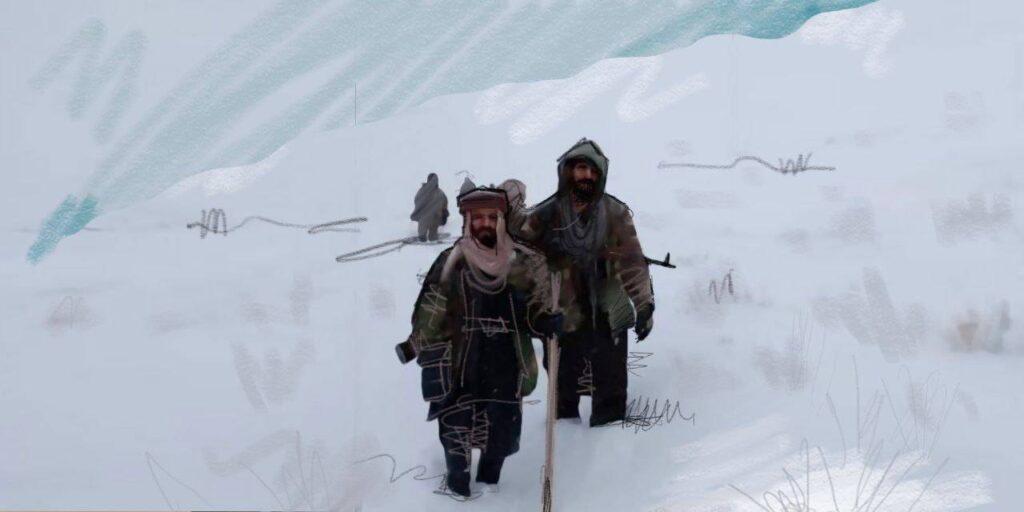
Following the high-profile terrorist attack at Moscow’s Crocus City Hall in March and reports that eight Tajik immigrants were arrested in the U.S., the media spotlight has once again fallen on Islamic State Khorasan Province (ISKP), also known as "Wilayat Khorasan", and the "Khorasan Project.” Many observers link ISKP to the countries of Central Asia, even though the terrorist organization, as it has been designated for a long time, has purely Afghanistani roots. In addition, there is a lot of talk about its geopolitical ambitions for “recreating” the state of “Khorasan.” Where this region’s boundaries lie is the subject of debate. The most expansive definitions include northeastern Iran, western and northern Afghanistan, eastern Turkmenistan, and parts of Tajikistan and Uzbekistan. It is important to understand, however, that clear boundaries have never existed, and neither has a state with that name. In modern times, the term “Khorasan” has only historical and cultural connotations, with no political meaning attached to it. ISKP has suffered a clear military defeat in the borderlands of Afghanistan and Pakistan, and faces significant opposition there. Still, weakening and even destroying the Taliban remains an important goal for the organization. It continues to fight in several regions of Afghamistan, which has prompted the Taliban to intensify their counter-terrorism efforts. [caption id="attachment_19644" align="alignnone" width="1920"] Sanaullah Ghafari, Emir of ISIS-K has a U$10 million bounty on his head; image: rewardsforjustice.net[/caption] The countries of Central Asia, having emerged out of the Soviet Union, are attractive for ISKP ideologists in the sense that they share a common historical and cultural past, while there are even linguistic similarities with Afghanistan (between the Persian languages). The Russian internet portal and analytical agency, TAdviser, points out that ISKP, through its online propaganda publication, announced the start of a new campaign against the countries of the post-Soviet space in April 2022. In June of that year, the ISKP publication, written in the Uzbek language, declared that the countries of Central and South Asia would be united under the flag of the “Islamic Caliphate.” TAdviser highlights that Turkmenistan has a special place in ISKP propaganda because according to the group a large part of what is now Turkmenistan was previously part of “Greater Khorasan,” while the foreign policy of the Turkmen authorities of actively cooperating with the Taliban is wholly at odds with the core goals of ISKP. The Lapis Lazuli corridor linking Afghanistan to Turkey, along with the Turkmenistan-Afghanistan-Pakistan-India gas pipeline (TAPI) which is being developed, are identified as priority targets for ISKP. But what in fact is ISKP? As previously noted by The Times of Central Asia, the answer to this question is known by only a very narrow circle. Indeed, no one can provide objective data on the qualitative and quantitative composition of ISKP. Nevertheless, the group is taking on real dimensions in the media. The threat to Central Asia from ISKP looks more virtual than real at this point. Any small group of terrorists can declare themselves part of ISKP, and, without any...