• KGS/USD = 0.01144 0%
  • KZT/USD = 0.00211 0%
  • TJS/USD = 0.10460 0.19%
  • UZS/USD = 0.00008 0%
  • TMT/USD = 0.28490 0%
  • KGS/USD = 0.01144 0%
  • KZT/USD = 0.00211 0%
  • TJS/USD = 0.10460 0.19%
  • UZS/USD = 0.00008 0%
  • TMT/USD = 0.28490 0%
  • KGS/USD = 0.01144 0%
  • KZT/USD = 0.00211 0%
  • TJS/USD = 0.10460 0.19%
  • UZS/USD = 0.00008 0%
  • TMT/USD = 0.28490 0%
  • KGS/USD = 0.01144 0%
  • KZT/USD = 0.00211 0%
  • TJS/USD = 0.10460 0.19%
  • UZS/USD = 0.00008 0%
  • TMT/USD = 0.28490 0%
  • KGS/USD = 0.01144 0%
  • KZT/USD = 0.00211 0%
  • TJS/USD = 0.10460 0.19%
  • UZS/USD = 0.00008 0%
  • TMT/USD = 0.28490 0%
  • KGS/USD = 0.01144 0%
  • KZT/USD = 0.00211 0%
  • TJS/USD = 0.10460 0.19%
  • UZS/USD = 0.00008 0%
  • TMT/USD = 0.28490 0%
  • KGS/USD = 0.01144 0%
  • KZT/USD = 0.00211 0%
  • TJS/USD = 0.10460 0.19%
  • UZS/USD = 0.00008 0%
  • TMT/USD = 0.28490 0%
  • KGS/USD = 0.01144 0%
  • KZT/USD = 0.00211 0%
  • TJS/USD = 0.10460 0.19%
  • UZS/USD = 0.00008 0%
  • TMT/USD = 0.28490 0%

Viewing results 1711 - 1716 of 3316

Will Kumtor’s ‘Tails’ Benefit or Harm Kyrgyzstan?

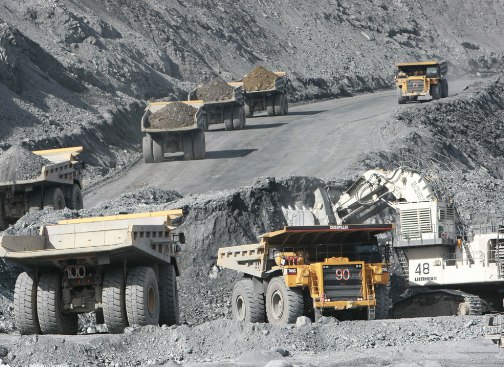
The Finnish company Metso is set to  develop a tailings pond at Kyrgyzstan's Kumtor goldmine but local environmentalists are sceptical, claiming that recycling the waste will bring more damage to the environment than economic benefits. "Tailings" are liquid and solid metal (pulp) remnants of ore processing and according to various estimates, Kumtor's tailings pond contains 70 to 130 tons of gold that could not be mined at the plant.  The remnants of precious metal with harmful waste are mothballed, making secondary mining extremely difficult. The Kyrgyz government however, believes that cooperation with the Finns could provide the state with an annual revenue of some $3.5 billion. Isakbek Torgoev, head of the geo-environmental monitoring laboratory at the Institute of Geomechanics and Subsoil Development of Kyrgyzstan and a candidate of technical sciences, told the Times of Central Asia that the Kumtor tailings pond, grandiose in volume, has over a hundred million tailings. "Throughout the entire phase of the mine -over 30 years - ores were taken from different parts of the Kumtor deposit. At times, ores containing 1.8 grams of gold per ton were dumped in the tailings pond. By comparison, at the Boruu gold mine in Mongolia, that amount of gold is contained in the mined rock, but here it is in the tailings. This is a lot," notes Torgoev. The scientific institute believes that dangerous chemical processes occur in the abandoned ores. "Frankly speaking, I am sceptical about such a development, given that very few successful examples exist worldwide. Especially at Kumtor, with its difficult climatic conditions and frigid winters. Theoretically, the work can be carried out, but practically, we'll see," commented the scientist. According to Torgoev, the price of gold may fall, and because of unprofitability, the Finnish company could refuse to process tailings. Moreover, the reclamation of tailings is a very complicated technological process. In addition to constructing water drains, a layer of a meter thick soil is required to cover them. Otherwise, the waste will go into the rivers and soil, harming the environment. The former owners of Kumtor, the Canadian company Centerra Gold, accumulated about $60 million for the reclamation of the tailings pond after the mine was depleted (tentatively in 2027). However, after the nationalization of the mine, the fate of these funds remains unknown. According to the Ministry of Emergency Situations of Kyrgyzstan, there are 92 burial sites for toxic and radioactive substances in the country. Of these, 23 tailings contain uranium elements, while the rest are buried with radioactive rock residues, heavy metals, and cyanide.

Kyrgyzstan’s President Apologizes Over Niece’s Use of State Helicopter

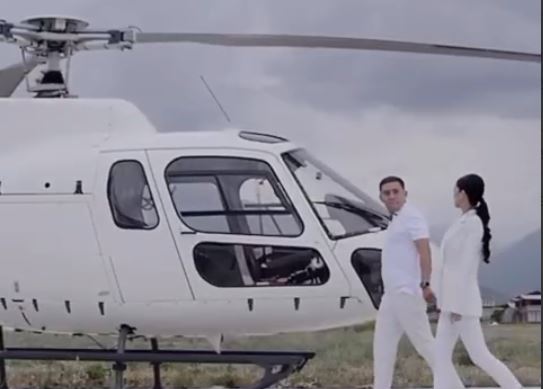
It was a fairytale setting for a marriage proposal. The fiancée of the niece of Kyrgyzstan’s president asked her to marry him after the pair traveled by helicopter to the mountains near Bishkek. The problem? The helicopter belonged to the Ministry of Emergency Situations, a revelation that prompted scorn on social networks and drew an apology from President Sadyr Japarov, who has campaigned against corruption. The ministry said the aircraft was “legally leased” and Japarov said the government sometimes rents its helicopters for the benefit of the state's coffers. But the ostentatious use of the government asset, flaunted in a slick video showing Japarov’s niece, Lazat Nurkozhoeva, in the helicopter, was too much for some commentators who fumed about alleged government hypocrisy. “Relatives of the country's leadership should be an example to others. I am trying to stop waste,” Japarov said in an interview with the official Kabar news agency on Wednesday. He said his niece, Lazat Nurkozhoeva and her fiancée loved each other and the proposal would have gone off without a hitch if it had been handled in a simpler way. “If an ordinary citizen, a businessman, a tourist, or an investor wants to rent helicopters, the state will gladly provide them. Because every penny received from the lease goes to the state and is concentrated on the purchase of new helicopters. Thus, the aircraft fleet is continuously updated,” Japarov said. The Kyrgyz government has a total of about 20 helicopters, he said. “I used to criticize others. Now it’s come back to me,” Japarov said in his apology. In a statement, the Ministry of Emergency Situations said the “rental of the helicopter discussed in social networks” was arranged with a legal contract and that it received the equivalent of about $1,800 for the flight that lasted 56 minutes and occurred on Monday. Lazat Nurkozhoeva has a high profile on social media. She has created her own clothing brand and won the Miss Kyrgyzstan beauty pageant in 2020.

Kazakhstan’s Attempts to Address Disinformation and Media Freedom

On June 19, President Tokayev signed amendments to the law governing Kazakhstan's mass media. Meanwhile, public debate on foreign and domestic media that allegedly receive financing from abroad continues. While human rights activists focus on the principle of freedom of speech, political analysts are concerned about a string of disinformation campaigns attempting to destabilizing the country. The respective changes to legislative acts affect a wide range of issues. In particular, a new and broader concept of mass media has been introduced which includes internet resources. It is envisaged that a Unified Media Platform will be created to implement the state’s information policy, including grants for non-state media and accreditation of journalists to state bodies and organizations through a simplified accreditation procedure. In addition, the statute of limitations for claims brought against the media to refute information that does not correspond to facts and defames honor, dignity, and business reputation has been reduced to one year. Under the new law, Kazakhstan's Ministry of Foreign Affairs has the right to deny accreditation to foreign journalists "in case of a threat to the national security of the Republic of Kazakhstan." A few months ago, the Ministry did not issue accreditation to 36 correspondents from Azattyk. The publication subsequently filed a lawsuit, and in April, the media outlet and the Ministry reached a mediation agreement. While the new law focuses mainly on foreign funded domestic media, experts cite recent examples of pressures on Kazakhstan’s society and authorities through disinformation campaigns that mostly originated from abroad. For instance, a week ago in Kyiv, Ukrainian authorities claimed an assassination attempt was made on Kazakhstani national Aidos Sadykov, the creator of a YouTube channel called Bәse. Sadykov and his wife Natalya were placed on the wanted list in Kazakhstan in October 2023 for “inciting social, national, clan, racial, class, or religious discord.” Their inclusion on the list is linked to the January 2022 coup attempt and riots, as well as their ties to controversial fugitive billionaire Mukhtar Ablyazov, who currently has judgements against him in U.S. and UK courts exceeding $5 billion. Ablyazov faced murder charges in Kazakhstan following the death of the CEO of a local bank that he later took over and reportedly defrauded. According to government authorities, Sadykov repeated Ablyazov's calls for violence surrounding the January 2022 coup attempt as well as the Mazhilis elections in March 2023, where the channel openly called for organizing riots. Furthermore, on the one-year anniversary of the January 2022 events, his Bәse channel gave instructions to overthrow the government in Kazakhstan, following the example of events in Ukraine. The four-minute video includes information on how to create coordination committees for regime change. Natalya Sadykova has also worked for the Respublika newspaper, allegedly funded by Ablyazov. Aidos Sadykov had previously served two years in Kazakhstan for hooliganism and fled to Kyiv in 2014. The alleged perpetrators of the attack on Sadykov, Meiram Karataev and Altai Zhakanbaev, are Kazakhstani citizens. Shortly after the purported assassination attempt, Natalya Sadykova accused Kazakhstan’s...

Kazakhstan Stock Exchange Set to Recoup Shares from Moscow Exchange

The Kazakhstan Stock Exchange (KASE) has approached the Moscow Exchange (MOEX) with an offer to buy back its shares. The move was prompted by the US sanctions imposed on MOEX, Russian publication Frank Media reported, citing sources close to the Russian trading floor. Moscow Exchange presently owns 13.1% of KASE shares. It acquired the first part of this stake (3.3%) in early 2020 and increased it to the current level at the end of the same year. The KASE shares were obtained as part of a strategic partnership for the Russian side's technology. The stake has a market value of KZT 12.1 billion, equivalent to RUB 2.2 billion ($25.9 million). In mid-June 2024, the U.S. Treasury Department's Office of Foreign Assets Control (OFAC) included the Moscow Exchange in the SDN list and issued a license to curtail operations with MOEX until August 13. The UK has joined the sanctions against MosBirch. "KASE will consider continuing business relations with MOEX taking into account the sanctions restrictions," stated the Kazakh exchange, the day after sanctions against Mosbirzhya were imposed. Timur Suleimenov, chairman of the National Bank of Kazakhstan, who has repeatedly mentioned the possible buyout of MOEX's stake in KASE, was vague however, when citing various options. "The National Bank has 47% in KASE. We have our funds, so we will buy out [Moscow Exchange's stake if such a decision is made]," he said on June 13, immediately after the sanctions against the Russian exchange were imposed. The head of the republic's regulator also said that KASE is negotiating with MOEX and considering various options, including possibly buying back shares. Some indirect data point to the preparation for the buyout. In the middle of last week, KASE announced the convocation of the extraordinary general meeting of shareholders in a month, at which the only question to be discussed is the methodology change for determining the cost of shares of Kazakhstan exchange at their redemption. According to the FM interlocutor close to the Russian Central Bank, Mosbirzha may agree to sell its stake in the Kazakhstan Stock Exchange under these conditions. In the past, entering the capital and providing technologies to KASE had a strategic goal—to leave it in the zone of Russian influence, he noted. In particular, American Nasdaq could provide technologies for the Kazakhstan stock exchange. South Korea has  likewise expressed interest in KASE .

Kazakhstan Facing Challenge of Developing Roads in Ninth Largest Country in World

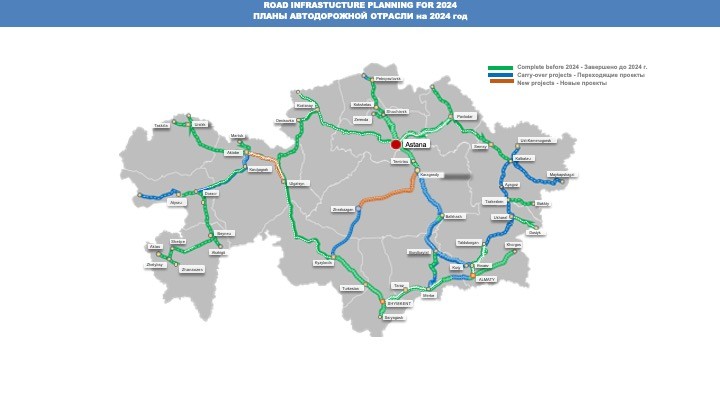
Kazakhstan is one of the most active post-Soviet states in building roads. Over the past decade, KZT4 trillion ($8.55 billion) has been spent on highway construction in the country, yet in a world ranking of road quality, Kazakhstan stands 93rd out of 141 countries. Record year for road construction The focus of the current road construction season is completing the reconstruction of sections of the main road transport corridors: Karaganda–Balkhash–Almaty, Taldykorgan–Ust-Kamenogorsk, Aktobe–Kandyagash, and Atyrau–Astrakhan. Overall, the current season is due to be set new records. There are plans to repair, reconstruct and build twelve thousand kilometers of road. Another feature of the work this year is the implementation of a major new program for the “medium repair” of local roads to strengthen them structurally, which is designed to improve transport links between populated areas. This program is set to repair about 2,500 kilometers of road throughout the country. Betting on tolls In February, the government announced plans to increase tariffs on federal toll roads. However, the initiative is still under consideration. The current tariffs – KZT 1 per kilometer for passenger vehicles (0.002 US cents) and KZT 5-25 per kilometer for freight vehicles depending on the load capacity and transport class – were approved back in March 2013 for the first toll highway built in the country (Astana-Shchuchinsk). Since then, the tariffs have not changed. In 2024, there are plans to roll out a toll system on another 2,400 kilometers of federal roads, namely on the sections Kostanay–Troitsk, Aktobe–Russian border (toward the city of Orenburg), Aktau–Beineu, Kyzylorda–Aktobe Region border, Usharal–Dostyk, Kostanay–Denisovka, Makat–Kandyagash, Taraz bypass, Karaganda bypass, Balkhash–Burylbaital, and Shu– Burylbaital. According to the national company in charge of federal and international roads in Kazakhstan, KazAvtoZhol, the toll system will be introduced only after repair work is completed and the roads fully comply with regulatory requirements. In addition, attention is being paid to transit routes when introducing tolls. This is especially relevant in the context of the government’s plans to develop freight transit through Kazakhstan and make the country a regional transport and logistics hub. Thanks to international transport, including transit, tolls are expected to become a significant contributor to the country’s budget. Today in Kazakhstan, there are 17 toll road sections with a total length of more than 3,200 kilometers, which, along with the state budget, help finance the maintenance of federal roads. According to the Ministry of Transport, KZT60 billion ($130 million) is required annually to maintain the country’s roads. Internationally, road maintenance is financed by taxes allocated for transport, but this is not enough in Kazakhstan – it is one of the largest countries in the world, but has a low population density, meaning its road infrastructure remains underutilized. Because of this, historically, road maintenance in the country was financed from the state budget. Overall, the toll system will be gradually introduced on 11,000 kilometers of road by 2029 as reconstruction work is completed. The further rollout of the system, which aims to support year-round maintenance, should reduce the...

Uzbekistan: Deaf Photographers Document the World Around Them

The assignment for the Uzbek deaf photographers’ workshop: cover a game of kupkari, in which horse-riders jostle for a goat carcass and hustle it to a goal amid shouting, shoving and swirling dust. It didn’t go well for student Murod Yusupov, who arrived late at the event in Piskent, in the Tashkent region, and then struggled to orient himself in the boisterous crowds watching the maelstrom on the field. [caption id="attachment_19449" align="aligncenter" width="599"] Crowds watch a game of kupkari, a traditional sport in Uzbekistan (Photo: Khuvaido Fatihojayeva)[/caption] “Unfortunately, I was a little late, and I had to stay among the fans. Communication with the teacher and participants was almost non-existent. But it was a big problem to take pictures there, there were too many people who came to watch the kupkari, I didn’t have enough experience to find a convenient place and opportunity to take pictures,” Yusupov said through a sign language interpreter in an interview with The Times of Central Asia. He learned from the experience, though. With the help of workshop director Husniddin Ato, 21-year-old Yusupov got accredited for the Asian Weightlifting Championships in Tashkent in February and delivered strong images. Best of all, he enjoyed the assignment. [caption id="attachment_19450" align="aligncenter" width="615"] Uzbek athlete performs during the Asian Weightlifting Championships in Tashkent in February. (Photo: Murod Yusupov)[/caption] --- One recent evening, at the Bon Cafe in Tashkent, Ato, Yusupov and several other participants in the “Deaf Photographers” workshop talked about their experiences and hopes to a correspondent from The Times of Central Asia. Ma’mur Akhlidinov, a sign language teacher at the University of Uzbek Language and Literature who is also deaf, helped to interpret. Cups of sea buckthorn tea were served during a conversation lasting two and a half hours. The deaf photographers were upbeat, often smiling, communicating with each other through hand gestures and showing photos on their phones to each other. --- A decade ago, Ato, a professional photographer, wanted to report on deaf people. Then he decided to let deaf people show in pictures how they feel about the world. While in quarantine during the pandemic, he consulted Akhlidinov, a member of the Deaf Society of Uzbekistan. For many years, Akhlidinov worked as a designer in the editorial office of Ma’rifat, an Uzbek publication, and as the editor-in-chief of the MediaPlus project. Akhlidinov was surprised by the fact that there wasn’t a single internet resource about deaf people and their rights in Uzbekistan. In 2017, he launched a blog for deaf people, their parents and educators. Akhlidinov supported Ato’s proposal for an initial three-month course. and announced the project on the Deaf Society blog, which has more than 1,000 subscribers. An age requirement (18-25) was set for the participants. Nine people signed up. In the fall of 2021, the teaching started. It was slow going at first because of scheduling conflicts and other obstacles. “Later, their interest and enthusiasm wasn’t always there, they didn’t complete their assignments on time, and I had to explain some...