• KGS/USD = 0.01144 0%
  • KZT/USD = 0.00212 0%
  • TJS/USD = 0.10456 0.19%
  • UZS/USD = 0.00008 0%
  • TMT/USD = 0.28490 0%
  • KGS/USD = 0.01144 0%
  • KZT/USD = 0.00212 0%
  • TJS/USD = 0.10456 0.19%
  • UZS/USD = 0.00008 0%
  • TMT/USD = 0.28490 0%
  • KGS/USD = 0.01144 0%
  • KZT/USD = 0.00212 0%
  • TJS/USD = 0.10456 0.19%
  • UZS/USD = 0.00008 0%
  • TMT/USD = 0.28490 0%
  • KGS/USD = 0.01144 0%
  • KZT/USD = 0.00212 0%
  • TJS/USD = 0.10456 0.19%
  • UZS/USD = 0.00008 0%
  • TMT/USD = 0.28490 0%
  • KGS/USD = 0.01144 0%
  • KZT/USD = 0.00212 0%
  • TJS/USD = 0.10456 0.19%
  • UZS/USD = 0.00008 0%
  • TMT/USD = 0.28490 0%
  • KGS/USD = 0.01144 0%
  • KZT/USD = 0.00212 0%
  • TJS/USD = 0.10456 0.19%
  • UZS/USD = 0.00008 0%
  • TMT/USD = 0.28490 0%
  • KGS/USD = 0.01144 0%
  • KZT/USD = 0.00212 0%
  • TJS/USD = 0.10456 0.19%
  • UZS/USD = 0.00008 0%
  • TMT/USD = 0.28490 0%
  • KGS/USD = 0.01144 0%
  • KZT/USD = 0.00212 0%
  • TJS/USD = 0.10456 0.19%
  • UZS/USD = 0.00008 0%
  • TMT/USD = 0.28490 0%

Viewing results 421 - 426 of 3334

Tokayev Secures $17B in U.S. Deals, Trump Hints at Kazakhstan Visit

The summit between the leaders of the United States and the five countries of Central Asia was the primary focus of Kazakh President Kassym-Jomart Tokayev’s visit to Washington. But even before the summit began, the Kazakh delegation secured a series of high-level meetings with U.S. political leaders and business executives, culminating in the signing of 29 bilateral agreements, valued at approximately $17 billion. Tokayev’s program in Washington began with meetings with Secretary of State Marco Rubio, Secretary of Commerce Howard Lutnick, and U.S. Special Representative for South and Central Asia Sergio Gor. Kazakhstan, Tokayev noted, maintains active political ties with the United States at multiple levels, and remains committed to a constructive dialogue to deepen its multifaceted cooperation with Washington. During the meeting, Kazakhstan and the United States signed a memorandum of understanding on cooperation in the field of critical minerals. The document was signed by Kazakhstan’s Minister of Industry and Construction, Yersayin Nagaspayev, and U.S. Secretary of Commerce Howard Lutnick. The agreement took immediate shape: Tau-Ken Samruk, a subsidiary of the sovereign wealth fund Samruk-Kazyna, and U.S. based Cove Capital agreed to jointly develop tungsten deposits in Kazakhstan’s Karaganda region. The investment is expected to total around $1.1 billion. Preparatory work on a final feasibility study for one of the projects is already underway. Kazakhstan’s tungsten reserves, estimated at 410,000 tons, are among the largest in the world. Tokayev later met with U.S. Representatives Jimmy Panetta, Carol Miller, Bill Huizenga, and Sydney Kamlager-Dove. Tokayev highlighted the role of the U.S. - Kazakhstan Friendship Group, chaired by Panetta, in deepening political dialogue, boosting economic ties, and strengthening bilateral relations. During the meeting, it was noted that the U.S. is one of Kazakhstan’s largest economic partners, accounting for $100 billion in cumulative investment, roughly 80% of all investment in Central Asia. Tokayev invited U.S. lawmakers to visit Kazakhstan to foster further cooperation. A similar invitation was extended to Senator Steve Daines, whom Tokayev described as “a true friend of Kazakhstan.” The senator is set to receive the Order of Dostyk (Friendship), First Class, for his contributions to bilateral relations. The Kazakh president also met with Chevron Chair and CEO Michael Wirth and Chaboy Leiko, President for the CIS and Central Asia at John Deere. Tokayev praised Chevron’s long-standing role in Kazakhstan’s oil and gas sector, including its projects at the Tengiz and Karachaganak fields. He confirmed Kazakhstan’s commitment to ongoing cooperation. John Deere was also lauded for its decision to localize production of agricultural machinery through a partnership with AgromashHolding KZ. Since production began in May, over 290 units have been assembled, with another 100 expected by year’s end. John Deere has signed a $2.5 billion strategic partnership agreement with Kazakhstan to produce at least 3,000 agricultural machines over five years. The agreement includes plans to establish at least three service centers and develop a workforce training system. Separately, Kazakhstan’s national carrier, Air Astana, signed a contract with Boeing for the purchase of up to 15 Boeing 787-9 Dreamliner aircraft. According...
Kazakhstan to Join Abraham Accords

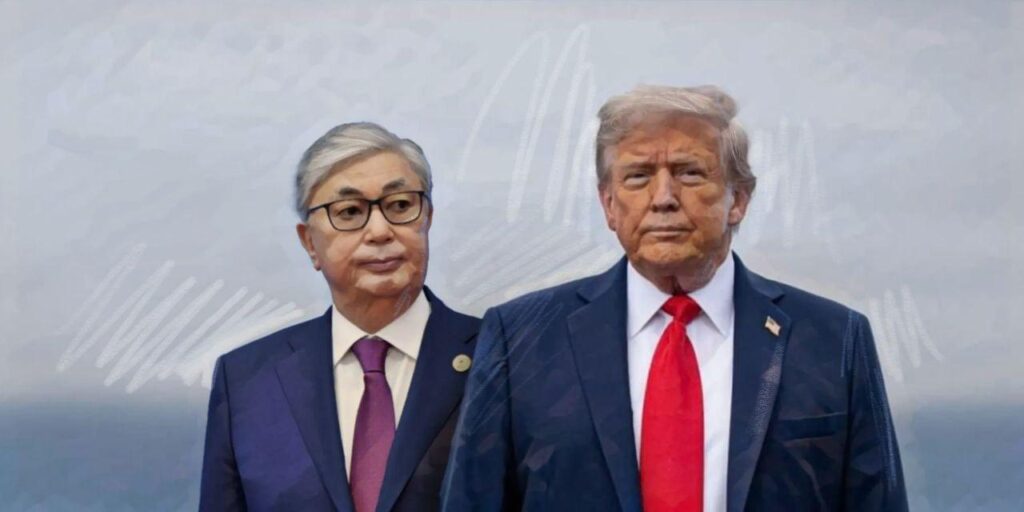
Washington D.C. - The Government of Kazakhstan announced its intention to join the Abraham Accords on Thursday, ahead of a scheduled meeting between President Kassym-Jomart Tokayev and U.S. President Donald Trump in Washington. The move was confirmed by President Trump in a post on Truth Social, where he described Kazakhstan’s decision as “a major step forward in building bridges across the world.” He added that a formal signing ceremony would be held soon to make the accession official. In doing so, Kazakhstan will join the United Arab Emirates, Bahrain, Morocco, Sudan, Israel, and the United States within the framework of the Abraham Accords. Its inclusion represents a significant diplomatic milestone, making it the first Central Asian nation — and the only non–Middle Eastern or North African member apart from the United States — to take part in the initiative. The expansion extends the Accords’ reach into Central Asia, highlighting their growing relevance beyond their original geographic and political context. Kazakhstan’s accession represents a powerful statement from a Muslim-majority nation in favor of peaceful normalization with Israel. By joining, Astana reinforces the framework’s legitimacy across the Islamic world and demonstrates that constructive engagement with Israel can coexist with respect for Islamic values and regional cooperation. As the first Central Asian signatory, Kazakhstan sets a precedent for its neighbors and broader Muslim communities, illustrating that pragmatic diplomacy and peace-building can transcend historical divisions. The move also strengthens U.S.-led efforts to expand the Accords’ vision of dialogue, stability, and coexistence beyond the Middle East — signaling a new chapter in regional diplomacy. The Tokayev administration’s decision carries political risks. The move may draw criticism from some pro-Palestinian factions and Iran-aligned groups that view normalization with Israel skeptically. To manage this, Astana will need careful messaging, emphasizing that engagement with Israel complements its continued support for Palestinian statehood and regional peace. Ultimately, the government’s calculation is that the benefits — including closer alignment with the United States and enhanced international influence — outweigh the potential political costs. Alignment with Washington Joining the Abraham Accords underscores President Tokayev’s continued alignment with President Trump’s foreign policy priorities. By joining a U.S.-led initiative promoting normalization with Israel, he reinforces support for the White House’s approach to Middle East diplomacy. The move builds on Tokayev’s earlier stance: on September 30, 2025, he publicly endorsed former U.S. President Donald Trump’s 20-point Gaza peace plan, calling it a “unique opportunity and a crucial step toward lasting peace in the Middle East.” As a Muslim-majority nation pursuing a balanced foreign policy, Kazakhstan’s support highlights its strategic effort to deepen ties with Washington and Israel while maintaining credibility across the Arab and Islamic world. The decision reflects Tokayev’s broader vision of positioning Kazakhstan as a diplomatic bridge between East and West. Expanding Regional Appeal and Continuity in Israel Ties Kazakhstan’s decision to join the Abraham Accords represents both a continuation of its long-standing relationship with Israel and a forward-looking step to broaden the framework’s regional reach. Since establishing diplomatic ties in 1992,...

Kazakhstan Advances Digital Transformation with U.S. Partnerships

Kazakhstan, Central Asia’s largest economy, is rapidly positioning itself as a regional leader in digital transformation. Increasingly, United States partners no longer view Kazakhstan solely as a source of natural resources. Instead, future cooperation is expected to expand into digital technologies and artificial intelligence (AI). Advances in Digitalization In October, Kazakhstan reaffirmed its digital ambitions with a major technological breakthrough. Kaspi, the country’s leading fintech firm and a systemically important bank, launched Kaspi Alaqan, a palm-based payment system that requires no phone, card, or internet connection. The service will debut in December 2025 through dedicated ATMs in Almaty before expanding nationwide. Analysts say the innovation puts Kaspi on par with Amazon One and China’s WeChat, highlighting Kazakhstan’s readiness to adopt cutting-edge global technologies. Traditionally associated with oil, gas, and uranium, Kazakhstan is now investing heavily in becoming Central Asia’s digital hub, an evolution that presents strategic opportunities for the U.S. Partnerships in digital governance, AI, and innovation ecosystems align closely with Washington vision for expanded cooperation in Eurasia. According to the United Nations, Kazakhstan ranked 24th globally in digital development as of June 2025, placing in the top 10 for online public services. Services such as school enrollment, vehicle registration, and passport issuance have been fully digitized, requiring minimal citizen effort. In some cases, the process is faster than in many Western countries. Kazakhstan’s government aims to double its GDP to $450 billion by 2029, a target that will require more than a 2.5-fold increase in investment. Digital technologies are central to this strategy. To manage this transformation, a new Investment Board was established in October 2025 to oversee large-scale projects and determine economic priorities. In September, the Mazhilis (lower house of parliament) passed a landmark law on artificial intelligence. Deputies highlighted fairness, transparency, and the protection of personal data as key legal principles. The newly launched National Artificial Intelligence Platform hosts over 100 AI agents that support e-government functions and expand access to technology. Additionally, in July, Kazakhstan introduced a supercomputer powered by NVIDIA H200 GPUs. With performance reaching 2 exaflops (FP8), it is the most powerful computing system in Central Asia. Startups, universities, and research centers now have access to this infrastructure. The language models KazLLM and Alem LLM have also been introduced, capable of generating content in Kazakh, Russian, English, and Turkish. For the U.S., Kazakhstan’s AI ecosystem offers a valuable partner for collaborative research, ethical framework development, and State Department–supported initiatives using AI for sustainable development. Investing in the Future U.S.–Kazakhstan cooperation in digital innovation is already accelerating. In September, Amazon announced a $200 million investment in Kazakhstan’s internet infrastructure. A distribution agreement with Kazakhtelecom will bring Amazon’s Kuiper satellite network to the republic, improving connectivity and driving economic growth. Additionally, 24 startups from Central Eurasia have joined U.S. accelerator programs such as AlchemistX and Silicon Valley Residency. These initiatives, launched in September in Palo Alto, connect regional teams with U.S. venture capital and technology ecosystems. Kazakhstan is also advancing blockchain infrastructure. Astana recently launched the...

U.S. Secretary of State Marco Rubio Plans Visit to Central Asia in 2026

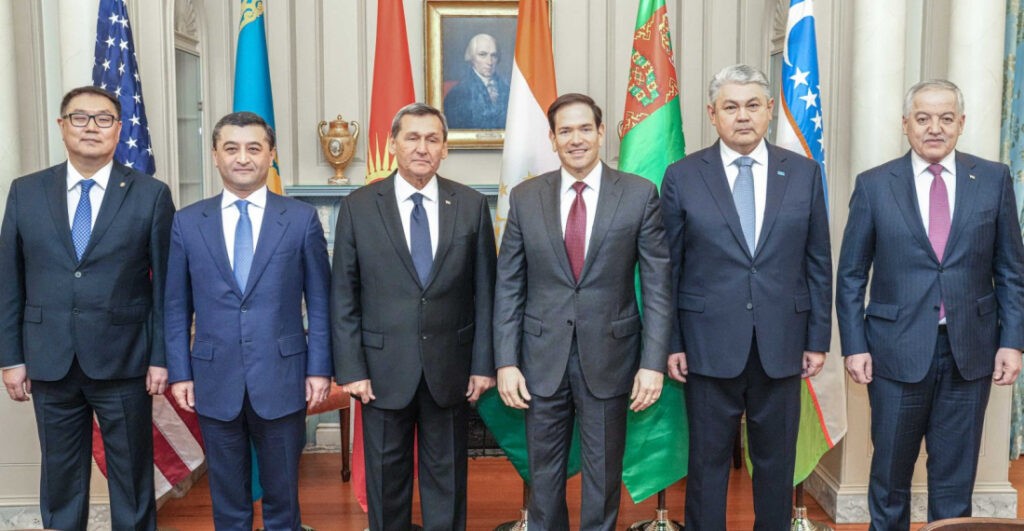
U.S. Secretary of State Marco Rubio announced on Wednesday his intention to visit all five Central Asian countries in 2026. Rubio made the statement during a meeting with the foreign ministers of Kazakhstan, Kyrgyzstan, Tajikistan, Turkmenistan, and Uzbekistan. The visit is part of a broader diplomatic initiative by U.S. President Donald Trump's administration to strengthen ties with the resource-rich region. Today, the presidents of the five Central Asian republics, Kassym-Jomart Tokayev (Kazakhstan), Sadyr Japarov (Kyrgyzstan), Emomali Rahmon (Tajikistan), Serdar Berdimuhamedov (Turkmenistan), and Shavkat Mirziyoyev (Uzbekistan), are scheduled to meet with President Trump in Washington. The summit is expected to focus on cooperation in the extraction of rare earth elements and other natural resources in Central Asia. Rubio emphasized the alignment of U.S. and Central Asian interests in promoting responsible and sustainable development of the extractive sector. “You are seeking to use the resources that God has blessed your countries with to create responsible development and diversify your economies,” he said at a reception hosted by the State Department. “I personally intend to visit in the coming year. All five [countries], so I know it would probably be a week-long trip. So we’ve got to work on that and make that happen together.” U.S. Deputy Secretary of State Christopher Landau stated that the invitation extended to Central Asian leaders is part of President Trump’s personal initiative to deepen engagement with the region. He highlighted broad opportunities for cooperation in business, investment, and strategic partnerships. Also speaking at the reception, Republican Senator James Risch said he intends to introduce legislation to repeal the Jackson-Vanik amendment, a Cold War-era law that restricts U.S. trade with non-market economies.

Deals, Not Declarations: U.S.–Central Asia Cooperation at Summit Crossroads

A landmark summit between the United States and the five Central Asian republics is scheduled for November 6 in Washington, D.C., bringing together the presidents of Kazakhstan, Kyrgyzstan, Tajikistan, Turkmenistan, and Uzbekistan. It will be the second leaders-level C5+1 meeting with a U.S. president—the first took place on the sidelines of the UN General Assembly in 2023—and the first time the format is hosted in the U.S. capital. The gathering also marks the 10th anniversary of the C5+1 diplomatic platform that connects Central Asia with Washington. The summit comes at a pivotal moment geopolitically; Russia remains consumed by its war in Ukraine, whilst China continues to expand its Belt and Road footprint across Eurasia. As the region’s strategic importance grows, both the United States and the Central Asian states see an opportunity to recalibrate their relationships, each approaching the meeting with distinct priorities and expectations. Washington’s Agenda: Critical Minerals and Connectivity For the United States, this summit is about converting diplomatic engagement into tangible deliverables. Officials want to see results in three main areas: critical minerals, regional connectivity, and security coordination. Congress and the administration view the region’s reserves of antimony, tungsten, uranium, and rare earth elements as essential to securing U.S. supply chains. During his October 2025 visit to Kazakhstan and Uzbekistan, Deputy Secretary of State Christopher Landau emphasized expanding cooperation on critical minerals and trade diversification. The Trump administration has prioritized these resources as part of a broader effort to reduce dependence on China. Trade routes are also in focus. The U.S. supports the Middle Corridor, a trans-Caspian route that links Central Asia with the South Caucasus and Europe. Infrastructure investments that bypass Russia are strategically important, and Washington wants to help harmonize customs and logistics to make that corridor more viable. These priorities form part of a wider push to anchor the region in transparent, market-based supply chains that connect Central Asia more directly with Western markets. Kazakhstan: Trade Normalization and Resource Investment Central Asia’s largest economy, Kazakhstan is expected to push for permanent normal trade relations with the U.S. The country still faces Cold War-era restrictions under the Jackson-Vanik amendment – as do Tajikistan, Turkmenistan, and Uzbekistan - with Astana long having viewed its repeal as a key milestone. That push has taken on new importance after Washington imposed a 25% tariff on Kazakh imports in mid-2025 - though Kazakh exports were exempted shortly thereafter - a move viewed by officials in Astana as inconsistent with efforts to expand economic cooperation. Kazakhstan is also looking to the U.S. for support in developing its mineral wealth. President Kassym-Jomart Tokayev’s government is actively mapping new rare earth deposits, and Washington has recently backed a private American bid to reopen Kazakhstan’s long-idle tungsten mine at Upper Kairakty, underscoring growing U.S. interest in Central Asia’s critical minerals sector. The two sides are also expanding industrial ties: in September 2025, Astana signed a $4.2 billion deal with U.S. rail manufacturer Wabtec to modernize Kazakhstan’s locomotive fleet and develop regional transport corridors...

Kazakhstan Strengthens Role as U.S. Key Trade Partner in Central Asia

Kazakhstan has emerged as the United States’ primary economic partner in Central Asia, accounting for the vast majority of regional exports to the U.S. and serving as the leading destination for American imports, according to Finprom.kz. While Central Asia’s share of total U.S. trade remains small, Kazakhstan’s role within the region is increasingly dominant. Kazakhstan Accounts for Over 96% of Central Asia’s U.S. Exports In 2024, Kazakhstan was responsible for 96.7% of Central Asia’s exports to the United States, totaling approximately $2.4 billion out of a regional total of $2.5 billion. Uzbekistan, the next largest exporter, contributed just $44.4 million. The trend is similar for U.S. goods entering the region. Kazakhstan imported $1.1 billion worth of U.S. goods in 2024, or 62.3% of all American exports to Central Asia. Uzbekistan followed with $380.8 million, while Turkmenistan and Tajikistan imported $82.2 million and $56.8 million, respectively. Despite this strong bilateral exchange, Central Asia remains a small player in U.S. global trade. In 2024, the U.S. recorded $3.27 trillion in goods imports and $2.06 trillion in exports, according to U.S. Census Bureau data. Even so, U.S.–Kazakhstan trade has grown meaningfully in recent years. Between 2019 and 2024, the U.S. share of Kazakhstan’s total trade rose from 2.3%  to around 3%. Bilateral trade peaked in 2024 at $4.2 billion, the highest level in six years, with U.S. exports to Kazakhstan accounting for 53.2% of the total. Trade Growth and 2025 Downturn That growth slowed sharply in 2025. From January to August, total trade between the two countries fell to $2.1 billion, a 25.8% drop compared to the same period in 2024. Kazakhstan’s exports to the U.S. accounted for much of the decline, falling to $749.7 million in the first nine months of the year - about half the level recorded the previous year. Oil and oil products saw the steepest drop, falling 3.5 times to $269.1 million. Exports of uranium, silver, ferroalloys, tantalum, and titanium also declined, though these remain important categories. By contrast, U.S. exports to Kazakhstan remained relatively stable. Goods shipments fell just 4.8% year-on-year, totaling approximately $1.7 billion from January through September. U.S. exports to Kazakhstan continue to consist primarily of high-value manufactured goods, including vehicles, aircraft, agricultural machinery, computers, telecommunications equipment, and medical devices. Pharmaceuticals stood out in 2025, with American shipments of medicines and vaccines more than doubling to $249.3 million in the first nine months of the year. Investment and Business Cooperation Deepen Alongside trade, investment, and business cooperation between the two countries is also deepening. According to the Kazakh Prime Minister’s office, more than 600 companies with U.S. capital were operating in the country as of late 2025 – a large increase over the previous year. The number of Kazakh-American joint ventures rose by 5.6% over the same period. U.S. companies are active in a range of sectors, including IT, manufacturing, education, consulting, and trade. While the United States is not among Kazakhstan’s top trading partners by volume, the relationship is seen as strategically important. Amid...