• KGS/USD = 0.01144 0%
  • KZT/USD = 0.00213 0%
  • TJS/USD = 0.10456 0.19%
  • UZS/USD = 0.00008 0%
  • TMT/USD = 0.28490 0%
  • KGS/USD = 0.01144 0%
  • KZT/USD = 0.00213 0%
  • TJS/USD = 0.10456 0.19%
  • UZS/USD = 0.00008 0%
  • TMT/USD = 0.28490 0%
  • KGS/USD = 0.01144 0%
  • KZT/USD = 0.00213 0%
  • TJS/USD = 0.10456 0.19%
  • UZS/USD = 0.00008 0%
  • TMT/USD = 0.28490 0%
  • KGS/USD = 0.01144 0%
  • KZT/USD = 0.00213 0%
  • TJS/USD = 0.10456 0.19%
  • UZS/USD = 0.00008 0%
  • TMT/USD = 0.28490 0%
  • KGS/USD = 0.01144 0%
  • KZT/USD = 0.00213 0%
  • TJS/USD = 0.10456 0.19%
  • UZS/USD = 0.00008 0%
  • TMT/USD = 0.28490 0%
  • KGS/USD = 0.01144 0%
  • KZT/USD = 0.00213 0%
  • TJS/USD = 0.10456 0.19%
  • UZS/USD = 0.00008 0%
  • TMT/USD = 0.28490 0%
  • KGS/USD = 0.01144 0%
  • KZT/USD = 0.00213 0%
  • TJS/USD = 0.10456 0.19%
  • UZS/USD = 0.00008 0%
  • TMT/USD = 0.28490 0%
  • KGS/USD = 0.01144 0%
  • KZT/USD = 0.00213 0%
  • TJS/USD = 0.10456 0.19%
  • UZS/USD = 0.00008 0%
  • TMT/USD = 0.28490 0%

Viewing results 937 - 942 of 2362

IFC Provides $240 Million Loan to Boost Uzbekistan’s Renewable Energy

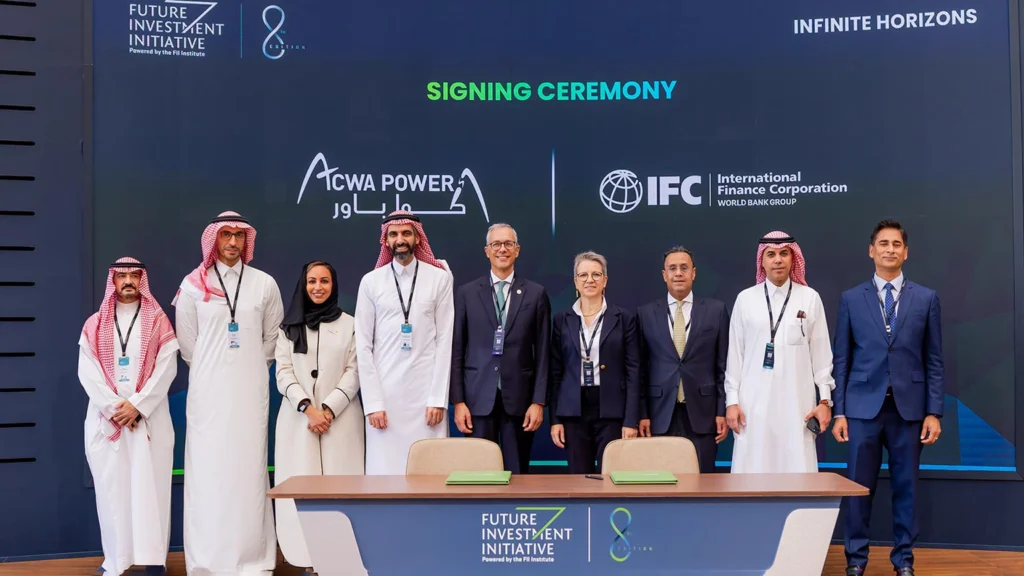
The IFC has announced a $240 million Islamic Equity Bridge Loan for ACWA Power to boost Uzbekistan’s renewable energy sector. The announcement was made at the 8th Future Investment Initiative conference in Riyadh, Saudi Arabia. The financing will cover a 1-gigawatt solar PV plant, a 668-megawatt Battery Energy Storage System (BESS), and around 500 kilometers of high-voltage transmission lines. These projects aim to advance Uzbekistan’s clean energy goals, potentially cutting greenhouse gas emissions by 1.3 million tons of CO2 annually and generating around 2,400 gigawatt hours of electricity per year. Al Muhaidib, ACWA Power's Chief Financial Officer, stated that “we are honored to collaborate with IFC on this transformative project in Uzbekistan, which embodies our shared vision of advancing sustainable energy solutions. This initiative will establish a new standard for cross-border ACWA Power recourse funding support, effectively addressing energy demands while championing environmental sustainability.” The $240 million financing, structured as an Islamic Finance Murabaha, includes an A-Loan of up to $227.75 million and a $12.25 million trust loan through IFC’s Managed Co-Lending Portfolio Program. This funding will support ACWA Power’s equity contributions to the project’s development over the next four years. By optimizing equity returns, this structure helps project developers offer competitive tariffs and attract private investors, advancing Uzbekistan’s goal of reaching 40% renewable energy by 2030. “This project reflects IFC’s commitment to tackling climate change, accelerating the clean energy transition in emerging markets, and supporting public and private sector entities in Saudi Arabia with innovative investments in the region and beyond,” said Laura Vecvagare, IFC’s Regional Head of Industry for Infrastructure and Natural Resources in the Middle East, Central Asia, Türkiye, Afghanistan, and Pakistan. Saudi company ACWA Power’s investment portfolio in Uzbekistan now includes eight projects worth over $6.8 billion, with a more than 5.5 GW design capacity. The company’s success highlights Uzbekistan as an attractive investment hub and a leader in renewable energy in Central Asia.

Kazakhstan Hosts Meeting of Council of Foreign Investors

Astana's Palace of Independence hosted the 36th meeting of the Foreign Investors Council. Kazakhstan's President Kassym-Jomart Tokayev and Prime Minister Olzhas Bektenov attended the event. This year's central theme was “Kazakhstan's New Investment Cycle.” The meeting discussed strategies for the new investment cycle and the development of Kazakhstan's attractiveness to investors. Citing data from the International Institute for Management Development (IMD), Tokayev emphasized that Kazakhstan has become one of the world's top 35 competitive countries. “We set ourselves a rather ambitious goal: to attract $150 billion of foreign direct investment by 2029. To realize this goal, the Investment Headquarters under the Government is endowed with expanded powers to solve emerging problems promptly,” said the president. Tokayev noted the merits of international oil companies, which have played an essential role in the country's development. “Foreign investors have invested capital and provided advanced technologies and highly skilled labor. Their investments have contributed to the growth of our energy industry: over the past 30 years, oil production has tripled. Thanks to this, Kazakhstan has become one of the five countries with the highest oil production growth rates. Speaking about the future, we set a goal to overcome the threshold of 100 million tons per year,” he said. The meeting focused on increasing investment attractiveness in the “clean energy” sector. Specific agreements were reached with world companies such as Total, Svevind, ACWA Power, and Masdar on realizing 43 GW of “green” projects in Kazakhstan. In addition, Kazakhstan has a vast potential for developing nuclear energy, so creating an international consortium to realize the NPP construction project is under consideration. Kazakhstan focuses on the work of the Astana International Financial Center to strengthen cooperation in the financial sector. Tokayev spoke of the importance of continuing the dialog between the Council members and government agencies to improve the country's investment climate and implement new initiatives and specific projects. The meeting also included Odile Renaud-Basso, President of the EBRD; Nurlan Dosymbekov, Deputy Prime Minister and Minister of National Economy; Zhang Daowei, Chairman of the Board of the Kazakh Association “Baibazarov” and the Yerstanign Investors; Nikolai Podguzov, chairman of the EDB; Andrew Deleoni, president of Alstom for Africa, the Middle East, and Central Asia; and Vadim Vorobyov, Chief Executive Officer of PJSC Lukoil. Established in 1998, the Council of Foreign Investors is a platform for foreign investors and the government of Kazakhstan to discuss strategic objectives and find solutions to improve the business climate. From the Kazakhstani side, the Council is attended by government members and heads of several national companies and development institutions. Foreign participants include representatives of major international corporations and organizations, underscoring the global interest in investing in Kazakhstan. Last year's 35th Plenary Meeting of the Foreign Investors Council was also chaired by President Tokayev. The main topic of the meeting was “Digital Transformation of the Economy.” At the time, Tokayev emphasized that digitalization is a tremendous technological breakthrough and opportunity. The growth of digitalization is already dramatically impacting economic development and changing the game's...

Kazakhstan To Establish Special Commission on NPP Construction

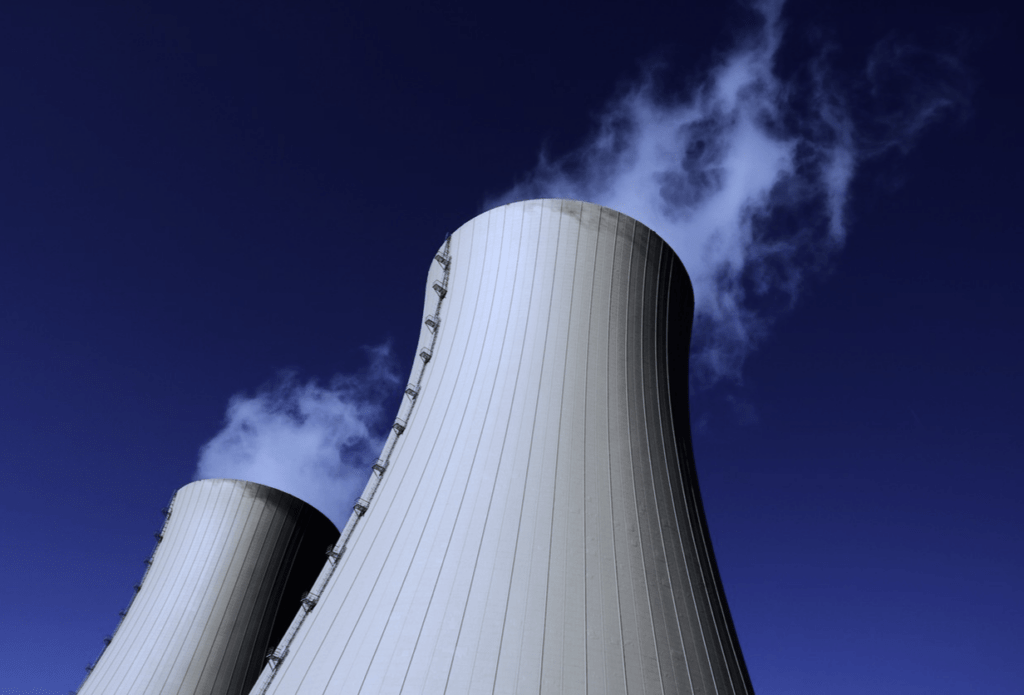
A special government commission will be formed in Kazakhstan to manage the nuclear power plant construction project, according to Energy Minister, Almasadam Satkaliyev. As stated by the minister, the commission will engage in an open, competitive dialog with potential bidders. Preliminary consultations have already been held, including visits to China and South Korea, where critical requirements for future contractors were discussed. Among the main selection criteria are power cost, budget and construction time-frame, mandatory safety guarantees, social commitments, financing, and localization of fuel production. As part of this process, the commission will formulate proposals for further consideration at a meeting of the Energy Council under the President of Kazakhstan. In addition, consultants will analyze the project's financial, economic, legal, and technical aspects. As The Times of Central Asia previously reported, a referendum on nuclear power in Kazakhstan was held on October 6. More than 70% of Kazakhstanis voted in favor of the construction of a nuclear power plant. Potential participants in the project are now being discussed. Among the countries being considered as partners are Russia, China, France, and South Korea. These states have set out their proposals, and the authorities in Kazakhstan are considering them. In addition, the United States has expressed its willingness to participate. President Tokayev has expressed his preference for an international consortium to realize the project. The final decision will be made based on technical and financial conditions, with the preliminary cost estimated at $5 billion.

Car Multimedia System Plant Launched in Almaty

The opening ceremony of the Kazakhstan Mobility Engineering Plant took place on October 30 in Almaty, Kazakhstan’s largest city. The new production facility is part of Astana Motors, Kazakhstan’s major automobile distribution and manufacturing company. In April last year, Astana Motors signed a memorandum of cooperation with South Korea’s Motrex Co Ltd., receiving the right to produce multimedia devices in Kazakhstan using the Korean partner's technology. The plant was launched in September 2024, and the first batch of its audio and video multimedia systems has already been delivered to the Hyundai Trans Kazakhstan plant for installation on Tucson and Elantra cars. Speaking at the opening ceremony, Minister of Industry and Construction of Kazakhstan, Kanat Sharlapayev, emphasized that multimedia systems are high-precision production requiring first-class specialists' competencies in digital technologies. “Our key goal is to create a production cycle with a high share of [production] localization [inside Kazakhstan]. And we will make maximum use of domestic raw materials and components. That is why Kazakhstan Mobility Engineering is important for the country.” Motrex CEO Junseon Kim also stressed the importance of local production: "Our goal is to closely cooperate with our partners to increase local production of components and leadership in the assembly of multimedia devices. The partnership will allow us to respond quickly to local needs, create jobs, and support Kazakhstan's economic growth." The Kazakhstan Mobility Engineering plant is part of the Astana Motors Engineering Technopark, constructed in the Industrial Zone of Almaty to produce automobile components. The technopark will also open a car seat manufacturing plant, a rubber and plastic products manufacturing plant, and a logistics hub. Its products will be supplied to the Hyundai Trans Kazakhstan plant and other automobile plants in Kazakhstan. Astana Motors has also signed a memorandum with Sanico Electronics, a South Korean manufacturer, to obtain the right to produce motherboards and cases for multimedia systems. In other news, Kazakhstan’s national company, Kazakh Invest, and KIA Qazaqstan discussed projects to produce original South Korean auto components for KIA cars in Kazakhstan. The parties considered cooperating with South Korean companies SJG Sejong and Seoyon E-Hwa, the original manufacturers of seats, bumpers, mufflers, and other components for KIA cars. Representatives of the companies expressed interest in implementing investment projects in Kazakhstan, emphasizing the strategic importance of localizing the production of automotive components in the country. A full-cycle plant to produce KIA cars is currently under construction in Kazakhstan’s Kostanay. The new plant will cost about $200 million and have a production capacity of 70,000 vehicles annually. This project is KIA's first direct investment in a joint venture to construct a plant outside Korea. At a government meeting on October 29, Minister of Industry and Construction Sharlapayev said that from January to September 2024, Kazakhstan produced more than 82,000 cars.

Turkmen Business Prepares for WTO Integration

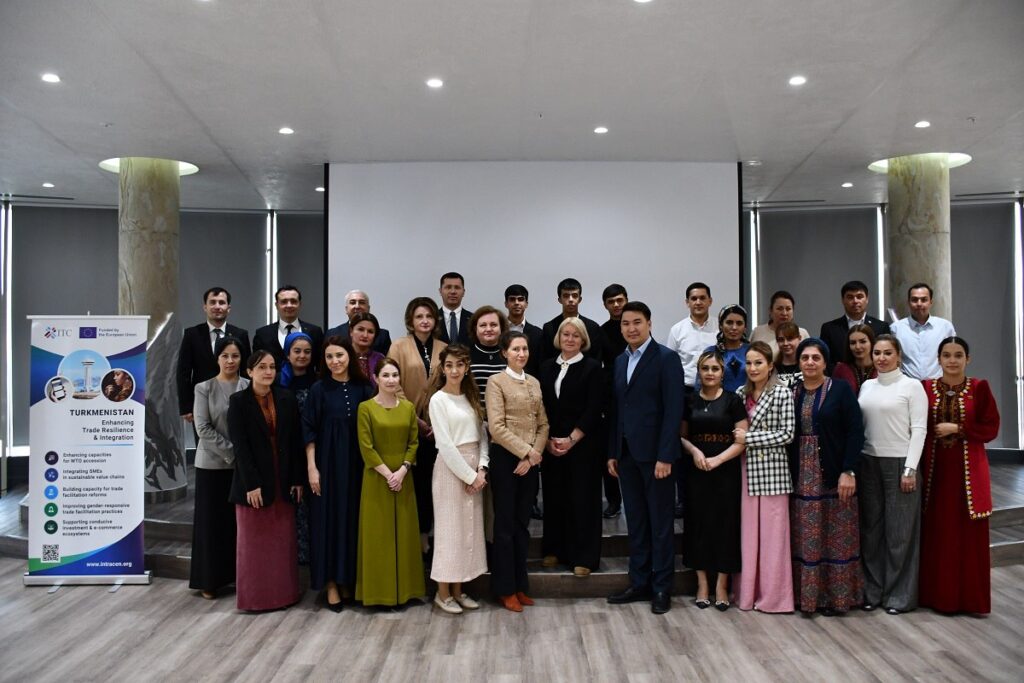
Ashgabat recently hosted a two-day seminar on Turkmenistan's prospects for joining the World Trade Organization. The event, organized by the Ministry of Finance and Economy and the International Trade Center (ITC), brought together representatives of the country's private sector and government agencies. ITC international experts Daria Karman, Alyson Hook, and Nurlan Kulbatyrov shared practical integration experience into the global trading system with the participants. Special attention was paid to Kazakhstan, whose path to the WTO can serve as an illustrative example for Turkmenistan. Among the key topics of discussion were the need to adapt legislation to international standards, reform trade policy, and modernize mechanisms for regulating foreign economic activity. For Turkmen entrepreneurs, accession to the WTO opens access to world markets and creates favorable conditions for increasing exports. However, this will require a significant increase in local enterprises' competitiveness and the introduction of modern production technologies. According to the event organizers, the active discussion of integration processes testifies to Turkmen business's serious attitude toward international cooperation. Such seminars are part of Turkmenistan's comprehensive preparation for accession to the WTO. In the future, this should create additional incentives for entrepreneurship and increase the country's export potential. Representatives of government agencies and the business community actively participated in the seminar, which confirmed Turkmenistan's interest in deepening integration processes and expanding international trade cooperation.

Only Half of Kazakhstan’s CO2 Emissions are Subject to State Regulation

Environmentalists say that Kazakhstan's quota system for greenhouse gas emissions covers only half of the country's emissions. This means that the state only has real leverage over large industrial polluters. Experts say that the state needs to pay further attention in the near future to emissions in three sectors: agriculture, forestry, and waste management systems. These sectors currently remain virtually uncontrolled in terms of environmental emissions. Kazakhstan ratified the UN Framework Convention on Climate Change in 1995 and, in 2016, presented its plan to the world community for transitioning to a green economy and achieving carbon neutrality. The carbon neutrality strategy envisages a 15% reduction in the 1990 level of emissions by 2030 (from 386.3 to 328.4 million tons of CO2) and achieving a net zero balance of greenhouse gases by 2060. The country has implemented a quota system for greenhouse gas emissions, and any industrial facility with emissions exceeding 20,000 tons of carbon dioxide per year is subject to quotas. However, those “polluters” whose activities result in emissions of 10 to 20 thousand tons of CO2 are subject to regulation and must report to the state for their emissions, but they are not subject to quotas. Finally, economic entities that do not even reach 10,000 tons of emissions are not obliged to notify the state about the environmental damage they cause. As a result, the state can regulate only half of emissions. Aigul Malikova, coordinator of the Central Asia Regional Environmental Network in Kazakhstan, explained to The Times of Central Asia: “In 2021, according to the national inventory, the actual volume of emissions across Kazakhstan amounted to 340 million tons, and quotas, including even additional ones, were issued for only 176 million, which means that only half of all greenhouse gas emissions fall under regulation, and in fact, we can affect only half of all emissions now. The situation is aggravated by the fact that in 2021, Kazakhstan produced one-third more emissions than the quotas granted; in 2022, this excess was 3%; that is, even regulated enterprises emit more than they are allowed under the quotas.” Malikova also noted there is no data for 2023. Still, it is already clear that the government needs to control not only major industrial polluters but also other sectors of the economy that need to be more accountable in terms of emissions regulation to achieve carbon neutrality. However, assessing their contribution to total emissions is difficult since they are not even legally required to submit reports. Paradoxically, such sectors include agriculture and forestry, which by definition should be environmentally “clean,” as well as the waste management system and housing and communal services. “For these three sectors - agriculture and forestry, waste management and housing, and communal services - data on greenhouse gas emissions could not be assessed at all. In the national reporting, this data is absent in the context of regions. In the reporting of the carbon cadastre, this data is also absent, and because they are not subject to quotas, no...