• KGS/USD = 0.01144 0%
  • KZT/USD = 0.00206 0%
  • TJS/USD = 0.10760 -0.46%
  • UZS/USD = 0.00008 0%
  • TMT/USD = 0.28571 0%
  • KGS/USD = 0.01144 0%
  • KZT/USD = 0.00206 0%
  • TJS/USD = 0.10760 -0.46%
  • UZS/USD = 0.00008 0%
  • TMT/USD = 0.28571 0%
  • KGS/USD = 0.01144 0%
  • KZT/USD = 0.00206 0%
  • TJS/USD = 0.10760 -0.46%
  • UZS/USD = 0.00008 0%
  • TMT/USD = 0.28571 0%
  • KGS/USD = 0.01144 0%
  • KZT/USD = 0.00206 0%
  • TJS/USD = 0.10760 -0.46%
  • UZS/USD = 0.00008 0%
  • TMT/USD = 0.28571 0%
  • KGS/USD = 0.01144 0%
  • KZT/USD = 0.00206 0%
  • TJS/USD = 0.10760 -0.46%
  • UZS/USD = 0.00008 0%
  • TMT/USD = 0.28571 0%
  • KGS/USD = 0.01144 0%
  • KZT/USD = 0.00206 0%
  • TJS/USD = 0.10760 -0.46%
  • UZS/USD = 0.00008 0%
  • TMT/USD = 0.28571 0%
  • KGS/USD = 0.01144 0%
  • KZT/USD = 0.00206 0%
  • TJS/USD = 0.10760 -0.46%
  • UZS/USD = 0.00008 0%
  • TMT/USD = 0.28571 0%
  • KGS/USD = 0.01144 0%
  • KZT/USD = 0.00206 0%
  • TJS/USD = 0.10760 -0.46%
  • UZS/USD = 0.00008 0%
  • TMT/USD = 0.28571 0%

Viewing results 1 - 6 of 17

Turkmenistan Highlights International Outreach at Cabinet Meeting

A recent Cabinet meeting in Turkmenistan highlighted contacts with many countries and international organizations, reinforcing a perception that the tightly managed nation is taking more steps, however limited, to engage the world. Appearing via video link, President Serdar Berdimuhamedov presided over the May 1 meeting of ministers who covered economic growth, oil and natural gas production, scientific research, and other national priorities in a review of the year so far. But international outreach was a big part of the high-level discussion in an energy-rich Central Asian country often defined as opaque and restrictive. An account of the meeting by the Turkmenistan State News Agency (TDH) ticked off statistics: 220 delegations visited Turkmenistan this year, 400 delegations from Turkmenistan visited other countries, 711 negotiations and other meetings occurred in the country with foreign states and international agencies, and 57 more international documents were added to Turkmenistan’s legal code. “The development of diplomatic relations through foreign embassies is one of the important directions of the foreign policy work of neutral Turkmenistan,” said the report, referring to the country’s policy of non-alignment and not getting involved in the internal affairs of other countries. “Work on promoting relations with the countries of the Middle East is also ongoing,” it said. Iraq opened its embassy in Ashgabat in March, 17 years after Turkmenistan and Iraq established diplomatic relations in 2009. On May 4, Rashid Meredov, Turkmenistan’s foreign minister, spoke by telephone with Iranian Foreign Minister Abbas Araghchi about regional security, Caspian issues, and other matters, according to the Turkmen Foreign Ministry. The ministry’s statement did not mention the Iran conflict or uncertainty surrounding the ceasefire with the United States. Turkmenistan’s international campaign is consistent with a pattern seen across Central Asia, where governments have sought to diversify their trade and diplomatic ties while maintaining close relations with the region’s major powers, Russia and China. Turkmenistan, however, still exports most of its natural gas to China, its largest trading partner. At the same time, Turkmenistan is intensifying efforts to integrate into the global trading system, with officials reaffirming plans to move towards membership in the World Trade Organization (WTO). It is the last post-Soviet republic to start WTO accession talks. Turkmenistan’s leaders are also working on their international profiles. Berdimuhamedov attended an ecological summit of regional leaders in Kazakhstan last month. His father and predecessor, Gurbanguly Berdimuhamedov, traveled to the U.S. in February, China in March, and Austria in April. This month, he is due to travel to the Russian city of Kazan. Although government transparency is limited in Turkmenistan, father and son appear to run the country through a power-sharing arrangement. Outsiders are getting more glimpses of Turkmenistan. The capital, Ashgabat, hosted an international tourism conference in April. This month, the Reuters news agency reported on a trip there after being given what it said was “rare access” to travel in the country. It remains unclear, however, whether any efforts to engage with the outside world will materially change daily life in Turkmenistan, where people...

Turkmenistan Steps Up Preparations for WTO Membership Amid Economic Growth

Turkmenistan is intensifying efforts to integrate into the global trading system, with officials reaffirming the country’s intention to move towards membership in the World Trade Organization (WTO). The announcement was made by Deputy Minister of Finance and Economy Perhat Yagshiyev during the forum “Investing in Turkmenistan’s Future,” according to local media reports. Yagshiyev said the accession process is progressing in a structured manner. A draft memorandum on the country’s foreign trade regime has been prepared, while WTO standards are being introduced gradually in cooperation with the organisation’s Secretariat and international partners. Authorities also point to positive macroeconomic trends. Official data indicate that Turkmenistan’s gross domestic product exceeded $77.4 billion in 2025, reflecting growth of 6.3%. Investment volumes reached more than $12.8 billion, up 6% year-on-year, while inflation reportedly declined to 3.2%. External debt remains below 3% of GDP, and officials say the country has not recorded domestic public debt since January 2022. Foreign trade turnover rose by 10.3% to $21.8 billion. The oil and gas sector, petrochemicals, energy, construction and agriculture continue to be highlighted by the government as priority areas for foreign investment. Transport infrastructure development remains a central component of economic policy. Turkmenistan is participating in several international logistics initiatives, including the Trans-Caspian corridor, the North-South transport route and the Lazurite corridor. The third phase of the Ashgabat-Turkmenabat highway is expected to be completed in 2026, which authorities say will strengthen the country’s role as a regional transit hub. Preparations for WTO accession are also linked to the modernisation of trade procedures. Galina Romanova, a representative of the Ministry of Finance and Economy, previously stated that improving trade facilitation is a key priority. “We are taking consistent steps to modernise customs procedures and introduce digital solutions that make trade faster and more transparent,” she said. Turkmenistan was granted observer status in the WTO on July 22, 2020, following a decision by the organisation’s General Council in Geneva.

Uzbekistan Completes Bilateral WTO Talks with U.S.

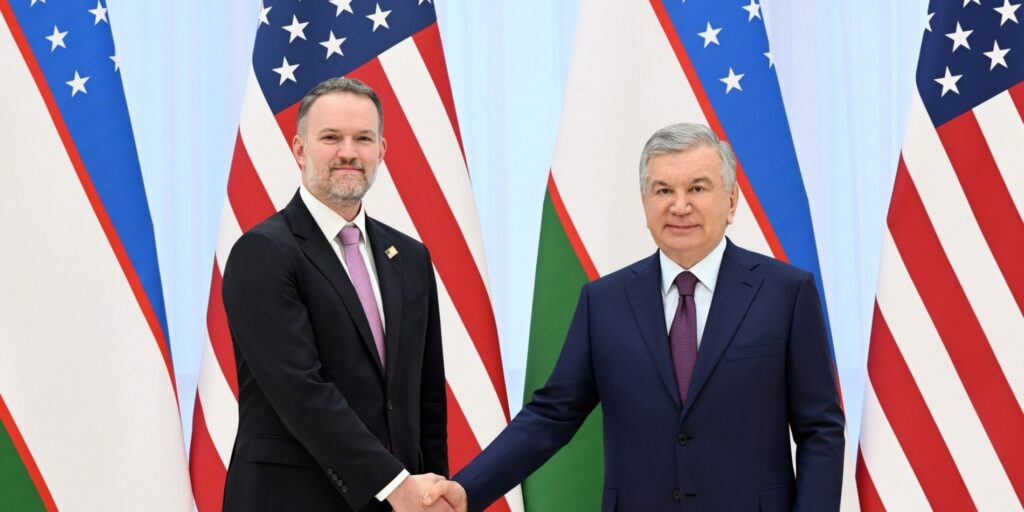
Uzbekistan has successfully concluded bilateral negotiations with the United States as part of its efforts to join the World Trade Organization (WTO), according to Azizbek Urunov, Special Representative of the President of Uzbekistan for the WTO. Urunov announced the milestone on his LinkedIn page. “Uzbekistan and the United States signed today, on December 19, 2024, the Protocol on the completion of the bilateral market access negotiations within Uzbekistan’s WTO accession,” Urunov wrote. The protocol was signed by Deputy Prime Minister Jamshid Khodjaev and U.S. Trade Representative Katherine Tai. Urunov described 2024 as a “historic year” for Uzbekistan’s WTO membership process, noting significant progress achieved by the end of the year. Expressing gratitude, Urunov commended the U.S. negotiating team for its constructive engagement and lauded the dedication of Uzbekistan’s negotiators. He emphasized the country’s commitment to finalizing its WTO accession by 2026, under the leadership of President Shavkat Mirziyoyev. In addition to the United States, Uzbekistan has also concluded bilateral negotiations with China, signaling accelerated efforts to meet its WTO membership target.

Uzbekistan Aims to Join WTO by 2026

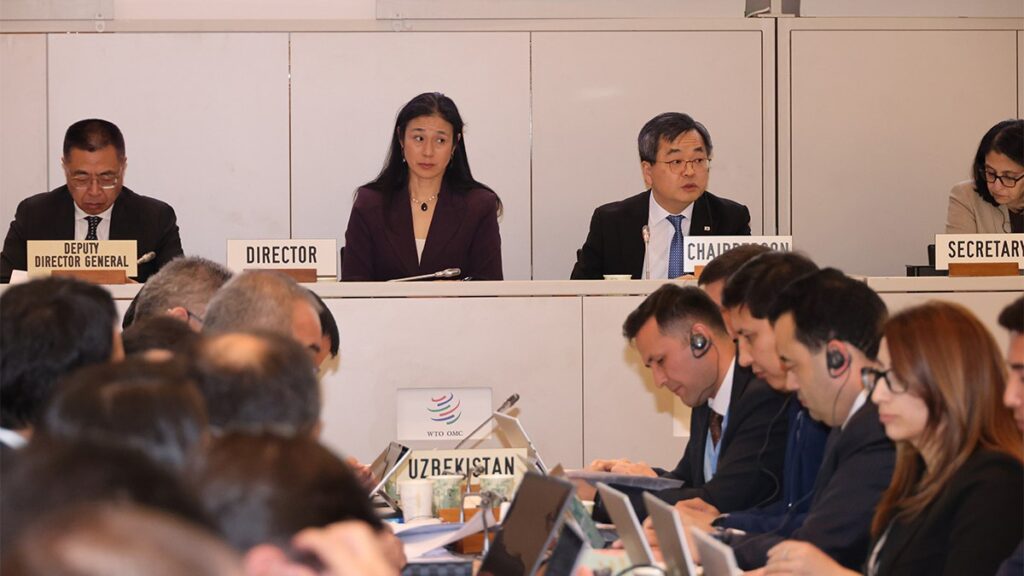
Uzbekistan is intensifying efforts to finalize its accession to the World Trade Organization (WTO), aiming for completion by 2026. At the ninth meeting of the Working Group on Accession, held December 5-6, a delegation led by Deputy Prime Minister Jamshid Khodjayev reaffirmed the country’s commitment to this timeline. WTO members expressed support for Uzbekistan’s high-level political engagement, and encouraged continued alignment of its trade regime with international standards. Khodjayev emphasized that WTO accession is not merely a technical procedure but a critical driver of internal reforms. “This goal demonstrates the inevitability of Uzbekistan's integration into the global trading system. In 2025, efforts will focus on completing negotiations and harmonizing legislation with WTO norms,” Khodjayev stated. The Uzbek delegation included Azizbek Urunov, the president's special representative on WTO issues, Deputy Economy Minister Ahadbek Khaidarov, and representatives from various agencies. Some officials joined the discussions virtually from Tashkent. Chief Negotiator Azizbek Urunov reported that Uzbekistan has concluded bilateral negotiations with nine additional WTO members, bringing the total to 22. This milestone underscores significant progress in the accession process. WTO Deputy Director General Xiangchen Zhang commended Uzbekistan for its ambitious reforms, including Presidential Decree DP-85, which aims to align national legislation with WTO norms. These efforts align with President Shavkat Mirziyoyev’s strategy to accelerate economic modernization. Chairman of the Working Group, Ambassador Yoon Seong-Dok of South Korea, also noted substantial progress at both bilateral and multilateral levels. He highlighted Uzbekistan’s productive cooperation with international organizations such as the IMF, World Bank, and WTO. The Working Group reviewed Uzbekistan’s draft report outlining commitments as a prospective WTO member and examined recent legislative changes. Since May 2024, Uzbekistan has enacted 192 legal acts to comply with WTO standards. Ambassador Yoon stressed the importance of sustained efforts in 2025 to meet the next milestones. “The coming seven to eight months will be crucial to achieve the goal of completing the process by 2026,” he said. The Times of Central Asia previously reported that Uzbekistan has secured China's agreement for its WTO accession. Joining the organization is a cornerstone of Uzbekistan’s broader economic reforms aimed at integrating the nation into the global trading system.

Uzbekistan Completes Key Step in WTO Accession with China Agreement

Uzbekistan has successfully concluded bilateral negotiations with China regarding its accession to the World Trade Organization (WTO). Azizbek Urunov, Special Representative of the President for the WTO, announced this milestone in a LinkedIn post. “[It was a] very short but productive visit to Beijing! Yesterday, we completed bilateral negotiations on Uzbekistan’s accession to the WTO with the People’s Republic of China,” Urunov wrote. He expressed gratitude to China’s Ministry of Commerce, Deputy Minister Li Fei, Director Li Defeng, and their teams for their cooperation. “[It is] very important at [the] year-end to finish negotiations with the two biggest global trade players – the United States and China. Twenty-two countries are there, a few left!” The Times of Central Asia reported that this achievement follows Uzbekistan’s recent finalization of WTO accession negotiations with the United States, Uzbekistan’s WTO accession is a cornerstone of the country’s ongoing economic reforms, which aim to integrate its economy into the global trade system. Johanna Hill, WTO Deputy Director-General, praised Uzbekistan’s progress: “Uzbekistan has been one of the most active acceding governments of late. It has pushed ahead with economic reform in the strategic region of Central Asia, with WTO accession very high on the government’s agenda.” Hill referenced a WTO report indicating that countries implementing market reforms during WTO accession experience growth rates 1.5% higher than those without such reforms. With negotiations with major economies like the United States and China now complete, Uzbekistan is edging closer to its goal of WTO membership, a move poised to boost its global trade prospects and economic development.

WTO Momentum: Uzbekistan Wraps up Talks with U.S.

Uzbekistan has taken another big stride in its march toward membership in the World Trade Organization, a goal that it hopes to finalize ahead of the WTO ministerial meeting in the spring of 2026. A bilateral agreement with the United States has been reached after 14 months of negotiations, according to Azizbek Urunov, Uzbekistan’s chief negotiator on WTO accession. Uzbekistan has now completed talks with 21 countries as it seeks to implement reforms and integrate more closely with the global economy, demonstrating considerable momentum toward WTO accession since no deals had been negotiated at the beginning of 2023. “It has been an adventurous journey, tough but substantive negotiations,” Urunov said after the talks with American counterparts last week. Uzbekistan started the WTO accession process in 1994, several years after independence from the Soviet Union, and then dropped the effort a decade later. It resumed the campaign a few years ago. Johanna Hill, deputy director-general of the WTO, said last month that Uzbekistan’s goal was to “reduce the number of outstanding bilateral negotiations to under 10 WTO Members by next year.” [caption id="attachment_25176" align="aligncenter" width="1149"] Uzbekistan's accession process; image: WTO[/caption]   Uzbekistan is pursuing reforms in the role of state trading enterprises, exports restrictions and subsidies, technical barriers to trade and other areas, according to Hill. "Uzbekistan has been one of the most active acceding governments of late. It has pushed ahead with economic reform, in the strategic region of Central Asia, with WTO accession very high on the government's agenda,” she said. Hill cited a WTO report this year that says economies reforming their markets during WTO accession grew on average 1.5% more than economies that did not reform. The WTO report maintains that trade and more global cooperation are critical to fostering equality and inclusivity, while acknowledging rising geopolitical tensions, measures to restrict trade, greater urgency surrounding the push for sustainability and other challenges. Some analysts point to the WTO’s ministerial conference in Abu Dhabi, United Arab Emirates earlier this year as a showcase for the troubles that the organization is facing. “On the critical agenda items - agricultural trade, fisheries subsidies, and reform of the WTO’s dispute-settlement mechanism - ministers simply kicked the can down the road, undertaking to continue work and once more extend deadlines that few expect to be met,” wrote Evan Rogerson, an analyst at the S. Rajaratnam School of International Studies in Singapore. His commentary on the meeting was among several presented by the Council of Councils, an international group of policy institutes.