• KGS/USD = 0.01144 0%
  • KZT/USD = 0.00201 0%
  • TJS/USD = 0.10475 0%
  • UZS/USD = 0.00008 0%
  • TMT/USD = 0.28571 0%
  • KGS/USD = 0.01144 0%
  • KZT/USD = 0.00201 0%
  • TJS/USD = 0.10475 0%
  • UZS/USD = 0.00008 0%
  • TMT/USD = 0.28571 0%
  • KGS/USD = 0.01144 0%
  • KZT/USD = 0.00201 0%
  • TJS/USD = 0.10475 0%
  • UZS/USD = 0.00008 0%
  • TMT/USD = 0.28571 0%
  • KGS/USD = 0.01144 0%
  • KZT/USD = 0.00201 0%
  • TJS/USD = 0.10475 0%
  • UZS/USD = 0.00008 0%
  • TMT/USD = 0.28571 0%
  • KGS/USD = 0.01144 0%
  • KZT/USD = 0.00201 0%
  • TJS/USD = 0.10475 0%
  • UZS/USD = 0.00008 0%
  • TMT/USD = 0.28571 0%
  • KGS/USD = 0.01144 0%
  • KZT/USD = 0.00201 0%
  • TJS/USD = 0.10475 0%
  • UZS/USD = 0.00008 0%
  • TMT/USD = 0.28571 0%
  • KGS/USD = 0.01144 0%
  • KZT/USD = 0.00201 0%
  • TJS/USD = 0.10475 0%
  • UZS/USD = 0.00008 0%
  • TMT/USD = 0.28571 0%
  • KGS/USD = 0.01144 0%
  • KZT/USD = 0.00201 0%
  • TJS/USD = 0.10475 0%
  • UZS/USD = 0.00008 0%
  • TMT/USD = 0.28571 0%

Viewing results 1477 - 1482 of 2215

EU to Allocate €600,000 to Uzbekistan for Green Budgeting

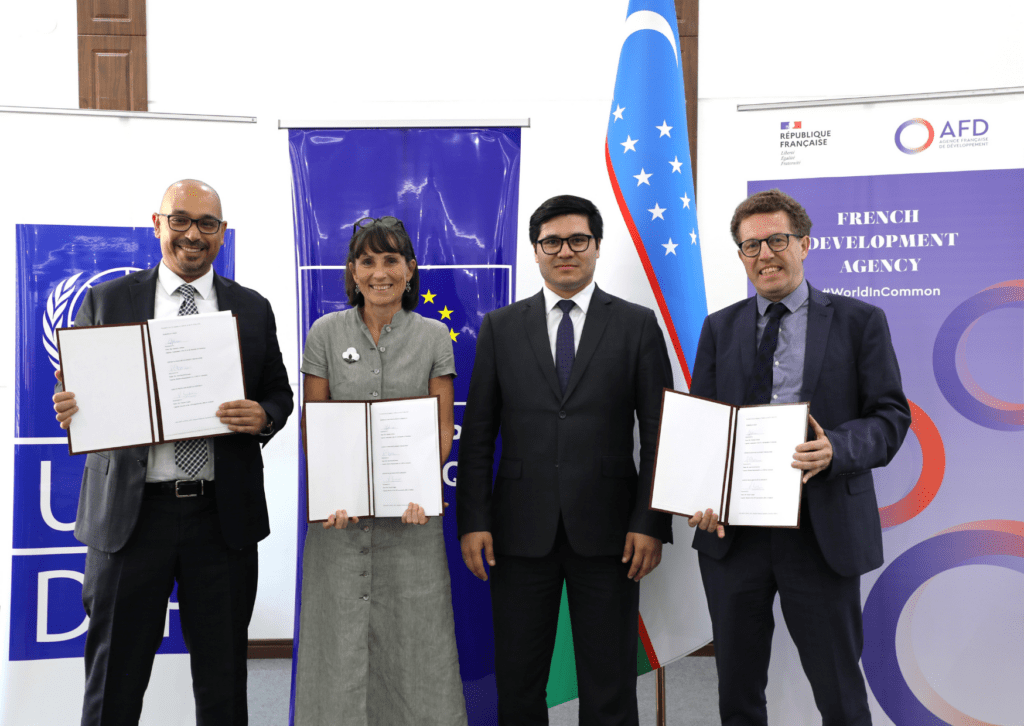
An agreement on financing a new project in support of green development in Uzbekistan was signed on May 6 by representatives of the French Development Agency (AFD), the European Union, and the United Nations Development Program (UNDP). According to the UNDP's press service, the project aims to assist the Uzbek government in financing green development across the country through the effective use of public finance, integrating green priorities into the budgeting process (green budgeting), and introducing innovative financial instruments to attract investments in green projects. The Ministry of Economy and Finance is expected to act as the cabinet-level partner in this project. Under the agreement, grant funds in the amount of €600,000 provided by the EU will be directed by AFD and the UNDP to provide technical assistance to the government under the project "Supporting Green Development Financing in Uzbekistan" for the period 2024-2026. The new project will build on the results and achievements of the previous joint initiative by AFD and the UNDP to introduce budgeting methodologies and practices based on the Sustainable Development Goals (SDGs), which were successfully implemented in 2022-2023. At that time, the Ministry of Economy and Finance was supported in designing and developing methodologies based on international best practices, conducting research and capacity building of national partners in the field of SDGs and green budgeting. Key results of that project included climate budget labeling -- implemented for the first time in Uzbekistan -- and the presentation of its results in the "Budget for Citizens" publication.
USAID to Host 13th Central Asia Trade Forum in Kazakhstan

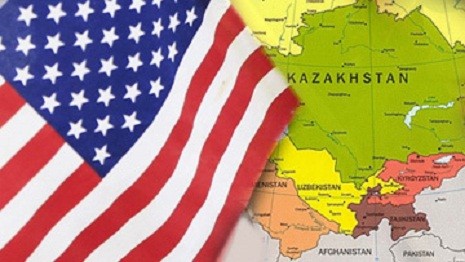
The U.S. Embassy in Kazakhstan has announced that preparations are well underway for the 13th Central Asia Trade Forum. Under the theme, ‘Trade Connections: Bridging Globally,’ the event will be hosted by U.S. Agency for International Development (USAID) in Almaty from 13 – 14 May. Since its inception, the Central Asia Trade Forum (CATF) has attracted the participation of over 10,000 government and business leaders from 25 countries in Central and South Asia, Europe, and the United States, and led to contracts worth over $32 million. This year’s event will focus on exploring new trade opportunities and overseas markets, as well as identifying and expanding the scope of regional trade. To this end, the forum will feature sessions on customs digitalization, transport and logistics, trade regulation (including regional trade agreements), World Trade Organization standards, and harmonization. Promoting the event, Luis A. Rivera, Regional Mission Director at USAID Central Asia, stated, “The forum’s success is its ability to attract policymakers, business leaders, and trade experts each year. Agreements made at the forum have expanded businesses, strengthened trade between Central Asian nations, and advanced economic growth in the region and beyond,” The accompanying trade fair, organized in partnership with Kazakhstan’s Ministry of Trade and Integration and Almaty Chamber of Commerce and Investment, with the participation of 40 companies from Kazakhstan, Kyrgyzstan, Tajikistan, Turkmenistan, and Uzbekistan, will showcase agricultural, textile, apparel, and food products. Other complementary events include a business-to-business expo to promote Central Asian products amongst global buyers, and a Kazakhstan-Pakistan Trade Fair. In the wake of the forum, business executives and officials from the five CA countries, will convene at the 11th Regional Meeting of the National Trade Facilitation Committees of Central Asian countries on 15 May, to discuss customs control, transport, phytosanitary certification, and veterinary border control.  

Central Asian Leaders Gather in Moscow for Economic Meeting, WWII Anniversary

At the invitation of Russian President Vladimir Putin, Central Asian leaders are arriving in Moscow ahead of celebrations on Thursday of the victory over Nazi Germany in World War II. President Shavkat Mirziyoyev of Uzbekistan arrived in the Russian capital “on a working visit” and will participate in commemorations of the 79th anniversary of victory over the Nazis, Russia’s state-run Tass news agency has reported. It said that Kyrgyz President Sadyr Japarov arrived in Moscow on Tuesday. The leaders of Kazakhstan, Tajikistan and Turkmenistan will also be in town, according to Russian presidential aide, Yuri Ushakov. Putin, who was inaugurated to a fifth term on Tuesday, was scheduled to attend a meeting of the Eurasian Economic Council, a regional trade group, on Wednesday. Also on the guest list were other leaders of member states of the group, including Kazakhstan, Kyrgyzstan, Belarus and Armenia, the Kremlin said. Uzbekistan and Cuba were attending as observer states. Russia has looked to Central Asia to serve as a conduit for trade with as it seeks to circumvent Western sanctions imposed because of its invasion of Ukraine. Russia has said that only representatives from “friendly countries” were invited to the May 9 ceremony in Red Square, an opportunity for Putin to stir patriotic pride and showcase military might in the third year of war in Ukraine. Central Asian countries, as former Soviet republics, were critical to the Soviet war effort in World War II, and have been holding their own solemn commemorations in recent days. Whilst nurturing relations with China and the West, Central Asia countries retain close economic and security ties to Moscow.

Uzbekistan and the EU Celebrate 30 Years of Mutually Beneficial Cooperation

A festival to celebrate the 30th anniversary of cooperation between Uzbekistan and the European Union (EU) will be held on 18 May at Tashkent's Botanical Garden. Welcoming the event, EU Ambassador to Uzbekistan Charlotte Adrian, stated,  "The partnership between the European Union and Uzbekistan remains strong, from the signing of the Enhanced Partnership and Cooperation Agreement (EPCA) to the strengthening of GSP+ [Generalized Scheme of Preference Plus] trade relations and joint commitments to improve human rights." The festival will feature an exhibition of EU-funded projects including an interactive platform for young people, students and other visitors.   The 'Climate Change and Resilience in Central Asia' project will be highlighted through an interactive game, quizzes and question-and-answer sessions, whilst  'Made in Uzbekistan'  will showcase goods from EU-AGRIN (Uzbek Agriculture Knowledge and Innovation System) in tasting sessions of local produce. Celebrations will close  with a grand gala concert dedicated to the 30th anniversary of the partnership. Interaction with the EU , one of the main priorities of Uzbekistan's foreign policy, is evidenced by the country's accession in 2021 to the GSP+ system of preferences, which enables   6,200 categories of goods to be exported to Europe duty-free. In this regard, General Director of BMB Trade Group Mirgulom Usmanov noted that agri-food companies in Uzbekistan are now growing and processing varieties of fruit and vegetables to meet the demands of  the European market. In the first 10 months of 2023 alone, the volume of mutual trade between Uzbekistan and the EU grew by 36 percent year-on-year to $4.8 billion. An important step towards revitalizing the partnership  was taken in the adoption of a resolution that calls for a review of the EU's strategy towards Central Asian countries and as stressed by  the report,  "The EU is extremely interested in deploying efficient trade and energy corridors between Europe and Asia, bypassing Russia."

Dushanbe Conference to Discuss New Mass Media Law

On May 14, Dushanbe will host a conference entitled "Favorable Media Environment - an Important Factor of Legal Education in Society." The meeting is being organized by the Tajik Parliament and the nonprofit organization, Homa, with the support of the European Union (EU). The purpose of the discussion is to review the draft law "On Mass Media" with participation from a wide range of representatives of government agencies, international, multilateral, nonprofit, non-governmental organizations (NGOs) and the media. According to representatives of civic organizations, the rapid development of technology and international norms oblige the government to adapt legislation to international standards and modern best practices. In March 2023, a working group was established to draft a law on the mass media. It included representatives of government agencies and civil society, who together studied the experience of various countries in the region and analyzed legislative acts regulating media activities. In Tajikistan, the activities of the media are regulated mainly by two laws: the law "On Periodical Press and Other Mass Media" and the law "On Television and Radio Broadcasting." Following crackdowns, only two significant independent media voices remain in Tajikistan; the privately owned Asia-Plus, and the U.S. Congress-funded Radio Free Europe/Radio Liberty’s local service, both of which have long been subjected to partial shutdowns.

Why Kazakhstan’s Deepening Ties With Afghanistan Are Significant

At the end of April a Kazakh delegation made an official visit to Kabul, where a meeting of the Kazakh-Afghan Business Forum and an exhibition of Kazakh products were held. This was the third bilateral event aimed at expanding trade and economic ties between Kazakhstan and Afghanistan. The visit to Kabul indicates Astana’s intention to enhance Kazakhstan’s relations with the new Afghan authorities, and not only through trade. This is evidenced by a number of details that differed from previous official contact. First, an unannounced trilateral government meeting took place between Afghanistan, Kazakhstan and Turkmenistan in Kabul. The result was the announcement that a new logistics route to Afghanistan through Turkmenistan and Kazakhstan would be developed. There is nothing earthshaking about this – Turkmenistan is set to become a transportation hub for international corridors passing through Kazakhstan, primarily the North-South and the Middle corridors, as well as the Lapis Lazuli Corridor (Turkey-Azerbaijan-Turkmenistan-Afghanistan). What is significant is that the sides are striving to create favorable conditions for logistics, especially more competitive transport tariffs so trains can pass through faster. This is particularly important given congestion in Uzbekistan, where bottlenecks occur. The announcement in Kabul also means a direct route to economically attractive western Afghanistan and further south. What else made the Kabul visit notable was the meeting between Kazakh deputy prime minister Serik Zhumangarin, who oversees trade, and Abdul Kabir, the Taliban’s deputy prime minister for political affairs. Given the reputation of the Taliban, it is not in the interests of Astana to simply stage a conversation for the cameras. Unfortunately, details about the Zhumangarin-Kabir meeting are few. According to the available information, the deputy prime ministers discussed security issues in Afghanistan, apparently in the context of how to grow the Afghan economy. Following the meeting, Kabir stated that Afghanistan does not want to be a threat to the region, and intends to improve relations with its neighbors through the progressive development of trade and economic relations. The Zhumangarin-Kabir meeting is said to have taken place on the initiative of the Afghan side. Considering Kabir’s closeness to the emir of the Taliban, it is likely that the initiative came from him. Other notable outcomes of the visit of the Kazakh delegation to Kabul included: discussion of joint projects for geological exploration, mining and processing of solid minerals in Afghanistan, as well as in the IT sector; discussion of the possibilities for supplying Kazakh-made cars and subsequent localization of service centers in Afghanistan; a rise in the quota for Afghan students at Kazakh universities from 30 to 60, as well as a 10-day trip to children’s camps in Kazakhstan for 30 Afghan children in the summer of 2024; and discussion of the possibility of establishing direct flights between the two countries. Aidar Borangaziev is a Kazakhstani diplomat. He has worked in the diplomatic service in Iran and Afghanistan. He is a founder of the Open World Center for Analysis and Forecasting Foundation (Astana). He is an expert in regional security.