• KGS/USD = 0.01144 0%
  • KZT/USD = 0.00211 0%
  • TJS/USD = 0.10526 0%
  • UZS/USD = 0.00008 0%
  • TMT/USD = 0.28530 0%
  • KGS/USD = 0.01144 0%
  • KZT/USD = 0.00211 0%
  • TJS/USD = 0.10526 0%
  • UZS/USD = 0.00008 0%
  • TMT/USD = 0.28530 0%
  • KGS/USD = 0.01144 0%
  • KZT/USD = 0.00211 0%
  • TJS/USD = 0.10526 0%
  • UZS/USD = 0.00008 0%
  • TMT/USD = 0.28530 0%
  • KGS/USD = 0.01144 0%
  • KZT/USD = 0.00211 0%
  • TJS/USD = 0.10526 0%
  • UZS/USD = 0.00008 0%
  • TMT/USD = 0.28530 0%
  • KGS/USD = 0.01144 0%
  • KZT/USD = 0.00211 0%
  • TJS/USD = 0.10526 0%
  • UZS/USD = 0.00008 0%
  • TMT/USD = 0.28530 0%
  • KGS/USD = 0.01144 0%
  • KZT/USD = 0.00211 0%
  • TJS/USD = 0.10526 0%
  • UZS/USD = 0.00008 0%
  • TMT/USD = 0.28530 0%
  • KGS/USD = 0.01144 0%
  • KZT/USD = 0.00211 0%
  • TJS/USD = 0.10526 0%
  • UZS/USD = 0.00008 0%
  • TMT/USD = 0.28530 0%
  • KGS/USD = 0.01144 0%
  • KZT/USD = 0.00211 0%
  • TJS/USD = 0.10526 0%
  • UZS/USD = 0.00008 0%
  • TMT/USD = 0.28530 0%

Viewing results 391 - 396 of 2395

Cholpon-Ata to Host ‘Day of German Economy in Kyrgyzstan’

On August 26, Kyrgyzstan will host one of its most prominent international business events of the year, the Day of German Economy in Kyrgyzstan, alongside the 4th meeting of the Kyrgyz-German Business Council. The events are organized by the National Investment Agency under the President of the Kyrgyz Republic. According to the agency, the forum will take place at two venues in the resort city of Cholpon-Ata: the Rukh Ordo Cultural Center and the No. 2 State Residence of the President of the Kyrgyz Republic. The event is expected to bring together high-level participants, including government officials, business leaders, industry associations, and investors from both Germany and Kyrgyzstan. Welcoming remarks will be delivered by Adylbek Kasymaliyev, Chairman of the Cabinet of Ministers of Kyrgyzstan, and Professor Reinhold Krämmel, Honorary Consul of Kyrgyzstan in Munich and Deputy Co-Chairman of the Kyrgyz-German Business Council. The forum will feature two thematic panel sessions: "Energy Projects for German-Kyrgyz Economic Cooperation" - focusing on opportunities in green energy and infrastructure development. "Export Potential and Logistics in the Transition Period: Opportunities of the Middle Corridor" - examining evolving trade routes and modern logistical challenges. In addition, Kasymaliyev will attend the meeting of the Kyrgyz-German Business Council. Discussions will center on the theme: “Kyrgyz-German Trade, Economic and Investment Cooperation: Finance as an Integral Part of the Partnership.” The primary aim of the event is to deepen economic dialogue, enhance trade and investment relations, and strengthen the strategic partnership between Kyrgyzstan and Germany.

CSTO Working Group on Military Training and Scientific Cooperation Opens in Bishkek

A working group meeting on military training and scientific cooperation under the Collective Security Treaty Organization (CSTO) opened in Bishkek today, bringing together delegations from Armenia, Belarus, Kazakhstan, Kyrgyzstan, Russia, and Tajikistan to coordinate officer education, joint curricula, and research collaboration across the bloc. The two-day session runs August 21–22 under Kyrgyzstan’s 2025 chairmanship. AKIpress reported the start of proceedings and its focus on aligning training and scientific work across member states. Officials have said the agenda will center on harmonizing military-education standards, expanding joint training for specialized branches, and mapping priority research areas that can be shared among defense academies and laboratories across the alliance. Outcomes from the Bishkek meeting are expected to inform the CSTO’s rolling program of joint trainings and institutional cooperation in 2026 and beyond. Recent Track Record in Central Asia Today’s meeting builds on a stepped-up schedule of CSTO drills and staff talks in Central Asia. In September 2024, Kyrgyzstan hosted the active phase of “Interaction-2024,” “Search-2024,” and “Echelon-2024” exercises designed to synchronize command-and-control, reconnaissance, logistics, and support elements of the alliance’s collective forces. The Kyrgyz leg concluded with combined operations demonstrations and evaluation of interoperability gains. In October 2024, Tajikistan hosted “Rubezh-2024,” focused on Central Asia’s rapid-deployment forces and scenarios involving incursions by illegal armed groups, hostage rescue, and air-defense coordination. The CSTO reported that the exercise’s operational objectives were achieved and that joint tactics were refined during the active phase at the Harbmaidon range. This year, the organization also ran a strategic command-staff training for its Joint Staff and national ministries on March 17–20, 2025, rehearsing planning and coordination procedures for regional contingencies - part of the bloc’s annual joint-training cycle. Policy framework and next steps The Bishkek working group is meeting against the backdrop of decisions taken by defense ministers in Bishkek on May 28, 2025, when CSTO members approved the Plan of Military Cooperation for 2026–2030 and the Plan of joint training for 2026 - documents that set training priorities, exercise calendars, and institutional cooperation goals across the alliance. By aligning academy programs and research agendas, and pairing them with the long-term exercise plan, the CSTO is aiming to standardize specialist training (from signals and EW to logistics and UAV operations), expand exchanges among defense universities, and convert lessons from recent drills into updated curricula. As chair, Kyrgyzstan is expected to circulate agreed proposals from this week’s sessions to the Council of Defense Ministers for inclusion in the 2026 training calendar and for incorporation into the 2026–2030 cooperation framework.

Tokayev to Visit Kyrgyzstan for High-Level Talks on Aug. 21–22

Kazakhstan’s President Kassym-Jomart Tokayev is due in Kyrgyzstan for an official visit at the invitation of President Sadyr Japarov, with the main program set in Bishkek. An announcement, carried by state media, confirmed the trip and outlined that talks would take place on deepening political and economic ties. Local authorities have introduced traffic restrictions for Aug. 21–22, indicating a two-day schedule including protocol events and bilateral meetings. The leaders are expected to review cooperation across trade, transit, and energy, and to convene the Supreme Interstate Council, the highest bilateral forum, to sign documents prepared by their foreign ministries in recent weeks. Diplomatic sources say deliverables could include measures to ease border procedures and timelines for joint infrastructure projects. A Busier, More Formalized Partnership Kazakhstan and Kyrgyzstan have intensified engagement through 2024–2025 with frequent ministerial contacts, new investment pledges, and coordination on water-energy policy. In early August, the countries’ foreign ministers initiated a 2025–2027 cooperation plan for presidential approval at the upcoming summit. Energy is central: the governments, together with Uzbekistan and international partners, have advanced groundwork on the Kambarata-1 hydropower plant, a flagship project intended to expand clean generation and regulate seasonal flows in the Syr Darya basin. Economically, both states are members of the Eurasian Economic Union, giving their businesses a shared customs space and labor mobility framework — a recurring theme when leaders meet to resolve practical bottlenecks in border trade and logistics. Business groups on both sides are also pushing for upgrades to road and rail crossings and for the expanded use of digital customs tools. Tokayev’s program is expected to include a formal meeting with President Japarov, a session of the Supreme Interstate Council, and a signing ceremony. While detailed communiqués typically follow the talks, officials in Bishkek and Astana have signaled that this visit aims to translate recent preparatory work into specific targets on trade, transport, and energy, setting the tone for the next phase of Kazakh–Kyrgyz relations.

Has Kyrgyzstan Benefited From Its Membership of the EAEU?

On the sunlit shores of Lake Issyk-Kul this August, Kyrgyzstan played host to leaders from across the Eurasian Economic Union (EAEU). On August 14-15, officials from Armenia, Belarus, Kazakhstan, and Russia descended on the resort town of Cholpon-Ata for a meeting of the Eurasian Intergovernmental Council, accompanied by ceremonies to mark a decade since Kyrgyzstan joined the Moscow-led economic bloc. The Kyrgyz government issued a commemorative stamp to celebrate the anniversary, while the guest of honor, Russian Prime Minister Mikhail Mishustin, arrived with pledges of deeper integration. Rosatom, Moscow’s nuclear agency, signed agreements to build Kyrgyzstan’s first wind farm near Issyk-Kul, while the union’s five governments also agreed to recognize each other’s digital documents, and talks continued on a long-awaited gas union. Mishustin also caused a stir on social media by addressing the Kyrgyz honor guard in their own language. The words “Salam Asker” (hello, soldiers) were enough to draw appreciation from a Kyrgyz society unused to hearing Russian politicians use any language but Russian in its former colonies. The flattery was all part of the choreography: in return, Kyrgyz government officials and state media fell in line to proclaim the benefits of EAEU membership. But have these benefits been worth it? Or has the EAEU merely tethered Bishkek to a partner whose grip is more suffocating than supportive? [caption id="attachment_35121" align="aligncenter" width="1600"] The Conference Hall at Cholpon-Ata, where the council meeting took place; image: Joe Luc Barnes[/caption] The Case for the Union Kyrgyz officials are keen to emphasize the upsides. In an interview with state mouthpiece Slovo.kg, former economic minister Arzybek Kozhoshev said that joining the bloc had eased conditions for Kyrgyz migrant laborers in Russia and Kazakhstan. “With the accession of the Kyrgyz Republic to the EAEU, the conditions of stay and work of citizens of the Kyrgyz Republic in other EAEU countries have changed significantly,” Kozhoshev said, highlighting simplified entry, no requirement to take a Russian language exam, equal access to health insurance, and even the right to draw pensions on par with local workers. For a country where remittances have accounted for around 25% GDP over the past decade, these measures are not insignificant. Kyrgyz drivers, once barred from operating commercial vehicles in Russia, now enjoy full rights. Digital labor platforms like Work Without Borders make it easier to find jobs, and migrant workers in Russia pay the same flat 13% tax as local workers. In short, for the hundreds of thousands of Kyrgyz toiling in Moscow, Novosibirsk, and Almaty, the EAEU has meant fewer hurdles and more predictability. It’s worth bearing in mind that other potential labor destinations, such as Korea, the United States, or the European Union, are not handing out hundreds of thousands of visas to Kyrgyz citizens every year. Kremlin officials have also stressed that Kyrgyzstan pays lower tariffs on Russian gas – only $150 per 1,000 cubic meters, due to its EAEU membership. That said, given Russia’s current oversupply of gas with the closure of the European market, this is not...

Tokayev Congratulates Putin After Alaska Meeting; Russian Leader Briefs Mirziyoyev

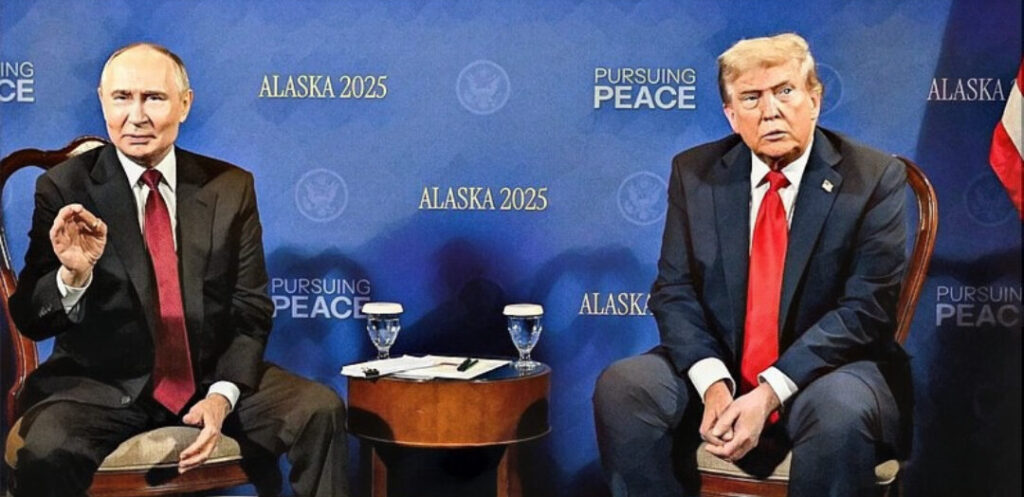
Russian President Vladimir Putin spoke to the leaders of Kazakhstan and Uzbekistan by telephone on Sunday, briefing them about his talks in Alaska with U.S. President Donald Trump about ending the war in Ukraine. Trade and joint energy projects between Russia and the Central Asian countries were also discussed. President Kassym-Jomart Tokayev of Kazakhstan congratulated Putin on “the results” of the meeting with Trump and said “the negotiations contributed to a better understanding by the American side of the Russian position on Ukraine, which will help find common ground on this complex issue,” Tokayev’s office said. “Kassym-Jomart Tokayev considers the Alaska summit a breakthrough event in terms of strengthening Russia's international positions and mutual understanding on the world stage,” the office said. Even so, uncertainty remains. Putin and Trump provided few details about their meeting on Friday, leaving Alaska without the Ukraine-backed cease-fire that Trump had previously demanded. Ukraine and its European allies are concerned that Trump could back a proposed deal under which Moscow secures more Ukrainian territory as part of a resolution. Ukrainian President Volodymyr Zelenskyy and European leaders are scheduled to meet Trump at the White House on Monday to press their case for a peace with security guarantees. In their phone call, Putin informed President Shavkat Mirziyoyev of Uzbekistan of the “main results” of his meeting with Trump, Mirziyoyev’s office said. “The leader of Uzbekistan expressed support for the agreements reached and voiced hope for a swift settlement of the situation surrounding Ukraine,” the office said. Putin and Mirziyoyev spoke about accelerating trade between their two countries, while Tokayev thanked the Russian leader for collaborating in the field of energy, a possible reference to Russia’s leading role in building Kazakhstan’s first nuclear power plant. The Kremlin released similar statements about the phone calls.

Despite War’s Challenges, Kazakhstan Says Trump-Putin Meeting Was “The Beginning”

Kazakhstan has praised Russian President Vladimir Putin and U.S. President Donald Trump for their meeting in Alaska, describing it as “the beginning of high-level negotiations on the situation in Ukraine.” President Kassym-Jomart Tokayev “regards the summit as a historic event, made possible by the political will and sincere determination of both leaders to seek common approaches to resolving contemporary global challenges, including the cessation of hostilities in Ukraine,” Tokayev´s press secretary, Ruslan Zheldibay, said on X on Saturday. Tokayev’s statement generally aligned with the positive statements made by Putin and Trump after their meeting on Friday, even though the two leaders provided few details about how they envisioned resolving the conflict when they spoke briefly to the media after their discussion. Ukraine and its European allies have been concerned that Trump could favor Putin’s terms for ending the war, leaving Ukraine vulnerable to renewed Russian pressure in the future. Ukrainian President Volodymyr Zelenskyy is expected to meet Trump at the White House on Monday. In a Truth Social post on Saturday, Trump appeared to back away from his previous demand for a Ukraine-supported ceasefire, saying it was better to “go directly to a Peace Agreement, which would end the war, and not a mere Ceasefire Agreement, which often times do not hold up.” Despite their concerns, European leaders have welcomed Trump’s negotiation efforts, noting a statement by the U.S. president that the United States “is prepared to give security guarantees” so that Ukraine can defend its sovereignty. “It will be up to Ukraine to make decisions on its territory. International borders must not be changed by force,” a joint statement by European leaders said. Kazakhstan is not directly involved in negotiations over Ukraine, but it has become an intermittent venue for international diplomacy and has offered to assist as needed since it maintains ties with both Russia and Ukraine. Tokayev has spoken in support of Ukraine’s sovereignty and territorial integrity. But in a phone call a week ago, Tokayev told Zelenskyy that “A bad peace is better than a good war,” possibly a pitch to the Ukrainian leader to consider concessions such as giving up territory in order to preserve the country’s independence. Russia occupies an estimated 20% of Ukraine and has made gains in eastern Ukraine in recent days. At least publicly, Zelenskyy has opposed the idea of giving up territory, saying the Ukrainian constitution prevents him from doing so. On Saturday, he said on X: “A real peace must be achieved, one that will be lasting, not just another pause between Russian invasions.” Kazakhstan, which has sought neutrality over the war, shares a long land border with Russia and has closer trade and diplomatic ties with Moscow than Kyiv. Since Russia’s full-scale invasion of Ukraine in February 2022, Tokayev has spoken to Zelenskyy several times in phone calls that, according to Kazakhstan’s presidency, were initiated by the Ukrainian side. Tokayev has spoken to Putin by phone on more than twice as many occasions and has also met the Russian...