• KGS/USD = 0.01144 0%
  • KZT/USD = 0.00213 0%
  • TJS/USD = 0.10569 0.09%
  • UZS/USD = 0.00008 0%
  • TMT/USD = 0.28530 0%
  • KGS/USD = 0.01144 0%
  • KZT/USD = 0.00213 0%
  • TJS/USD = 0.10569 0.09%
  • UZS/USD = 0.00008 0%
  • TMT/USD = 0.28530 0%
  • KGS/USD = 0.01144 0%
  • KZT/USD = 0.00213 0%
  • TJS/USD = 0.10569 0.09%
  • UZS/USD = 0.00008 0%
  • TMT/USD = 0.28530 0%
  • KGS/USD = 0.01144 0%
  • KZT/USD = 0.00213 0%
  • TJS/USD = 0.10569 0.09%
  • UZS/USD = 0.00008 0%
  • TMT/USD = 0.28530 0%
  • KGS/USD = 0.01144 0%
  • KZT/USD = 0.00213 0%
  • TJS/USD = 0.10569 0.09%
  • UZS/USD = 0.00008 0%
  • TMT/USD = 0.28530 0%
  • KGS/USD = 0.01144 0%
  • KZT/USD = 0.00213 0%
  • TJS/USD = 0.10569 0.09%
  • UZS/USD = 0.00008 0%
  • TMT/USD = 0.28530 0%
  • KGS/USD = 0.01144 0%
  • KZT/USD = 0.00213 0%
  • TJS/USD = 0.10569 0.09%
  • UZS/USD = 0.00008 0%
  • TMT/USD = 0.28530 0%
  • KGS/USD = 0.01144 0%
  • KZT/USD = 0.00213 0%
  • TJS/USD = 0.10569 0.09%
  • UZS/USD = 0.00008 0%
  • TMT/USD = 0.28530 0%

Viewing results 493 - 498 of 2424

After U.S. Strikes, Kazakhstan Warns of Deteriorating Security in Caspian Region

Kazakhstan said on Sunday that U.S. military strikes on Iran pose “serious consequences” for security in the Caspian region. “As a result of recent U.S. military actions against Iran, the international situation is rapidly deteriorating, posing serious consequences for the security of states in our region,” Kazakhstan’s Ministry of Foreign Affairs said after the United States joined Israel’s war against Iran and attacked several Iranian nuclear sites. “Kazakhstan, as one of the Caspian region states, maintains cooperation with Iran in various spheres. We believe that all disputes, including those related to nuclear issues, must be resolved through negotiations based on the United Nations Charter,” the ministry said. “We urge all relevant states to accelerate the development of an agreement aimed at preventing the proliferation of nuclear weapons and providing security guarantees for states that comply with the non-proliferation regime under international oversight,” it said. Kazakhstan, Azerbaijan, Turkmenistan, Iran and Russia border the Caspian Sea. The area is an important trade route.

Amidst Diplomatic Tensions, Russia and Uzbekistan Explore Long-Term Youth Exchange Program

During a recent meeting with the heads of global news agencies in St. Petersburg, Russian President Vladimir Putin responded positively to a proposal from Uzbekistan’s National News Agency (UzA) to establish a long-term youth exchange program aimed at strengthening bilateral ties and addressing migration-related issues. Abdusaid Kochimov, Director General of UzA, initiated the proposal, emphasizing the historical and cultural ties between the two countries. “There is a strong interest in Uzbekistan in everything that happens in and around Russia. Our societies share close mentalities and traditions,” he said. Kochimov praised the leadership of Presidents Vladimir Putin and Shavkat Mirziyoyev in deepening strategic cooperation, describing their efforts as “titanic.” However, he pointed out persistent challenges in the migration sphere and argued that a structured youth program with defined goals could foster deeper mutual understanding and resolve some of these issues. “There is a real need for a large-scale and long-term youth exchange program with clear projects and goals,” Kochimov said. “This would bring our young people closer and build a strong, friendly image of each other, based on our shared values and history.” President Putin welcomed the suggestion, noting ongoing collaboration between Russia and Uzbekistan across several sectors, including energy. He referenced the two countries’ partnership in nuclear energy development and acknowledged Uzbekistan’s rapidly growing population, from 15 million three decades ago to 38 million today, highlighting the resulting pressures on its labor market. “We agreed with President Mirziyoyev to prepare people who want to work in Russia in advance. This includes learning the Russian language and culture. There’s a good plan in place,” Putin said, adding, “This work is not just important, it’s essential. I fully agree with you.” Putin also mentioned recent visits by Uzbek officials to Moscow, including Saida Mirziyoyeva, which included discussions on youth engagement. He reaffirmed Russia’s commitment to supporting joint initiatives in this area. However, this positive diplomatic development comes against the backdrop of recent tensions over the treatment of Uzbek nationals in Russia. On June 10, the Uzbek Foreign Ministry summoned Russian diplomats to protest what it called the aggressive and disrespectful conduct of law enforcement officers during identity checks on Uzbek migrants. The protest followed a major police raid in Moscow’s Strogino district on June 8. Footage shared online appeared to show migrants being forcibly removed, verbally abused, and subjected to electric shocks. Uzbek authorities criticized these actions as unauthorized and unacceptable. In response, Uzbekistan’s embassy in Moscow issued an official note requesting a legal explanation and urging Russian authorities to treat migrants with dignity in line with international standards. Russian Foreign Ministry spokesperson Maria Zakharova confirmed that the matter is currently under official review.

Another Suspected Drone Discovered in Kazakhstan’s Mangistau Region

On June 19, fragments of a suspicious object resembling an unmanned aerial vehicle (UAV) were discovered in the Karakiyan district of Kazakhstan’s Mangistau Region, near the Bolashak border station. According to the Mangistau Region Police Department, the UAV debris was found in a remote area, far from populated settlements. Authorities emphasized that "no damage" was reported. The incident is currently under investigation in cooperation with the relevant agencies. Potential Iranian Link Suggested While officials have not confirmed the origin or type of the device, speculation is growing. The KazTAG news agency reported that the shape of the debris may resemble that of an Iranian Shahed-136 drone. These drones have been reportedly supplied by Iran to Russia since late 2022 and used extensively in the war in Ukraine. According to independent sources, Russia may have paid Iran approximately 1.8 tons of gold, worth around $104 million, for a consignment of Shahed-136 drones. Despite denials from both Moscow and Tehran, the drones' deployment in Ukraine has been documented by independent journalists and military experts. Meanwhile, pro-Kremlin sources have speculated that it could be a British Banshee drone used by the Ukrainian Armed Forces. [caption id="attachment_33143" align="aligncenter" width="1280"] Image: TCA[/caption] Pattern Emerges Along Western Border This is not an isolated occurrence. Since early 2024, at least three similar incidents have been recorded in the West Kazakhstan Region (WKR). UAVs or drone parts were discovered in the villages of Ualy (February 18), Atameken (March 18), and Zhanibek (March 25). Regional media have noted that some of the discovered objects bear a resemblance to French-made Crecerelle reconnaissance drones, produced by Sagem. However, no official conclusions have been issued. Broader Security Implications The repeated discovery of drone-like objects in Kazakhstan raises broader security concerns, particularly given the proximity of Russian regions frequently targeted by Ukrainian drones. Strategic installations in Russia’s Saratov region, including airfields and oil depots, have been hit multiple times. In this context, the unexplained appearance of aerial objects near Kazakhstan’s borders is concerning. Experts stress the need for transparent investigations and enhanced monitoring of airspace, especially near critical infrastructure and transportation corridors. Kazakhstan’s Ministry of Defense previously stated that UAV fragments found in February and March 2025 may have originated from activities at Russia’s 929th State Flight Test Center, located near the Kazakh border. The facility, named after Chkalov, is used by the Russian Ministry of Defense for testing military aircraft.

Turkmenistan’s Gas Swap Deals Could Be Collateral Damage from Israeli-Iran Conflict

Turkmenistan has the fourth largest reserves of natural gas in the world, but the country has found it difficult to export substantial volumes. Lack of export pipelines are one of the problems and it seemed Turkmenistan had partially solved this dilemma by arranging gas swap deals. Unfortunately for Turkmenistan, these deals involve Iran as the key country, and the Israeli-Iran conflict sheds new doubt on the ability of Iran to fulfill its part in the swap arrangements. So Close Turkmenistan signed a deal to supply 10 billion cubic meters (bcm) of gas annually to Iraq in late October 2024. It was the first major gas export deal Turkmenistan had signed in nearly two decades. That last big agreement was signed with China in 2006. It involved building four gas pipelines from Turkmenistan to China to eventually carry a combined 85 bcm of gas, 65 bcm of which would be Turkmen gas. Since the pipelines cross through Uzbekistan and Kazakhstan, both of those countries are allotted 10 bcm each of the capacity for their gas exports. The fourth branch that would have carried 30 bcm of Turkmen gas has not been built, leaving Turkmen gas exports to China averaging 35 bcm per year. At the moment, China is the only major customer for Turkmen gas. The second largest buyer of Turkmen gas is Uzbekistan, which only purchases about 2 bcm. Not even 20 years ago, Russia was purchasing more than 40 bcm of Turkmen gas, but by 2023 that had dwindled to 5.5 bcm, still leaving Russia as the second largest buyer of Turkmen gas. In July 2024, after negotiations over price broke down, the two parties chose not to renew that contract. That made the agreement with Iraq all the more important for Turkmenistan. However, there are no pipelines connecting the two countries. Yet So Far The Turkmen-Iraqi agreement calls for Turkmenistan to ship 10 bcm of gas to Iran, with Iran then sending 10 bcm of its gas to Iraq. Iran needs gas for its northern regions that are not connected to the domestic pipeline network that sources gas from the fields of in the south of the country. Turkmenistan has two pipelines to export gas to Iran. Both were built after independence in 1991, and could carry up to a combined 20 bcm. Since January 2017, when the Turkmen government made good on a threat to cut off Iran over unpaid bills for gas, almost no gas has been shipped through these pipelines. The first task is to perform maintenance, repairs, and upgrades on these pipelines so that Turkmenistan can physically send 10 bcm of gas to Iran. The Iranian pipeline to Iraq is functional. Iran was exporting gas to Iraq, but international sanctions on Iran hindered Iraq’s ability to pay for that gas. Prior to the agreement with Iraq, Turkmenistan signed a contract in early July 2024 with Iranian officials for the transfer of gas. It is unclear how far along Turkmenistan is in performing its pipeline...

XI Jinping’s Five Points: How China Is Looking To Reshape Central Asia

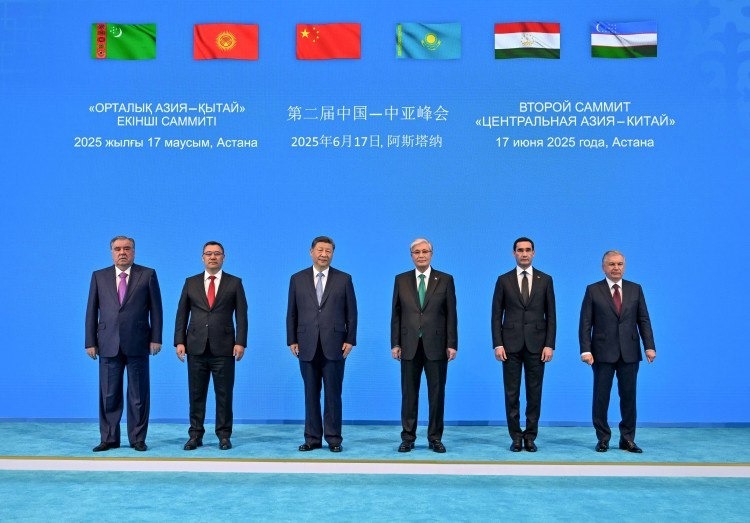
The second China-Central Asia summit on June 17, held in Astana, Kazakhstan, underscored the strengthening ties between China and the region. This event marked a significant milestone in solidifying the China-Central Asia cooperation framework with the signing of the Treaty on Eternal Good-Neighborliness, Friendship, and Cooperation. Experts note that Central Asian countries, once unable to adopt an intra-regional treaty, collectively reached this broader agreement with China. The summit also featured a range of side events, including the Energy Forum “Energy of Central Asia - China,” the Forum on Humanitarian Exchange, the Second Forum on Industrial and Investment Cooperation, and the Central Asia-China Business Council meeting, among others. These gatherings highlighted cooperation in energy, trade, and cultural exchange, reflecting China’s deepening influence in the region. Kazakh President Kassym-Jomart Tokayev praised China’s approach to equal partnership, stating that relations between the two nations are “stable and free from the negative impacts of geopolitical challenges and shocks as well as the international circumstances. China has never imposed any political conditions regarding cooperation with Kazakhstan.” “This is a very important point, Kazakhstani Sinologist Adil Kaukenov explained, “as the head of state, being at the forefront of Kazakhstan's foreign and domestic policies, faces political games, manipulation, and pressure at various levels, which require considerable restraint, experience as a statesman, and popular support to overcome.” During the summit, the heads of the Central Asian states articulated their priorities for cooperation with China. Kazakhstan emphasized projects like the creation of a joint cargo terminal in the port of Kuryk on the Caspian Sea, cooperation in the fields of nuclear energy and artificial intelligence, and counteracting international cybercrime. Kyrgyzstan focused on security, transport, e-commerce, energy, and tourism. Tajikistan prioritized industrial development, trade, food security, and green economy initiatives. Uzbekistan, meanwhile, sought the further integration of Afghanistan into the region, and proposed an “Electronic Silk Road” trade platform, and the development of a long-term strategy called the “Central Asia-China Industrial and Infrastructure Belt.” Chinese President Xi Jinping used his address to outline five key points that shape China’s vision for the future of its relationship with Central Asia. “Our cooperation is rooted in more than two thousand years of friendly relations, consolidated by the solidarity and mutual trust that has been established for 30 years since the establishment of diplomatic relations, and has made great progress thanks to mutually beneficial cooperation in the new era,” Xi stated in his keynote speech. According to Xi, China considers Central Asia one of the priorities of its foreign policy, and this building of peaceful, inclusive partnerships was marked by the historical milestone of the signing of the treaty at the summit. “We will improve the architecture of cooperation, which is characterized by pragmatism, efficiency, and deep integration,” the Chinese president said, adding that 2025–2026 have been declared the Years of High-Quality Development of China-Central Asia Cooperation. This initiative will focus on trade, transport connectivity, green energy, agriculture, and technology. Notably, China pledged 1.5 billion yuan ($208 million) in grants for projects aimed...

Citizens of Central Asia Face New Entry Restrictions To Russia and the U.S.

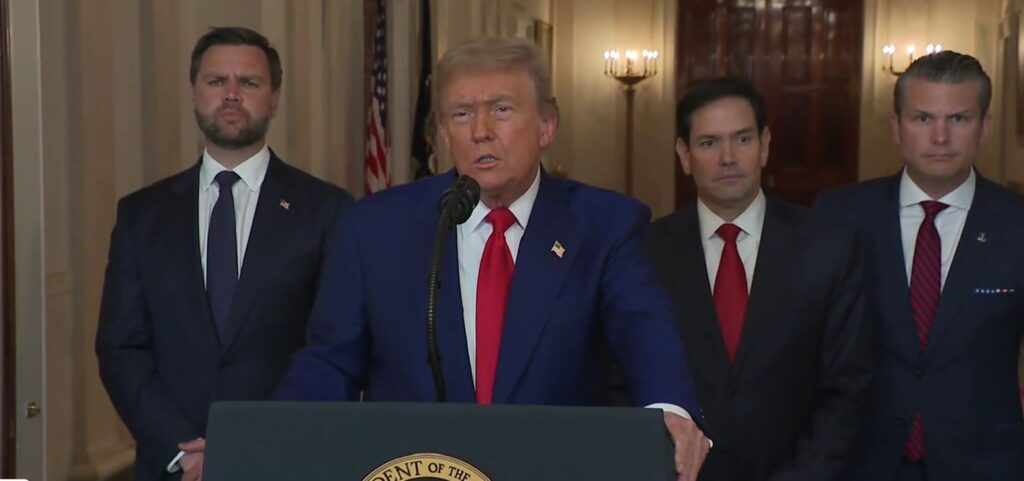
Citizens of Central Asian countries are encountering a wave of new travel restrictions from two major global powers, Russia and the United States. In recent weeks, Moscow and Washington have both introduced or expanded measures that complicate entry for citizens of the region, raising concerns about migration rights, bilateral relations, and regional security. Russia Tightens Border Rules Starting June 30, 2025, citizens from visa-free countries, including Kazakhstan, will be required to obtain a special QR code to enter Russia. The code must be secured in advance via the Gosuslugi RuID app, at least 72 hours before travel, or four hours in emergency cases. The app is not yet operational, but Russian Prime Minister Mikhail Mishustin has confirmed its planned launch on the same date. While Russia maintains visa-free arrangements with over 30 countries, including Argentina, Brazil, Israel, and all CIS members, these new digital entry requirements apply broadly. Exceptions include citizens of countries already subject to visa regimes, diplomats, and citizens of Belarus, a Union State member. Additionally, as of January 1, 2025, the allowable visa-free stay in Russia for citizens of these countries has been reduced from 90 days per half-year to 90 days per calendar year. Many Kazakhstani travelers fear that the new rules will result in long queues and technical delays at border crossings. More broadly, critics point out that the move undermines the spirit of the Eurasian Economic Union (EAEU), whose member states, Kazakhstan, Kyrgyzstan, Armenia, Belarus, and Russia, are supposed to enjoy facilitated mobility. Response to the Crocus City Hall Attack The changes come in the wake of the March 22, 2024 terrorist attack at Moscow’s Crocus City Hall, which left at least 145 dead and more than 500 injured. The suspects in the attack were reportedly citizens of Tajikistan, sparking a wave of anti-migrant sentiment in Russia. According to Temur Umarov, a Berlin-based political analyst at the Carnegie Center, Russian authorities are prioritizing security over economic necessity. "Russia is doing everything possible to reduce the number of migrants from Central Asia," he said, noting the vital role these workers play in several Russian industries. Regional Backlash Public figures and officials in Kyrgyzstan, Uzbekistan, and Tajikistan have expressed frustration over Russia’s tightened migration policy. In Kyrgyzstan, the Ministry of Foreign Affairs lodged a formal protest with the Russian ambassador following a widely publicized incident in which Kyrgyz citizens were forcibly removed from a Moscow bathhouse. Member of Parliament Zhana Akayev strongly condemned the treatment of Kyrgyz nationals: “Partners and allies do not behave like this. They are humiliating our citizens,” he said. Tajik Foreign Minister Sirojiddin Muhriddin criticized Russia’s approach as inhumane and called for migration policies that respect mutual interests and fundamental rights. In Uzbekistan, several bloggers have gone further, calling for entry bans on Russian public figures, including Foreign Ministry spokeswoman Maria Zakharova, for alleged chauvinistic remarks. Kazakhstan has taken a more measured stance. Aibek Smadiyarov, a spokesman for the Kazakh Foreign Ministry, emphasized that the QR code system does not constitute a...