• KGS/USD = 0.01144 0%
  • KZT/USD = 0.00215 0%
  • TJS/USD = 0.10680 0.19%
  • UZS/USD = 0.00008 0%
  • TMT/USD = 0.28530 0%
  • KGS/USD = 0.01144 0%
  • KZT/USD = 0.00215 0%
  • TJS/USD = 0.10680 0.19%
  • UZS/USD = 0.00008 0%
  • TMT/USD = 0.28530 0%
  • KGS/USD = 0.01144 0%
  • KZT/USD = 0.00215 0%
  • TJS/USD = 0.10680 0.19%
  • UZS/USD = 0.00008 0%
  • TMT/USD = 0.28530 0%
  • KGS/USD = 0.01144 0%
  • KZT/USD = 0.00215 0%
  • TJS/USD = 0.10680 0.19%
  • UZS/USD = 0.00008 0%
  • TMT/USD = 0.28530 0%
  • KGS/USD = 0.01144 0%
  • KZT/USD = 0.00215 0%
  • TJS/USD = 0.10680 0.19%
  • UZS/USD = 0.00008 0%
  • TMT/USD = 0.28530 0%
  • KGS/USD = 0.01144 0%
  • KZT/USD = 0.00215 0%
  • TJS/USD = 0.10680 0.19%
  • UZS/USD = 0.00008 0%
  • TMT/USD = 0.28530 0%
  • KGS/USD = 0.01144 0%
  • KZT/USD = 0.00215 0%
  • TJS/USD = 0.10680 0.19%
  • UZS/USD = 0.00008 0%
  • TMT/USD = 0.28530 0%
  • KGS/USD = 0.01144 0%
  • KZT/USD = 0.00215 0%
  • TJS/USD = 0.10680 0.19%
  • UZS/USD = 0.00008 0%
  • TMT/USD = 0.28530 0%

Viewing results 67 - 72 of 756

Dozens of Human Trafficking Attempts Prevented in Kazakhstan

Kazakh law enforcement agencies have disrupted dozens of serious human trafficking attempts during the nationwide STOP-Traffic operational and preventive campaign, according to the Ministry of Internal Affairs. The ministry reported 39 recorded cases of attempted human trafficking, including six involving minors. In Almaty, authorities dismantled a criminal group engaged in the illegal sale of newborns. According to investigators, the suspects exploited vulnerable young women by persuading them to give up their babies in exchange for money. More than 20 criminal cases have been opened, and all suspects have been detained. If convicted, they face up to 18 years in prison and confiscation of property. In the Abai Region, law enforcement uncovered forced labor operations involving local citizens. Eleven criminal cases have been initiated, and the case files are being prepared for court proceedings, the ministry said. Routine inspections of nightlife venues in several regions, including Shymkent, Zhambyl, Aktobe, West Kazakhstan, Karaganda, and Kostanay, also led to the prevention of exploitative practices involving both adults and minors. In Astana, police and prosecutors conducted targeted raids near the city’s railway station on Goethe Street. Eight individuals are currently under prosecution for organizing and operating brothels for sexual exploitation. Meanwhile, in the Akmola Region, the activities of a religious group operating a so-called “spiritual center” were halted. Law enforcement seized religious literature, ceremonial items, and ritual objects. Expert examinations have been ordered, and the investigation remains ongoing. Authorities also documented the operations of “elite escort” services in Astana, Almaty, and Shymkent. The organizers allegedly recruited young women from nightclubs and bars. Related criminal cases have been submitted to court on charges of organizing prostitution. In the first half of 2025, Kazakhstan recorded 134 crimes related to human trafficking. This comes amid the implementation of a new national law on combating human trafficking, which took effect in 2024. The law was developed by the Ministry of Internal Affairs with technical support from the International Organization for Migration.
Turkmenistan Denies Early Release to Activist Mansur Mingelov Despite Serious Illness

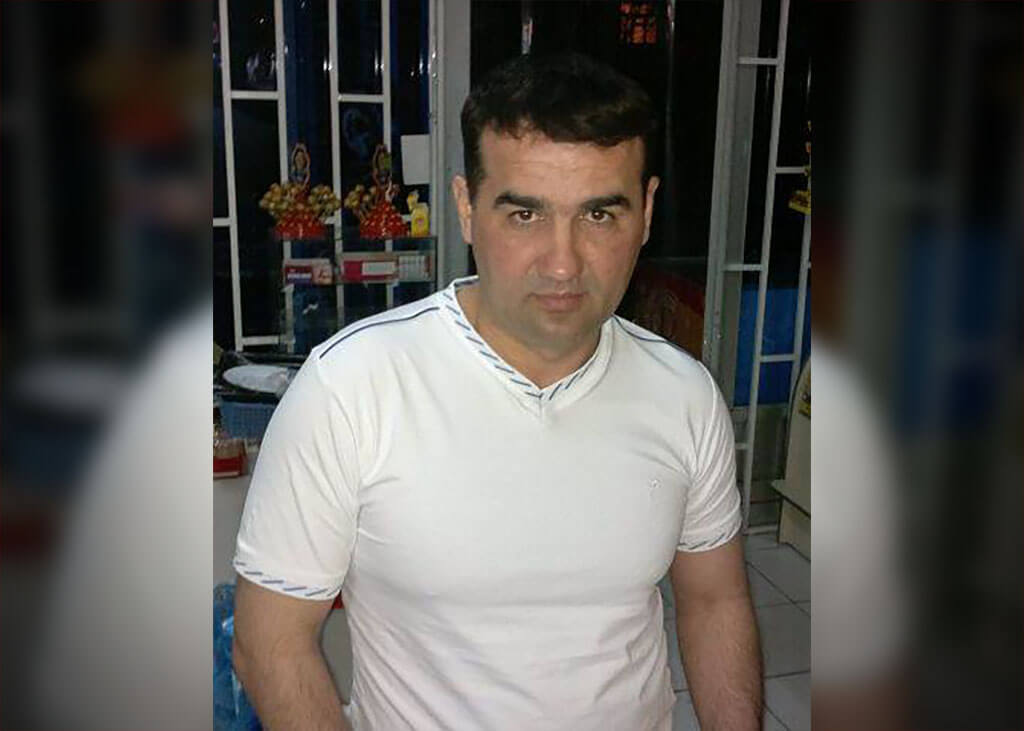
Turkmenistan’s Ministry of Internal Affairs has rejected a request to initiate early release procedures for imprisoned human rights activist Mansur Mingelov, despite his confirmed serious medical diagnosis and the legal provisions that would permit such action. According to an official response dated October 20, the Department for the Enforcement of Sentences under the Ministry of Internal Affairs concluded there were “no grounds” for early release. The response followed appeals by Mingelov’s family to the Prosecutor General’s Office and the Ministry of Internal Affairs, citing his deteriorating health and referencing multiple legal articles supporting their request. Mingelov, who has been imprisoned since 2012, was convicted after defending his own rights and those of the Baloch minority in Turkmenistan. His family cited Article 76 of the Criminal Code (“Release from punishment due to serious illness”) and Article 166 of the Criminal Enforcement Code (“Grounds for release from serving a sentence”), as well as Presidential Decree No. 202 of May 11, 2017, which outlines the medical criteria for such releases. In mid-2024, a commission from the Ministry of Health officially diagnosed Mingelov with tuberculous arthritis in both knees, a condition that, according to doctors, cannot be treated inside Turkmenistan. He is currently being held at the MR-B/15 prison hospital. Notably, Vepa Hajiyev, Turkmenistan’s permanent representative to the United Nations, publicly acknowledged Mingelov’s diagnosis and affirmed that national legislation provides for the release of prisoners with serious illnesses upon court approval. Under existing law, a court can only consider such cases after receiving a joint submission from the prison monitoring commission and the sentencing authority - a process Mingelov’s family attempted to initiate but which authorities declined to advance. Despite the official diagnosis and detailed legal framework, no follow-up medical examination or formal review of Mingelov’s health condition has been conducted, according to the independent outlet, turkmen.news. Mingelov's relatives argue that the Ministry’s refusal is not based on medical or legal grounds, but rather political calculation. They note that Mingelov has served more than half of his sentence, one they consider to be politically motivated and unlawful, and that his condition meets all criteria for early release. In their view, the key decision lies with Turkmen President Serdar Berdimuhamedov. Human rights organizations and family members suggest that releasing Mingelov, along with other political prisoners, could help improve Turkmenistan’s international standing by showing a willingness to respect its own laws and humanitarian obligations. For now, the contradiction remains stark: the illness is acknowledged, the law is in place, and the legal procedure is defined, yet no action has been taken.

Uzbek Student Among Two Killed in Brown University Shooting

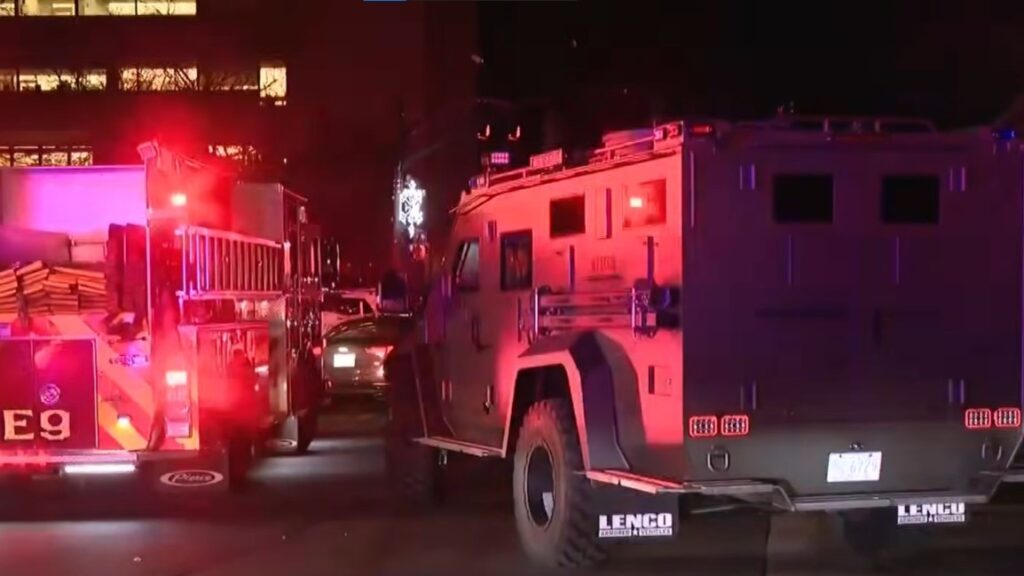
Two students were killed, and nine others were injured in a shooting on the campus of Brown University in Providence, Rhode Island, a tragic event that has drawn international attention. Uzbekistan’s Ministry of Foreign Affairs has confirmed that one of the deceased was an Uzbek national. The shooting occurred overnight on December 13-14 at the Ivy League institution. The death of Muhammad Aziz Umurzoqov was first reported by family members through a fundraising appeal on the GoFundMe platform and later officially confirmed by the press secretary of Uzbekistan’s Foreign Ministry. In the GoFundMe statement, Umurzoqov was remembered as a kind, intelligent, and compassionate young man who dreamed of becoming a neurosurgeon. “He always lent a helping hand to anyone in need without hesitation,” the family wrote. As of 10:30 a.m. Uzbekistan time on December 15, donations had reached $171,326. The family stated that a portion of the funds would be donated to charity in his name. Initial reports from CNN, citing law enforcement sources, indicated that a 24-year-old man from Wisconsin had been detained in connection with the incident. However, Brown University later clarified that the man had been released. In an official statement, the university said Providence police had found “no basis” to consider him a person of interest, a conclusion also confirmed by the Rhode Island Attorney General. Brown University confirmed that two students were fatally shot, while nine others sustained injuries ranging from minor to critical. Law enforcement authorities have stated there is no immediate threat to the campus or surrounding community, though the investigation remains ongoing. Providence police are leading the investigation in coordination with local, state, and federal agencies. In response, Brown University has significantly increased its on-campus police presence, with the Department of Public Safety more than doubling its staff. Authorities have established a dedicated tip line and urged anyone with relevant information to contact the Providence Police Department. University officials have reiterated their commitment to campus safety and urged students, faculty, and staff to remain alert as the investigation progresses.

Tajikistan Introduces Prison Terms for Crypto Mining Using Stolen Electricity

Tajikistan has formally introduced criminal liability for the unauthorized use of electricity to mine cryptocurrency. On December 3 the country’s parliament approved amendments to the Criminal Code, adding Article 253(2): “Illegal use of electricity for the production of virtual assets.” Under the new law, violators face penalties ranging from fines of $1,650 to $8,250 or prison sentences of two to eight years, depending on the severity of the offense. The base-level offense, using stolen electricity for mining, carries a fine equivalent to $1,650 to $4,070. If committed by a group acting in coordination, penalties increase to $4,125-8,250 or two to five years' imprisonment. In cases involving organized groups and “particularly large-scale” electricity theft, offenders may face five to eight years in prison. Presenting the bill to parliament, Attorney General Khabibullo Vokhidzoda warned that unregulated mining has already contributed to regional power outages and an uptick in related crimes. “The illegal circulation of virtual assets contributes to a number of crimes, such as electricity theft, damage to state infrastructure, and the laundering of criminal proceeds,” Vokhidzoda said. He reported that damages from illegal mining operations have reached $3.52 million to date, with four to five criminal cases currently under investigation. Law enforcement officials have recorded cases of mining equipment being smuggled into the country and illegally connected to the national grid. Member of Parliament Shukhrat Ganizoda outlined the technical challenges posed by such operations. “A typical ASIC consumes up to 3.5 kWh, while more powerful models use 5–6 kWh. Large farms run thousands of these devices, placing an enormous strain on the electrical system,” he said. Ganizoda added that perpetrators often bypass meters or make illegal connections to reduce operating costs and maximize profits. The new legislation, he said, aims to deter tax evasion schemes, unauthorized data encryption, and attempts to circumvent commodity tracking systems. The law will take effect after it is signed by President Emomali Rahmon and officially published in state media. Tajikistan had already strengthened penalties for illegal electricity use and non-payment. Currently, such offenses are punishable by fines ranging from $2,970 to $9,900 or prison terms of three to ten years. The legislative crackdown comes amid the country's annual autumn-winter energy crisis. This year, electricity shortages are particularly severe, with some regions receiving just two to four hours of power per day. Authorities hope the new measures will ease pressure on the national grid and help prevent further outages.

Saltanat Law One Year On: Domestic Violence Crackdown, Hidden Barriers Remain

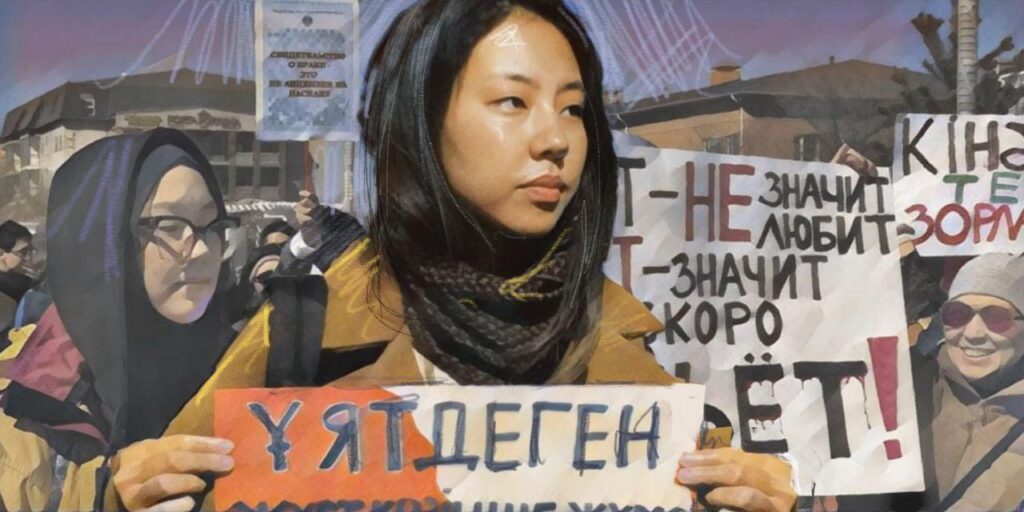
In the spring of 2024, the world's attention turned to Astana as the trial of former minister Kuandyk Bishimbayev unfolded. Accused of the brutal murder of his common-law wife, Saltanat Nukenova, the proceedings were broadcast live, marking the region’s first live-streamed murder trial, which was widely followed like a reality show. The livestream drew hundreds of thousands across Kazakhstan, with daily clips dissected on TikTok and Telegram channels, a public fixation that turned the courtroom into a national arena Under intense public pressure, President Kassym-Jomart Tokayev signed a landmark legislative reform popularly dubbed “Saltanat's Law.” These amendments enhanced protections for women and children. The most consequential change was re-criminalizing battery and intentional infliction of minor bodily harm — offences frequently present in domestic violence cases — which had previously been treated as administrative violations. Now, over a year later, the emotional urgency has waned, giving way to the realities of implementation. The transition from legislative success to consistent enforcement has revealed systemic resistance from conservative communities and infrastructural gaps. A Statistical Paradox The initial police data may appear counterintuitive. Rather than declining, reported cases of domestic abuse surged following the law’s passage. According to the General Prosecutor’s Office and the Institute of Legislation, such offenses increased by 238% within a year, rising from 406 to 1,370 criminal cases by mid-2025. Interior Ministry data shows that more than 70,000 protective orders were issued nationwide in the first nine months of 2025, a surge driven by mandatory registration and proactive police intervention. Experts caution against interpreting this spike as a rise in violence, however. Instead, it reflects the exposure of previously hidden abuse. From 1 July 2023, police could start administrative domestic-violence cases without a victim’s complaint. The 2024 Saltanat Law then reinforced this proactive approach in the criminal sphere. The law also removed the option for repeated reconciliation. Previously, over 60% of domestic violence cases collapsed when victims, often under familial pressure, withdrew their statements. Now, cases proceed regardless. As a result, administrative arrests have doubled, supporting the argument long made by human rights activists: it is the inevitability of punishment, not its severity, that disrupts the cycle of abuse. Uneven Enforcement Across Regions The law's effectiveness varies significantly by region. High reporting rates in cities such as Almaty and Astana and in northern industrial regions often reflect improved enforcement rather than increased violence. In these areas, women are more aware of their rights, and law enforcement responds accordingly. In Astana and Almaty, police units trained specifically on domestic violence now conduct routine checks and intervene based on neighbour reports or video evidence, even without a formal complaint. Conversely, in more traditional regions, particularly Turkestan, Zhambyl, and parts of western Kazakhstan, domestic violence often remains underreported. Here, entrenched patriarchal norms and the cultural concept of uyat (shame) discourage women from seeking legal help. Local police and community leaders sometimes view reporting abuse as a family disgrace and pressure women to resolve disputes privately. In the Turkestan region, activists recount cases in...

Information Sovereignty? Central Asia Tightens Control Over Its Information Space

Across the post-Soviet space, governments are adopting new measures that affect the scope of free expression. Similar trends are visible in Central Asia, the Caucasus, and parts of Eastern Europe, reflecting wider global shifts in how states manage their information environments. In Central Asia, where journalism has long faced political constraints, recent policies indicate a renewed emphasis on controlling the flow of information. From Georgia to Kazakhstan: Pushback Against Foreign Narratives Recent events in Georgia highlight these changes. The adoption of a controversial “foreign agents” law, widely described as a Russian-style or “pro-Russian” measure, reflected the ruling party’s growing hostility to foreign-funded media and NGOs, many backed by European donors, and triggered mass pro-EU protests in Tbilisi. Similar dynamics are emerging in Central Asia, where officials increasingly view foreign narratives as interference in domestic affairs. In Kazakhstan, legislative restrictions on so-called "LGBT propaganda" have sparked both domestic protests and criticism from international partners. At the same time, well-known media figure Gulnar Bazhkenova, editor-in-chief of Orda.kz, has been placed under house arrest, an episode that underscores the tightening environment for journalists. The Bazhkenova Case: A Turning Point for Kazakh Media Bazhkenova, a prominent editor known for critical coverage of Kazakhstan’s political elite and security services, came under scrutiny after Orda.kz falsely reported the arrest of Foreign Minister Murat Nurtleu, an unverified claim that was quickly debunked. Although Nurtleu remained in his position immediately afterward, he was dismissed later in September, prompting speculation that the incident had political consequences. Soon after his departure, law enforcement launched an investigation into Bazhkenova. On December 1, Almaty police searched her residence and the offices of Orda.kz. Authorities stated that a 2024 article had disseminated false information regarding a law enforcement officer allegedly caught accepting a bribe, an incident that officials assert never occurred. Another article reportedly misrepresented details in a property dispute, allegedly damaging the business reputation of the involved party. The Almaty police have since opened additional investigations into past publications from Orda.kz that may contain misleading content. Media organizations have largely responded with condemnation, urging the authorities to decriminalize the dissemination of false information and instead treat such cases under civil law. However, the Union of Journalists of Kazakhstan issued a pointed statement calling on media professionals to “treat the preparation and dissemination of information responsibly. Individual cases for the dissemination of inaccurate information cast a shadow on the entire journalistic community of our country,” the organization said.  An implicit acknowledgment, perhaps, that Bazhkenova’s actions may have crossed legal or ethical boundaries. Parallel Cases and Regional Patterns While suppression of the media in Tajikistan and Turkmenistan has long been widespread, Kyrgyzstan - long considered the most politically open country in Central Asia - has also moved to tighten control over its information space. In early 2024, authorities introduced a controversial “foreign representatives” law requiring NGOs and media outlets receiving international funding to register under a special status, echoing legislation seen in Russia and Georgia. Independent outlets such as Kloop, Temirov Live, and Azattyk...