• KGS/USD = 0.01144 0%
  • KZT/USD = 0.00211 0%
  • TJS/USD = 0.10454 -0.1%
  • UZS/USD = 0.00008 0%
  • TMT/USD = 0.28571 0.28%
  • KGS/USD = 0.01144 0%
  • KZT/USD = 0.00211 0%
  • TJS/USD = 0.10454 -0.1%
  • UZS/USD = 0.00008 0%
  • TMT/USD = 0.28571 0.28%
  • KGS/USD = 0.01144 0%
  • KZT/USD = 0.00211 0%
  • TJS/USD = 0.10454 -0.1%
  • UZS/USD = 0.00008 0%
  • TMT/USD = 0.28571 0.28%
  • KGS/USD = 0.01144 0%
  • KZT/USD = 0.00211 0%
  • TJS/USD = 0.10454 -0.1%
  • UZS/USD = 0.00008 0%
  • TMT/USD = 0.28571 0.28%
  • KGS/USD = 0.01144 0%
  • KZT/USD = 0.00211 0%
  • TJS/USD = 0.10454 -0.1%
  • UZS/USD = 0.00008 0%
  • TMT/USD = 0.28571 0.28%
  • KGS/USD = 0.01144 0%
  • KZT/USD = 0.00211 0%
  • TJS/USD = 0.10454 -0.1%
  • UZS/USD = 0.00008 0%
  • TMT/USD = 0.28571 0.28%
  • KGS/USD = 0.01144 0%
  • KZT/USD = 0.00211 0%
  • TJS/USD = 0.10454 -0.1%
  • UZS/USD = 0.00008 0%
  • TMT/USD = 0.28571 0.28%
  • KGS/USD = 0.01144 0%
  • KZT/USD = 0.00211 0%
  • TJS/USD = 0.10454 -0.1%
  • UZS/USD = 0.00008 0%
  • TMT/USD = 0.28571 0.28%

Viewing results 271 - 276 of 693

Kazakhstan Leads Central Asia in Anti-Money Laundering Efforts

The Basel Anti-Money Laundering Index (AML) has been released. It offers a comprehensive assessment of global efforts to combat money laundering. The index evaluates the risk of money laundering and financial crime across countries and regions, using 17 indicators across five domains to identify key factors that can heighten vulnerability. The indicators are updated annually and reviewed by an independent panel of experts to ensure relevance, methodology integrity, and access to current data. The Index does not measure the actual volume of money laundering activity. Instead, it focuses on the risk factors, scoring countries on a scale from 0 to 10 where 10 represents the highest risk and 0 the lowest. The Times of Central Asia examined this year’s ratings, focusing on the performance of Central Asian nations: Kazakhstan achieved a notable ranking of 111th out of 164 countries, with a score of 4.65. Uzbekistan followed, ranking 81st with a score of 5.27, while Kyrgyzstan placed 45th with 5.95 points. Tajikistan ranked 30th, scoring 6.45, and Turkmenistan recorded the region’s worst result, ranking 23rd with 6.71 points. Globally, the best results were observed in San Marino (2.96), Iceland (3.00), and Finland (3.07).

Deportations of Central Asians from the U.S. Increased in 2024

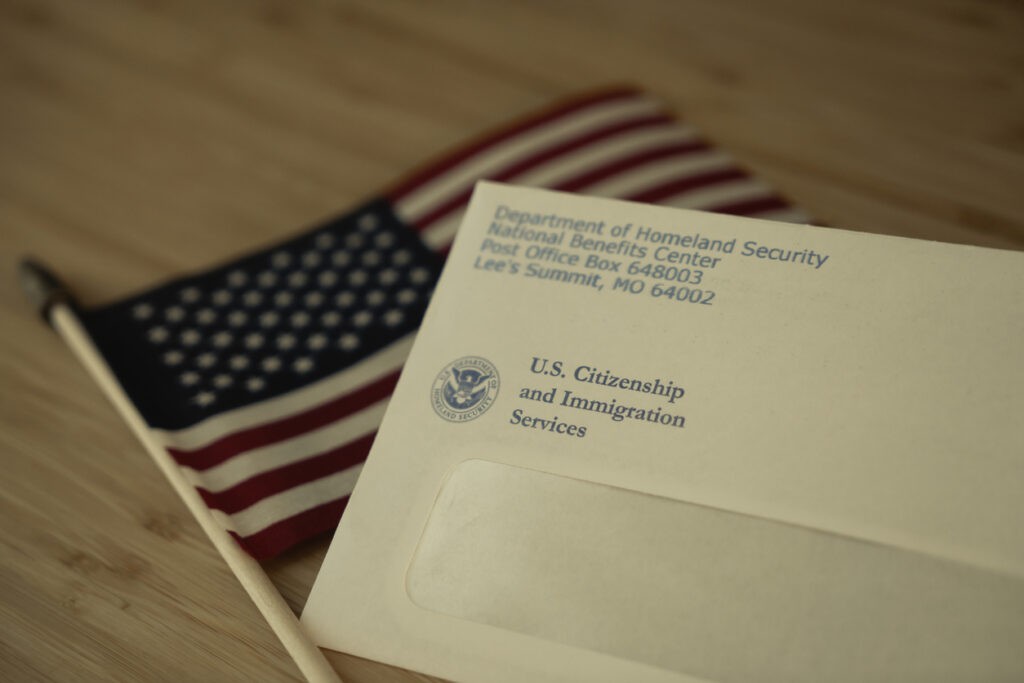
U.S. Immigration and Customs Enforcement (ICE) has released its Fiscal Year 2024 Annual Report, detailing the agency’s accomplishments over the past year. The report highlights how ICE’s directorates and program offices met their mission objectives. Established in the aftermath of the 9/11 attacks, ICE is tasked with protecting the American public, ensuring public safety, and promoting national security. According to the report, ICE’s Enforcement and Removal Operations (ERO) deported 271,484 non-citizens with final orders of removal to 192 countries. This total includes 88,763 individuals charged with or convicted of criminal offenses, 3,706 known or suspected gang members, 237 known or suspected terrorists, and eight human rights violators. More than 30% of those deported had criminal histories, with an average of 5.63 convictions or charges per individual. ERO also assisted in identifying and arresting individuals wanted in their home countries for serious crimes, including terrorism and torture. The Times of Central Asia examined the report with a focus on Central Asian countries. In 2024, the US deported 572 Uzbek nationals - a dramatic increase compared to 88 in 2013, 21 in 2021, and 55 in 2022. Deportations of Tajik citizens also surged, reaching 77 in 2024 compared to only four annually in 2019, 2020, 2022, and 2023. Kazakhstan saw the deportation of 23 of its citizens this year, up from 14 in 2023. Deportations to Kyrgyzstan also spiked, with 69 individuals removed in 2024. By comparison, only three Kyrgyz citizens were deported in 2020, eight in 2021, one in 2022, and 14 in 2023. Meanwhile, deportations of Turkmen nationals remained low, but still showed an upward trend. In 2024, five Turkmen citizens were deported, compared to four in 2019, one in 2022, and three in 2023.

German Firms Urged to Address Human Rights Risks in Uzbek Cotton

German companies, supported by the Federal Ministry for Economic Cooperation and Development and the German textile sector, are increasingly exploring Uzbekistan as a potential market. A report titled Relevant Human Rights Expertise: Risk Assessment for German Companies in the Textile Industry of Uzbekistan evaluates how these firms comply with supply chain laws and fulfill their human rights obligations. The report underscores ongoing challenges in Uzbekistan’s cotton industry, despite recent reforms. Key issues include risks of forced labor, government interference in cotton production, and poor working conditions. Farmers face coercive contracts, insecure land tenure, and restricted union rights. These problems persist even after Uzbekistan privatized its cotton industry and adopted the ‘cluster’ model, which integrates farming, processing, and manufacturing. Umida Niyazova, founder of the Uzbekistan Human Rights Forum, highlighted widespread violations, including illegal land seizures and forced production quotas. She emphasized the lack of protections for cotton workers. Additionally, the report warns that some Uzbek cotton may be entering German markets indirectly through suppliers in Turkey and other countries. The report stresses that effective human rights due diligence is essential for maintaining brand integrity. However, according to author Ben Vanpeperstraete, German companies are failing to adequately address risks associated with Uzbek cotton. Public communications by firms often lack tailored approaches to identifying and mitigating these risks. Forced labor risks in Uzbekistan’s cotton industry remain significant, the report states, despite ongoing reforms. Corporate disclosures frequently omit recognition of forced labor as a sourcing risk. The report calls on businesses to adopt due diligence practices that address Uzbekistan’s restrictions on unionizing and civil society activities. Companies are urged to map and disclose their supply chains to enhance compliance and traceability. Trade between Germany and Uzbekistan surpassed €1 billion in 2023, with German investments in Uzbekistan reaching €800 million by early 2024.

Uzbekistan Searches for Two Chechens Accused of Allamjonov Assassination Attempt

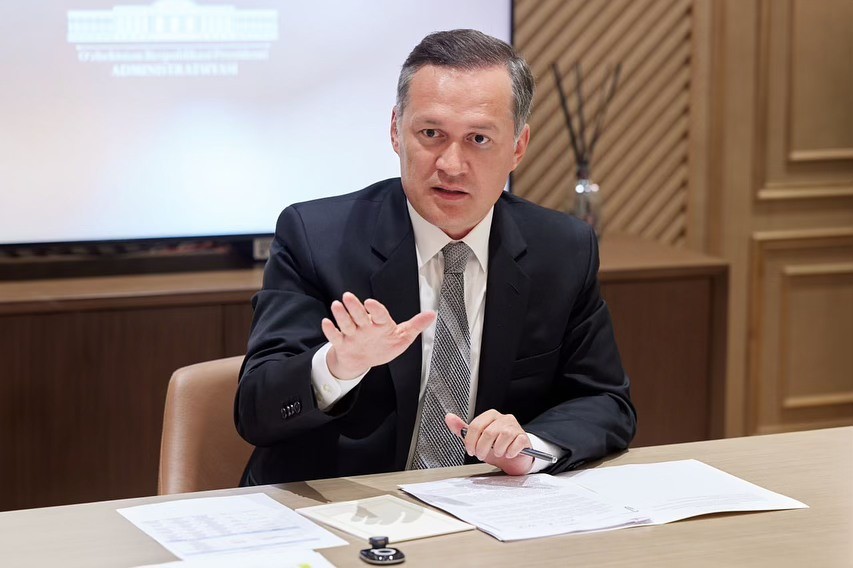
Uzbekistan has placed two Chechen residents, Bislan Rasayev and Shamil Temirkhanov, on Interpol’s wanted list in connection with an alleged assassination attempt. According to Vzglyad.uz, the two men are accused of multiple crimes and were allegedly offered $1.5 million to kill Komil Allamjonov, the former head of the Information Policy Department of the Presidential Administration, and Dmitry Li, head of the National Agency for Prospective Projects (NAPP). Rasayev, 36, and Temirkhanov, 31, reportedly attempted to assassinate Allamjonov. Investigators allege that the pair entered Uzbekistan via separate routes -- one crossing the Uzbek-Kyrgyz border illegally and the other entering through the Dostlik checkpoint -- while following instructions from their clients. The case gained attention following reports of an armed attack on October 26. According to the Prosecutor General's Office, the incident occurred outside Tashkent, on Ifor Street in the Qibray district. Unidentified individuals fired multiple shots at a Range Rover driven by a man identified as "S.S." before fleeing the scene. The investigation has revealed material evidence collected at the crime scene, in vehicles used by the suspects, and at their places of residence. These findings have been critical to the case. Authorities have identified seven individuals connected to the crime. While five suspects are currently in custody, Rasayev and Temirkhanov remain at large. Some media outlets have speculated about possible links to Chechen leader Ramzan Kadyrov, though no official confirmation has been provided.

Tajikistan Captures Four Suspected of Konibodom Night Murders

Tajikistan's Prosecutor General's Office has announced that it has detained four men in connection with a series of murders that have terrified the town of Konibodom, in the country's northern Sughd region. The office's statement says that operational and investigative measures led to the arrest of four Tajik citizens. The detainees are: Solehjon Khudojberdiev, born in 1998, a resident of Firuzoba Jamoat, Gulbog village; Akhajon Tukhtaev, born in 1997, also from Firuzoba Jamoat, Gulbog village; Bakhtiyor Ravshanov, born in 1988, a resident of Lohuti Jamoat, Sanchidzor village; Manuchehr Odilov, born in 1996, in M. Abdulloyev street, Khamroboyev Jamoat. All four are residents of Konibodom. The Prosecutor General's Office said that the investigation is being conducted under the direct supervision of the country's top leadership. Earlier this year, The Times of Central Asia reported that Konibodom residents had endured a wave of night murders in the spring. Between late March and late May, 13 people -- ethnic Tajiks, and Kyrgyz from the region near the Kyrgyz border -- were killed. The victims, ranging from children to the elderly, were murdered in different parts of the town. While authorities initially claimed the suspects had been caught and the killings had stopped, violence returned in December. On December 9, six more people were murdered, followed by four more found dead in their homes on December 16.

Anti-Migrant Sentiments Continue to Rise in Russia Following General’s Murder

Anti-migrant sentiment is intensifying in Russia following the murder of a high-ranking general, with calls from populist media outlets and bloggers urging the Kremlin to tighten its migration policies. Experts warn that this tension is likely to escalate. They argue that the Russian authorities are redirecting public frustration toward Central Asians as a means of improving domestic social stability. Anti-migrant rhetoric coming out of Russia is increasingly being wielded as a tool to exert leverage on Central Asian nations.   General Kirillov Murder: Uzbeks Question Russian Narrative of Kurbonov's Arrest The recent arrest of an Uzbek citizen accused of committing a terrorist act - allegedly recruited by Ukrainian security services - has added fuel to the fire. This incident follows a long-standing pattern of discrimination against Central Asian labor migrants in Russia. In Uzbekistan, people are questioning the arrest in Moscow this week of 29-year-old courier Akhmadjon Kurbonov, who stands accused of murdering Russian general Igor Kirillov. The head of Russia's radiation, chemical, and biological defense forces, Kirillov was heavily involved in Russia's war with Ukraine. The media in Russia has claimed that Kurbonov carried out the assassination - and that of Kirillov's assistant Ilya Polikarpov - on behalf of the Ukrainian government in exchange for financial reward and residency in Europe. This version of events has sparked widespread debate in Uzbekistan. On social media, people have raised questions about the credibility of the allegations. Analyst Shuxrat Rasul described the accusation as “hard to believe.” On Facebook, Uzbek citizens such as Anvar Sagdullayev have questioned the narrative, commenting, “How can a man accused of murder appear so calm, as if reciting a prepared script? Perhaps this was orchestrated by interests closer to home.” Another Facebook user, Raimbergan Kuchkarov, speculated that internal conflicts are being stoked by using migrants as scapegoats. “The Russians themselves likely don’t know where their generals live. Why would a high-ranking officer be targeted by someone from Uzbekistan? This seems like a provocation,” Kuchkarov wrote. The case has also raised concerns among Uzbek immigrants in Russia, who fear that collective blame for the alleged actions of one individual may exacerbate prejudice and discrimination against their community. The Embassy of Uzbekistan in Russia has responded by stating that it is in contact with Russian law enforcement agencies and is working to verify details regarding the detained Uzbek citizen. On December 19, Uzbek President Shavkat Mirziyoyev held a phone conversation with Vladimir Putin to discuss bilateral and regional cooperation. The leaders highlighted the importance of close collaboration between their countries’ special services to combat security threats. The Kremlin noted that the discussion was initiated by the Uzbek side. During the call, Mirziyoyev expressed condolences for the deaths of General Kirillov and Polikarpov, condemning the attack as a “heinous act of terrorism.”   Increasing Pressure The situation for migrants in Russia has worsened significantly since the 2022 invasion of Ukraine. Migrants have faced frequent raids, detentions, and the threat of deportation. Legislative changes have further tightened entry and residency rules....