• KGS/USD = 0.01144 0%
  • KZT/USD = 0.00216 0%
  • TJS/USD = 0.10663 0%
  • UZS/USD = 0.00008 0%
  • TMT/USD = 0.28530 0%
  • KGS/USD = 0.01144 0%
  • KZT/USD = 0.00216 0%
  • TJS/USD = 0.10663 0%
  • UZS/USD = 0.00008 0%
  • TMT/USD = 0.28530 0%
  • KGS/USD = 0.01144 0%
  • KZT/USD = 0.00216 0%
  • TJS/USD = 0.10663 0%
  • UZS/USD = 0.00008 0%
  • TMT/USD = 0.28530 0%
  • KGS/USD = 0.01144 0%
  • KZT/USD = 0.00216 0%
  • TJS/USD = 0.10663 0%
  • UZS/USD = 0.00008 0%
  • TMT/USD = 0.28530 0%
  • KGS/USD = 0.01144 0%
  • KZT/USD = 0.00216 0%
  • TJS/USD = 0.10663 0%
  • UZS/USD = 0.00008 0%
  • TMT/USD = 0.28530 0%
  • KGS/USD = 0.01144 0%
  • KZT/USD = 0.00216 0%
  • TJS/USD = 0.10663 0%
  • UZS/USD = 0.00008 0%
  • TMT/USD = 0.28530 0%
  • KGS/USD = 0.01144 0%
  • KZT/USD = 0.00216 0%
  • TJS/USD = 0.10663 0%
  • UZS/USD = 0.00008 0%
  • TMT/USD = 0.28530 0%
  • KGS/USD = 0.01144 0%
  • KZT/USD = 0.00216 0%
  • TJS/USD = 0.10663 0%
  • UZS/USD = 0.00008 0%
  • TMT/USD = 0.28530 0%

Viewing results 721 - 726 of 1671

Redefining Work and Innovation: The Impact of AI and Its Rise in Kazakhstan

Will artificial intelligence be able to replace humans? What professions will disappear in the future, and will mankind face an “aggressive” neural network? Aigerim Abdenbayeva, head of educational programs at the Institute of Smart Systems and Artificial Intelligence (ISSAI) at Nazarbayev University (NU), answers these questions and discusses how AI is developing in Kazakhstan. TCA: Most people have heard the term “artificial intelligence” in one way or another, but only a small proportion know about the practical possibilities of AI. In your view, what is artificial intelligence? Artificial intelligence can be characterized as the ability of machines to perform tasks that traditionally require human intelligence. This includes recognizing images, understanding language, making decisions, and solving complex problems. In everyday life, we encounter AI in many different forms, from voice assistants like Siri and Google Assistant to recommendations on streaming platforms like Netflix, which suggests movies based on your preferences. The term “artificial intelligence” was coined in 1956 by American scientist John McCarthy, who is considered one of the field's founders. Although the concept of AI was proposed more than half a century ago, its modern form only began to develop in the 1980s, when so-called expert systems emerged. These systems used rules and knowledge bases to solve specific problems, such as disease diagnosis or financial forecasting. Since then, AI has gone through several stages of development. The 2010s saw a significant breakthrough with the emergence of deep learning and big data technologies. Based on neural networks, deep learning has allowed computers to process and analyze vast amounts of information, dramatically improving their ability to recognize patterns and understand speech. This progress has made AI more accessible to a broader audience and has become an integral part of our daily lives. Several trends in the field of artificial intelligence can be distinguished: "Narrow AI"  is a specialized system for specific tasks. For example, algorithms are used to recognize faces or diagnose diseases. They outperform humans in a narrow domain, but cannot perform functions outside their specialization. “General AI” involves creating machines that can perform any intellectual task at a level comparable to humans. General AI remains a theoretical concept and has not been achieved in reality. "Generative AI" is a field that deals with creating new data based on existing data. Examples include generating text, images, and music. Algorithms such as GPT (Generative Pre-trained Transformer) can create text that looks like a human wrote it, and they are already being used extensively in various applications. Generative AI, in particular, has become popular due to its ability to make human life more manageable. For example, platforms like ChatGPT can help with writing articles, creating content for social media, and automating routine tasks, saving users a lot of time and effort. Other AI applications have already become part of our daily lives. For example, in medicine, AI is used to analyze medical images, which helps doctors in diagnosis and treatment selection. In finance, AI helps analyze market data and predict trends, allowing investors...


Ninety One: Revolutionizing Kazakh Music and Fighting Stereotypes

Ninety One revolutionized Kazakhstani pop music by pioneering the Q-pop genre. With their vivid images, deep lyrics and courage in expressing themselves openly. They broke gender stereotypes and inspired a new generation of artists. How it started Ninety One were founded in 2014, based on the "K-Top Idols" project, which sought to create Kazakhstan's first idol group. Initially, the jury selected two participants: A.Z. (Azamat Zenkaev) and Zaq (Dulat Mukhamedkaliev). Later, after additional auditions, they were joined by Bala (Daniyar Kulumshin) and Alem (Batyrkhan Malikov). The fifth member was Ace (Azamat Ashmakyn). The producer of the group, Yerbolat Bedelkhan, sought not only to create a new musical team, but to lay the foundation for the development of a new genre - Q-pop (Qazaq pop) - to unite Kazakh culture with modern pop music and bring it to an international audience. [embed]https://www.youtube.com/watch?v=A9QIgf50sh4&ab_channel=GAKKUTV[/embed] A challenge to society and initial successes Released in 2015, Ninety One's debut music video for the song “Ayyptama” (Don't blame me), was a breakthrough. The daring style of the members - bright clothes, makeup and skirts - caused heated debates in still conservative Kazakhstani society. Many criticized the group for being “unconventional,” but young people quickly accepted the new format, seeing in it the freedom of self-expression. Despite pressure, canceled concerts and criticism, Ninety One continued to make steady progress. Their work has been recognized both at home and abroad. The hits “Qalay Qaraisyn” (How do you look at it?), “Su Asty” (Underwater) and “Taboo” (with Irina Kairatovna) gained popularity, and the group's albums became a cultural phenomenon. In addition to music, the band found time to test themselves on the silver screen. On August 24, 2017, the film, Ninety One, dedicated to the history of the group and their path to success, was released. The film was directed by Askar Uzabaev, and the producers were Asel Sadvakasova and Erbolat Bedelhan. The picture entered the top three leaders at the Kazakhstan box office, reaping 32,672,000 tenge on the first weekend of its release alone. [embed]https://www.youtube.com/watch?v=sciYs_H0Ifo&ab_channel=1kino.kz[/embed] Contributing to the fight against gender stereotypes Ninety One broke stereotypes about how men should look and behave in Kazakhstani society. They showed that a colorful apparel, experimentation with fashion and openness to new ideas are not a weakness, but a strength. The group inspired young people to boldly express themselves, overcome the fear of judgment, and break with outdated stereotypes. They became an inspiration for new artists, playing a key role in the development of the Q-pop industry. Ninety One's fan base grew so large that they gave themselves the nickname “eagles” after the symbol which was the band's signature gesture: crossed palms representing a bird, the symbol of the national flag of Kazakhstan. Today, Ninety One remain one of the most successful musical groups in Kazakhstan, actively touring, releasing new albums and continuing to attract the attention of international audiences. In 2023, the group released the album GAP, which became a huge hit. Among the most popular tracks is “АPEREM AI”...

Former Uzbek Diplomat, Jailed In Case Criticized by UN, Dies at 73

Kadyr Yusupov, a former Uzbek diplomat with a distinguished career who was convicted of treason and jailed in a case that the United Nations said had violated his rights, has died at the age of 73, an international human rights group said on Thursday. Yusupov, who died on Nov. 14, was released from jail on June 10 after being imprisoned for five and a half years and suffering alleged torture and “deplorable” conditions during some of that time, according to the Norwegian Helsinki Committee. While Uzbek officials denied the torture allegations, the U.N. Working Group on Arbitrary Detention concluded in a 2021 report that Yusupov had been arbitrarily detained, he should be released immediately and that the government should take action against those responsible for violating his rights. The group said that the violations included the denial of “medication and treatment for the very serious health conditions from which he suffers.” Rights groups have said that Yusupov was suffering from a mental illness. “In December 2018 he was arrested on charges of treason which appear to have been based on a statement he made during a psychotic episode, when he was undergoing medical treatment,” the Norwegian Helsinki Committee said. “Whilst in hospital, suffering from brain trauma and clearly confused, Yusupov reportedly said that he had been a spy for the West.” It said there were “credible allegations” that state security officers coerced Yusupov into a confession. The former diplomat said he was treated better after being transferred from a prison in the city of Navoi to a jail in the Tashkent region. Yusupov had worked in a series of high-profile jobs for Uzbekistan’s Ministry of Foreign Affairs. The posts included head of the ministry’s Asia and Africa department, head of the European department and, from 2006 to 2009, chargé d’affaires in Austria and permanent representative to the Organization for Security and Cooperation in Europe and United Nations organizations in Vienna.

A Synthesis of Sounds: How the Silk Road Became the Melting Pot of Music in the Soviet Empire

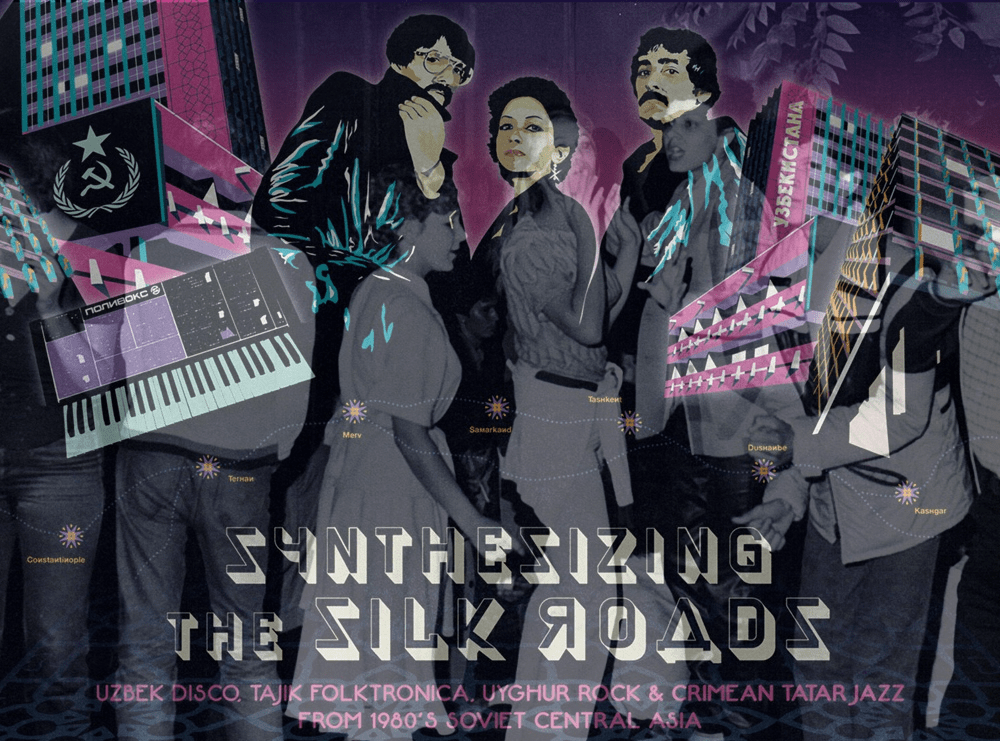
As a DJ, radio podcaster and music enthusiast, I love discovering hidden retro gems like Nuggets-style compilations. There is an unspoken agreement on an era’s sounds depending on the artist’s breaking into the mainstream at the time. Then there are the obscure cuts and one hit wonders that for some reason didn’t make it big upon release, but dated well or were ahead of their time and found an audience at a later date. On other occasions, it’s about geography; if it had been premiered in a different part of the world, it would have been successful or far more celebrated than it was. In my search for such sounds, I feel it shouldn’t be limited by location; good music has no boundaries. [caption id="attachment_25764" align="aligncenter" width="950"] Yalla band, commemorative stamp, Uzbekistan, 2021 [/caption] There are many compilations touching upon niche genres and moments in time which can transport one to sonically experience a particular era. As a Westerner trying to peek behind the Iron Curtain to gauge the music and arts scene of the 1970’s and 80’s, what flickered across the Cold War barriers seemed controlled, state-approved, and mostly a mystery. It was a delight to learn that under this supposed monochromic blanket, a dynamic underground music scene was flourishing in regions that had a long history of cultural fusion. SYNTHESIZING THE SILK ROADS: Uzbek Disco, Tajik Folktronica, Uyghur Rock & Crimean Tatar Jazz from 1980s Soviet Central Asia features musicians from countries such as Uzbekistan, Tajikistan, and Kazakhstan, who were creating a unique sound that stood apart from anything else being produced in the USSR. TCA spoke to Ostinato record label boss Vik Sohonie about the release. TCA: How does this statement by Peter Frankopan quoted in your liner notes - “The bridge between east and west is the very crossroads of civilization” - relate to or define the music you chose? The music itself is the greatest evidence we have to this argument, because you can hear the cultures of Europe, South Asia, East Asia, West Asia - the Middle East - all mixed into it. Indeed, Central Asia was influenced by all of these regions musically given its unique geography, but it has also influenced the cultures of so many of those parts of the world. During the era of the Silk Roads and the "golden age" of the region, its musical theory, as stated in the liner notes, influenced the music of Europe. [caption id="attachment_25766" align="aligncenter" width="2172"] Natalia Nurumkhamedova album cover[/caption] TCA: How did World War II and Stalin create the circumstances behind the Tashkent and Uzbekistan scene? When the Nazis invaded the Soviet Union, Stalin put the best and brightest minds on trains bound for Soviet Central Asia, mainly Uzbekistan and its capital, Tashkent. There were recording engineers on board who went on to set up one of the biggest press plants in the Soviet Union that produced millions of records. A little-known story of World War II - the evacuation from the Eastern...

Unified Digital Health System to Transform Kyrgyzstan’s Healthcare

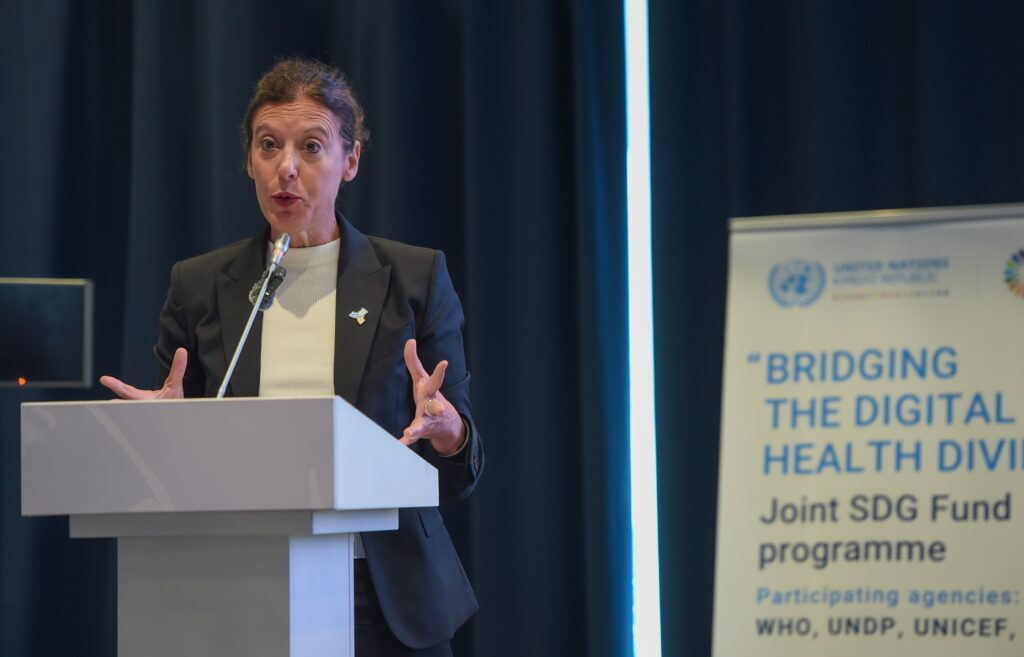
The United Nations Office in Kyrgyzstan, in collaboration with the Ministry of Health, has launched a program to create a unified digital health system in the country. The Ministry of Health stated that the digitization initiative aims to harmonize Kyrgyzstan’s healthcare system. By providing easier access to medical information, the program is expected to expedite the delivery of medical services, even to the most remote and underserved communities. As part of this effort, specialists will enhance government e-services and telemedicine. According to the UN, the project will require an investment of over $4 million, and is scheduled to run until 2027. “One of the key features of the program is to improve the digital health profile, giving citizens access to information about their health,” the Ministry of Health noted in a press release. The authorities plan to integrate a unified registry of citizen vaccinations, which currently holds approximately 3 million records, with a national electronic medical records platform. The program will also focus on supporting vulnerable groups. For example: • 120,000 people will receive digital disability certificates; and • 280,000 people will gain access to digital sick leave documentation, reducing hospital queues and making medical services faster and more convenient. Telemedicine will be expanded to 10 districts, offering medical consultations to more than 700,000 children under the age of 14. Additionally, 60 healthcare facilities will provide specialized care to 140,000 mothers and newborns, all connected to the unified electronic health records (EHR) platform. “This digital health initiative is an important step forward for Kyrgyzstan. By improving access to important medical information, we can make healthcare more efficient and improve outcomes for all,” said Bakyt Dzhangaziev, Deputy Minister for Digital Development of Kyrgyzstan. UN Resident Coordinator in Kyrgyzstan Antje Grave added: “Digital technologies are transforming our world, opening up new opportunities. It is necessary to bridge the digital divide between countries, promote the goals of sustainable development, and ensure that no one is left behind.” The program is being implemented with support from international organizations, including the World Health Organization (WHO), UNICEF, the UN Population Fund, and the UN Development Programme (UNDP).

Turkmenistan and UK Strengthen Cooperation in Education

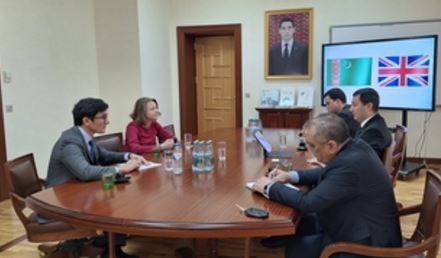
The Ministry of Education of Turkmenistan hosted a meeting between Deputy Minister Azat Ataev and Sarah Chidgey, Regional Export Director for Eastern Europe and Central Asia, to discuss prospects for educational cooperation between Turkmenistan and the UK. Ms. Chidgey shared insights into the UK's experience in delivering quality education, citing successful examples in Kazakhstan and Uzbekistan, where British universities, such as the University of Westminster, have actively sought to expand partnerships. During the meeting, the participants explored opportunities for British universities to offer educational services in Turkmenistan, including the accreditation of academic institutions to enhance secondary and higher education. Chidgey announced plans to hold the Turkmen-British Trade and Industry Council early next year, with educational cooperation set to be a key topic. The British delegation also expressed its readiness for more in-depth discussions at the World Education Forum, held annually in London. Ataev expressed interest in implementing the proposed initiatives and supported organizing webinars for Turkmen specialists. These webinars will focus on introducing Turkmen specialists to British educational standards and accreditation procedures and enhancing education quality. He emphasized that particular attention would be given to studying critical aspects of the British educational system to facilitate their successful adaptation and implementation in Turkmenistan. Both sides expressed confidence that this partnership would contribute to developing Turkmenistan's education system and creating new opportunities for students and teachers. In the long term, it is expected to support their integration into the global educational community. Great Britain actively cooperates with Central Asian countries in the field of education: Kazakhstan has the Kazakh-British Technical University, founded in 2001, which offers programs in partnership with British universities, and British universities are opening branches in Uzbekistan, giving local students access to British education. The British Council also runs the region's English language training and teacher development programs. In 2024, the British Foreign Secretary announced a new initiative to promote English in Central Asia by giving teachers access to online resources with local content.