• KGS/USD = 0.01143 0%
  • KZT/USD = 0.00216 0%
  • TJS/USD = 0.10684 -0.28%
  • UZS/USD = 0.00008 0%
  • TMT/USD = 0.28571 0%
  • KGS/USD = 0.01143 0%
  • KZT/USD = 0.00216 0%
  • TJS/USD = 0.10684 -0.28%
  • UZS/USD = 0.00008 0%
  • TMT/USD = 0.28571 0%
  • KGS/USD = 0.01143 0%
  • KZT/USD = 0.00216 0%
  • TJS/USD = 0.10684 -0.28%
  • UZS/USD = 0.00008 0%
  • TMT/USD = 0.28571 0%
  • KGS/USD = 0.01143 0%
  • KZT/USD = 0.00216 0%
  • TJS/USD = 0.10684 -0.28%
  • UZS/USD = 0.00008 0%
  • TMT/USD = 0.28571 0%
  • KGS/USD = 0.01143 0%
  • KZT/USD = 0.00216 0%
  • TJS/USD = 0.10684 -0.28%
  • UZS/USD = 0.00008 0%
  • TMT/USD = 0.28571 0%
  • KGS/USD = 0.01143 0%
  • KZT/USD = 0.00216 0%
  • TJS/USD = 0.10684 -0.28%
  • UZS/USD = 0.00008 0%
  • TMT/USD = 0.28571 0%
  • KGS/USD = 0.01143 0%
  • KZT/USD = 0.00216 0%
  • TJS/USD = 0.10684 -0.28%
  • UZS/USD = 0.00008 0%
  • TMT/USD = 0.28571 0%
  • KGS/USD = 0.01143 0%
  • KZT/USD = 0.00216 0%
  • TJS/USD = 0.10684 -0.28%
  • UZS/USD = 0.00008 0%
  • TMT/USD = 0.28571 0%

Viewing results 739 - 744 of 1717

Former Uzbek Diplomat, Jailed In Case Criticized by UN, Dies at 73

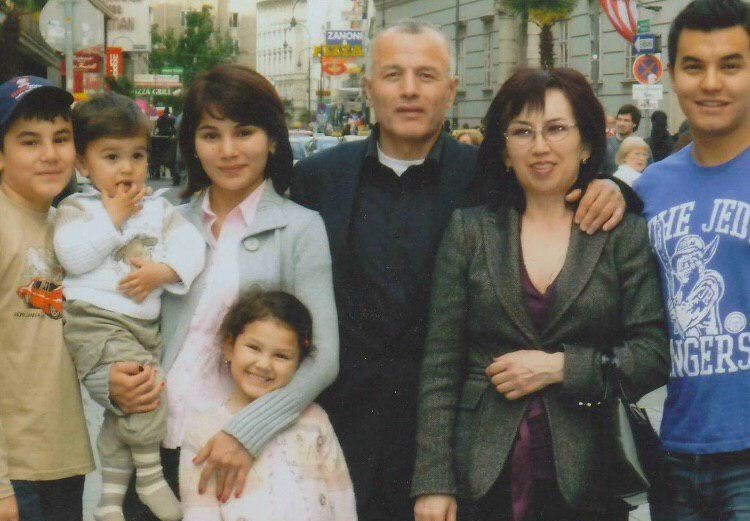
Kadyr Yusupov, a former Uzbek diplomat with a distinguished career who was convicted of treason and jailed in a case that the United Nations said had violated his rights, has died at the age of 73, an international human rights group said on Thursday. Yusupov, who died on Nov. 14, was released from jail on June 10 after being imprisoned for five and a half years and suffering alleged torture and “deplorable” conditions during some of that time, according to the Norwegian Helsinki Committee. While Uzbek officials denied the torture allegations, the U.N. Working Group on Arbitrary Detention concluded in a 2021 report that Yusupov had been arbitrarily detained, he should be released immediately and that the government should take action against those responsible for violating his rights. The group said that the violations included the denial of “medication and treatment for the very serious health conditions from which he suffers.” Rights groups have said that Yusupov was suffering from a mental illness. “In December 2018 he was arrested on charges of treason which appear to have been based on a statement he made during a psychotic episode, when he was undergoing medical treatment,” the Norwegian Helsinki Committee said. “Whilst in hospital, suffering from brain trauma and clearly confused, Yusupov reportedly said that he had been a spy for the West.” It said there were “credible allegations” that state security officers coerced Yusupov into a confession. The former diplomat said he was treated better after being transferred from a prison in the city of Navoi to a jail in the Tashkent region. Yusupov had worked in a series of high-profile jobs for Uzbekistan’s Ministry of Foreign Affairs. The posts included head of the ministry’s Asia and Africa department, head of the European department and, from 2006 to 2009, chargé d’affaires in Austria and permanent representative to the Organization for Security and Cooperation in Europe and United Nations organizations in Vienna.
A Synthesis of Sounds: How the Silk Road Became the Melting Pot of Music in the Soviet Empire

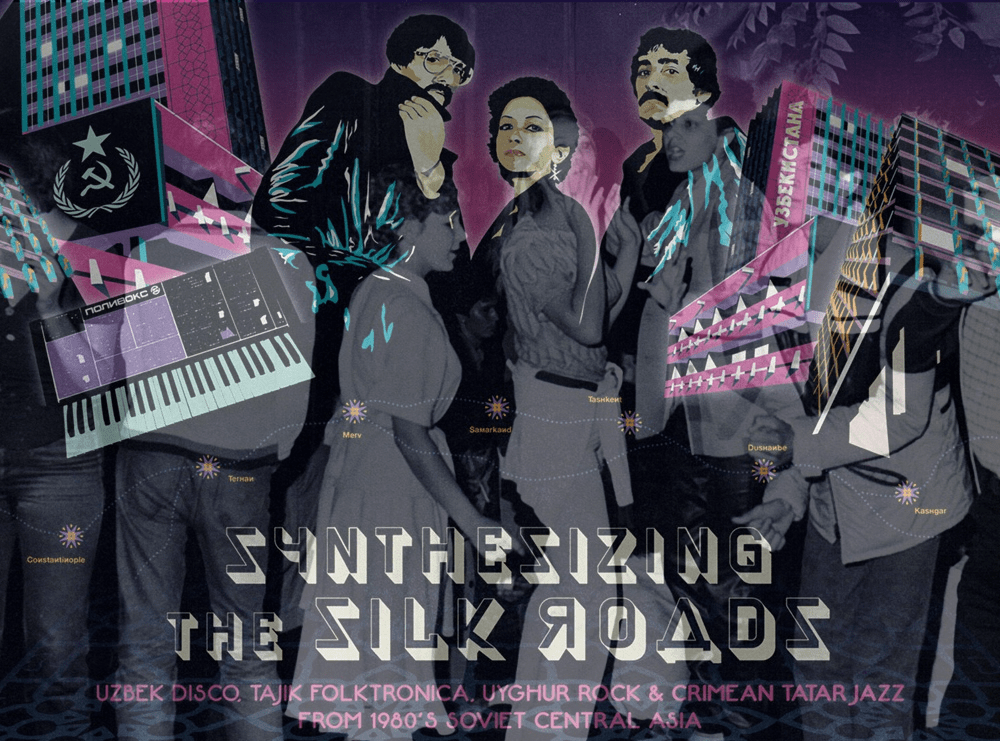
As a DJ, radio podcaster and music enthusiast, I love discovering hidden retro gems like Nuggets-style compilations. There is an unspoken agreement on an era’s sounds depending on the artist’s breaking into the mainstream at the time. Then there are the obscure cuts and one hit wonders that for some reason didn’t make it big upon release, but dated well or were ahead of their time and found an audience at a later date. On other occasions, it’s about geography; if it had been premiered in a different part of the world, it would have been successful or far more celebrated than it was. In my search for such sounds, I feel it shouldn’t be limited by location; good music has no boundaries. [caption id="attachment_25764" align="aligncenter" width="950"] Yalla band, commemorative stamp, Uzbekistan, 2021 [/caption] There are many compilations touching upon niche genres and moments in time which can transport one to sonically experience a particular era. As a Westerner trying to peek behind the Iron Curtain to gauge the music and arts scene of the 1970’s and 80’s, what flickered across the Cold War barriers seemed controlled, state-approved, and mostly a mystery. It was a delight to learn that under this supposed monochromic blanket, a dynamic underground music scene was flourishing in regions that had a long history of cultural fusion. SYNTHESIZING THE SILK ROADS: Uzbek Disco, Tajik Folktronica, Uyghur Rock & Crimean Tatar Jazz from 1980s Soviet Central Asia features musicians from countries such as Uzbekistan, Tajikistan, and Kazakhstan, who were creating a unique sound that stood apart from anything else being produced in the USSR. TCA spoke to Ostinato record label boss Vik Sohonie about the release. TCA: How does this statement by Peter Frankopan quoted in your liner notes - “The bridge between east and west is the very crossroads of civilization” - relate to or define the music you chose? The music itself is the greatest evidence we have to this argument, because you can hear the cultures of Europe, South Asia, East Asia, West Asia - the Middle East - all mixed into it. Indeed, Central Asia was influenced by all of these regions musically given its unique geography, but it has also influenced the cultures of so many of those parts of the world. During the era of the Silk Roads and the "golden age" of the region, its musical theory, as stated in the liner notes, influenced the music of Europe. [caption id="attachment_25766" align="aligncenter" width="2172"] Natalia Nurumkhamedova album cover[/caption] TCA: How did World War II and Stalin create the circumstances behind the Tashkent and Uzbekistan scene? When the Nazis invaded the Soviet Union, Stalin put the best and brightest minds on trains bound for Soviet Central Asia, mainly Uzbekistan and its capital, Tashkent. There were recording engineers on board who went on to set up one of the biggest press plants in the Soviet Union that produced millions of records. A little-known story of World War II - the evacuation from the Eastern...

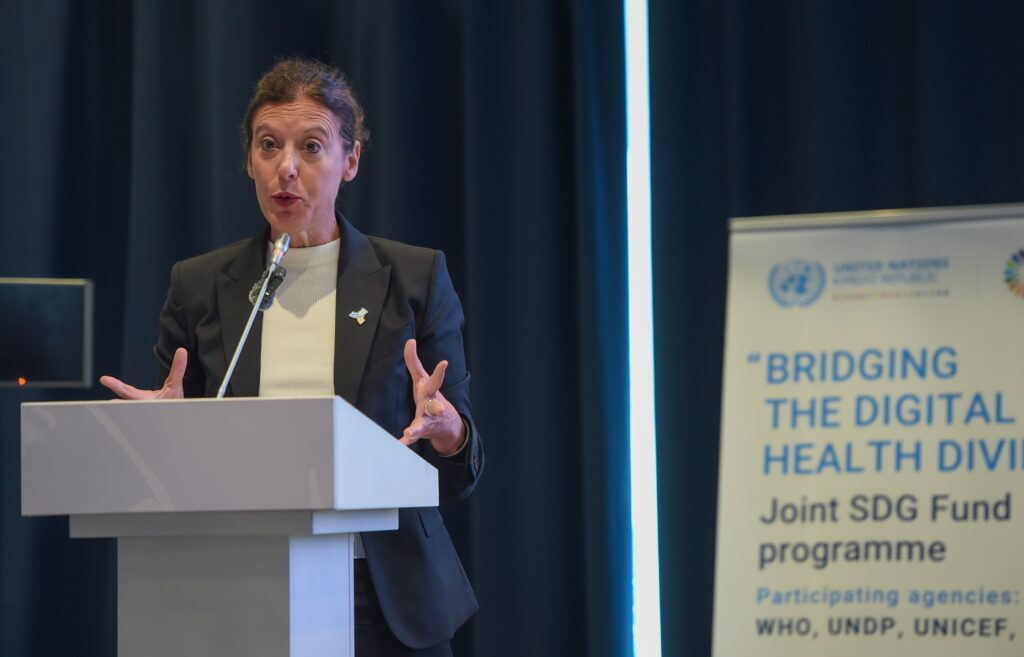
Unified Digital Health System to Transform Kyrgyzstan’s Healthcare

The United Nations Office in Kyrgyzstan, in collaboration with the Ministry of Health, has launched a program to create a unified digital health system in the country. The Ministry of Health stated that the digitization initiative aims to harmonize Kyrgyzstan’s healthcare system. By providing easier access to medical information, the program is expected to expedite the delivery of medical services, even to the most remote and underserved communities. As part of this effort, specialists will enhance government e-services and telemedicine. According to the UN, the project will require an investment of over $4 million, and is scheduled to run until 2027. “One of the key features of the program is to improve the digital health profile, giving citizens access to information about their health,” the Ministry of Health noted in a press release. The authorities plan to integrate a unified registry of citizen vaccinations, which currently holds approximately 3 million records, with a national electronic medical records platform. The program will also focus on supporting vulnerable groups. For example: • 120,000 people will receive digital disability certificates; and • 280,000 people will gain access to digital sick leave documentation, reducing hospital queues and making medical services faster and more convenient. Telemedicine will be expanded to 10 districts, offering medical consultations to more than 700,000 children under the age of 14. Additionally, 60 healthcare facilities will provide specialized care to 140,000 mothers and newborns, all connected to the unified electronic health records (EHR) platform. “This digital health initiative is an important step forward for Kyrgyzstan. By improving access to important medical information, we can make healthcare more efficient and improve outcomes for all,” said Bakyt Dzhangaziev, Deputy Minister for Digital Development of Kyrgyzstan. UN Resident Coordinator in Kyrgyzstan Antje Grave added: “Digital technologies are transforming our world, opening up new opportunities. It is necessary to bridge the digital divide between countries, promote the goals of sustainable development, and ensure that no one is left behind.” The program is being implemented with support from international organizations, including the World Health Organization (WHO), UNICEF, the UN Population Fund, and the UN Development Programme (UNDP).

Turkmenistan and UK Strengthen Cooperation in Education

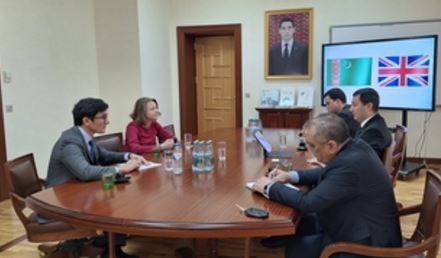
The Ministry of Education of Turkmenistan hosted a meeting between Deputy Minister Azat Ataev and Sarah Chidgey, Regional Export Director for Eastern Europe and Central Asia, to discuss prospects for educational cooperation between Turkmenistan and the UK. Ms. Chidgey shared insights into the UK's experience in delivering quality education, citing successful examples in Kazakhstan and Uzbekistan, where British universities, such as the University of Westminster, have actively sought to expand partnerships. During the meeting, the participants explored opportunities for British universities to offer educational services in Turkmenistan, including the accreditation of academic institutions to enhance secondary and higher education. Chidgey announced plans to hold the Turkmen-British Trade and Industry Council early next year, with educational cooperation set to be a key topic. The British delegation also expressed its readiness for more in-depth discussions at the World Education Forum, held annually in London. Ataev expressed interest in implementing the proposed initiatives and supported organizing webinars for Turkmen specialists. These webinars will focus on introducing Turkmen specialists to British educational standards and accreditation procedures and enhancing education quality. He emphasized that particular attention would be given to studying critical aspects of the British educational system to facilitate their successful adaptation and implementation in Turkmenistan. Both sides expressed confidence that this partnership would contribute to developing Turkmenistan's education system and creating new opportunities for students and teachers. In the long term, it is expected to support their integration into the global educational community. Great Britain actively cooperates with Central Asian countries in the field of education: Kazakhstan has the Kazakh-British Technical University, founded in 2001, which offers programs in partnership with British universities, and British universities are opening branches in Uzbekistan, giving local students access to British education. The British Council also runs the region's English language training and teacher development programs. In 2024, the British Foreign Secretary announced a new initiative to promote English in Central Asia by giving teachers access to online resources with local content.

Six Key Names in the Music of Kazakhstan

The music of Kazakhstan is a bright reflection of the national identity. From pop classics to groundbreaking hip-hop sounds, Kazakhstani artists are creating more than just songs – they’re blazing a new cultural trail, where every chord and lyric is imbued with a unique identity. TCA has compiled a list of six key names whose music has united generations, captured hearts and made Kazakhstan a prominent spot on the global music map.   Dos-Mukasan [embed]https://www.youtube.com/watch?v=KCmlOVdhVLc[/embed]   Dos-Mukasan have been one of the most popular bands in Kazakhstan since the late 1960s. The group was created by students of the Kazakh Polytechnic Institute and soon became a firm favorite with the public. They combined folk motifs with elements of rock music, which was revolutionary at the time, and set a new vector for Kazakhstani pop music. Their compositions, such as “Aliya” and “Toi Zhyry”, remain popular and are played at various events, evoking a strong sense of nostalgia among the older generations. Following the release of the movie Dos-Mukasan in 2022, the band gained a second lease of life with a younger audience. Now, the legendary band can be heard on a new generation of headphones, and the number of monthly listens on Spotify has already exceeded 19,000.   Roza Rymbayeva [embed]https://www.youtube.com/watch?v=NvdFwnQ1nXU[/embed] Roza Rymbayeva, the “Nightingale of Kazakhstan”, is one of the most famous performers from Soviet-era Kazakhstan. Her career began in 1975 when she became a soloist with the Arai ensemble and quickly gained immense popularity. Rymbayeva continued her career performing on various international stages and won a plethora of awards. Her songs are characterized by strong vocals and deep content, and many, such as “Aliya,” have become true classics of Kazakhstani pop music.   Kairat Nurtas [embed]https://www.youtube.com/watch?v=bkPBXZNbKA4[/embed] Kairat Nurtas is one of the most commercially successful performers in modern Kazakhstan. He began his musical career as a teenager, and by the 2010s had become a star of the Kazakh pop scene. His songs, such as “Arman” and “Almaty tүni,” became hits, winning over fans across the country. Kairat is listened to by both the younger generation, who appreciate his modern pop sounds, and more mature listeners, who are drawn to his lyrics and national motifs. Thanks to his charisma and ability to find a common language with different generations, Kairat has a huge army of fans and has a significant influence on the modern pop culture of Kazakhstan.   Dimash Kudaibergen [embed]https://www.youtube.com/watch?v=AUARjexCTlQ[/embed] Dimash Kudaibergen is a singer with a unique voice, the range of which reaches six octaves. He became famous globally thanks to his participation in the Chinese show “I Am a Singer” in 2017, where he captivated the audience with his powerful voice. Dimash has won numerous international awards and actively popularizes Kazakh culture abroad, incorporating national themes into his performances. His compositions, “S.O.S” and “Acapella” have been recognized both in Kazakhstan and far beyond its borders.   Skriptonit [embed]https://www.youtube.com/watch?v=nkncpcanly0[/embed] Skriptonit (Adil Jalelov) is one of the most influential rappers in Kazakhstan and the CIS. His style...

Kazakhstan Sports Anticipates Influx of Russian and Belarusian Athletes

Kazakhstan's lower house of parliament, the Mazhilis, has approved in its first reading a bill on physical culture and sports that would ban the funding of foreign athletes (legionnaires) from the state budget and national companies with government stakes. However, even if this bill is enacted, Kazakh sports teams will retain a legal avenue to invite athletes from Eurasian Economic Union (EAEU) countries using public funds. For the first time, Kazakhstan’s national legislature is proposing a provision prohibiting the use of state funds to finance athletes who are not citizens of Kazakhstan, with the goal of prioritizing Kazakh athletes in terms of both sports representation and financial support. Minister of Tourism and Sports Yerbol Myrzabasynov has also suggested setting a cap on state funding for professional sports clubs, which would vary by sport according to national priorities. “The freed funds will be redirected towards children’s and youth sports, including boarding schools, youth sports schools, sports reserves, and facility upgrades,” Myrzabasynov explained. The bill was approved in the first reading. Currently, government funding for sports clubs in Kazakhstan comes from two main sources. Teams competing internationally, such as the Barys hockey team in the Continental Hockey League, the Astana basketball team in the VTB United League, and the Astana cycling team in the World Tour, receive support from the Samruk-Kazyna fund. Other teams in soccer, hockey, basketball, and volleyball competing in Kazakhstan’s national championships are funded by local budgets, with Astana’s soccer team - which also receives sponsorship from the Samruk-Kazyna fund - being the sole exception. Should the bill pass, these teams will need to rely on Kazakh athletes — or athletes from EAEU countries such as Russia, Belarus, Armenia, and Kyrgyzstan. The Treaty on the Eurasian Economic Union, enacted in January 2015, promotes the free movement of services, goods, capital, and labor across member states, ensuring equal labor rights and remuneration for citizens of EAEU countries. This treaty means that Kazakh clubs cannot restrict funding for athletes from EAEU nations without breaching international commitments. In Kazakh soccer, for instance, EAEU athletes are not counted as foreign players in the Premier League, a policy instituted after the Kazakhstan Football Federation set a limit on foreign players several years ago, capping each team’s roster at eight foreign players per season. Athletes from Russia, Belarus, Armenia, and Kyrgyzstan, however, are treated as domestic players due to Kazakhstan’s international obligations. This arrangement stems from Kazakhstan’s Law on Legal Acts, which stipulates that ratified international treaties take precedence over national laws. Therefore, if the bill banning foreign athletes' funding from the state budget is fully enacted, EAEU athletes will remain exempt from this ban. The bill must still pass through a second reading in the Mazhilis, two readings in the Senate, and obtain presidential approval before it becomes law. Questions remains as to whether Kazakh sports clubs will use this provision to hire athletes from EAEU countries, given potential legal challenges. Local administrations (akimats) who would be affected by any restrictions on funding for...