• KGS/USD = 0.01143 0%
  • KZT/USD = 0.00212 0%
  • TJS/USD = 0.10718 -0.09%
  • UZS/USD = 0.00008 0%
  • TMT/USD = 0.28571 0%
  • KGS/USD = 0.01143 0%
  • KZT/USD = 0.00212 0%
  • TJS/USD = 0.10718 -0.09%
  • UZS/USD = 0.00008 0%
  • TMT/USD = 0.28571 0%
  • KGS/USD = 0.01143 0%
  • KZT/USD = 0.00212 0%
  • TJS/USD = 0.10718 -0.09%
  • UZS/USD = 0.00008 0%
  • TMT/USD = 0.28571 0%
  • KGS/USD = 0.01143 0%
  • KZT/USD = 0.00212 0%
  • TJS/USD = 0.10718 -0.09%
  • UZS/USD = 0.00008 0%
  • TMT/USD = 0.28571 0%
  • KGS/USD = 0.01143 0%
  • KZT/USD = 0.00212 0%
  • TJS/USD = 0.10718 -0.09%
  • UZS/USD = 0.00008 0%
  • TMT/USD = 0.28571 0%
  • KGS/USD = 0.01143 0%
  • KZT/USD = 0.00212 0%
  • TJS/USD = 0.10718 -0.09%
  • UZS/USD = 0.00008 0%
  • TMT/USD = 0.28571 0%
  • KGS/USD = 0.01143 0%
  • KZT/USD = 0.00212 0%
  • TJS/USD = 0.10718 -0.09%
  • UZS/USD = 0.00008 0%
  • TMT/USD = 0.28571 0%
  • KGS/USD = 0.01143 0%
  • KZT/USD = 0.00212 0%
  • TJS/USD = 0.10718 -0.09%
  • UZS/USD = 0.00008 0%
  • TMT/USD = 0.28571 0%

Viewing results 775 - 780 of 1735

Archaeologists unlock Secrets of Ancient Civilization in Turkmenistan

Large-scale archaeological research continues in the Karakum desert at the ancient site of Gonur-Depe. This unique monument, discovered in 1972, is the key to unlocking the mysteries of the ancient civilization Margush, which flourished in the delta of the Murghab River about four millennia ago. The Turkmen-Russian Margush Archaeological Expedition, operating under the international agreement, is nearing the end of another field season. The scientists uniting specialists from the Institute of Ethnology and Anthropology of the Russian Academy of Sciences, the Institute of History of Material Culture of the Russian Academy of Sciences, and Turkmen researchers continue painstaking work to study and describe numerous artifacts found at this ancient settlement. The excavation season brought some interesting findings. Among them, a miniature cylindrical seal made of talc-agalmatolite, a fragment of a clay bulla with imprints of a snake-shaped seal, and a unique clay lid from a vessel with imprints of a rope and a cloisonné seal stands out. Of particular interest are sets of semi-precious stone beads found in five burials. The skill of ancient jewelers has astonished modern researchers—some lapis lazuli beads have a diameter of only 1 millimeter. Archaeologists have also conducted research aimed at studying the technologies of ancient builders. For the first time, a gypsum kiln was described in detail, making it possible to reconstruct the technological process of producing building materials in ancient Gonur-Depe. The results of these studies will be presented at an international scientific conference in Ashgabat, where scientists from different countries will discuss the discoveries and their significance as regards understanding the history of the ancient civilization of Margiana. The discoveries made in Gonur-Depe not only shed light on the life of the ancient inhabitants of these places but also emphasize the importance of international cooperation in archaeology and history. Each discovery brings us closer to understanding the rich cultural heritage left by an ancient civilization in the heart of the Karakum desert.
Kazakhstan and Kyrgyzstan to Cooperate on Snow Leopard Conservation

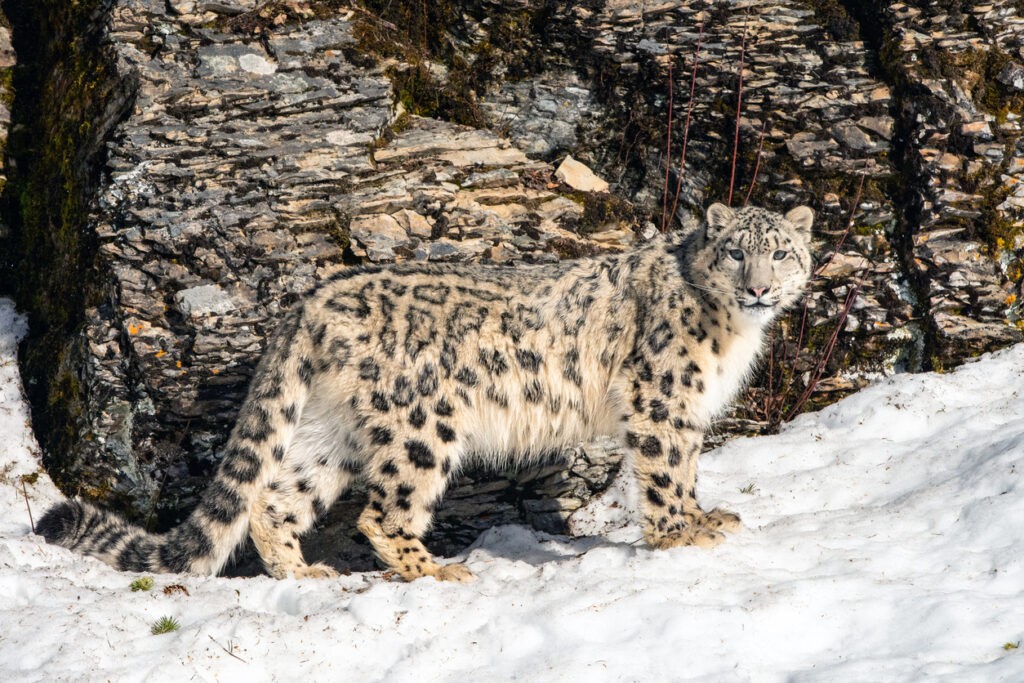
As reported by the United Nations Development Programme (UNDP) in Kazakhstan, a memorandum of understanding on snow leopard conservation was signed on October 17 between Kazakhstan's and Kyrgyzstan's  protected nature reserves. Initiated by UNDP in Kazakhstan with the support of the Global Environment Facility (GEF), the five-year agreement aims to conserve the snow leopard and its habitats in the northern Tien Shan Mountains within four of the countries' Specially Protected Nature Areas: the Kolsay Kolderi State National Park, the Almaty State Nature Reserve, the Ile-Alatau State National Park in Kazakhstan, and the Chon Kemin State Nature Park in Kyrgyzstan. The two countries will coordinate joint measures and share experiences in researching and strengthening snow leopard protection. Over the next five years, the parties will also develop and implement several initiatives to monitor the snow leopard, its habitats and food supply, promote transboundary and international cooperation, and increase public awareness and participation through snow leopard conservation programs. Nurken Sharbiyev, Vice Minister of Ecology and Natural Resources of Kazakhstan, citing the fact that the country's snow leopard population has increased by over 20% since 2019, to between 152 and 189 animals, stated, “This memorandum will strengthen the links between our countries to conserve this globally important species." Mirslav Amankulov, Vice Minister of Natural Resources, Ecology and Technical Supervision of Kyrgyzstan, said that Kyrgyzstan currently has over 400 snow leopards but noted: “As it is a migratory species, its habitat is not limited to the territory of the country. To study and preserve the snow leopard and its habitat, prevent the impact of serious threats such as illegal hunting and reduction of food supply and habitats due to human activities, interaction between stakeholders is needed, which will be facilitated by the implementation of measures under the signed memorandum between Kazakhstan and the Kyrgyz Republic." The snow leopard is recognized as a rare or endangered species in 12 countries and its population is indicative of the stability and health of the mountain ecosystem, which occupies a third of the globe. At the first International Forum on Snow Leopard Conservation in Bishkek in 2013, with the support of representatives of 12 snow leopard range countries and the international community, the Bishkek Declaration on the Protection of the Snow Leopard was unanimously adopted, and the Global Snow Leopard and Ecosystem Protection (GSLEP) Program was approved. Later, in December 2023, Kyrgyzstan's President Sadyr Japarov signed a Decree “On recognizing the snow leopard as a national symbol of the Kyrgyz Republic.”

U.S. Supports Restoration of Medieval Mausoleum in Karakalpakstan, Uzbekistan

The  12th Century Khalif Erejep Mausoleum, restored with a $80,000 grant from the U.S. Ambassadors Fund for Cultural Preservation (AFCP), has reopened in Khojayli in Uzbekistan’s northwestern Karakalpakstan region. As reported by the U.S. Embassy in Uzbekistan, the condition of the site was first assessed using  advanced techniques such as geophysics, geodesy, archaeological investigations, structural monitoring, 3D scanning, photogrammetry, and radiocarbon dating. Information boards with interactive elements installed at the site, now offer visitors both detailed insights into the mausoleum’s history and the conservation techniques applied. In addition to the above, an audio guide provides informative commentary accessible via mobile devices, and a dedicated website, www.mizdakhkan.com, has been launched to broadcast the site’s historical background, updates on conservation efforts, and practical visitor information. During his visit on October 15, U.S. Ambassador Jonathan Henick, announced:  “Karakalpakstan’s rich history and culture shine through this important monument. It reflects Karakalpakstan’s deep traditions and ancient soul. The preservation of the Khalif Erejep Mausoleum is a testament to the strong partnership between the United States and Uzbekistan. Through the Ambassadors Fund for Cultural Preservation, we are honored to support Uzbekistan’s efforts in preserving its rich history for future generations.” Established by Congress in 2001 and administered by the U.S. Department of State, the Ambassador’s Fund for Cultural Preservation (AFCP) provides direct grant support for preserving cultural sites, cultural objects and collections, and forms of traditional cultural expression in developing countries worldwide. Since 2001, the Fund has supported 15 projects, with a total budget of $1,300,000 in Uzbekistan focused on the restoration of ancient and historic buildings, the assessment and conservation of rare manuscripts and museum collections, the preservation and protection of important archaeological sites, and the documentation of traditional craft techniques.

Uzbekistan to Fine Parents of Quadrobers

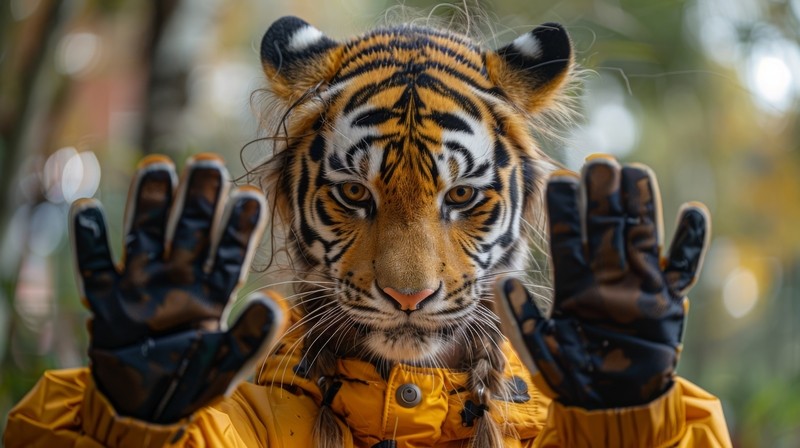
Parents in Uzbekistan have been threatened with fines for the inappropriate behavior of their children who belong to the quadrobika subculture. The Interior Ministry said failure to comply with parental duties will be punishable as parents are responsible for educating their children to respect social norms and preventing inappropriate behavior. The quadrobika subculture, which has emerged among young people, involves using masks and accessories to imitate animals and their habits. This movement has already been noticed in Kazakhstan, Russia, and Ukraine, and recently, cases of such behavior have been registered in Tashkent. On October 10, a teenager wearing an animal mask frightened people, and the next day, a quadrober imitating a dog attacked a person and frightened children. Specialists warn that such behavior can harm the mental health of minors, affect their social integration, and even lead to aggression. In this regard, the authorities are pressing home parents' legal obligations to ensure their children's upbringing and education under the Constitution and the Education Act of Uzbekistan. Violating these duties carries a fine of up to five times the basic calculation unit (up to 1.875 million UZS ($147). The Interior Ministry has urged parents to take care of their children's all-round development, reacting in time to the emergence of dangerous sub-cultural phenomena. If necessary, a psychological examination of children may be conducted to determine the impact of quadrobics on their emotional health. In Russia, the issue of administrative responsibility of parents who fail to oversee the upbringing of their children who are addicted to quadrobics has also been raised. The problem has not yet been resolved, a the request to the State Duma has been submitted calling for fines and criminal liability violations. In addition, Gennady Shkil, a priest of the Russian Orthodox Church, suggested in a sermon that mothers and fathers of quadrobers should be deprived of parental rights. Shkil believes that such “tough measures” are necessary as it is “for the salvation of mankind.”

UAE Player Fails to Attend World Cup Qualifiers Due to Fake Uzbekistan Passport

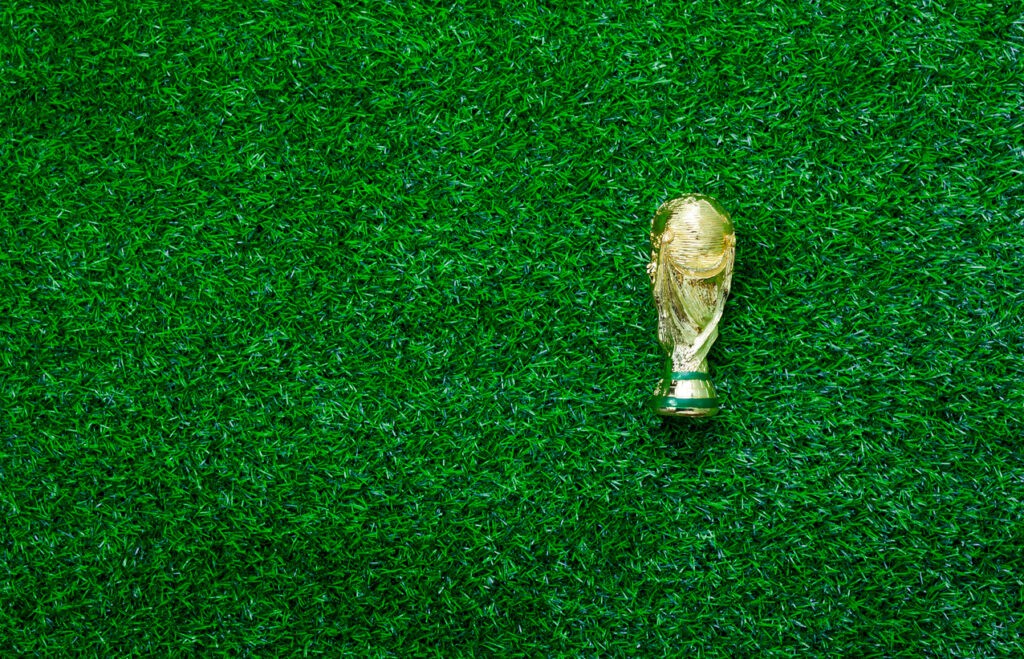
On October 15 , Uzbekistan's national football team will compete against the UAE in the 3rd round of the 4th round of the World Cup Qualifiers. According to a report  issued by the Uzbekistan Football Federation, Fabio de Lima, a Brazilian player in the UAE, will not be joining his team in Uzbekistan for personal reasons. It transpires that although Fabio de Lima received citizenship in Uzbekistan in 2013 and was registered as an Asian legionnaire in the UAE Championship, his documents were fake. Uzbek football specialist Alisher Nikibayev however, claims there is no legal reason preventing the player from entering Uzbekistan: “They are asking if Fabio can come to Uzbekistan. I don’t see any legal obstacle to it; it is unlikely that a criminal case was opened against him. In addition, it is necessary to check the statute of limitations for such violations. Don’t forget that Fabio, as a citizen of Uzbekistan, has never seen his ‘passport’ and, of course, has never used it anywhere. This fake document was only needed to enter the Emirates Championship. Why is he not coming? He fears the case is still open and doesn’t want to take any chances. As for his UAE passport, everything is legal in the Emirates."

Alisher Usmanov Sues Journalist for Insults in Germany

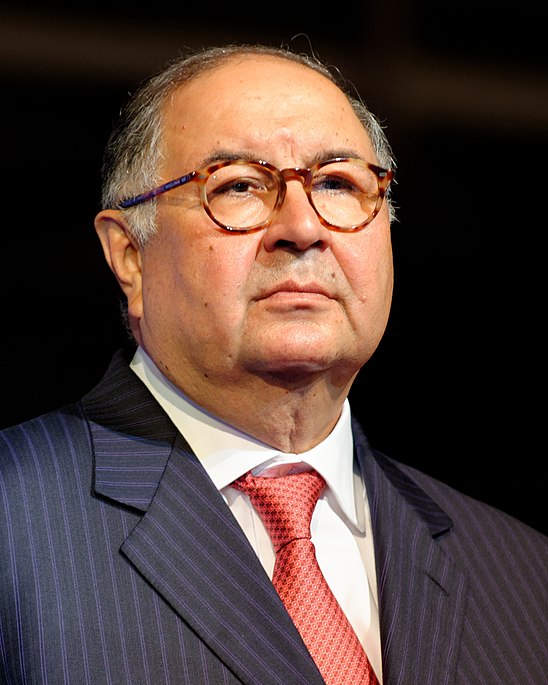
As previously reported by The Times of Central Asia, Alisher Usmanov won a court case against the German TV channel ARD, after a Hamburg court determined the channels' broadcast accusation that Uzbek-born billionaire Alisher Usmanov had created a system of bribing the International Fencing Federation (FIE),unreliable. In his article “Doubtful judges in action at the Olympics – 5,000 euros bribes in fencing,” award-winning journalist Hans-Joachim Seppelt accused Usmanov of bribery and manipulation of judges in international fencing. According to the report, the court banned its distribution as “inappropriate news based on suspicion.” If the court order is violated, the violator will be fined up to 250,000 euros per episode or imprisoned. But Usmanov needed more and in an complaint submitted electronically to the Cologne prosecutor’s office on October 8, called for the journalist to be prosecuted. In a statement to BILD, Usmanov's lawyer, Joachim Steinhöfel said, “Mr. Seppelt and ARD Sportschau not only violated basic journalistic standards and the press code. This malicious and vile gossip-  should be - punished. Seppelt only wanted to humiliate Mr. Usmanov. He had no facts. This is not journalism; this is shaming.”