• KGS/USD = 0.01144 0%
  • KZT/USD = 0.00204 0%
  • TJS/USD = 0.10439 0%
  • UZS/USD = 0.00008 0%
  • TMT/USD = 0.28490 0%
  • KGS/USD = 0.01144 0%
  • KZT/USD = 0.00204 0%
  • TJS/USD = 0.10439 0%
  • UZS/USD = 0.00008 0%
  • TMT/USD = 0.28490 0%
  • KGS/USD = 0.01144 0%
  • KZT/USD = 0.00204 0%
  • TJS/USD = 0.10439 0%
  • UZS/USD = 0.00008 0%
  • TMT/USD = 0.28490 0%
  • KGS/USD = 0.01144 0%
  • KZT/USD = 0.00204 0%
  • TJS/USD = 0.10439 0%
  • UZS/USD = 0.00008 0%
  • TMT/USD = 0.28490 0%
  • KGS/USD = 0.01144 0%
  • KZT/USD = 0.00204 0%
  • TJS/USD = 0.10439 0%
  • UZS/USD = 0.00008 0%
  • TMT/USD = 0.28490 0%
  • KGS/USD = 0.01144 0%
  • KZT/USD = 0.00204 0%
  • TJS/USD = 0.10439 0%
  • UZS/USD = 0.00008 0%
  • TMT/USD = 0.28490 0%
  • KGS/USD = 0.01144 0%
  • KZT/USD = 0.00204 0%
  • TJS/USD = 0.10439 0%
  • UZS/USD = 0.00008 0%
  • TMT/USD = 0.28490 0%
  • KGS/USD = 0.01144 0%
  • KZT/USD = 0.00204 0%
  • TJS/USD = 0.10439 0%
  • UZS/USD = 0.00008 0%
  • TMT/USD = 0.28490 0%

Viewing results 109 - 114 of 1420

Turkmen Pensioners Decry Government’s Refusal to Index Payments

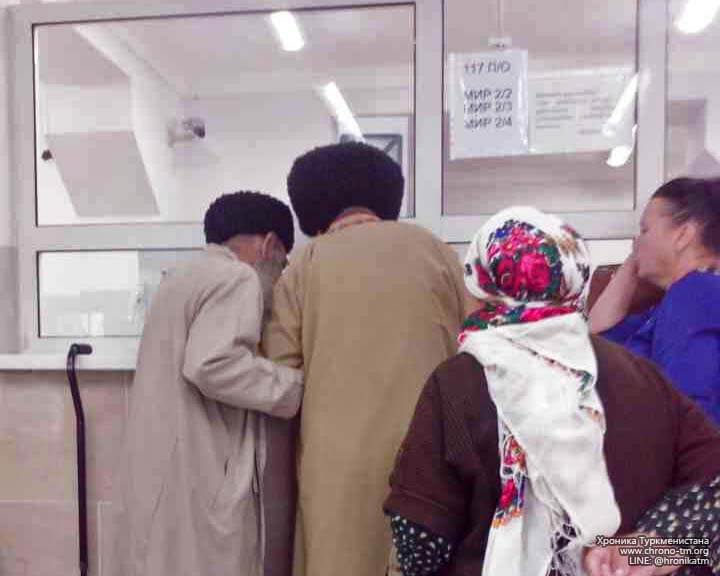
The Turkmen government's decision to forgo its customary annual increase in pensions and benefits in 2026 has sparked sharp discontent among elderly citizens. Pensioners, arriving to have their documents updated for the year, have discovered that payment amounts remain unchanged and many are not hiding their anger.  Since January 2, retirees have been visiting social security offices where pension amounts are officially recorded in their books. In previous years, this annual procedure was typically accompanied by an indexation of around 10%, helping to offset inflation and rising prices. That practice has been discontinued. Pension and social benefit levels remain frozen, despite the ongoing increase in living costs. The decision not to index pensions was announced in autumn 2025 during a parliamentary session, where honorary elder Yazmyrat Atamyradov proposed a complete halt to increases in salaries, pensions, state benefits, and scholarships. He claimed the “happy people” of Turkmenistan already enjoy a steadily improving standard of living, making additional financial support unnecessary. The response from the public has been stark. Pensioners are openly criticizing the government and President Serdar Berdimuhamedov, not only in social services offices but also in markets, on public transport, and in other public places. Many older citizens recall a similarly severe decision under the country’s first president, Saparmurat Niyazov, when pensions were abolished entirely. Witnesses from that time report that some elderly individuals, left without support, were pushed to the brink of survival. The current cost-of-living crisis has exacerbated the backlash. Over the past year, food prices have surged. Beef has risen from $17.40-$20.30 to $31.90-$33.40 per kilogram, and local apples have jumped from $4.35 to $7.69 per kilogram. As of January 1, 2025, the minimum pension in Turkmenistan was set at $159.50. That figure remains unchanged in 2026, despite the deepening economic pressures faced by retirees.

Kyrgyzstan Urged to Shift from Rural Focus to Urban Development

Kyrgyzstan must develop modern urban infrastructure and gradually move away from its predominantly rural development model, according to Nurdan Oruntayev, Director of the State Agency for Architecture, Construction, and Housing and Utilities. Speaking to local media, Oruntayev emphasized the need for a strategic transition toward urbanization to drive economic growth and job creation. Master plans for the development of the towns of Karakol, Manas, and Osh have already been approved. These include the construction of high-rise residential buildings, signaling a broader shift toward urban expansion. “We must develop cities and move toward an urban infrastructure system. We must have megacities. The construction industry makes a significant contribution to the economy and provides jobs for many citizens,” Oruntayev said. He noted that the average annual growth in real estate prices in Kyrgyzstan ranges between 20-30 percent, reflecting strong demand and rising investor interest. According to official data, construction has been a primary driver of economic growth in recent years, with GDP growth consistently exceeding 10 percent. However, this rapid development has raised concerns among local communities. In an interview with the Times of Central Asia, Albina Alimova, a tour guide from Karakol, criticized the city’s master plan for ignoring input from the tourism sector, despite tourism being a key regional revenue source. She warned that unchecked construction was compromising the city’s historical character. “New buildings are blocking historic sites and views. Karakol has streets with late 19th-century stonework, old merchant houses, and a museum. We take tourists there, in part for the mountain views. But all of this is gradually being built up, and the city's former appearance may be lost,” she said. Similar concerns have emerged in Bishkek, where city authorities are preparing a renovation program that would replace older buildings with high-rise developments. Residents say the city’s growing density has disrupted natural wind patterns and worsened environmental conditions. The capital’s master plan, developed with input from St. Petersburg-based urban planners, also flagged excessive building density in some districts as a key issue.

Uzbek Defender Abdukodir Khusanov Named Asia’s Best Young Footballer of 2025

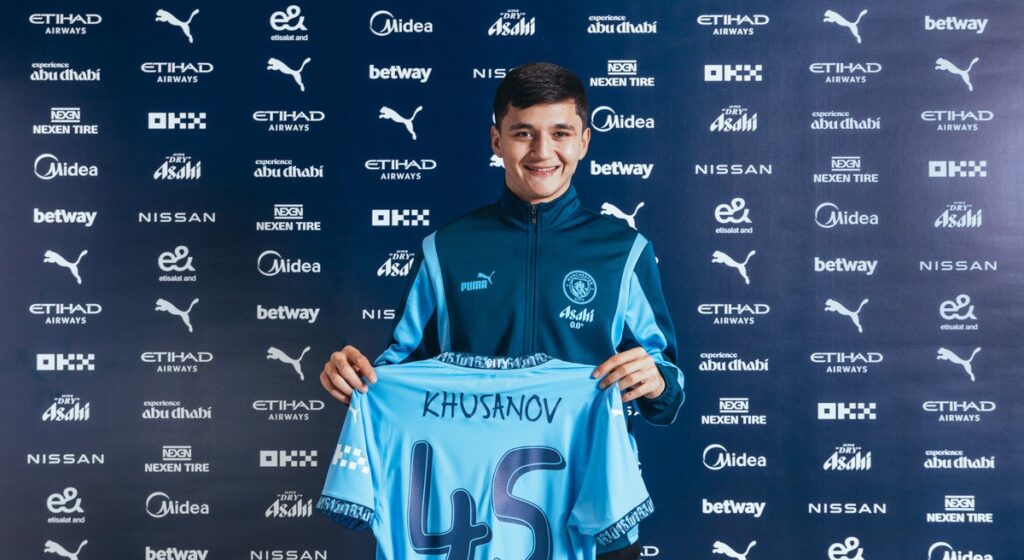
Abdukodir Khusanov, central defender for the Uzbekistan national team and Manchester City, has been named Asia’s Best Young Footballer of 2025 by football outlet Goalpost, marking a major milestone in the meteoric rise of the 21-year-old. The past year has been a breakthrough period for Khusanov. In January, he made history as the first footballer from Uzbekistan to debut in the English Premier League, following his transfer to Manchester City. Since then, he has steadily earned playing time at one of Europe’s top clubs, making nine appearances for the Manchester side this season. Khusanov’s impact has extended beyond club football. In June, he played a pivotal role in securing Uzbekistan’s qualification for the FIFA World Cup, a landmark achievement for the national team. His performances at both domestic and international levels propelled him to the top of Goalpost’s rankings, ahead of emerging talents from Australia, Indonesia, South Korea, Iraq, and other Asian nations. His international recognition continues to grow. Khusanov was recently ranked 86th in The Athletic’s list of the world’s top 100 footballers, underscoring his expanding global profile. Interest from Europe’s elite clubs is also mounting. In December, reports emerged that Real Madrid is considering Khusanov for a mid-season loan, viewing him as a potential short-term solution to its defensive injury crisis. The Spanish club is said to value his physical presence and versatility, particularly his ability to play in several defensive positions.

Kazakhstan Plans to Send 35 Athletes to 2026 Winter Olympics in Italy

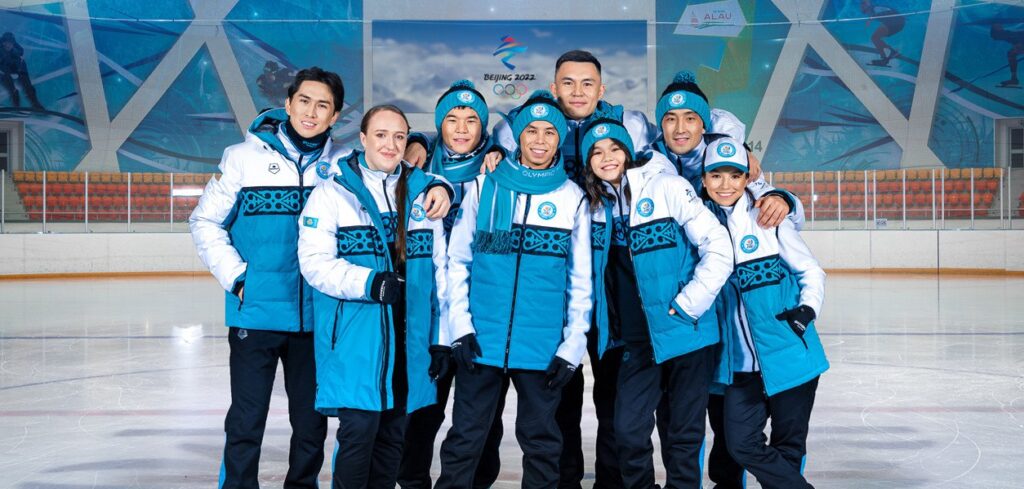
Kazakhstan plans to send a team of 35 athletes to compete at the XXV Winter Olympic Games, which will take place in Italy in 2026 in Milan and Cortina d’Ampezzo. The 2026 Winter Olympics will be held from February 6 to 22, bringing together approximately 3,000 athletes from 93 countries. A total of 116 sets of medals will be contested. Kazakhstan’s athletes will compete in 10 disciplines across 58 medal events. These include biathlon, speed skating, figure skating, short track, alpine skiing, Nordic combined, cross-country skiing, ski jumping, freestyle moguls, and freestyle aerials. Among the strongest medal contenders are figure skaters Mikhail Shaydorov and Sofya Samodelkina; freestyle skiers Anastasia Gorodko and Yulia Galysheva; speed skater Evgeny Koshkin; and a group of short track skaters, including several world championship medalists. Shaydorov is the current world silver medalist in men’s singles figure skating. Galysheva won bronze in moguls at the 2018 Winter Olympics and was crowned world champion in 2019 in the same discipline. Gorodko has twice earned bronze in parallel moguls at the World Championships, in 2021 and 2025. Kazakhstan has participated in every Winter Olympics since 1994, when skier Vladimir Smirnov won the country’s first and so far only, Winter Olympic gold medal in Lillehammer, Norway. To date, Kazakhstan has won eight medals at the Winter Games: one gold, three silver, and four bronze. The Lillehammer Games remain the country’s most successful, with three medals and a 12th-place finish in the overall medal standings. At the most recent Winter Olympics in Beijing in 2022, Kazakh athletes did not reach the podium. However, the national team delivered a strong performance at the 2025 Winter Asian Games, finishing fourth in the overall standings with 20 medals.

Kazakh-Spanish Film La Tregua to Premiere on Netflix

Following its premiere at the San Sebastian International Film Festival this fall, where it received a special award, the Kazakh-Spanish film La Tregua (The Truce) has been released in cinemas in Spain and Kazakhstan. It is now set to become the first Spanish-language film featuring Kazakhstan to appear on Netflix. “Although critics say the film is not for popcorn viewing, given its focus on little-known and tragic chapters in the histories of Kazakhstan and Spain, its release has generated strong emotional responses in both countries,” said Yerlan Bekhozhin, a prominent Kazakh journalist and co-producer of the film, in an interview with The Times of Central Asia. “It speaks to the timeless struggle of human confrontation.” The film presents a Kazakh narrative about Spaniards caught on opposing sides of ideological conflict. “It is a story from the last century, yet it addresses the present day,” Bekhozhin said. “When we look at today’s world, it’s clear that people lack the ability to engage in dialogue. The main message of the film is: There is always a way to negotiate.” Netflix is expected to stream the film in 2026. Distribution discussions are also underway for theatrical releases in Mexico and other Spanish-speaking countries in Latin America. [caption id="attachment_41648" align="aligncenter" width="2560"] Still from La Tregua[/caption] From Karaganda to the Screen The story is rooted in the history of Karlag, the Karaganda labor camp that operated in Kazakhstan from 1937 to 1959. Victims of Stalinist repression from across the Soviet Union, including foreign nationals, were imprisoned there for dissent, free expression, or as victims of denunciations. The idea for the film came from Spanish producer César Benítez, inspired by an event from over 30 years ago. During the Soviet era, the identities of Spanish citizens imprisoned in Karlag were kept secret. After Kazakhstan gained independence, its government handed the list of repressed Spaniards to the King of Spain, a gesture that sparked widespread attention in Spain, allowing many families to finally discover the fate of their relatives. Years earlier, the Spanish documentary, The Forgotten in Karaganda, had drawn significant attention to the subject. Now, Benítez has transformed the story into a feature film. “The title The Truce is deeply relevant today, at a time when peace requires people to sit at the same table,” said Bekhozhin. [caption id="attachment_41650" align="aligncenter" width="2560"] Still from La Tregua[/caption] Kazakh Identity on a Global Stage Bekhozhin also emphasized the film’s role in portraying Kazakh identity. “Its global release will introduce the world to the law of the steppe, the law of hospitality,” he said. “Kazakhs have long demonstrated empathy forged under harsh conditions. It’s part of our national character to welcome others, regardless of nationality or faith.” One scene in the film shows a Kazakh family near the camp inviting Spanish prisoners into their home and setting a traditional dastarkhan, a generous table of lamb-based dishes. The prisoners are seated in the place of honor, or torge, in keeping with Kazakh custom. “In the film, the hostess explains that when...

Eco-Friendly Quraq-Korpe Christmas Tree Installed in Astana

An unconventional art installation has appeared in Astana’s new administrative center: an eco-friendly Christmas tree styled after quraq-korpe, the traditional Kazakh patchwork quilt. Created by local volunteers, the project is part of the city's broader initiative to incorporate national cultural heritage into contemporary public spaces. Quraq-korpe, made from multi-colored fabric scraps, symbolizes warmth, family, and hospitality. The New Year’s tree, hand-assembled from textile elements and installed on the left bank of the Ishim River, reflects these values in a striking urban art form. A similar eco-tree was first introduced in the capital in 2020 and proved popular with both residents and visitors. In response to public interest, the project was revived in 2025 with a fresh concept and deeper symbolic meaning, focusing on community involvement. [caption id="attachment_41616" align="aligncenter" width="1082"] Image: gov.kz[/caption] “The eco-tree project in the quraq-korpe style has returned to the city at the request of residents,” said organizer Rakhima Mukusheva. “This year’s version is inspired by the Year of Working Professions and the Year of the Horse, symbols of labor, movement, strength, and a living connection to tradition.” All the tree’s decorations were handmade by Astana residents of all ages. More than 50 volunteers across three generations, grandmothers, mothers, daughters, and grandchildren, contributed to the effort. Within two days, they crafted over 100 unique textile ornaments, which were placed in a symbolic “chest of goodness” as part of the installation. The tree will remain on display through January 20, inviting the public to experience it during the holiday season. [caption id="attachment_41618" align="aligncenter" width="1082"] Image: gov.kz[/caption] According to the Astana mayor’s office, the initiative supports Kazakhstan’s Year of Working Professions and highlights the value of labor, craftsmanship, and intergenerational professional traditions. It also showcases the potential of handicrafts as a foundation for cultural initiatives and the creative economy. Interest in Kazakhstan’s national culture continues to grow internationally. As previously reported by The Times of Central Asia, a cultural event called NoMad was recently held in New York to celebrate Kazakh identity. In Kazakhstan, Christmas is officially celebrated on January 7 by Orthodox Christians as a public holiday, while December 25 is observed privately by Catholic and Protestant communities.