
• KGS/USD = 0.01144 0%
  • KZT/USD = 0.00216 0%
  • TJS/USD = 0.10630 -0.09%
  • UZS/USD = 0.00008 0%
  • TMT/USD = 0.28530 0%
  • KGS/USD = 0.01144 0%
  • KZT/USD = 0.00216 0%
  • TJS/USD = 0.10630 -0.09%
  • UZS/USD = 0.00008 0%
  • TMT/USD = 0.28530 0%
  • KGS/USD = 0.01144 0%
  • KZT/USD = 0.00216 0%
  • TJS/USD = 0.10630 -0.09%
  • UZS/USD = 0.00008 0%
  • TMT/USD = 0.28530 0%
  • KGS/USD = 0.01144 0%
  • KZT/USD = 0.00216 0%
  • TJS/USD = 0.10630 -0.09%
  • UZS/USD = 0.00008 0%
  • TMT/USD = 0.28530 0%
  • KGS/USD = 0.01144 0%
  • KZT/USD = 0.00216 0%
  • TJS/USD = 0.10630 -0.09%
  • UZS/USD = 0.00008 0%
  • TMT/USD = 0.28530 0%
  • KGS/USD = 0.01144 0%
  • KZT/USD = 0.00216 0%
  • TJS/USD = 0.10630 -0.09%
  • UZS/USD = 0.00008 0%
  • TMT/USD = 0.28530 0%
  • KGS/USD = 0.01144 0%
  • KZT/USD = 0.00216 0%
  • TJS/USD = 0.10630 -0.09%
  • UZS/USD = 0.00008 0%
  • TMT/USD = 0.28530 0%
  • KGS/USD = 0.01144 0%
  • KZT/USD = 0.00216 0%
  • TJS/USD = 0.10630 -0.09%
  • UZS/USD = 0.00008 0%
  • TMT/USD = 0.28530 0%

Viewing results 157 - 162 of 1624

Disability Inclusion Is Emerging as Central Asia’s Next Social Frontier

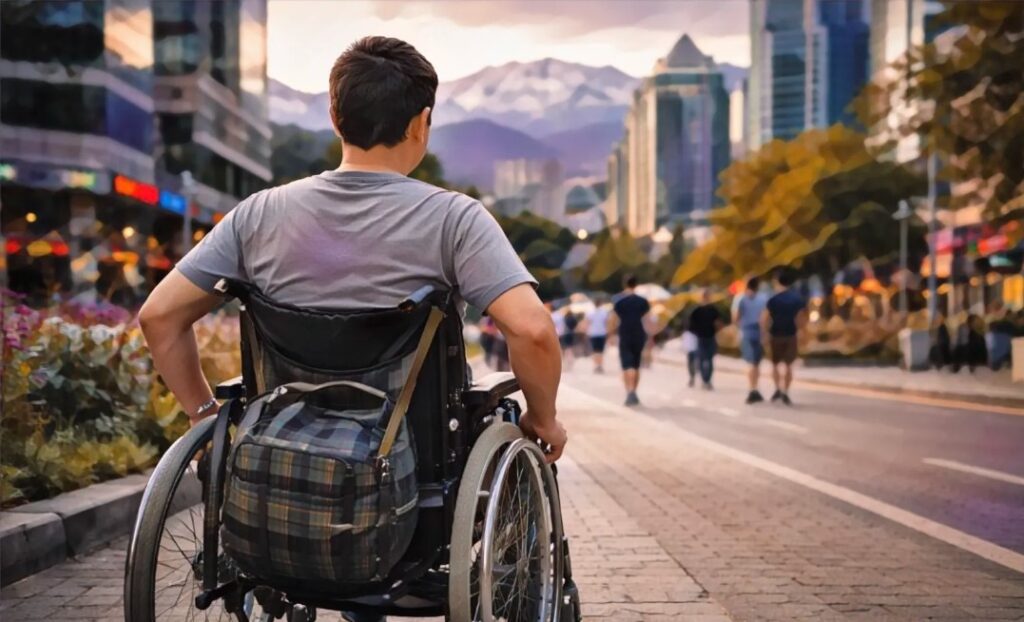
More than 1.3 billion people worldwide live with some form of disability, yet disability remains one of the least visible dimensions of social and economic life. In Central Asia, that invisibility is especially pronounced. As governments focus on infrastructure, growth, and modernization, far less attention is paid to whether people with disabilities are becoming more present in schools, workplaces, and public life, or whether they remain largely confined to families and institutions beyond the reach of public discussion. Across the region, cities are expanding, labor mobility is increasing, and younger generations are more connected to global ideas through study and migration. These shifts are often treated as shorthand for progress. At the same time, people with disabilities consistently face lower educational attainment and weaker labor market outcomes, making inclusion a practical test of whether development reaches beyond headline indicators into everyday life. Disability policy across much of Central Asia has long centered on legal classification, benefit eligibility, and institutional care. Long-term institutionalization is associated with reduced autonomy and poorer social outcomes, yet institutions remain a common default, reinforcing the idea that disability is primarily an administrative or medical issue rather than a social one shaped by access and expectations. In practice, families remain the primary providers of care throughout the region. In Kyrgyzstan, around 200,000 people are officially registered as living with disabilities, and outside major cities, most daily support is provided by family members due to limited community-based services. In Turkmenistan, public disability data remain sparse, and undercounting is widely acknowledged, leaving extended families as the central source of long-term care. In Tajikistan, official estimates place the number of people living with disabilities between 150,000 and 200,000, with caregiving overwhelmingly home-based due to constrained public resources. Family-based care provides continuity and belonging, but it also carries an economic cost. Caregivers are more likely to reduce paid employment and experience long-term income loss, a burden that falls disproportionately on women and shapes household economic outcomes. This reliance on family support is often contrasted unfavorably with wealthier countries, but the comparison is more complicated. In the United States, more than one in four adults lives with a disability, and people with disabilities report significantly higher rates of loneliness and depression despite extensive legal protections and formal services. By contrast, strong family networks are associated with lower levels of severe social isolation, even in settings with fewer public resources. In recent years, small but notable shifts have begun to appear. Local organizations across the region are experimenting with community-based rehabilitation, inclusive education, and supported employment models that move beyond institutional care. These efforts remain fragmented and under-resourced, but they reflect a growing recognition that disability policy is about protection and participation. As Central Asian governments seek to retain talent, expand their labor force, and project social modernization, inclusion is increasingly intersecting with economic and demographic realities rather than remaining a niche social issue. Institutional care remains common across Central Asia, yet community-based rehabilitation is consistently linked to better social participation and quality...

A Breakout Year for Contemporary Art in Kazakhstan

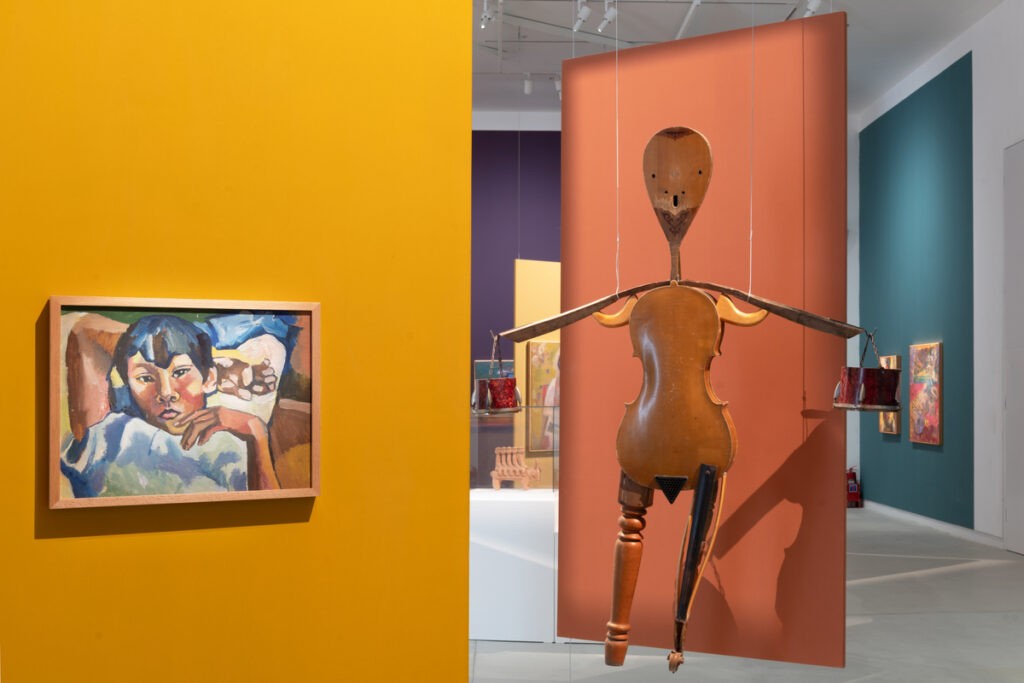
The year 2025 marked not only a busy period for contemporary art in Kazakhstan but also a decisive acceleration. Art moved beyond professional circles, claimed urban spaces, entered international agendas, and ceased to be a conversation “for insiders only.” The Kazakhstani art scene spoke with growing confidence both at home and abroad. New institutions, landmark exhibitions, festivals, and global collaborations signaled a pivotal shift: contemporary art has become a visible and integral component of the country’s cultural fabric. New Museums and Art Spaces in Kazakhstan Geographically, Almaty emerged as the epicenter of contemporary art activity in 2025. The city saw the opening of key institutions that became new focal points for artists, curators, and audiences. Opening of the Almaty Museum of Arts (ALMA) On September 12, 2025, the Almaty Museum of Arts (ALMA) opened its doors in Almaty, becoming one of the largest contemporary art museums in Central Asia. From the outset, ALMA signaled serious institutional ambitions, with a mission to support and study contemporary art processes and situate them within a global cultural context. The museum’s collection includes around 700 works, more than 70% of which are by notable Kazakhstani artists of the 20th century, such as Zhanatai Shardenov, Tokbolat Togyzbayev, Makym Kisameddinov, and Shaimardan Sariyev. Contemporary artists like Rustem Khalfin, Saule Suleimenova, and Said Atabekov are also prominently featured. Designed by the British architectural bureau Chapman Taylor, the 10,000-square-meter museum includes expansive exhibition halls (“The Great Steppe,” “Saryarka”), an Art Street atrium, storage and restoration facilities, and a creative workshop, setting a new standard for museum infrastructure in the region. [caption id="attachment_42431" align="aligncenter" width="1200"] Installation view of "I Understand Everything" – Almagul Menlibayeva (12 September 2025 - May 2026), Almaty Museum of Arts; image: Alexey Naroditsky[/caption] Tselinny Center of Contemporary Culture: Reclaiming a Building and Its Meaning Just days earlier, on September 5, 2025, the Tselinny Center of Contemporary Culture was inaugurated in Almaty. Housed in a restored 1964 Soviet-era cinema, the building underwent nearly seven years of renovation led by British architect Asif Khan. Notably, the facade’s unique sgraffito by artist Evgeny Sidorkin was preserved. The transformed space now features an exhibition hall, library, cafe, and workshop areas. Its opening was marked by the performance BARSAKELMES, with initial public access free of charge. Tselinny now operates three days a week and serves as a vital platform for exhibitions, education, and creative dialogue. [caption id="attachment_42433" align="aligncenter" width="2400"] The Tselinny Center of Contemporary Culture; image: SAPARLAS/Zhanarbek Amankulov[/caption] A. Kasteev State Museum of Arts: A New Status and Contemporary Focus Kazakhstan’s primary national art institution also redefined its role in 2025. Celebrating its 90th anniversary, the A. Kasteev State Museum of Arts was granted National Museum status. In conjunction with this milestone, a new gallery dedicated to contemporary Kazakhstani art from the independence period was unveiled. The exhibition Memory. Space. Progress brought together works from leading artists, charting the development of artistic practice from the 1990s to the present. Contributors included members of the Shymkent-based Red Tractor group, Almaty conceptualists,...

Epiphany in Central Asia: Orthodox Traditions and Regional Unity

On the night of January 18-19, Orthodox Christians across Central Asia gather at frozen rivers and lakes to celebrate the feast of Epiphany by plunging into icy waters, three times each, in line with tradition. Though rooted in the Christian faith, this ritual has evolved into a broader cultural event, drawing participation from people of many backgrounds. A Test of Faith and Endurance In Central Asia, Epiphany coincides with some of the coldest days of the year, often referred to as the "Epiphany frosts." Despite subzero temperatures, participation in ice bathing continues to grow. According to Orthodox tradition, Epiphany commemorates the baptism of Jesus in the River Jordan. While the climate in Israel was mild, believers in the region embrace the symbolic cleansing despite the extreme cold. The Orthodox Church does not consider ice bathing a requirement for the faithful. Instead, the central ritual of the holiday is the Great Blessing of Water, performed both on Epiphany and the evening before. Priests encourage believers to collect holy water from churches, sprinkle it throughout their homes, and drink it in small amounts on an empty stomach. Many believe this brings health and protection for the year ahead. Nevertheless, in the main Orthodox churches of Central Asia, fonts and pools are prepared for those who wish to immerse themselves. Designated ice holes are also opened in lakes and rivers for traditional bathing. Strict Safety Measures in Kazakhstan In Kazakhstan, authorities take extensive precautions to ensure public safety during Epiphany bathing. In Astana, the celebration began with a religious procession from the Constantine and Helen Cathedral to the embankment of the Ishim River, where the water was consecrated despite temperatures dipping to minus 30 degrees Celsius. Warm changing rooms were provided, and teams from the Ministry of Emergency Situations, along with paramedics and rescue personnel, were on hand throughout the night. In Almaty, where temperatures hovered around minus 15 degrees, Epiphany fonts were set up at 10 churches. Authorities reminded residents that swimming in non-designated natural bodies of water is prohibited due to the risk of slipping or falling through the ice. However, safety teams and patrols were stationed at approved bathing sites, including the Bolshaya Almatinka, Malaya Almatinka, Butakovka, Goryachiy Istochnik, and Gorenik rivers. Officials advised those with cardiovascular or endocrine conditions to avoid the ritual and warned against participating while intoxicated. A Cultural Tradition Embraced by Many Over time, Epiphany bathing in Central Asia has grown beyond a strictly religious practice. In Kazakhstan, many ethnic Kazakhs and other non-Christian residents eagerly take part, viewing the ritual as a source of health and vitality. It has become a powerful symbol of interethnic and interfaith unity in the region. While Muslim clerics typically do not encourage participation, they generally refrain from direct criticism, recognizing the tradition's broader cultural significance. Orthodox priests also emphasize that the ritual is more custom than doctrine, open to anyone. Some compare Epiphany bathing to the festive atmosphere of Kurban Ait, when Muslims share food in public spaces. Likewise,...

Mapping the Inner Landscape: An Interview with Oyjon Khayrullaeva

In recent years, a new generation of Uzbek artists has begun to reshape how culture, history, and identity are visually narrated. Among them is Oyjon Khayrullaeva, whose practice moves fluidly between photography, digital collage, and large-scale public installations. Born after independence and largely self-trained outside formal art institutions, Khayrullaeva works with inherited visual languages such as Islamic ornament and traditional textiles, reassembling them into contemporary forms that speak to the present moment. Her recent project for the Bukhara Biennial, called “Eight Lives,” marks a turning point in this exploration. Installed in the public and historical spaces of the ancient city, the work consists of monumental mosaic organs that connect physical vulnerability with emotional states and collective memory. Through the human body, Khayrullaeva maps experiences of anxiety, healing, spirituality, and social pressure, transforming ornament into anatomy and architecture into inner landscape. The Times of Central Asia spoke with the artist to trace how Eight Lives emerged, how collaboration with mosaic masters shaped its final form, and how audiences in Uzbekistan are responding to seeing contemporary art in public spaces. TCA: Can you tell me about your beginnings as an artist? Did you always want to become one? Khayrullaeva: From early childhood, my parents noticed that there was something a bit unusual about me. My father has always called me - and still does - an “alien,” because I’m probably the only person in my family who chose a creative path. No one else in my family has been involved in art, at least not for the past seven generations. I was always a creative child, but I never imagined that I would become an artist. As a child, I tried many things; I went to music school, studied piano, and attended various creative clubs. Still, the idea of pursuing art professionally never crossed my mind. Becoming an artist was, in many ways, an unexpected turn in my life. For a very long time, honestly, until around the age of 24, I had no clear idea of what I wanted to do or what my profession would be. I was never certain about it. So yes, life is an interesting thing. You never really know where it’s going to lead you. TCA: Your artistic journey began with photography before evolving into digital collage. How did your early work in photography shape the way you now approach layering, texture, and composition in your digital pieces? Khayrullaeva: When I was around 17 or 18, I became interested in photography. At that time, I didn’t have a camera, so I was shooting with my phone. For my birthday, I was given some money, and I decided to use it to buy a camera. My father added a bit more, and I bought my very first one. It was an incredible feeling taking photos, holding the camera, and shooting. Mobile photography and working with a camera are completely different experiences, and that difference brought me so much joy. I remember the pure pleasure of photographing everything...

4 Killed in Bus Accident in Kazakhstan; Reports Say Dozens Injured

A bus crashed in the Mangystau region of southwestern Kazakhstan early Friday, killing four people, according to authorities. Citing regional police, some reports said dozens of people were injured. “According to preliminary information, the driver of the vehicle traveling from the city of Aktau towards the village of Beineu lost control of the steering, causing the vehicle to overturn,” the Ministry of Transport said. The ministry said three people were also injured, though some media outlets in Kazakhstan said police later reported that 42 people were injured. Seventeen of those injured were hospitalized and the rest received outpatient treatment, reported the Lada outlet, which covers the Mangystau region. About 50 people were on the bus when it crashed around 1 a.m. Video purportedly from the crash site showed the bus on its side and emergency responders and their vehicles with flashing lights. Transport officials said no defects were found on the road and that signs for drivers had been correctly installed. The bus, which passed an inspection last month, is registered to the Caspian Trans Corporation LLP, a logistics and transportation company. An investigation is ongoing. In September, 10 people died and several others were injured when a minibus crashed into a ditch on a highway in Mangystau.

Kazakhstan’s Yenlik Brings Her Sound to COLORS

Kazakhstani singer and songwriter Yenlik has made history by becoming the first artist from Kazakhstan to be featured on the international music platform COLORSxSTUDIOS. Founded in Berlin in 2016, COLORSxSTUDIOS, commonly known as COLORS, has grown from a small creative experiment into one of YouTube’s most influential music platforms. Recognized for its minimalist visual style, each performance is filmed against a single-color backdrop without set design or special effects, placing the focus squarely on the music, the voice, and the artist. The channel now counts more than 8.2 million subscribers and over 3.5 billion views, cementing its status as a global tastemaker in contemporary music. Over the years, COLORS has showcased a wide range of talent, from emerging artists to international stars such as Billie Eilish, Drake, Doja Cat, and Joji. The platform describes its mission as an effort to “connect people, countries, and cultures on a creative and emotional level,” framing its global, genre-spanning approach as a form of cultural exchange as much as a musical one. Yenlik’s Voice: Rooted in Culture, Reaching Beyond Borders Yenlik, born Enlik Kurarbek, is one of the most prominent figures in Kazakhstan’s emerging musical wave. Her sound blends alternative pop with modern R&B influences, creating a style that feels both personal and closely tied to her cultural identity. The Kazakh language plays a central role in her work, not as a folkloric reference but as a contemporary form of expression. Her music reflects a broader shift in which Kazakh is increasingly present in global pop contexts without being confined to traditional or ethnic frameworks. Yenlik’s authorial sound, shaped by contemporary production and subtle national influences, is paired with an emotionally restrained vocal delivery that has become her signature. Observers suggest it was this originality that drew the attention of the COLORS curators. Known for prioritizing authenticity over commercial success, the platform seeks artists with strong individuality and a distinctive voice, qualities that align closely with Yenlik’s creative vision. From Rejection to Recognition For Yenlik, the invitation from COLORS marked a long-awaited milestone. She had previously applied to the project without receiving a response, making the eventual outreach from the platform all the more meaningful. “When the invitation came, I was overjoyed and burst into tears,” she recalled. “This project always felt so distant. Two years ago, we submitted an application with no response. And now, COLORS reached out to us first.” The performance was filmed outside Kazakhstan and completed within a few hours. Yenlik was struck by the production’s simplicity, defined by an absence of elaborate sets and large crews, and by the quiet intimacy that has become a hallmark of COLORS. The team fostered a welcoming atmosphere, and she was even able to choose the episode’s background color, which she described as symbolizing “true gentle strength,” a visual reflection of the emotional tone of her performance. Rising Digital Momentum Yenlik’s digital presence has continued to grow steadily, with her music gaining traction among younger audiences on social media. Her songs often circulate...
