• KGS/USD = 0.01144 0%
  • KZT/USD = 0.00202 0%
  • TJS/USD = 0.10399 -0.29%
  • UZS/USD = 0.00008 0%
  • TMT/USD = 0.28490 0%
  • KGS/USD = 0.01144 0%
  • KZT/USD = 0.00202 0%
  • TJS/USD = 0.10399 -0.29%
  • UZS/USD = 0.00008 0%
  • TMT/USD = 0.28490 0%
  • KGS/USD = 0.01144 0%
  • KZT/USD = 0.00202 0%
  • TJS/USD = 0.10399 -0.29%
  • UZS/USD = 0.00008 0%
  • TMT/USD = 0.28490 0%
  • KGS/USD = 0.01144 0%
  • KZT/USD = 0.00202 0%
  • TJS/USD = 0.10399 -0.29%
  • UZS/USD = 0.00008 0%
  • TMT/USD = 0.28490 0%
  • KGS/USD = 0.01144 0%
  • KZT/USD = 0.00202 0%
  • TJS/USD = 0.10399 -0.29%
  • UZS/USD = 0.00008 0%
  • TMT/USD = 0.28490 0%
  • KGS/USD = 0.01144 0%
  • KZT/USD = 0.00202 0%
  • TJS/USD = 0.10399 -0.29%
  • UZS/USD = 0.00008 0%
  • TMT/USD = 0.28490 0%
  • KGS/USD = 0.01144 0%
  • KZT/USD = 0.00202 0%
  • TJS/USD = 0.10399 -0.29%
  • UZS/USD = 0.00008 0%
  • TMT/USD = 0.28490 0%
  • KGS/USD = 0.01144 0%
  • KZT/USD = 0.00202 0%
  • TJS/USD = 0.10399 -0.29%
  • UZS/USD = 0.00008 0%
  • TMT/USD = 0.28490 0%

Viewing results 463 - 468 of 1402

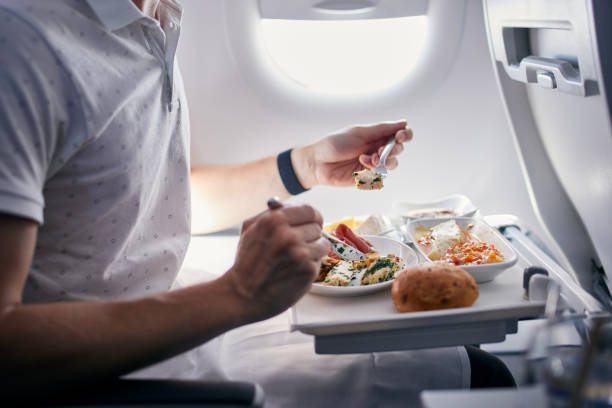
Air Astana to Serve Horse Meat and Baursaks to VIP Passengers

Kazakhstan’s flagship carrier, Air Astana, is introducing a new in-flight dining concept on international routes, offering business class passengers a taste of national cuisine reimagined through contemporary culinary techniques. The updated menu, available from June 2025, features dishes such as pumpkin-stuffed manty (dumplings), horsemeat tartare, and traditional desserts, part of a collaboration with the AUYL neo-nomadic cuisine restaurant and its chef, Ruslan Zakirov. Available from June, the menu also includes sweets infused with sesame, salted caramel, and balkaymak (a sweet made with camel's milk). “Our goal was to express Kazakhstan’s culture through flavor and a modern presentation,” said Zakirov, highlighting the project’s fusion of authenticity and innovation. The new offerings were tested on domestic flights during the Nauryz holiday and received overwhelmingly positive feedback, leading to their expansion to international routes. “We want passengers to feel at home, even at cruising altitude,” said Air Astana CEO Peter Foster. He added that the airline is committed to working with local producers and supporting small businesses, with plans to broaden the range of Kazakh-made products on board.  Vice President of Onboard Services Elena Obukhova noted that these initiatives enhance the airline’s cultural identity and create a unique travel experience for international guests. “It’s not just a menu, it’s Kazakhstan’s business card,” echoed Zakirov.  Beyond food, Air Astana has also updated its entertainment system. The airline now offers an expanded media library, including new movies, music, and audiobooks in Kazakh. With help from the National Library of Kazakhstan, passengers can listen to folk epics and modern interpretations of classic works. Long-haul business class passengers will also receive Moschino-branded travel kits containing cosmetics by the British brand TEMPLESPA. Cabin interiors now feature subtle elements reflecting Kazakh aesthetics. Air Astana’s efforts align with a broader shift in Kazakhstan’s tourism strategy. The Ministry of Tourism and Sports is now focusing on attracting high-spending travelers. “While growing numbers matter, quality should come first,” said Vice Minister Yerzhan Erkinbayev, who advocates for targeting tourists capable of spending $250 per day without overwhelming local infrastructure.  Kazakhstan, he added, is well-positioned to develop luxury tourism offerings, especially in its mountainous regions. Drawing on models from Barcelona, Milan, and the Alps, the country aims to build high-end infrastructure rather than pursue mass tourism. In this context, Air Astana’s gourmet in-flight service becomes more than just a culinary upgrade, it’s a strategic move to showcase Kazakhstan’s cultural sophistication and strengthen its appeal to discerning global travelers.
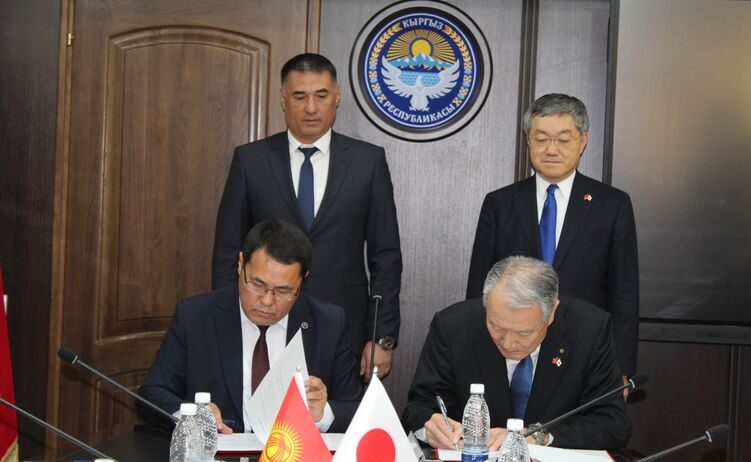

Japanese Company to Build Tunnel on Kyrgyzstan’s Strategic Bishkek-Osh Highway

Kyrgyzstan’s Ministry of Transport and Communications has signed a contract with Japan’s Takenaka Civil Engineering Co. for the construction of a 750-meter tunnel along the critical Bishkek-Osh highway. The project will be carried out at the highway’s 400-kilometer mark and is scheduled to begin in June 2025. The signing ceremony on April 15 was attended by Kyrgyz Transport and Communications Minister Absattar Syrgabayev, Japanese Ambassador to Kyrgyzstan Hideki Goda, and Kawamoto Hiroyuki, Permanent Representative of the Japan International Cooperation Agency (JICA) in Kyrgyzstan. Minister Syrgabayev expressed gratitude to the Japanese government and JICA for their ongoing support in developing Kyrgyzstan’s transport infrastructure. Strategic Significance The Bishkek-Osh highway is the only overland route linking Kyrgyzstan’s north and south, making it vital to the country’s economic, social, and political cohesion. The 655-kilometer artery cuts through four western regions, Chui, Talas, Jalal-Abad, and Osh, connecting the capital Bishkek with Osh, the country’s second-largest city. In addition to its domestic role, the Bishkek-Osh highway is a key part of several international transport corridors, linking Kyrgyzstan to Kazakhstan, Uzbekistan, Tajikistan, and China. Enhancing the reliability and safety of this route is a top infrastructure priority for the Kyrgyz government. Delays to Alternative Route As reported by The Times of Central Asia, Kyrgyz authorities have postponed the opening of the long-anticipated North-South alternative highway to 2026. Originally set for completion in May 2025, the 433-kilometer project has been delayed to allow for additional infrastructure development.

Kazakhstan Bans Use of Public Funds to Pay Foreign Athletes

President Kassym-Jomart Tokayev has signed a new law prohibiting the use of state budget funds and funds from the quasi-governmental sector, to finance the participation of foreign athletes in Kazakh sports clubs. Under the legislation, foreign “legionnaires” may now only be contracted using money from private sponsors. The move aims to refocus state support on domestic talent in professional sports. According to the presidential administration, athletes holding Kazakhstani passports who compete at elite levels, including in Olympic, Paralympic, Deaflympic, Asian, and national sports, will remain eligible for public funding. Funding Priorities and Implementation “The priority sports will be defined based on achievements on the international stage,” Akorda stated. These will include sports featured in the programs of major multi-sport events, along with traditional national disciplines. Budget allocations will also continue for state-run physical culture and sports organizations, grassroots sports initiatives, and the development of sports infrastructure. The final list of high-performance priority sports, along with detailed budget allocation procedures, will be finalized by the Ministry of Tourism and Sports. In addition to the funding changes, the new law introduces unified standards for athlete training and outlines measures to promote traditional values and patriotic education. A new concept, “national standards of sports training”, has been formally introduced into legislation. Financial Impact and Transition Period Deputy Minister of Tourism and Sports Serik Zharasbayev previously estimated that Kazakhstan allocates around 400 billion tenge (approximately $797 million) annually to high-performance sports through national and regional budgets. Currently, football and hockey clubs can receive up to 1.2 billion KZT ($2.4 million) per year, while basketball and volleyball clubs are limited to 450 million KZT ($897,000). The new rules, however, will not affect existing contracts, as Kazakh law is not retroactive. Nevertheless, authorities have advised clubs across all sports not to sign new agreements with foreign athletes in 2025. Potential Legal Challenges Observers note that the restrictions may conflict with Kazakhstan’s obligations under the Eurasian Economic Union (EAEU) Treaty, which guarantees the free movement of labor among member states. The move could impact the future participation of Russian and Belarusian athletes, in particular, in Kazakhstan’s domestic leagues. As previously reported by The Times of Central Asia, legal interpretations of the EAEU Treaty’s provisions may play a decisive role in how these new restrictions are implemented in practice.

How Kazakhstan Revives National Traditions Through Cinema

At a recent press screening of the Kazakhstani fantasy comedy All on Mosles: Battle of the Generations, the audience laughed, applauded and, perhaps most tellingly, relived childhood memories. Some even left wanting to play asyki again. The film’s creators achieved what seemed nearly impossible: they transformed an almost forgotten traditional game into a vibrant cinematic adventure appealing to both adults and children. The Times of Central Asia spoke with the film's authors, Yerken Gubashev, Yerkebulan Bekturov, and Mikhail Ulanov, about how the project came to life, the challenges they encountered, and why asyk atu is more than just a game. Now showing across Kazakhstan, the film centers on asyk atu, an ancient game where players aim to knock opponents’ asyk (ram’s knuckle bones) from a designated area using a special, often weighted and decorated, throwing asyk known as a sak. Popular across Soviet Kazakhstan until the 1990s, the game has since been revived by cultural activists. Today, asyk atu is included on UNESCO's Representative List of the Intangible Cultural Heritage of Humanity. [caption id="attachment_30806" align="aligncenter" width="797"] Image: TCA, Askar Kubaizhanov[/caption] TCA: Tell us about your film. How did the idea come about? Yerken Gubashev: I was really the initiator of the whole project. I co-wrote the script, co-produced the film, and played one of the lead roles. But more than that, it was my dream to bring asyki back and turn them into something grand. Watching my son and his friends sitting on the street, absorbed in their phones, was tough. When we were kids, asyki was real life. We played for hours, competing, learning dexterity, patience, and respect. I started imagining a world where asyki was the number one sport, with world championships and a whole culture surrounding it. I shared the idea with Yerkebulan and Mikhail, and we couldn’t stop. Mikhail Ulanov: We began to imagine: What if asyks could fly? What if each player had a unique technique? What if one could come to life or transform into a weapon? From this, a fantastical world emerged, rooted in tradition but filled with comedy, fantasy, and even superhero parody. Yerkebulan Bekturov: We shaped the film to resonate with modern youth: short, dynamic scenes, sharp transitions, and vivid visuals. Yet it tells a complete story. We believe it will appeal not just to Kazakhstani audiences but also internationally. There are lots of nods to Hollywood, The Gentlemen, Kill Bill, and others, which helps bridge cultures. TCA: The film isn’t just entertainment, is it? Is there a cultural mission here? Yerken Gubashev: Absolutely. Our goal is to bring asyki back to the playgrounds so kids share, compete, and step away from social media. More broadly, it's about reconnecting with our roots. Kazakh traditional culture is rich but underrepresented in cinemas. Importantly, asyki isn’t only Kazakh, it’s a Turkic game played by Uzbeks, Kyrgyz, Bashkirs, Tatars, Yakuts, and even in the Caucasus. It’s a vast cultural universe that unites Turkic peoples. Today, even the U.S., Norway, and Finland have national teams. A...

Kazakh Scientists Unveil Advanced Organ Storage Technology at Expo 2025

A team of Kazakhstani doctors from the UMC Heart Center, led by renowned cardiac surgeon Yuri Pya, presented a groundbreaking development at the World Expo 2025 in Osaka, Japan: ALEM, a device designed for long-term preservation of donor organs. Developed with the support of the Heart Center Foundation, ALEM (Astana Life Ex-situ Machine) addresses a pressing issue in Kazakhstan’s vast geographical context, ensuring timely and effective delivery of donor organs across long distances. Extending the Viability of Life The ALEM device can keep a donor heart viable for more than 24 hours by replicating conditions inside the human body, including maintaining precise temperature, oxygen levels, and vital functions. This significantly extends the traditional preservation window of 4-6 hours, offering new potential for transplantation logistics and success rates. From Emergency to Innovation The idea for ALEM was born from necessity. As Pya recalls, “We had a difficult situation, due to weather conditions we couldn’t get a donor heart in time. Then the idea arose to create our own system, more affordable and perhaps even more effective.” The device was developed through interdisciplinary collaboration among cardiac surgeons, anesthesiologists, and engineers. It has already passed preclinical trials on animals and is now preparing for the next phase: clinical testing. More Than Preservation According to Timur Lesbekov, director of the Heart Center’s cardiac surgery department, ALEM offers not only preservation but also therapeutic potential. “This product can be called a breakthrough. To sustain an organ for more than a day is a great achievement. Importantly, the system can also treat organs before transplantation,” he said. Developers hope that showcasing ALEM at Expo 2025 will attract international attention and foster collaboration in the field of transplantology. “This is a historic moment for Kazakhstan,” said Murat Zauyrov, director of the Heart Center Foundation. “It’s the first time we are presenting a major medical innovation on such a global stage. Our aim is to contribute to global medical progress.” Kazakhstan’s Transplant Challenges Kazakhstan currently needs around 10 transplants per million residents annually, according to Pya. Since 2012, 100 heart transplants have been performed, a modest number, but each representing a life saved. “It’s not just a surgery. It’s a complex operation involving air ambulances, police, and coordination across at least five ministries,” he emphasized. Plans are underway to begin serial production of the ALEM device in Astana, which would position Kazakhstan among a select group of countries with a domestically developed system for long-distance organ transport. Expo 2025: A Global Stage for Innovation Expo 2025 in Osaka features participation from 158 countries and nine international organizations. ALEM is on display at the Kazakhstan Pavilion in the “Connecting Lives” zone under the broader theme “Creating a Future Society for Our Lives”. Kazakhstan’s pavilion, designed in the shape of a traditional shanyrak, was presented alongside exhibitions from South Korea, Germany, and Turkey. The opening ceremony was attended by Japanese Emperor Naruhito and Prime Minister Shigeru Ishiba, with Kazakhstan’s delegation led by Minister of Trade Arman Shakkaliev.

Ice Cream Flavored with Kurt, Tara, and Balkaymak Presented in Almaty

An Almaty-based company, UMAMI, has launched a new line of ice cream inspired by traditional Kazakh flavors. The collection features three distinct varieties: kurt, tary, and balkaymak. Balkaymak is a rich, creamy dessert, sometimes prepared with flour and honey, and typically served warm alongside bread or pastries. Tary refers to roasted millet, a staple often enjoyed with tea. Kurt is a protein and mineral-rich dried fermented milk product, deeply rooted in Kazakh culinary heritage. UMAMI’s project aims not only to surprise the palate but also to integrate national gastronomy into a modern context, creating what the team hopes will become a new symbol of Kazakh culture. “You'll find it interesting in your mouth,” promises brand co-founder and technologist Oksana Kim-Flayosk. A Flavor Journey in Every Scoop Among the standout offerings is the cream kurt ice cream, made using authentic kurt. The UMAMI team sampled dozens of variations from different producers before selecting the ideal base. The flavor unfolds in stages: a brackish start, followed by a sour note, and ending in a sweet finish. To elevate the experience, UMAMI recommends serving the kurt ice cream in a baursak, a traditional Kazakh fried dough delicacy. Kim-Flayosk likens this combination to a local version of the Italian dessert maritozzo, where a sweet bun is filled with cream. “We put a ball of ice cream in the baursak, and that's our national version of maritozzo,” she explained. While all three flavors were tested in baursaks, kurt was the undisputed favorite among tasters. Nauryz Roots and Steppe Spirit The Tary & Talkan flavor, originally created for the Nauryz holiday five years ago, was so well received that it earned a permanent spot in UMAMI’s lineup. The recipe combines black tea infused with milk, roasted millet ground into talkan, and a dairy base, evoking the spirit of the Kazakh steppe. The third offering, Balkaymak & Irimshik, is rich and textured, featuring bits of irimshik (a type of curd) to accentuate the contrast between its caramel and creamy elements. “I wanted there to be texture, to be able to chew. First creamy, then caramel, and then creamy again,” said Kim-Flayosk. Prior to finalizing the recipe, UMAMI conducted a public survey to better understand what balkaymak means to different people. Responses varied widely, from cream skimmed from spring milk to a boiled mixture of sour cream, flour, and sugar. Modernizing Tradition Kim-Flayosk emphasized UMAMI’s commitment to preserving and popularizing Kazakh culinary identity. “We are a local brand. We see society’s interest in traditions and want to be part of a culture that popularizes Kazakhstani products,” she said. The company plans to launch souvenir boxes featuring all three flavors in the coming month, offering a gastronomic symbol of Kazakhstan to locals and tourists alike. Non-standard ice cream flavors are increasingly part of a global trend. Around the world, producers are experimenting with combinations like mustard and dill, eel, black pepper, garlic, chili, and even beer. In this diverse international context, UMAMI’s Kazakhstani creations stand out not just for...