• KGS/USD = 0.01143 0%
  • KZT/USD = 0.00216 0%
  • TJS/USD = 0.10633 -0.28%
  • UZS/USD = 0.00008 0%
  • TMT/USD = 0.28571 0%
  • KGS/USD = 0.01143 0%
  • KZT/USD = 0.00216 0%
  • TJS/USD = 0.10633 -0.28%
  • UZS/USD = 0.00008 0%
  • TMT/USD = 0.28571 0%
  • KGS/USD = 0.01143 0%
  • KZT/USD = 0.00216 0%
  • TJS/USD = 0.10633 -0.28%
  • UZS/USD = 0.00008 0%
  • TMT/USD = 0.28571 0%
  • KGS/USD = 0.01143 0%
  • KZT/USD = 0.00216 0%
  • TJS/USD = 0.10633 -0.28%
  • UZS/USD = 0.00008 0%
  • TMT/USD = 0.28571 0%
  • KGS/USD = 0.01143 0%
  • KZT/USD = 0.00216 0%
  • TJS/USD = 0.10633 -0.28%
  • UZS/USD = 0.00008 0%
  • TMT/USD = 0.28571 0%
  • KGS/USD = 0.01143 0%
  • KZT/USD = 0.00216 0%
  • TJS/USD = 0.10633 -0.28%
  • UZS/USD = 0.00008 0%
  • TMT/USD = 0.28571 0%
  • KGS/USD = 0.01143 0%
  • KZT/USD = 0.00216 0%
  • TJS/USD = 0.10633 -0.28%
  • UZS/USD = 0.00008 0%
  • TMT/USD = 0.28571 0%
  • KGS/USD = 0.01143 0%
  • KZT/USD = 0.00216 0%
  • TJS/USD = 0.10633 -0.28%
  • UZS/USD = 0.00008 0%
  • TMT/USD = 0.28571 0%

Viewing results 469 - 474 of 1690

“I Dreamed of Writing Without Borders”: An Interview With a Kazakh Journalist in Russia

Elmira, a journalist from Astana, moved to St. Petersburg six years ago to study journalism. Since then, she has transformed from a reserved first-year student into a working reporter, navigating culture shock, social media censorship, and the outbreak of the war in Ukraine. In this candid interview, Elmira discusses Russian bureaucracy, casual racism, and finding her voice in the Russian media landscape. She also offers reflections for others considering a similar path. TCA: Why did you choose to study in St. Petersburg rather than stay in Kazakhstan or go elsewhere? Elmira: I applied before the war in Ukraine began. At that time, Russia seemed like a land of opportunity, where you could earn a decent living even without connections, which is rare in Kazakhstan. Plus, Russia offers state-funded spots for foreign students, as long as you pass the entrance exams. Kazakh journalism programs felt underdeveloped to me; they lacked tradition, experienced faculty, and institutional history. In contrast, Russian journalism schools had all of that. Also, I wanted to write in Russian. My family always spoke Russian at home, and Kazakh was harder for me, an experience common among northern Kazakhs. Studying elsewhere was financially out of reach, and among CIS countries, Russia was the most appealing. TCA: Why journalism? And did your expectations match reality? Elmira: I’ve loved writing since childhood, school news, travel stories, anything. I imagined journalism as limitless creativity. In reality, it has even more constraints than other fields: editorial policies, laws, and censorship. Still, I wasn’t disappointed. Restrictions force you to innovate, and a strong story can always be told within the right format. TCA: What were your first impressions of university life? Did you feel like part of an international community or an outsider? Elmira: The university itself was a pleasant surprise. Many professors were open-minded and genuinely interested in students’ ideas. That made me feel I belonged. But the student environment was tougher. Although classmates claimed, “We’re not racist,” jokes about Tajiks, Uzbeks, and Caucasians were common, and occasionally about Kazakhs too, disguised as “harmless humor.” These moments were alienating. You’re sitting in the same lectures, working on the same projects, but still feel like a stranger. TCA: Was the Kazakh diaspora in St. Petersburg helpful during your adjustment? Elmira: Definitely. The community is very supportive. Besides the consulate, groups like Atameken and Dostar host cultural events. I couldn’t volunteer, but I never missed Nauryz or Independence Day. Just being able to speak with fellow Kazakhs helped me feel at home. TCA: What domestic or cultural challenges surprised you the most? Elmira: Dorm life was tough. Once, I overheard roommates say, “How can you live with a Chinese woman? She must smell bad.” These moments were rare but memorable. Still, there were warm experiences. In the dorm, I befriended students from Kyrgyzstan, Armenia, and Tajikistan. We cooked together, shared stories, and supported each other. That helped me to feel part of a community. I was also heartened that many Russian students were genuinely curious...

Kyrgyzstan’s Jewelry Industry Emerges from the Shadows

The jewelry industry in Kyrgyzstan is experiencing rapid growth, marked by a surge in exports, an expanded geographic reach, and a significant rise in foreign trade operations, according to official statistics. According to the National Statistical Committee, Kyrgyz jewelers quadrupled the volume of foreign trade in jewelry made from precious metals during the first four months of 2025. This figure encompasses both exports and imports. Approximately 100 kilograms of jewelry, valued at around $600,000, were exported. Export revenues increased fourfold compared to the same period in 2024. Meanwhile, imports reached 15.6 tons, worth $5.8 million, more than double the previous year’s figures. Russia and Italy were the primary destinations for Kyrgyz jewelry exports. Business Legalization and Tax Incentives Stalbek Akmatov, president of the Kyrgyz Jewelers' Union, told The Times of Central Asia that this growth was driven by the industry’s formalization, which allowed jewelers to operate legally, pay taxes, and submit accurate reports. "First of all, I would like to thank our authorities, the Jogorku Kenesh and the Cabinet of Ministers," Akmatov said. "Recently, significant changes were introduced to the Tax Code and legislation concerning precious metals. Instead of three separate taxes, VAT, sales tax, and income tax, a single tax of 0.25% has now been implemented." Akmatov noted that the new tax policy has provided a substantial boost to production and exports, while significantly reducing the size of the shadow economy, which previously accounted for over 90% of the sector. Experts estimate that less than half the industry now remains informal. Entry into the Kazakh Market Kyrgyz jewelers are also exploring new markets. Akmatov highlighted that one company has already exhibited twice at a jewelry fair in Almaty and has begun selling products featuring national designs. "The current volume of exports to Kazakhstan is small, just a few kilograms, but it's only the beginning. The potential in this direction is enormous," he told TCA. Persistent Challenges: Scrap Gold and Regulation Despite these advancements, challenges remain. One major issue is the high cost of scrap gold for local producers. As was the case five years ago, scrap gold is sold with a 5% markup over the London gold price, even though Kyrgyzstan annually produces several dozen tons of gold and even more silver. Akmatov also pointed to restrictive regulations on the circulation of precious metals. "If gold could be traded freely like a currency, our sales would increase significantly," he stated. The Jewellers' Union is currently in talks with the Ministry of Economy and Commerce on liberalizing precious metals circulation within the country.

How The New York Times Came to Publish an Obituary for Kazakh writer Mukhtar Auezov

While browsing old issues of The New York Times, we wondered: “Is there anything here about the Kazakhs or Kazakhstan?” One edition stood out, the June 28, 1961 issue. On page 35, alongside obituaries for several prominent figures, was one for our great writer, Mukhtar Auezov. [caption id="attachment_33412" align="aligncenter" width="378"] “Winner of Lenin Prize in 1959 for 2-Volume Work Dies Mukhtar O. Auezov, the Kazakh poet and philosopher whose two-novel work, ‘Abai’ and ‘The Road of Abai,’ earned a Lenin Prize two years ago, died yesterday in Alma-Ata.”[/caption] The article went on to note that Mukhtar Auezov was born and raised in the Shyngystau region (known today as the Abai District), and later wrote a major work about the life of Abai. It also mentioned that he studied at Leningrad University and authored numerous literary works. In 1960, Auezov visited several U.S. states as part of a Soviet writers’ delegation. Upon returning home, he expressed in interviews his admiration for the towering skyscrapers of New York City. What pleased us even more was that The New York Times included a photograph of Auezov alongside the obituary. This shows that even in the 1960s, American literary circles recognized and took notice of a Kazakh writer. In other words, Auezov left a lasting impression on the American public. Other articles about him may have appeared in the U.S. press, but so far this obituary is the only one we have been able to find. Mukhtar Omarkhanuli Auezov holds the distinction of being the first known Kazakh writer to set foot on American soil. His official visit was well covered by the U.S. press and known to the American public at the time. This likely explains why such a major publication honored him with a dedicated obituary, informing readers around the world of his passing. The gesture reflects a significant level of respect and recognition. Mukhtar Auezov indeed visited the United States from February 17 to March 17, 1960, as part of a delegation of Soviet writers. This trip was part of the “Agreement Between the United States of America and the Union of Soviet Socialist Republics on Exchanges in the Cultural, Technical, and Educational Fields.” According to the agreement, four American writers visited the USSR in 1959, and in return, a Soviet delegation traveled to the U.S. in February/March 1960. To give readers a closer look at his journey, we are sharing excerpts from Mukhtar Auezov’s diary, where he reflects on the trip. The entries were later published in a bilingual edition, Mukhtar Auezov: Impressions of America, in 2021, in both Kazakh and English. Below are a few details from Auezov’s impressions of the U.S.: That day we toured Washington, D.C. It’s a very beautiful city. No two houses look alike. Even the cars are all different, though there are many, they never repeat. We visited the old part of the city, the area known as ‘Georgetown.’ All the houses here are old, yet highly stylish, elegant two-story homes. There is one...

Kazakh Archaeologists Uncover Scythian-Era Treasures

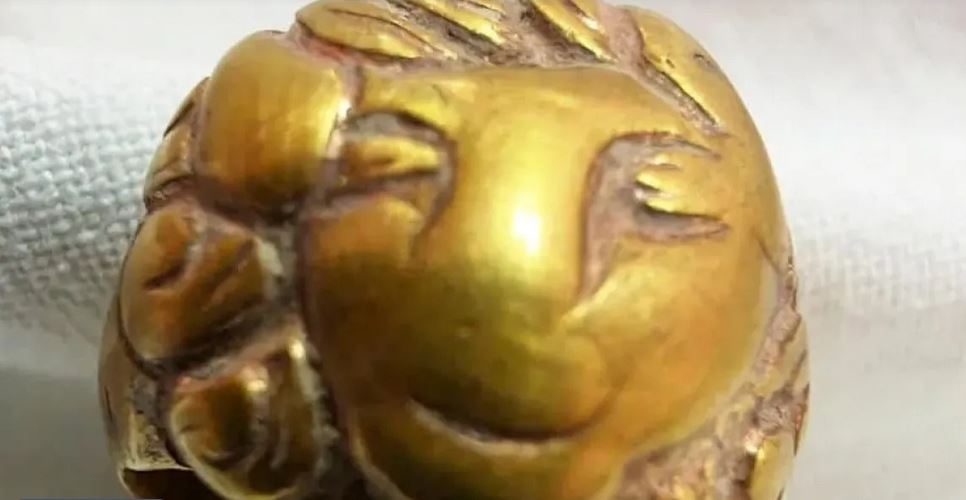
Archaeologists from Al-Farabi Kazakh National University have uncovered artifacts from the Scythian era in Kazakhstan’s Almaty region, including a rare gold ring weighing nearly eight grams. A Symbol of Power and Authority The excavations took place in the Uyghur district near the village of Togyzbulak and were led by Professor Dosbol Baigunakov, dean of the university’s history department. The team studied the Togyzbulak-1 and Togyzbulak-2 burial mound complexes, which contain more than 20 ancient burial sites. Among the most notable discoveries were burial mounds No. 3 and No. 4, which contained the remains of a man and a woman, along with ceramic vessels, iron and stone artifacts, and gold jewelry. The standout find was a gold ring engraved with a lion, a symbol of strength and authority. Researchers believe the image combines human and animal traits, reflecting the spiritual worldview of the Saka tribes in the 3rd-4th centuries BC. “These findings confirm that the territory of the modern Uyghur region was a cultural center of the Saka civilization,” the university said in a statement. Ruins of a Burned City [caption id="attachment_33402" align="aligncenter" width="931"] Image: Al-Farabi National University[/caption] Separately, a potentially groundbreaking discovery has been made in the Zhetysu region. Olga Gumirova, executive director of the Petroglyph Hunters Foundation, reported the discovery of ruins from a medieval city previously known only through historical texts. Archaeologists unearthed remnants of a tower, fragments of brick walls, and traces of fire, suggesting the city may have been destroyed during the Mongol invasion. While further research is ongoing, early comparisons are being drawn to the UNESCO World Heritage Sites of Talkhiz and Koylyk. A month earlier, archaeologists from the Saryarka Archaeological Institute discovered 25 historical and cultural sites in the Shet district of the Karaganda region. These include burial mounds, necropolises, and complexes dating to the Bronze Age, Iron Age, and Middle Ages. According to the institute’s director, Alexei Kukushkin, this marks the beginning of an extensive research campaign, with formal dating pending excavation approvals. The “Golden Man” and Buddhist Relics One of the most significant archaeological discoveries in recent years is the 2018 find in the Tarbagatay district of East Kazakhstan, where over 3,000 gold artifacts were unearthed in a burial site. Led by renowned archaeologist Zainolla Samashev, the expedition found women’s bell earrings, gemstone necklaces, and ornate horse adornments dating to the 7th-8th centuries BC, treasures of exceptional artistic and historical value. Another major discovery occurred in the Ayranada Gorge in the Merken district, where archaeologists found fragments of an ancient Buddhist temple and a carved stone head of Buddha. Anna Krokosheva, senior researcher at the Museum of Ancient Taraz, noted that the find reinforces the region’s historical importance along the Silk Road. Despite the site’s remote location at over 3,000 meters above sea level, the artifacts are well-preserved and could enhance scientific and cultural tourism in southern Kazakhstan.

From Coasters to Code: Bermet Koshoeva’s Leap into Tech Entrepreneurship

Five years ago, spotting Kyrgyz tech entrepreneurs in global accelerators was almost unheard of. Even locally, tech founders were rare. Fast forward to today, and it feels like Kyrgyz innovators are making their mark, especially at Antler. Last year, the global startup accelerator welcomed several Kyrgyz founders in its Vietnam and Malaysia cohorts. Among them is Bermet Koshoeva, a marketing professional turned tech entrepreneur with her startup, Onion. An Unconventional Path Koshoeva’s path to becoming a founder is far from traditional. Her early years followed a familiar trajectory, earning a Bachelor’s degree in Business Administration from Turkey’s Fatih University and working in marketing roles. Things took a unique turn when she pursued a Master’s degree in Agriculture through the prestigious Erasmus Mundus Programme, studying in Denmark and France. The agricultural focus was symbolic, as both her father and grandfather worked in the sector. However, Koshoeva’s studies steered her in a different direction. During her Master’s thesis, Koshoeva had her first entrepreneurial experience. While exploring investment opportunities, she stumbled upon the potential for sellers on Amazon. With an initial investment of $1,000, she started selling mug coasters and managed to turn it into $2,500. “When my studies were coming to an end, I wondered what I would do next and how I would earn a living,” Koshoeva told The Times of Central Asia. “I wasn’t emotionally ready to jump into a full-time job after such an intense academic experience, so I decided to invest in something.” Her Amazon success, combined with her professional marketing background, established Koshoeva as a local marketing expert. She shared her expertise as both a professional consultant and an educator, teaching marketing at the American University of Central Asia and serving as the Head of Creative Business at Compass College, the first art and design college in Central Asia. Onion’s Mission Koshoeva founded Onion in October 2024, originally envisioning it as a platform for collecting and analyzing qualitative research data, such as interviews and surveys. This aligned closely with her marketing background. However, a pivotal experience at Antler Malaysia in April 2025 led her to refine Onion’s focus. During the accelerator program, she pivoted to addressing AI-powered search optimization. The new direction positions Onion in a rapidly evolving space as search trends shift away from traditional Google results to AI-driven tools like ChatGPT and Perplexity. These emerging tools are still refining their contextual accuracy, but they represent the future. Onion helps brands become visible in these AI-powered searches, ensuring they appear when it matters most. Challenges and Vision Although Antler Malaysia eventually decided not to invest in Onion, Koshoeva is determined to push forward. Her analytical skills, honed over years of market research, are guiding her through this emerging niche. “In recent years, I’ve conducted extensive market analyses across various industries, including IT and SaaS,” Koshoeva told TCA. “Through research, I’ve identified a promising niche that’s only beginning to take shape. While not everyone sees its potential yet — even Antler wasn’t ready to invest — I’m...

What’s Behind the Rising Infertility Rates in Kazakhstan?

The number of people diagnosed with infertility in Kazakhstan has nearly tripled over the past five years, according to a recent study by Finprom.kz. While the numbers are stark, experts say the increase reflects improved diagnostics and wider access to reproductive healthcare rather than a sudden rise in medical infertility. Threefold Increase in Five Years According to data from the Ministry of Health, cited in the “Kazakh Families - 2024” report by the Institute for Social Development, the number of patients officially diagnosed with infertility rose from around 10,000 in 2019 to 29,200 by mid-2024. Nearly all of these cases involve women; only 102 men are recorded. The sharpest increases occurred in 2021 and 2022, with patient numbers rising by 51.8% and 49.7% respectively. Analysts attribute much of this growth to the state-funded Aңsaғan Sәbi ("Longed-for Child") program, which offers around 7,000 quotas annually for in vitro fertilization (IVF). To qualify, couples must first be registered at a medical facility, which has incentivized greater diagnostic activity. Geographic and Gender Disparities The highest official incidence is in Almaty (4,200 cases), followed by Astana (2,600) and the Zhambyl region (2,500). Experts caution that these figures likely reflect differences in diagnostic availability and public awareness, rather than actual regional variation in infertility rates. Men remain drastically underrepresented in official statistics. For instance, 39 men are registered in the Zhambyl region, compared to just three in the more populous Turkestan region. In four regions, North Kazakhstan, Zhetysu, Pavlodar, and Astana, there is no available data on male patients. Experts attribute this to a lack of andrological screening and persistent cultural taboos. Yet at the XIV International Congress of Reproductive Medicine in Almaty, it was noted that male factors account for up to 40% of infertility cases requiring assisted reproductive technologies (ART). In 2024, just one IVF clinic in Kazakhstan treated approximately 2,000 men for andrological conditions and performed surgeries on 1,500 of them. IVF Program Success and Medical Tourism Kazakhstan's IVF sector has seen major advances. Over the past 30 years, ART procedures have resulted in the birth of 39,000 children in the country, 11,000 of them under the state program. The first IVF laboratory in Kazakhstan was established in 1994. Success rates for ART in Kazakhstan have risen from 12% to 42%. Some private clinics report rates as high as 54%, while the national “take-home baby” rate, the percentage of live births per IVF cycle, stands at approximately 30%. These achievements, along with competitive costs, have turned Kazakhstan into a regional hub for fertility treatment. Analysts from the Institute for Social Development also link rising IVF demand to the post-pandemic surge in medical screenings, as many women delayed care during COVID-19 lockdowns. But broader social shifts are also at play. Reproductologists note a growing trend toward delayed marriage and childbirth. As ovarian reserves typically begin to decline after age 35, this delay contributes to fertility challenges. In response, the practice of social egg cryopreservation is becoming increasingly popular as a proactive measure. While...