
• KGS/USD = 0.01143 0%
  • KZT/USD = 0.00216 0%
  • TJS/USD = 0.10633 -0.28%
  • UZS/USD = 0.00008 0%
  • TMT/USD = 0.28571 0%
  • KGS/USD = 0.01143 0%
  • KZT/USD = 0.00216 0%
  • TJS/USD = 0.10633 -0.28%
  • UZS/USD = 0.00008 0%
  • TMT/USD = 0.28571 0%
  • KGS/USD = 0.01143 0%
  • KZT/USD = 0.00216 0%
  • TJS/USD = 0.10633 -0.28%
  • UZS/USD = 0.00008 0%
  • TMT/USD = 0.28571 0%
  • KGS/USD = 0.01143 0%
  • KZT/USD = 0.00216 0%
  • TJS/USD = 0.10633 -0.28%
  • UZS/USD = 0.00008 0%
  • TMT/USD = 0.28571 0%
  • KGS/USD = 0.01143 0%
  • KZT/USD = 0.00216 0%
  • TJS/USD = 0.10633 -0.28%
  • UZS/USD = 0.00008 0%
  • TMT/USD = 0.28571 0%
  • KGS/USD = 0.01143 0%
  • KZT/USD = 0.00216 0%
  • TJS/USD = 0.10633 -0.28%
  • UZS/USD = 0.00008 0%
  • TMT/USD = 0.28571 0%
  • KGS/USD = 0.01143 0%
  • KZT/USD = 0.00216 0%
  • TJS/USD = 0.10633 -0.28%
  • UZS/USD = 0.00008 0%
  • TMT/USD = 0.28571 0%
  • KGS/USD = 0.01143 0%
  • KZT/USD = 0.00216 0%
  • TJS/USD = 0.10633 -0.28%
  • UZS/USD = 0.00008 0%
  • TMT/USD = 0.28571 0%

Viewing results 475 - 480 of 1690

ALTAÏ: A Documentary Exploring Central Asia’s Water Lifelines to Start Filming

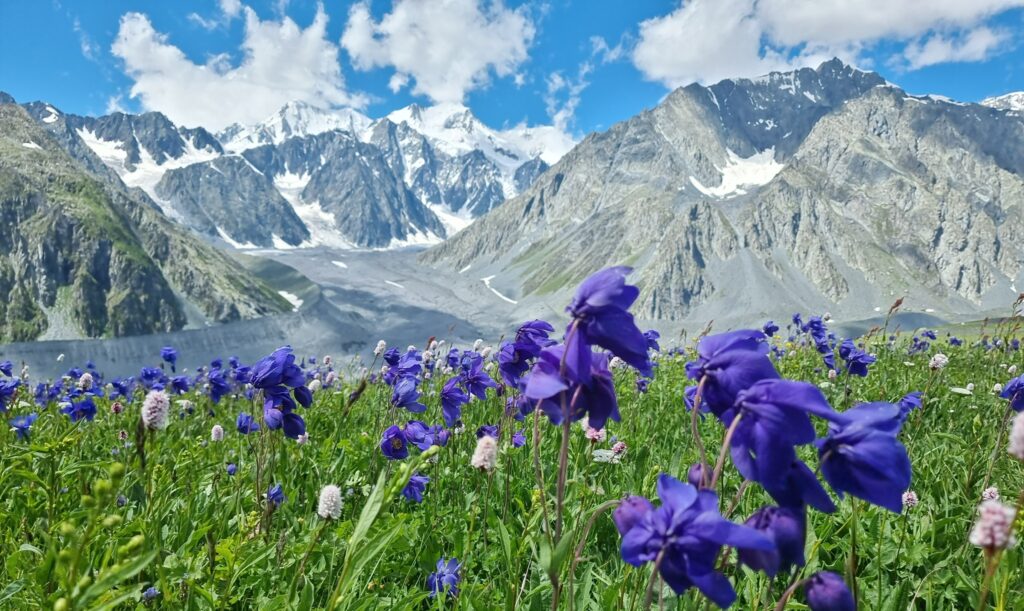
A new documentary, ALTAÏ, by acclaimed writer Cédric Gras and director Bertrand Delapierre, is set to bring global attention to the fragile ecosystems of Central Asia and the critical water issues tied to its majestic Altai Mountains. Slated for release on Ushuaïa TV in 2026, the documentary promises an in-depth exploration of the vital role these mountains play in sustaining life across the arid steppes of Kazakhstan, while addressing ecological challenges, geopolitical tensions, and the impact of climate change. A Journey Through Kazakhstan’s Heart [caption id="attachment_33183" align="aligncenter" width="2560"] Image: TCA, Ilyas Otan[/caption] The documentary follows the film crew’s expedition through Kazakhstan’s varied landscapes, beginning in its modern capital, Astana, and culminating in an ascent of Mount Belukha, the tallest peak in the Altai range. Along the way, the team will investigate how Kazakhstan is grappling with increasing water scarcity while striving to balance modernization with environmental conservation. Central to the film’s narrative is the Irtysh River, born from the Altai glaciers, which flows through Russia, China, Mongolia, and Kazakhstan. This river has long delivered life-sustaining water to Kazakhstan’s steppes, irrigating farmlands and powering industries. Yet, as the documentary reveals, upstream diversions and glacial retreat now threaten the river's future. Central Asia’s Water Crisis [caption id="attachment_33184" align="aligncenter" width="1536"] Image: TCA, Ilyas Otan[/caption] With Central Asia among the regions most threatened by water shortages, ALTAÏ examines the severe consequences of dwindling resources. Astana, once a Soviet outpost named Tselinograd, has been transformed into a futuristic capital fueled by the nation’s oil and gas wealth. However, this rapid expansion has brought a pressing water deficit. The Ishim River, which runs through the city, can no longer suffice, prompting the construction of the new Astana-Irtysh canal to draw water from the distant Altai region. The documentary highlights alarming findings from hydrologists about the ecological and political pressures weighing on water management in the region. Viewers will see the extensive canal network left by the Soviet Union, such as the Irtysh-Karaganda Canal, and the vital role it continues to play in supporting industrial cities, agriculture, and the survival of the steppes. Exploring the Altai Mountains [caption id="attachment_33185" align="aligncenter" width="2048"] Image: TCA, Ilyas Otan[/caption] At the heart of the documentary will be an expedition into the Altai Mountains, a remote massif spanning Kazakhstan, China, and Russia. The mountain range is revered as the “water tower” of the region, yet its glaciers are melting at an alarming rate due to climate change. Guided by Kazakh mountaineers, the crew will travel across high valleys and visit traditional nomadic settlements that depend on the rivers fed by these glaciers. Finally, the team will ascend Mount Belukha, the Altai’s highest peak, to examine the glacial sources of the Irtysh River, capturing breathtaking footage of this territory where the borders of Kazakhstan, China, and Russia converge. Along the way, they will discuss with locals and scientists the geopolitical tensions over water resources, as Chinese development upstream increasingly diverts flow from the Irtysh to fuel its arid regions. Environmental and Geopolitical Themes...

Bublik of Kazakhstan Wins a Grass Title Ahead of Wimbledon

Alexander Bublik wasn’t enjoying tennis. Last year, after a mediocre performance at Wimbledon, he thought about quitting the game. The months went by, and more losses piled up. His ranking sank as low as 82 in March this year after a career-high 17 in May of 2024. Now the 28-year-old Kazakhstani is on a roll that seems to surprise even him and it’s happening as the tennis world again converges on Wimbledon, which starts June 30. Once again, he’s confounding expectations about a player who has delighted crowds with talent, showmanship and an arsenal of trick shots but also disappointed some fans because of a perception that, at times, tennis wasn’t a top priority for him. On Sunday, after winning the Halle grass court tournament, a tune-up for this year’s Wimbledon, Bublik celebrated in a typically ebullient style, dueling with opponent Daniil Medvedev in a champagne fight that left both players drenched. Such antics might be the norm on race car podiums, but they don’t happen much in the tradition-heavy sport of tennis. If Bublik is pushing the limits of tennis etiquette, few people object right now. They would rather gush about his recent accomplishments. Early this month, he reached the quarterfinals at Roland Garros, his best performance in a major tournament, before falling to world No. 1 Jannik Sinner. He beat Sinner in the round of 16 on the way to the Terra Wortmann Open title in Halle, Germany, and his 6-3, 7-6(4) victory over Medvedev in the final was his first win in seven meetings with the Russian. Bublik’s ranking rises to no. 30 on Monday. “It’s tough to speak. I had such tough months since last Wimbledon to probably this summer,” Bublik said in an on-court interview after the final. “I was close to calling it quits after Wimbledon, because I was not enjoying it anymore. "I promised my coach that I would stay there and keep practising, and after Wimbledon we will make a decision about whether I need to take a couple of months off before trying to come back. Now this is happening. I don’t know. Quarters at the French, winner here. I have no words.” Things were so grim earlier this year that Bublik’s coach, Artem Suprunov, suggested they take a road trip to Las Vegas ahead of a Phoenix challenger, a tournament on the lower rung of professional tennis. The break somehow helped the struggling player, who made it to the final in Phoenix before gaining momentum heading into the summer. Bublik, who also won the Halle tournament in 2023, was born in Russia and became a citizen of Kazakhstan in 2016 after promises of support from the tennis federation there. He has said he hates clay but then had that spectacular run at the French Open. He said he is relaxed about diet and ate a kebab before the final on Sunday. The plan now is to “stay human” and balanced and prepare for the next weeks of competition, said Bublik,...

Kazakhstani Chess Prodigy to Represent France at Age 8

At just eight years old, Iskander Zhakupov has earned a spot on the French national youth chess team. This fall, the Kazakhstani citizen will represent France at the World Championship in Almaty, Kazakhstan, and the European Championship in Budva, Montenegro. In France, non-citizen children can compete internationally under the national flag if they attend school in the country and are part of a chess club. For adults, however, citizenship is required. Iskander was born in 2017 and is growing up to be an active and inquisitive boy. He enjoys soccer, playing guitar, solving Rubik’s Cubes, and studying math. In preschool, he was even awarded the title “Math Student of the Year.” Although both of his parents are citizens of the Republic of Kazakhstan, they currently live and work in France. His mother, Marzhan Kamardina, told The Times of Central Asia that his passion for chess began at the age of three, during the COVID-19 pandemic. At the time, his older brother was taking online chess lessons with a coach, and Iskander became fascinated while watching him play. “In the summer of 2021, we happened to visit a science museum,” his mother recalled. “As part of a chess promotion exhibit, there were tables set up for casual play. The organizers were amazed to learn that Iskander was only four years old. By then, he already knew so much. It was the first outside confirmation of his abilities and a real discovery for us.” Iskander soon began competing in online tournaments. During one hosted by a Kazakhstani chess school, a referee noted his use of a wide range of openings, including unconventional ones. Unlike Kazakhstan, France lacks a formal ranking system, so Iskander earns his titles through online qualifiers. He reached the equivalent of a second-level rank six months ago and will need to compete in an in-person tournament in Kazakhstan to advance to the first level. Iskander’s first major tournament took place in 2021, when he entered the qualifying round of the French under-8 championship at just four years old, competing against children three or four years older. He competed in seven games, winning four, drawing one, and earning 4.5 points, which was enough to advance to the regional Ile-de-France Championship. As the youngest player to qualify, he received a special prize. At the time, he didn’t grasp the significance of the achievement. He was simply enjoying the game. By age seven, Iskander had taken second place in the Ile-de-France tournament. In 2025, he became the French under-8 champion. The 62nd French Junior Chess Championship was recently held in Vichy, drawing more than 1,800 young players from across the country. The under-8 and under-10 categories competed over five days, each playing nine intense rounds. In the final rounds, Iskander faced regional champions from all over France. He lost only one game, to a player who had earlier been defeated by someone Iskander had beaten. Both players finished with 8 points, and the outcome remained uncertain until the very end. Iskander had...

Kazakhstan Marks Media Workers’ Day with “Day J” Festivities

Kazakhstan will celebrate Media Workers' Day on June 28, a professional holiday honoring everyone in the media industry, including reporters, editors, producers, technicians, and executives. Established by presidential decree, the date commemorates the launch of Turkestan Vedomosti, the first official print publication on the territory of modern-day Kazakhstan. It began publishing in Orenburg on June 28, 1870. For the past decade, “Day J” has brought together journalists and PR professionals to recognize outstanding achievements in Kazakhstani media in a creative, informal atmosphere. This year’s event, timed to coincide with Media Workers’ Day, will be held in Almaty on June 27. The Times of Central Asia is proud to serve as an information partner for “Day J,” an initiative inspired and organized by the communications agency 2BAgency. Theme: Romance of the ’90s This summer’s “Day J” will take participants back to the 1990s, an analog era remembered for cassette-recorded interviews, pager messages, single-cigarette purchases, denim-on-denim fashion, and a shared sense of optimism about the future. A highlight of the evening will be the annual Day J Awards, honoring professionals in five categories: Best Reporter Best Business Journalist Best Investigative Journalist Best Blogger Best Presenter Nominees and jury members were selected via the “Day J” Telegram channel and social media, reflecting recognition from within the journalistic community. Partners and Support As in previous years, the event is made possible by key partners. Sponsors of this year’s celebration include: Forte, a systemically important Kazakh bank Eurasia Insurance Company, a market leader Munchen Pub, renowned for its hospitality KazMinerals, one of the country’s top mining firms Tickets.kz, a leading travel platform ARTиШОК, the acclaimed independent theater RG Brands, producers of ASU and AVA beverages First Brewery, makers of Zhiguli Barnoe beer Additional media and organizational support comes from CheckPoint, BesMedia, Shishkin Like, Tribune, Profit, BlueScreen, Finratings, newtimes.kz, Offside.kz, aleminform.kz, optimism.kz, and bizmedia.kz. Following the event, The Times of Central Asia will publish coverage of the Day J Award winners and explore how this year’s celebration contributes to the evolving story of Kazakhstan’s media landscape.

The Hearth of Hospitality: The Importance of the Chaikhana in Central Asia

“Every meal begins with tea and ends with tea. Every guest is welcomed with tea. Every festival and every ceremony – from the celebration of birth to wedding to funeral – must feature tea” - Ketan Desai. Across Central Asia, the chaikhana, or teahouse, holds a cherished place in the region’s social and cultural fabric. Beyond serving cups of steaming tea, it represents history, hospitality, and a space where the rhythms of daily life unfold. For Central Asians, tea isn’t just a drink; it’s a way of life. Every pour, sup, and serving is steeped in tradition. Green tea is considered supreme in the east, while black tea holds court in the west. The offering of tea isn’t just polite, it’s a heartfelt symbol of welcoming and friendship, and to turn it down is practically a cultural crime. Tea is always poured into a piala, a small ceramic or porcelain bowl similar to the Chinese gaiwan or the Japanese chaiwan, but with its own unique steeped allure. A Link to History [caption id="attachment_33095" align="aligncenter" width="1024"] Chaikhana, Samarkand, 1905; image: Prokudin-Gorskiĭ[/caption] The chaikhana has roots stretching back centuries, intertwined with the history of the Silk Road. These teahouses sprang up along trade routes as places where merchants, travelers, and locals could rest and exchange goods, ideas, and stories. Over time, chaikhanas became hubs of cultural exchange, bearing silent witness to the blending of a rich tapestry of traditions. Central Asia is a region shaped by the collapse of the Soviet Union and subsequent episodes of democratization, political coercion, and repression. Throughout history, the chaikhana also played a role in the region’s intellectual life. Much like coffeehouses in Europe, these spaces often served as platforms for debate, poetry readings, and the airing of progressive ideas. These venues often feature private rooms with enclosed spaces or pull-down shades and outdoor spots with canopies or yurt-like structures, ensuring discretion for guests. Unlike typical restaurants or cafes, which rarely offer such private arrangements, teahouses allow organizations to hold meetings comfortably and confidentially. Teahouses serve a dual purpose by balancing privacy with public engagement, making them invaluable to those seeking both discretion and societal visibility. [caption id="attachment_33096" align="aligncenter" width="1019"] Bukhara Chaikhana; image: Joepyrek[/caption] Teahouses serve as neutral spaces where the general public and government can freely interact. They offer a safe space for open discussions, even for government employees, highlighting their unique role in fostering dialogue. The subversive potential of teahouses cannot be overlooked, as debates frequently occurred outside formal governmental frameworks. They have quietly allowed people to organize and challenge institutional power in subtle yet meaningful ways. Tradition and Architecture Chaikhanas are more than just teahouses; they’re cultural treasures enriched by stunning architecture. From simple wooden benches in rural areas to urban teahouses adorned with intricate carvings, colorful tiles, and ornate patterns, these spaces are as much about artistry as they are about tea. The interiors feature low tables and cushions, encouraging leisurely conversations and fostering a warm, communal atmosphere. Whether beside a flowing stream...

Kazakhstan Launches 2025 Year of China Tourism

On June 16, Astana hosted the official launch of the Year of China Tourism in Kazakhstan. The opening ceremony was attended by Kazakh Minister of Tourism and Sports Yerbol Myrzabosynov and Chinese Minister of Culture and Tourism Sun Yeli, underscoring the growing cultural and economic ties between the two countries. Minister Myrzabosynov emphasized that tourism has become a vital bridge in strengthening people-to-people connections between Kazakhstan and China. The 2025 initiative follows the success of the Year of Kazakhstan Tourism in China in 2024, declared by Presidents Kassym-Jomart Tokayev and Xi Jinping as part of ongoing bilateral cooperation. A centerpiece of this year’s initiative is the implementation of the Welcome Chinese program, which aims to tailor Kazakhstan’s hospitality and tourism services to meet the needs of Chinese visitors. The program includes efforts to improve language accessibility, offer Chinese-style amenities in hotels, and develop guided tours designed specifically for Chinese tourists. According to the Kazakh Ministry of Tourism and Sports, the Year of Kazakhstan Tourism in China yielded significant results. In 2024, Kazakhstan welcomed 655,000 tourists from China, a 78% increase compared to 367,000 in 2023. The surge in travel was further supported by the mutual visa-free regime introduced in November 2023. Under this agreement, citizens of both countries can travel visa-free for up to 30 days per visit, with a maximum of 90 days within a 180-day period. The visa exemption applies to tourism, medical visits, business travel, and transit. Officials expect that the Year of China Tourism in Kazakhstan will not only boost inbound travel from China but also deepen economic, cultural, and diplomatic cooperation between the two nations.
