• KGS/USD = 0.01144 0%
  • KZT/USD = 0.00211 0%
  • TJS/USD = 0.10678 0%
  • UZS/USD = 0.00008 0%
  • TMT/USD = 0.28490 0%
  • KGS/USD = 0.01144 0%
  • KZT/USD = 0.00211 0%
  • TJS/USD = 0.10678 0%
  • UZS/USD = 0.00008 0%
  • TMT/USD = 0.28490 0%
  • KGS/USD = 0.01144 0%
  • KZT/USD = 0.00211 0%
  • TJS/USD = 0.10678 0%
  • UZS/USD = 0.00008 0%
  • TMT/USD = 0.28490 0%
  • KGS/USD = 0.01144 0%
  • KZT/USD = 0.00211 0%
  • TJS/USD = 0.10678 0%
  • UZS/USD = 0.00008 0%
  • TMT/USD = 0.28490 0%
  • KGS/USD = 0.01144 0%
  • KZT/USD = 0.00211 0%
  • TJS/USD = 0.10678 0%
  • UZS/USD = 0.00008 0%
  • TMT/USD = 0.28490 0%
  • KGS/USD = 0.01144 0%
  • KZT/USD = 0.00211 0%
  • TJS/USD = 0.10678 0%
  • UZS/USD = 0.00008 0%
  • TMT/USD = 0.28490 0%
  • KGS/USD = 0.01144 0%
  • KZT/USD = 0.00211 0%
  • TJS/USD = 0.10678 0%
  • UZS/USD = 0.00008 0%
  • TMT/USD = 0.28490 0%
  • KGS/USD = 0.01144 0%
  • KZT/USD = 0.00211 0%
  • TJS/USD = 0.10678 0%
  • UZS/USD = 0.00008 0%
  • TMT/USD = 0.28490 0%

Viewing results 523 - 528 of 1729

Jennifer Lopez to Perform in Tashkent for the First Time

Global pop icon Jennifer Lopez will perform in Tashkent on August 7, as part of her Up All Night - Live in 2025 world tour, according to Uzbekistan’s Art and Culture Development Foundation. The concert, set to take place at Milliy Stadium, will mark Lopez’s debut performance in Uzbekistan. The event is part of a broader initiative by the Foundation to promote international cultural exchange and boost the country's tourism sector. Earlier, The Times of Central Asia reported that Lopez is also scheduled to perform in Kazakhstan’s capital Astana later this summer. Local organizers there estimate her concert could generate over $12 million in economic activity and yield nearly $800,000 in tax revenue. Jennifer Lopez, known as J. Lo, is one of the most prominent entertainers of her generation. A singer, actress, and dancer with a career spanning more than 30 years, she has received numerous accolades, including the Billboard Icon Award and the MTV Video Vanguard Award. To date, she has sold over 80 million records worldwide.

Rysgul Akimjanova Becomes Second Female Kyrgyz Mountaineer To Climb Everest

Rysgul Akimjanova has become the second woman from Kyrgyzstan to reach the summit of Mount Everest, the world’s highest peak at 8,848 meters. Akimjanova reached the summit at 4:40 a.m. Nepal time on May 27 and has since begun her descent to a lower camp. Her success follows an earlier attempt just days prior, which was aborted at 8,400 meters due to a shortage of oxygen. Earlier this month, The Times of Central Asia reported that Asel Baibagysheva became the first Kyrgyz woman to summit Everest, accomplishing the feat on May 11. Baibagysheva is an experienced mountaineer, having previously summited Lenin Peak (7,134 m), Khan Tengri (7,010 m), and Pobeda Peak (7,439 m) in Kyrgyzstan, as well as Mount Elbrus (5,642 m) in Russia's Caucasus region. She was also the first Kyrgyz woman to climb Manaslu in Nepal, the world’s eighth-highest mountain at 8,163 meters. Dmitry Grekov was the first Kyrgyz man to summit Everest in 1997, followed by Eduard Kubatov in May 2021.

Tajikistan Slips in Global Peace Index But Maintains Upper-Half Ranking

Tajikistan ranked 72nd out of 163 countries in the 2024 edition of the Global Peace Index (GPI), published by the Institute for Economics and Peace. While the country dropped two places compared to the previous year, it remains in the upper half of the ranking, reflecting a decade of gradual improvement. Understanding the Peace Index The GPI is based on 23 qualitative and quantitative indicators assessing internal and external conflicts, levels of crime, political stability, military expenditure, and the degree of militarization. Scores range from 1 to 5, with lower scores indicating higher levels of peace and security. In 2024, Tajikistan received a score of 2.035. Among its regional neighbors, Kazakhstan achieved the highest ranking in Central Asia at 59th, followed by Uzbekistan (60th), Kyrgyzstan (78th), and Turkmenistan (83rd). Global Rankings and Regional Comparisons According to the GPI, Ukraine (159th) and Russia (156th) remain among the least peaceful countries due to the ongoing war. Yemen once again ranked last at 163rd, reflecting its protracted civil war, humanitarian crisis, and political instability. The top five most peaceful countries are Iceland, Ireland, Austria, New Zealand, and Singapore, all known for political stability, low crime rates, and an absence of armed conflict. Global Trends and Tajikistan’s Decade of Progress The 2024 GPI notes a global decline in peacefulness by 0.56% compared to 2023. Nearly 60% of the countries assessed, 97 in total, saw a deterioration in their scores. Contributing factors include rising geopolitical tensions, advances in military technology, economic hardship, and internal instability. Despite these global trends, Tajikistan has made notable progress over the past decade. In 2015, the country ranked 108th. It fell further to 122nd in 2016 and stood at 114th in both 2017 and 2018. However, since 2019, the country has steadily climbed: 105th in 2019, 107th in 2020, 97th in 2021, 92nd in 2022, and 70th in 2023.

Kazakhstan Launches Central Asia’s Largest All-Season Tourism Project Near Almaty

Kazakhstan is embarking on the largest all-season tourism initiative in Central Asia with plans to develop a world-class ski resort near Almaty. The expansive project will stretch from Talgar in the east to Kaskelen in the west, creating an integrated mountain tourism corridor. Ambitious Plans for the Almaty Mountain Cluster The plan for the Almaty Mountain Cluster (AMC) envisions up to 700 kilometers of ski trails, 58 lifts, modern hotels, glamping sites, biking paths, and cable cars. By 2029, the project aims to accommodate up to 34,000 visitors daily and create more than 10,000 jobs, positioning the AMC as the region’s premier year-round destination. International collaboration is central to the project, with concepts presented by global firms including Horwath HTL (U.S.), Stem International (France), and PGI Management (Andorra). French consultant Vincent Tassard stressed the value of year-round tourism and sustainable practices such as renewable energy and digital environmental monitoring. PGI President Joan Viladomat introduced the “Almaty SuperSki” concept, featuring 65 kilometers of trails across the Kok-Zhailau tract and Kumbel peak. Environmental Sensitivities and Renewed Approaches The inclusion of Kok-Zhailau revives a previously suspended development. In 2019, President Kassym-Jomart Tokayev halted construction following strong public and environmental opposition. The land was subsequently returned to Ile-Alatau National Park to protect its biodiversity and recreational value. This time, developers promise greater environmental accountability. The AMC’s central zone, including Shymbulak, Butakovka, Kimasar, Oi-Karagai, and Pioneer, will serve as a pilot site for sustainable tourism design. Inclusive Design and Eco-Tourism Expansion The initiative also includes broader improvements to local tourist sites. The Medeu ECO Park concept has been introduced with facilities for family recreation and preserved landscapes. The Gorenlik visitor center and Jumbaq Jol trail are operational, and a suspension bridge, capable of accommodating 10,000 people daily, is slated to open in July. Almaty SuperSki project leader Thomas Tor Jensen highlighted the fact that half of the ski runs will be suitable for beginners and the entire infrastructure will be accessible to people with disabilities. Supporters such as Askar Valiev, Secretary General of the National Ski Association of Kazakhstan, and representatives from ECO Network and PANA ASIA, emphasized the importance of balancing economic goals with environmental protection. Valiev noted that Shymbulak is currently overburdened and in need of upgraded facilities for athletics training. Others stressed the need for transparency, compliance with ecological norms, and safe conditions for the increasing number of tourists. Economic Growth and Government Backing Prime Minister Olzhas Bektenov underscored the project's strategic role in Kazakhstan’s modernization efforts. “This project will completely change the economic landscape not only of Almaty but of the entire country,” he stated, asserting that every dollar invested would yield double in tourism revenue. Tourism currently accounts for 3.9% of Almaty’s gross regional product and employs more than 83,000 people. In 2024, the city welcomed over 2.3 million tourists, including 680,000 international visitors. The sector is growing rapidly: tourism revenues rose 30% last year, with tax contributions doubling.

Rediscovered Correspondence from the Man Behind the “Great Game”

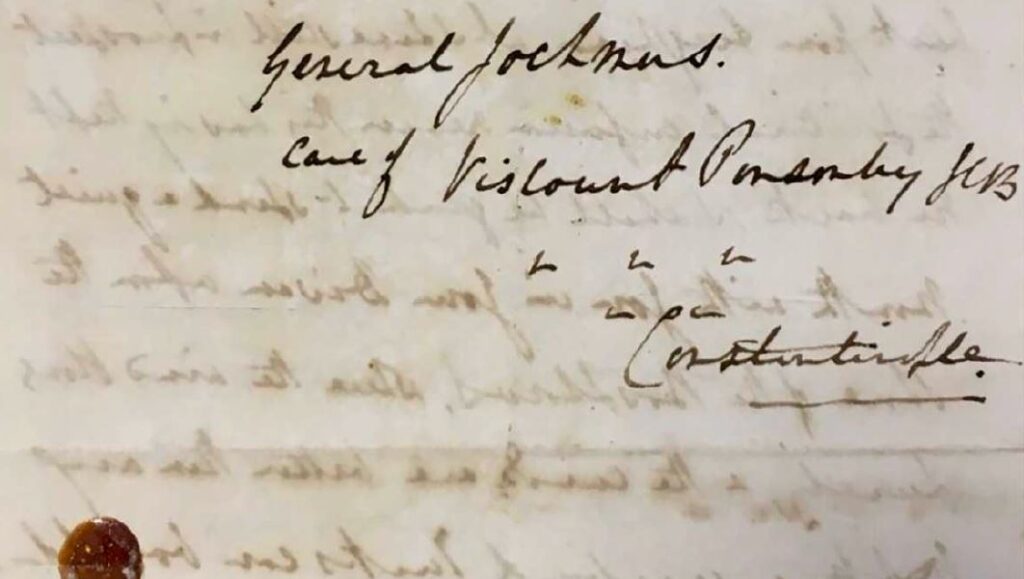
A recently uncovered letter written by Captain Arthur Conolly, the British officer who coined the term "Great Game," has captivated historians and scholars of 19th-century geopolitics. The correspondence offers a rare glimpse into the mind of the officer whose ill-fated expedition to Central Asia would become emblematic of the imperial rivalry between the British and Russian empires. The letter dates from April 1841, when Conolly stopped on the bank of the Amu Darya River, the northern boundary of Afghanistan, en route to Bukhara. Partly written in code, the missive, addressed to the Austrian General, August Giacomo Jochmus, commander of the combined forces of the Ottoman Empire, Britain, and Austria during the Syrian War of 1839–1841, reveals new details about Conolly’s observations regarding Central Asia’s complex power dynamics. The letter was discovered in the Russian State Archive of Literature and Art in Moscow. While the term "Great Game" would only gain prominence much later through Rudyard Kipling’s Kim, Conolly's writings shine a light on the precarious nature of imperial ambitions. His correspondence often reflected a mix of hope and foreboding, as he championed diplomatic engagement to win influence in the region while recognizing the human cost of such rivalry. The newly discovered letter includes remarks on the state of local governance, tribal allegiances, and the risks posed by Russian territorial advances. These insights could reshape the contemporary understanding of British intelligence operations and frontier policies at the height of imperial competition. "Travel has its charms and excitements, but it also has its disenchantment,” Conolly wrote, “and if I get safely back from Peshawar, I shall be glad to spend a quiet month with you in your Divan upon the shore of the Bosporus." Conolly’s fate remains a tragic footnote to his legacy. Captured and executed in 1842 by the Emir of Bukhara while attempting to negotiate the release of fellow British officer, Charles Stoddart, he became both a cautionary tale and a symbol of imperial zeal. This rediscovered letter serves as a poignant reminder of the personal stakes involved in the sprawling global chessboard that defined 19th-century diplomacy.

The Photographs of Prokudin-Gorsky: A Glimpse of a Lost World

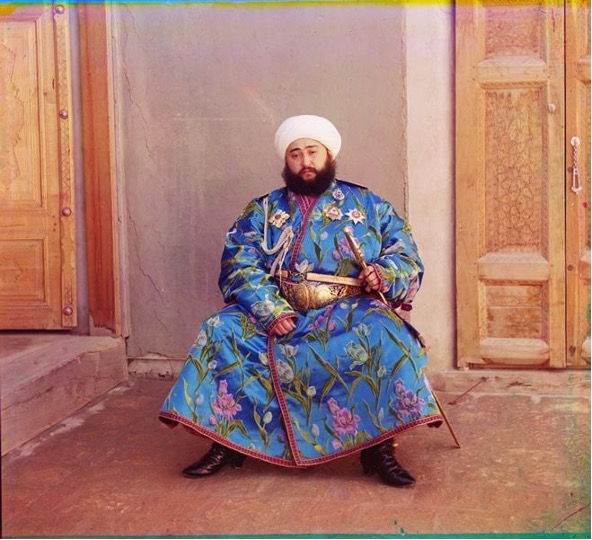
Using the emerging technology of color photography, Sergey Mikhaylovich Prokudin-Gorsky (1863–1944) undertook several photographic expeditions to capture images of the Russian Empire. Most of his work took place between 1909 and 1915, though some photographs date as early as 1905. At the time, the Russian Empire stretched roughly 7,000 miles east to west and 3,000 miles north to south. It encompassed one-sixth of the Earth’s land surface, making it the largest empire in history, spanning what are now eleven time zones. [caption id="attachment_32008" align="aligncenter" width="484"] Abutment for a dam and house belonging to the government. [Kuzminskoe] Prokudin-Gorsky, Sergey Mikhaylovich, 1912[/caption]Tsar Nicholas II supported Prokudin-Gorsky’s ambitious endeavor by granting him travel permits and access to various modes of transportation, including trains, boats, and automobiles. His journeys are preserved in photographic albums that include the original negatives. One album also features miscellaneous images, including scenes from other parts of Europe. The photographs capture a broad array of subjects: religious architecture and shrines (churches, cathedrals, mosques, and monasteries); religious and secular artifacts (such as vestments, icons, and items linked to saints, former Tsars, and the Napoleonic Wars); infrastructure and public works (railroads, bridges, dams, and roads); a variety of industries (including mining, textile production, and street vending); agricultural scenes (like tea plantations and field work); portraits, which often showed people in traditional dress, as well as cityscapes, villages, natural landscapes, and blooming plants. Besides being a photographer, Sergey Prokudin-Gorsky was a chemist who is renowned for his pioneering contributions to color photography in the early 20th century. In 1901, he traveled to Berlin to study photochemistry before returning to Russia, where he outfitted a railroad car as a mobile darkroom with the support of Tsar Nicholas II. As he traveled across the Russian Empire, he documented its people and landscapes, eventually earning recognition in Russia, Germany, and France. In 1906, he was appointed head of the photography section of Fotograf-Liubitel, Russia’s leading photography journal. One of his most famous works is a color portrait of Leo Tolstoy, taken in 1908. “By capturing the result of artistic inspiration in the full richness of its colors on the light-sensitive photographic plate, we pass the priceless document to future generations,” wrote Prokudin-Gorsky. As a nobleman, inventor, professor, and pioneer of color photography in Russia, Prokudin-Gorsky had a deep sense of national identity and heritage. Although he was unable to complete his grand project due to the outbreak of World War I and increasing social unrest across the Russian Empire, he still managed to capture photographs in regions such as the Urals, Siberia, Crimea, Dagestan, Finland, and Central Asia, as well as along the Volga and Oka rivers. Unfortunately, much of his photographic archive was lost in the aftermath of the 1917 Revolution. Prokudin-Gorsky created unique black-and-white negatives using a triple-frame method, taking three separate exposures through blue, green, and red filters. This technique allowed the images to be printed or projected in color, often for magic lantern slide presentations. The complete collection of 1,902 triple-frame glass...