• KGS/USD = 0.01143 0%
  • KZT/USD = 0.00216 0%
  • TJS/USD = 0.10684 -0.28%
  • UZS/USD = 0.00008 0%
  • TMT/USD = 0.28571 0%
  • KGS/USD = 0.01143 0%
  • KZT/USD = 0.00216 0%
  • TJS/USD = 0.10684 -0.28%
  • UZS/USD = 0.00008 0%
  • TMT/USD = 0.28571 0%
  • KGS/USD = 0.01143 0%
  • KZT/USD = 0.00216 0%
  • TJS/USD = 0.10684 -0.28%
  • UZS/USD = 0.00008 0%
  • TMT/USD = 0.28571 0%
  • KGS/USD = 0.01143 0%
  • KZT/USD = 0.00216 0%
  • TJS/USD = 0.10684 -0.28%
  • UZS/USD = 0.00008 0%
  • TMT/USD = 0.28571 0%
  • KGS/USD = 0.01143 0%
  • KZT/USD = 0.00216 0%
  • TJS/USD = 0.10684 -0.28%
  • UZS/USD = 0.00008 0%
  • TMT/USD = 0.28571 0%
  • KGS/USD = 0.01143 0%
  • KZT/USD = 0.00216 0%
  • TJS/USD = 0.10684 -0.28%
  • UZS/USD = 0.00008 0%
  • TMT/USD = 0.28571 0%
  • KGS/USD = 0.01143 0%
  • KZT/USD = 0.00216 0%
  • TJS/USD = 0.10684 -0.28%
  • UZS/USD = 0.00008 0%
  • TMT/USD = 0.28571 0%
  • KGS/USD = 0.01143 0%
  • KZT/USD = 0.00216 0%
  • TJS/USD = 0.10684 -0.28%
  • UZS/USD = 0.00008 0%
  • TMT/USD = 0.28571 0%

Viewing results 55 - 60 of 1343

Kazakh Civil Servants Fined Nearly $100,000 for Poor Public Services

In 2025, Kazakh civil servants were fined a total of $99,300 for violations related to the provision of public services, according to the Agency for Civil Service Affairs (ACSA). The agency reported that 917 administrative reports were filed against 442 officials for infractions such as missed deadlines, improper procedures for issuing permits, and unjustified refusals of service. Of those held accountable, 375 were local government employees and 67 represented central government agencies. In addition to financial penalties, 1,636 public employees faced disciplinary measures, 1,331 from local administrations and 305 from ministries and central agencies. Among them, 27.3% were in managerial positions. Over the course of the year, more than 478,000 violations in the provision of public services were identified: 130,751 in central government bodies and 347,692 at the local level. These included 147,105 instances of missed deadlines. The rights of 12,340 service recipients were restored as a result of investigations. The ACSA also received 2,737 complaints related to public service quality. Most grievances concerned local government officials, state-owned enterprises, and agencies involved in land administration. Following these complaints, 481 unscheduled inspections were conducted, leading to the restoration of the rights of 233 citizens. In total, the agency carried out 4,316 control measures in 2025. These resulted in 720 formal submissions and 2,164 orders to rectify violations, 2,026 of which were executed. As previously reported by The Times of Central Asia, Kazakhstan is prioritizing digital transformation to enhance public service delivery. A unified electronic platform for the construction industry is scheduled for launch in 2026, aiming to streamline bureaucratic processes and increase transparency.

Kazakhstan’s Draft Constitution and the Reordering of State Authority

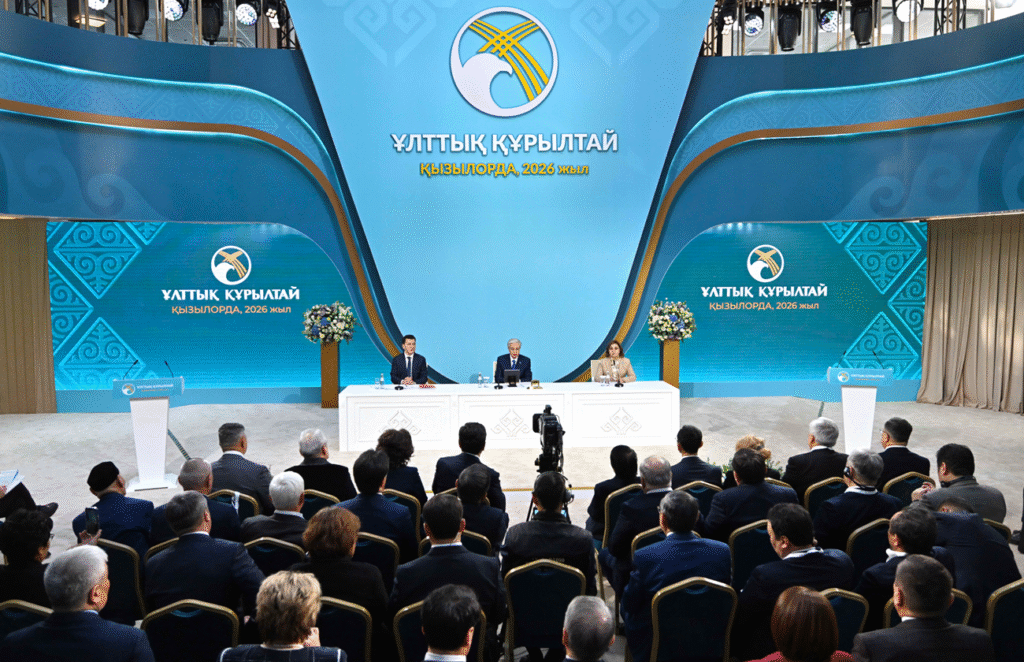
Kazakhstan’s current constitutional reform is no longer limited to parliamentary redesign. A draft updated basic law has been released for public discussion, and it presents the effort as a review of the state’s political architecture culminating in a nationwide referendum. The draft is described as the product of months of work initiated by President Kassym-Jomart Tokayev, with large-scale changes proposed for the country’s political system. A replacement-style text, an explicit state-architecture rationale, and a referendum endpoint together signal a reform agenda that reaches beyond legislative mechanics to the overall distribution of authority, the protection of fundamental rights, and strengthening of the rule of law. Kazakhstan’s current constitution was adopted by referendum in August 1995, replacing the January 1993 basic law. It has been amended repeatedly, including significant revisions in 1998, 2007, 2011, and 2022. The 2022 referendum package was a particularly extensive set of amendments. It presented a model of a presidential republic with a strong parliament, redistributed selected powers from the presidency to parliament, and created new parliamentary mechanisms. It also strengthened the ombudsman, enabled direct citizen appeals to the Constitutional Court, established a commissioner framework for socially vulnerable categories, established a ban on the death penalty, and set a single seven-year presidential term without the possibility of reelection. From Proposal to Draft Basic Law The current draft emerged from a process launched under Tokayev in late 2025. In September 2025, he proposed moving to a unicameral parliament, which set the reform’s initial direction. A working group was established in October 2025 to develop proposals, and in January 2026, a commission was formed to carry the work forward. The commission was chaired by Elvira Azimova, head of the Constitutional Court of Kazakhstan, linking the drafting process to the institution that reviews the basic law. The commission’s work moved beyond incremental amendments. It reviewed proposals affecting seventy-seven constitutional articles, about 84% of the current text, and that breadth drove the decision to prepare a fundamentally new basic law rather than another package of revisions. Rewriting most of the operative text shifts the reform from a parliamentary adjustment to a redesign of the state’s governing framework. The resulting draft is structured as a replacement-style document, with an updated preamble and a reorganization into eleven sections and ninety-five articles. The institutional centerpiece of the draft is a shift from a two-chamber parliament to a single chamber and to proportional representation for electing deputies. The proposed supreme legislative body, the Kurultai, would have 145 deputies, slightly fewer than the combined 148 members of the current Mazhilis and Senate of Kazakhstan. The draft also grants the Kurultai expanded powers, pairing structural consolidation with a change in how legislative authority is organized, including oversight, political accountability, and approval of key state appointments and conciliation procedures. Alongside the proposed legislature, the draft creates a national dialogue platform, the People's Council of Kazakhstan, described as the highest advisory body representing citizens’ interests and granted the right of legislative initiative. This adds a second channel for agenda-setting with...

Opinion: Tokayev’s National Kurultai Address: A Moral Message, Not a Political One

On January 20, 2026, Kassym-Jomart Tokayev, the President of Kazakhstan, addressed the nation at a session of the National Kurultai, an age-old platform for public dialogue, akin to a wise men’s council – at any rate, that’s how it’s often billed. To no one’s surprise, Tokayev pressed ahead with his stated agenda of political reform, highlighting foreign, economic, and development policies and goals. While not devoid of interest, those parts of the speech felt like little more than window dressing that tended to obscure the address’s underlying fire and true import. Tokayev’s oration seemed at points to echo Alexis de Tocqueville’s ideas in Democracy in America: nations endure only when citizens pair civic participation with moral virtue and personal responsibility, because unchecked individualism ultimately weakens free societies and institutions, regardless of the presence of law and order. On closer examination, Tokayev’s thinking reflects Tocqueville’s view that building democracy is hard but doable. As Tocqueville wrote: “nothing is more wonderful than the art of being free, but nothing is harder to learn how to use than freedom,” pointing towards the belief that nation-building depends on freedom bound to virtue. Tokayev’s Kurultai message went far beyond a list of technical fixes, platitudes about the economy, and empty cheerleading. Nor did it read as a sleight of hand or bait-and-switch tactic to preserve power in the face of a failing democracy. Those familiar with Tokayev know he has called for Tocquevillian-like responsible citizenship for years, which, to be sure, requires at times tough love. Tokayev drove home a familiar theme, that the nation’s fate rests on the character and outlook of its people—not just on its economy, wealth, and politics. He maintained that traditional values present the vital adhesive of society, without which, every effort at statecraft withers—or worse, becomes easy prey to unsavory ambitions or certain secular ideologies which have taken on religious force in modern culture. At the heart of Kazakhstan’s future, Tokayev thinks, there must lie a commitment to enduring human principles and timeless truths: unity, selflessness, sharing, mutual understanding, patience, compromise, and common sense. These values are not solely theoretical constructs but qualities evident for successful outcomes. They positively shape family formation, social relations, conflict resolution, and citizens’ engagement with the state and outsiders. What’s more, economic and institutional strength is only possible when built upon a society united by common values, clarity of purpose, and a spirit of service. Transforming Public Consciousness President Tokayev stressed that changing minds matters more than changing laws and hollow pep talks. Without a common moral compass, nation-building is fragile. Strong cultural and spiritual roots foster social cohesion, building trust, identity, and civic duty. Towards this end, he urged the older generation “to promote the values of work and enterprise, and wean young people from verbosity, glorification, laziness, indifference, and idleness.” Tokayev’s strategy for consolidating national consciousness focuses on two core investments: on advancing cultural infrastructure (museums, theatres, libraries) and creative capital, thereby recharging towns and schools as sites of learning, dialogue, and shared...

Kyrgyzstan Suspends Private Driving Schools in Bid to Improve Road Safety

Kyrgyzstan has temporarily suspended the operations of all private driving schools as part of a sweeping reform aimed at improving driver education and road safety. On January 29, President Sadyr Japarov signed a decree introducing a trial period, effective until August 30, 2026, during which driver training will be conducted exclusively through state-run driving schools.  The reform also mandates a significant extension of the training period from the current 2.5 months to 10 months. Authorities say the new measures are designed to reduce traffic accidents and eliminate corruption in the issuance of driver's licenses. As of 2025, Kyrgyzstan had 340 driving schools, including 74 state-run institutions and 266 privately operated ones. Officials cite systemic issues in the private sector, including substandard instruction, widespread corruption, and the illegal sale of licenses. Daiyrbek Orunbekov, Head of the Information Policy Service under the Presidential Administration, addressed public concerns over the extended training period in a Facebook post on January 29.  He emphasized that the 10-month program is intended solely to improve driver competence and reduce accidents. “A driver who has acquired sufficient knowledge poses no danger to themselves, passengers, or other road users,” Orunbekov wrote. Under the new model, instruction will include both theoretical and practical training held two to three times per week, with each session lasting two to three hours. Some classes may be offered online. The curriculum will also cover psychological preparation and road ethics. In response to critics who argue that the current 2.5-month course is adequate, Orunbekov said that meaningful learning cannot occur in such a short timeframe. He cited international practices, noting that in many developed countries, driver training takes significantly longer. In Finland, the process can last up to a year and includes a probationary license period; in Germany, it ranges from six to twelve months; in Sweden and Norway, up to a year; and in the United Kingdom, Canada, the U.S., Australia, and New Zealand, it can take up to two years. The reform follows concerning national road safety data. In 2025 alone, Kyrgyzstan recorded 8,456 traffic accidents, resulting in 900 deaths and 12,169 injuries. Over the past decade, more than 75,000 accidents have claimed over 9,000 lives. According to Orunbekov, many current drivers lack even basic knowledge of traffic regulations and, in some cases, cannot recall where they were trained. He described this as a lingering consequence of a flawed and often corrupt driver education system.

Kyrgyzstan Seeks End to Extra Transit Fees for Its Citizens Crossing Uzbekistan

Kyrgyzstan has formally requested that Uzbekistan eliminate additional fees imposed on Kyrgyz citizens transiting through Uzbek territory, including charges for vehicle insurance and window tinting. The matter was raised during a session of the Jogorku Kenesh (parliament), where Deputy Foreign Minister Almaz Imangaziev confirmed that negotiations with Uzbek authorities are ongoing. According to Imangaziev, the request is currently under internal review in Uzbekistan. “When Kyrgyz citizens transit through Uzbekistan, mainly en route to the southern regions of our country, they are required to purchase car insurance and pay additional fees if their windows are tinted. On our side, no such requirement exists,” said lawmaker Dastan Bekeshev, who called on the Foreign Ministry to advocate for the removal of these rules. Imangaziev affirmed that Bishkek has already submitted a formal request to Tashkent. He added that if Uzbekistan fails to eliminate the fees, Kyrgyzstan may consider imposing reciprocal measures on Uzbek citizens transiting through Kyrgyz territory. The development comes amid broader regional concerns over trade and transit barriers. On January 17, Uzbek Deputy Prime Minister Jamshid Khodjaev addressed similar frustrations during a meeting in Tashkent with entrepreneurs, ambassadors, and government officials. He pointed to challenges faced by Uzbek exporters to Tajikistan, citing excessive procedures and additional customs fees that reportedly raise the price of Uzbek goods by approximately 15%, undermining their competitiveness. Khodjaev warned that unless such restrictions are lifted, Uzbekistan may introduce symmetrical measures in response.

Bishkek Unveils New Master Plan for 2050

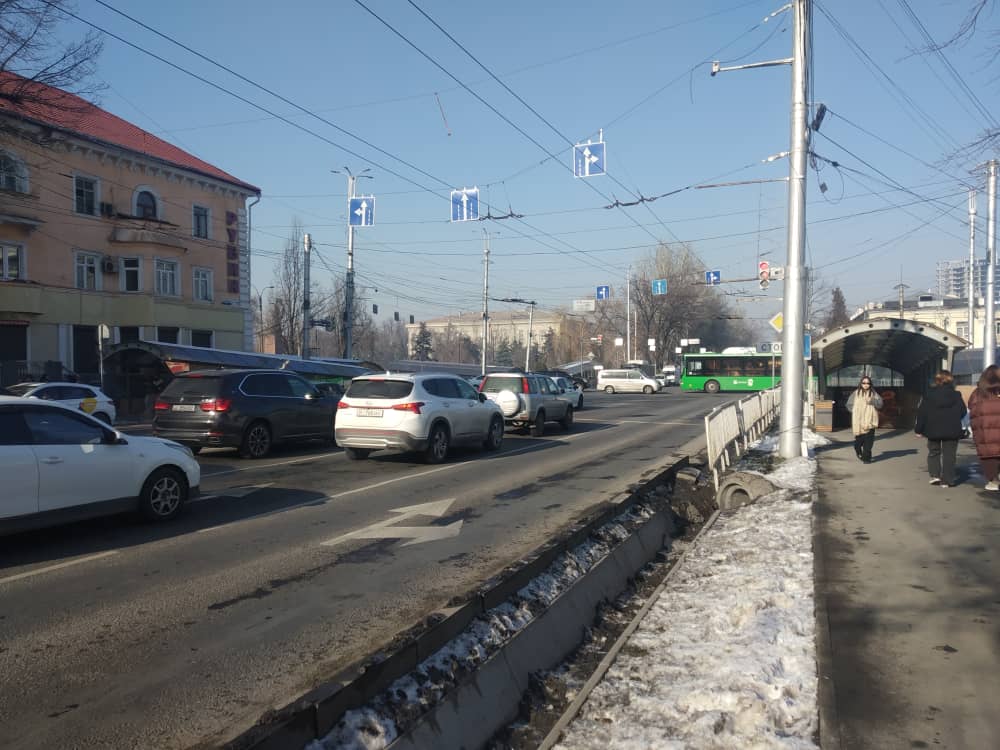
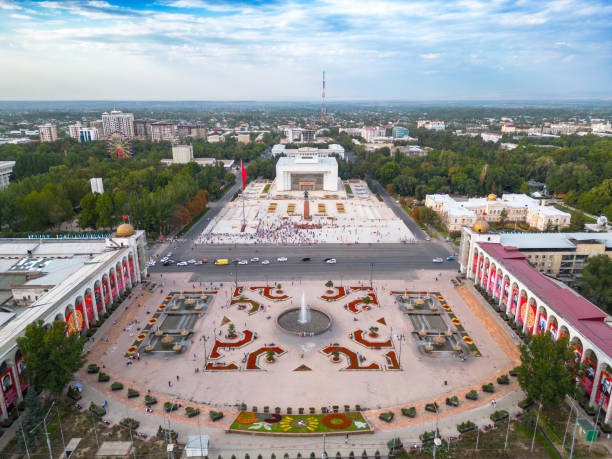
Kyrgyz authorities have submitted a draft law outlining a new master plan for the development of Bishkek through 2050, now open for public discussion. The document defines long-term priorities for the capital's growth across several sectors, including transport infrastructure, environmental management, economic development, and spatial expansion. Once adopted, the plan will become the principal framework for territorial planning and will be legally binding for decisions related to construction and land use. According to the draft, Bishkek's official population is expected to rise from 1.3 million to 1.9 million by 2050. However, the city is already believed to house approximately 2 million people, with urban development having long exceeded administrative boundaries. As a result, Bishkek is currently facing critical shortages of housing, employment, and transport infrastructure. The plan's authors stress that continued development of the city center alone is no longer viable, as it is already overburdened in terms of both transport and utilities. To address this, the master plan proposes moving away from the current "center-bedroom" model. Instead, employment opportunities should be created within districts and suburbs, supported by improved transport accessibility across all parts of the city. This approach aims to reduce commuting to the center, alleviate traffic congestion, and lessen pressure on the road network. Key infrastructure upgrades include the introduction of an intra-city railway and a high-speed bus system operating along dedicated corridors. A network of transport hubs will also be established, with the goal of reducing residents’ reliance on private vehicles. Developed in 2025 by the Bishkek City Hall in cooperation with the Scientific Research Institute of Prospective Urban Development in St. Petersburg, the plan is now being updated based on public feedback. The most contentious element of the proposal is the renovation program, which calls for the demolition of a substantial number of two, three, and four-storey buildings in central areas and along major roads. Many residents are concerned that state compensation for demolished properties may fall short of market value, a topic that has become one of the most debated during public consultations. Environmental improvements are also a core component. Bishkek frequently ranks among the most polluted cities in the Eurasia region. To address this, the plan includes a “green framework” for the city: expanding river and canal beds, creating green corridors, and enhancing recreational zones.