• KGS/USD = 0.01143 0%
  • KZT/USD = 0.00216 0%
  • TJS/USD = 0.10684 -0.28%
  • UZS/USD = 0.00008 0%
  • TMT/USD = 0.28571 0%
  • KGS/USD = 0.01143 0%
  • KZT/USD = 0.00216 0%
  • TJS/USD = 0.10684 -0.28%
  • UZS/USD = 0.00008 0%
  • TMT/USD = 0.28571 0%
  • KGS/USD = 0.01143 0%
  • KZT/USD = 0.00216 0%
  • TJS/USD = 0.10684 -0.28%
  • UZS/USD = 0.00008 0%
  • TMT/USD = 0.28571 0%
  • KGS/USD = 0.01143 0%
  • KZT/USD = 0.00216 0%
  • TJS/USD = 0.10684 -0.28%
  • UZS/USD = 0.00008 0%
  • TMT/USD = 0.28571 0%
  • KGS/USD = 0.01143 0%
  • KZT/USD = 0.00216 0%
  • TJS/USD = 0.10684 -0.28%
  • UZS/USD = 0.00008 0%
  • TMT/USD = 0.28571 0%
  • KGS/USD = 0.01143 0%
  • KZT/USD = 0.00216 0%
  • TJS/USD = 0.10684 -0.28%
  • UZS/USD = 0.00008 0%
  • TMT/USD = 0.28571 0%
  • KGS/USD = 0.01143 0%
  • KZT/USD = 0.00216 0%
  • TJS/USD = 0.10684 -0.28%
  • UZS/USD = 0.00008 0%
  • TMT/USD = 0.28571 0%
  • KGS/USD = 0.01143 0%
  • KZT/USD = 0.00216 0%
  • TJS/USD = 0.10684 -0.28%
  • UZS/USD = 0.00008 0%
  • TMT/USD = 0.28571 0%

Viewing results 73 - 78 of 1343

Kazakhstan Debates Parliamentary Reform as Inflation Pressures Living Standards

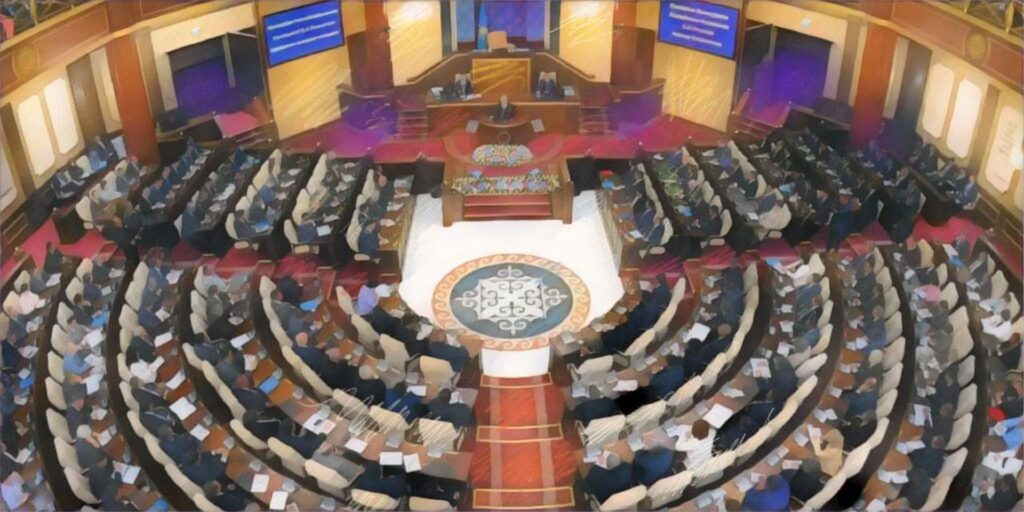
The Kazakh government is actively developing the framework for a future unicameral parliament, working to define its status, powers, and functions. Currently, Kazakhstan’s legislative branch consists of two chambers: the Senate and the Mazhilis.  The proposed transition to a unicameral system has been positioned by authorities as a step toward democratization. However, many citizens remain unclear about the details and implications of the reform, particularly as inflation and declining living standards dominate public concern. Uncertain Details of Reform In September 2025, President Kassym-Jomart Tokayev proposed holding a nationwide referendum on transitioning to a unicameral parliament in 2027. While some analysts have speculated about a faster timeline, no official acceleration beyond 2027 has been announced. "The establishment of a parliamentary republic is not under consideration. The foundational model of a 'Strong President, Influential Parliament, Accountable Government' remains unchanged," Tokayev previously stated. According to political analyst Gaziz Abishev, pivotal developments are expected on January 20, when the National Kurultai (Assembly) convenes. He believes this meeting will outline the contours of constitutional reform and potentially signal a date for the referendum. “If the decree on holding a referendum is signed during the Kurultai, the vote could be held on March 22 [2026],” Abishev stated. Under the current system, the Senate represents regions and appointive quotas, reviewing legislation passed by the Mazhilis and serving as a constitutional buffer. Any move to unicameralism would require redefining how regional interests are represented and how legislative oversight is maintained without an upper chamber. The National Kurultai serves as a platform for dialogue between the government and society, addressing national identity, economic development, social justice, and improving the quality of life. Historically, the Kurultai was a gathering of Turkic and Mongol tribes. Over 500 Public Proposals Submitted Public discussion around the proposed unicameral parliament has been active. Since the launch of a dedicated “Parliamentary Reform” section on the state portals e-Otinish and Egov, over 500 proposals have been submitted by citizens, experts, and public organizations. Despite this engagement, tangible benefits for ordinary citizens remain vague, aside from a potential reduction in government spending. Globally, more than half of national parliaments operate as unicameral systems. According to IPU Parline, 107 out of 188 legislatures follow this model, primarily in unitary states with smaller populations. Unicameral systems are often praised for faster legislative processes, lower administrative costs, and increased transparency. Kazakhstan previously had a unicameral legislature under the 1993 Constitution. Following the invalidation of the 1994 elections, the Supreme Council was dissolved. In 1995, the country transitioned to its current bicameral system. The Senate, as the upper house, plays a stabilizing and arbitration role. Analysts caution that without a second chamber, legislative processes may be vulnerable to hasty or populist decisions. Potential for Early Elections Abishev suggests that a referendum in March 2026 could prompt an early electoral cycle. "Under the current schedule, the next Mazhilis elections are set for January 2028. However, they could be moved up to summer 2026 if Parliament adopts a constitutional amendment package in April...

Uzbekistan’s Supreme Court Updates List of Banned “Extremist” Online Content

Uzbekistan has released an updated list of sources and materials banned for promoting extremism and terrorism, according to the press service of the Supreme Court. The revised register, current as of 10 January 2026, includes online content deemed to pose a threat to public safety and the country’s constitutional order. The Supreme Court reported that the updated list contains 1,593 profiles, channels, and other materials, most of which are linked to content distributed via social networks and messaging platforms. The listed materials were found to promote extremist ideologies, justify violence, or encourage terrorist activity. Telegram was the most frequently cited platform, with 790 channels, groups, and materials included. Facebook followed with 249 entries, while 265 profiles were identified on Instagram. The list also includes 167 YouTube channels and videos, 53 TikTok profiles, and 36 entries from the Odnoklassniki network. Beyond social media, the register includes 13 websites and standalone digital materials classified as prohibited sources. Additionally, 20 books, lectures, and religious chants were assessed as promoting religious extremism or violent ideology. At the same time, some legal experts and human rights advocates caution that broadly defined extremism regulations carry risks of misuse. They argue that vague or expansive interpretations of what constitutes extremist or unconstitutional content could potentially be applied to suppress political dissent, independent journalism, or peaceful criticism of state policies, particularly in online spaces where contextual nuance is often limited. Concerns have also been raised about the potential impact on religious freedom. Critics note that religious materials or sermons not aligned with officially approved interpretations could be vulnerable to restriction, even when they do not explicitly call for violence. Without transparent judicial oversight and clear public access to decisions, observers warn that such measures may unintentionally marginalize lawful religious expression or discourage open theological discussion. The court stated that all materials were evaluated using clear criteria, such as promoting extremist ideas, justifying violence or terrorism, or seeking to undermine the constitutional system. Materials meeting these thresholds were formally recognized as prohibited. Legal grounds for these designations are provided under Uzbekistan’s Criminal Code. Article 244-1 covers extremist content promoting terrorism and allows for criminal prosecution, including prison terms of up to eight years for the preparation, storage, or dissemination of such materials. Article 244-3 addresses the unlawful distribution of religious content that breaches legal standards without directly inciting terrorism. Initial violations under this article result in administrative penalties such as fines and equipment confiscation but repeat offenses may escalate to criminal charges. These actions are part of Uzbekistan’s National Strategy to Counter Extremism and Terrorism for 2021–2026. Under this strategy, state agencies are tasked with identifying and curbing the spread of extremist and terrorist materials online, while enhancing legal, technical, and informational capabilities to counter growing digital recruitment activities.

Mandatory Participation in Elections Proposed in Kyrgyzstan

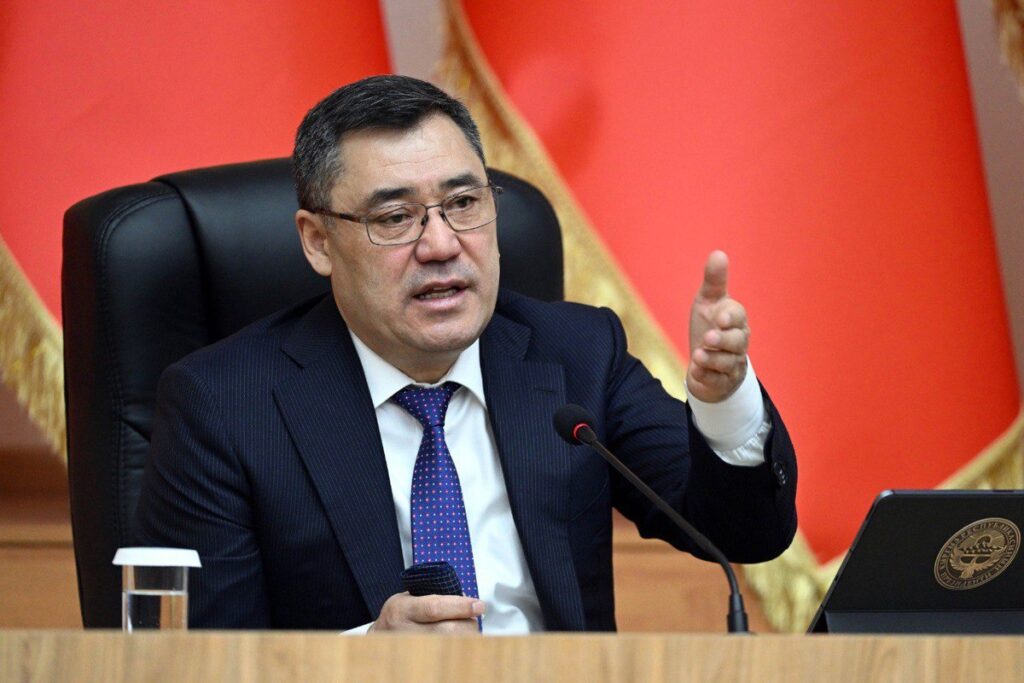
On January 13, Marlen Mamataliev, a member of Kyrgyzstan's parliament, the Jogorku Kenesh, introduced a bill proposing mandatory participation in elections and referendums, along with penalties for non-participation and incentives to encourage voting. The draft legislation has been submitted for public discussion. According to the bill, all Kyrgyz citizens registered as eligible voters would be required to participate in elections. However, the proposal affirms that freedom of political expression remains protected: voters would retain the right to support any candidate or to vote “against all”, as currently allowed on the ballot. The bill outlines several exemptions. Citizens over 70 years old, those legally deemed incapacitated, individuals outside Kyrgyzstan on election day, and voters who fail to appear due to valid reasons, such as illness, natural disasters, military service, or other emergencies, would not be penalized. Proposed penalties for non-participation without a valid excuse include: A written warning for the first offense; An administrative fine for repeat violations; A temporary ban of up to five years on running for elected office or holding public service positions for systematic evasion (defined as three or more violations). The bill also proposes incentives to boost voter engagement, including discounts on state and municipal services, and awarding additional points for candidates seeking public sector employment. Notably, the legislation includes a provision for issuing a lottery ticket along with each ballot, with the Central Commission for Elections and Referendums tasked with organizing state-sponsored lotteries and prize drawings during election periods. The bill’s explanatory note highlights declining voter turnout as one of the most serious challenges facing Kyrgyzstan’s electoral system. Turnout statistics illustrate a steady drop over the past 15 years. In the 2011 presidential election, participation was 61.28%; it fell to 56.11% in 2017, and to 39.16% in 2021. Parliamentary election turnout followed a similar trend: 59.19% in 2010, 39.78% in 2015, 54.38% in the contested 2020 vote, 34.61% in 2021, and just 36.9% in the most recent parliamentary elections held on November 30, 2025. The bill’s authors point to international examples of compulsory voting, in countries such as Belgium, Australia, Turkey, Singapore, and several Latin American nations, where turnout regularly exceeds 80-90%. This initiative follows concerns voiced by President Sadyr Japarov about low voter participation in the 2025 parliamentary elections. The president addressed the issue at the fourth People’s Kurultai (National Assembly), a national forum for direct dialogue between citizens and the state, held in Bishkek in December 2025, one month after the election.

Japarov Credits Mirziyoyev’s in Resolving Kyrgyzstan-Tajikistan Border Dispute

Kyrgyz President Sadyr Japarov has detailed how the long-standing border conflict with Tajikistan was resolved, citing direct diplomacy, enhanced military capabilities, and crucial regional mediation. His remarks came during the second part of the documentary President, aired on Kyrgyzstan’s Region TV. Japarov recounted that after the deadly clashes along the Kyrgyz, Tajik border in April 2021, he opted to visit Dushanbe for direct talks with Tajik President Emomali Rahmon, despite opposition from some members of his inner circle, including State Committee for National Security Chairman Kamchybek Tashiyev. The negotiations, which lasted ten hours, ended without immediate results. “We talked for many hours, but at that time we could not reach an agreement,” Japarov recalled in the film. The 2021 conflict, triggered by disputes over infrastructure near the Kyrgyz village of Kok-Tash, exposed significant weaknesses in Kyrgyzstan’s defense capacity. The two-day confrontation involved heavy weaponry, including mortars, armored vehicles, and helicopter gunships. Official figures reported 54 fatalities, hundreds of injuries, and mass civilian displacement. Japarov said the violence spurred a modernization of the Kyrgyz military. The country began acquiring advanced equipment, including Turkish-made Bayraktar Akıncı and Aksungur drones. By the time renewed clashes broke out in September 2022, the president claimed that the balance of power had shifted. “By then, the forces were already equal, and we had begun to gain air superiority,” he said. Despite these developments, Japarov stressed that diplomacy ultimately brought resolution, and credited Uzbek President Shavkat Mirziyoyev with playing a pivotal role. “At summits, I told Rahmon, ‘Let’s sit down and talk.’ At first he refused. The second time, he agreed,” Japarov stated. “I must say that the role of Uzbekistan’s President Shavkat Mirziyoyev was very significant. He persuaded us not to miss the moment and to reach an agreement. That’s how we sat down and resolved the border issue.” Kyrgyz Foreign Minister Jeenbek Kulubaev supported this view, describing Mirziyoyev as a regional leader who consistently urged neighbors to resolve disputes peacefully. He noted that Mirziyoyev had warned unresolved conflicts risk deterring both investors and tourists, who often see Central Asia as a single, interconnected region. Kyrgyzstan and Tajikistan officially signed a border delimitation agreement on March 13 of last year, following a preliminary signing on March 31 in Khujand during a trilateral meeting involving the leaders of Kyrgyzstan, Tajikistan, and Uzbekistan.

Kazakh Government Rules Out AI Deputy Ministers

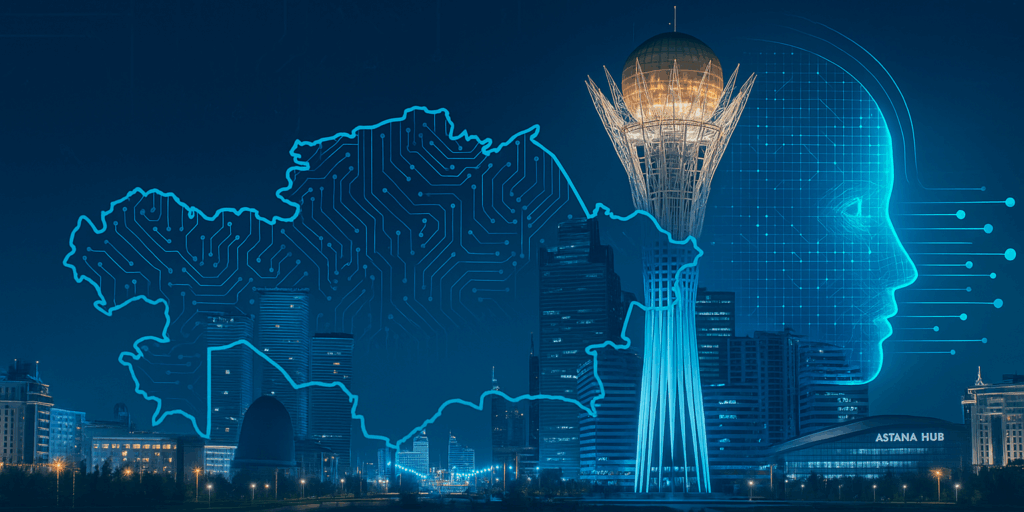
AI will not be occupying senior government posts in Kazakhstan anytime soon. While AI-based tools may serve as advisors and consultants to top officials, there are currently no plans to appoint virtual or digital deputy ministers. This was confirmed by Rostislav Konyashkin, First Deputy Minister of Artificial Intelligence and Digital Development. The question arose during a press conference following a cabinet meeting, when journalists referenced Albania’s 2025 decision to appoint a virtual minister for public procurement, the first of its kind globally. They asked whether Kazakhstan was considering a similar initiative. According to Konyashkin, AI systems have not yet reached the level of reliability required for managing official functions. “As political officials, we are responsible for the decisions we make, so the emergence of digital deputy ministers is not expected at this time. When AI provides correct answers in 95-97% of cases, then perhaps we can begin discussing the transfer of some powers to algorithms. For now, we are only talking about AI assisting in analysis and decision-making,” he stated. Konyashkin expressed hope that in the future, personal AI assistants could be developed to the level of full-fledged consultants and advisors, significantly easing the workload of civil servants. Only after practical trials of such systems, he noted, could discussions about formal AI appointments begin. He also pointed to an existing example: the SKAI (Samruk-Kazyna Artificial Intelligence) neural network, which was added to the board of directors at the state holding company Samruk-Kazyna. However, its role remains consultative and does not involve decision-making authority. Konyashkin additionally outlined plans to establish a secure digital environment enabling Kazakh civil servants to work remotely. This includes secure access to work systems via tablets and trusted laptops, particularly during field operations conducted by ministries and akimats. To support this, a unified authorization system is in development, with optional biometric identification for accessing sensitive personal data. There are also plans to integrate various digital tools, video conferencing, messaging platforms, and email, into a single work interface. According to Konyashkin, this will streamline administrative processes and enhance the efficiency of Kazakhstan’s digital infrastructure.

Uzbekistan Has “Only Just Begun” Reforms, Says Saida Mirziyoyeva

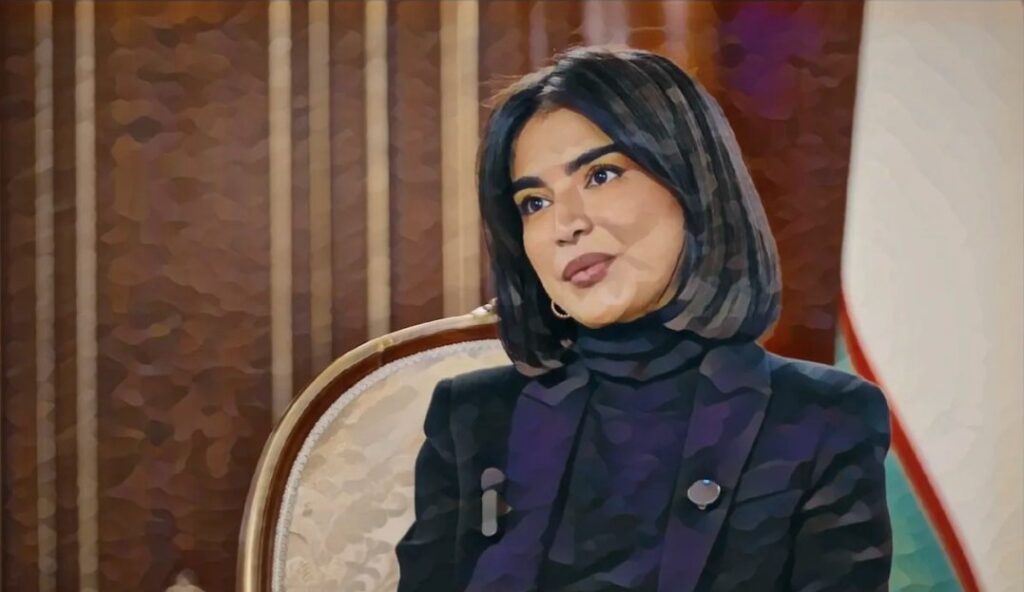
Saida Mirziyoyeva has said that the country’s reform agenda remains at an early stage, arguing that the scale of change should be measured in years rather than months. In her first major interview since becoming Head of the Presidential Administration, Mirziyoyeva said Uzbekistan had “only just begun” large-scale reforms. Expectations of rapid results, she warned, often overlook structural limits, including weak infrastructure, uneven regional development, and tight public finances. Mirziyoyeva spoke about decision-making inside the presidential system and outlined what she described as the administration’s main policy priorities, including water management, education, healthcare, the business climate, and reform of the judicial and legal system. “Our goal is to improve people’s lives,” she stated, emphasizing that improvements in courts and law enforcement were essential for other reforms to succeed. Without legal guarantees, she argued, investment and social policy changes would fail to deliver lasting results. She said the reforms now underway are intended to address long-standing systemic problems rather than produce quick political gains, and rejected the idea that reform momentum has slowed, arguing that many of the most complex changes require time and careful implementation to succeed. Water management featured prominently in her remarks. Mirziyoyeva described it as one of Uzbekistan’s most urgent challenges, pointing to climate pressures, ageing infrastructure, and rising demand. Education and healthcare were also presented as priorities, with reforms focused on improving quality and access rather than simply expanding state programs. The judicial system, however, emerged as the central theme. Mirziyoyeva said that without independent and predictable courts, reforms in other areas would not deliver lasting results. Legal uncertainty, she said, discourages investment and undermines public trust, making the rule of law essential for both economic reform and the protection of citizens’ rights. Mirziyoyeva also addressed the business environment, arguing that excessive regulation and administrative pressure continue to constrain private enterprise. The state, she said, should act as a partner to entrepreneurs rather than an obstacle, and reforms should create conditions in which businesses can operate transparently and competitively. Mirziyoyeva described her role as focused on coordination and execution rather than public visibility. The task of the Presidential Administration, she said, is to ensure that decisions taken at the top translate into practical change on the ground. Public service, she added, should be judged by outcomes, not rhetoric. The interview comes more than nine years after President Shavkat Mirziyoyev took office in December 2016 and launched a reform agenda that marked a break with the isolationist policies of his predecessor. Early measures included the liberalisation of the foreign exchange market in September 2017, easing trade restrictions, and reducing state control over prices. International financial institutions have described Uzbekistan’s economic transition as ambitious, while noting that progress has been uneven. Political reform has proceeded more cautiously. In its 2024 Nations in Transit assessment, Freedom House classified Uzbekistan as a consolidated authoritarian system, citing restrictions on opposition activity and independent media. Against that backdrop, Mirziyoyeva said reforms should be judged by tangible outcomes rather than timelines. Reliable access...