
• KGS/USD = 0.01144 0%
  • KZT/USD = 0.00209 0%
  • TJS/USD = 0.10523 0%
  • UZS/USD = 0.00008 0%
  • TMT/USD = 0.28530 0%
  • KGS/USD = 0.01144 0%
  • KZT/USD = 0.00209 0%
  • TJS/USD = 0.10523 0%
  • UZS/USD = 0.00008 0%
  • TMT/USD = 0.28530 0%
  • KGS/USD = 0.01144 0%
  • KZT/USD = 0.00209 0%
  • TJS/USD = 0.10523 0%
  • UZS/USD = 0.00008 0%
  • TMT/USD = 0.28530 0%
  • KGS/USD = 0.01144 0%
  • KZT/USD = 0.00209 0%
  • TJS/USD = 0.10523 0%
  • UZS/USD = 0.00008 0%
  • TMT/USD = 0.28530 0%
  • KGS/USD = 0.01144 0%
  • KZT/USD = 0.00209 0%
  • TJS/USD = 0.10523 0%
  • UZS/USD = 0.00008 0%
  • TMT/USD = 0.28530 0%
  • KGS/USD = 0.01144 0%
  • KZT/USD = 0.00209 0%
  • TJS/USD = 0.10523 0%
  • UZS/USD = 0.00008 0%
  • TMT/USD = 0.28530 0%
  • KGS/USD = 0.01144 0%
  • KZT/USD = 0.00209 0%
  • TJS/USD = 0.10523 0%
  • UZS/USD = 0.00008 0%
  • TMT/USD = 0.28530 0%
  • KGS/USD = 0.01144 0%
  • KZT/USD = 0.00209 0%
  • TJS/USD = 0.10523 0%
  • UZS/USD = 0.00008 0%
  • TMT/USD = 0.28530 0%

Viewing results 151 - 156 of 1298

Kyrgyz Parliament Votes to Dissolve; Preparations for Early Elections Begin

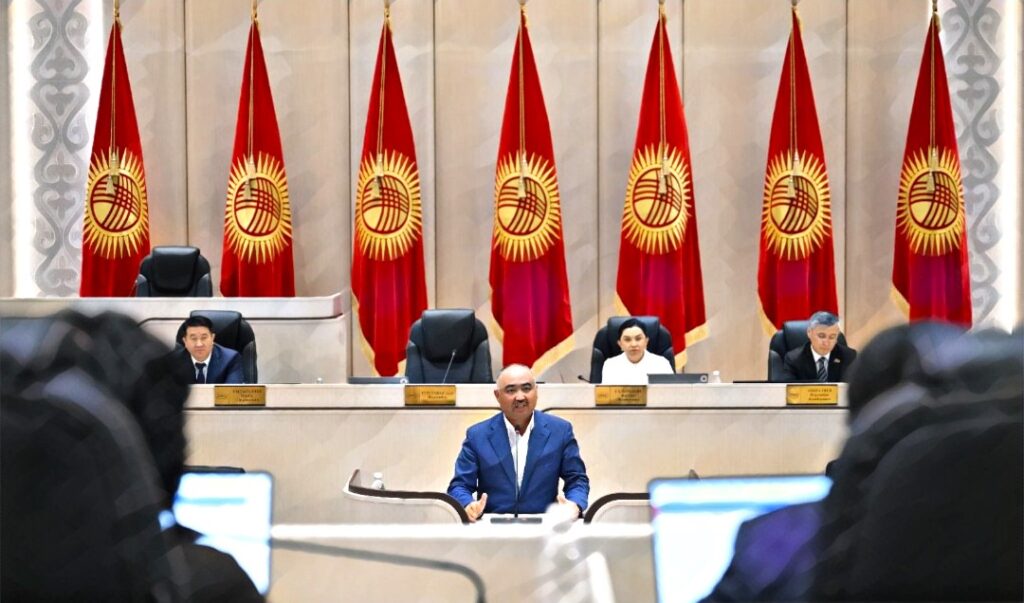
Deputies in Kyrgyzstan’s parliament voted on September 25 to dissolve parliament, paving the way for early elections that will be conducted under a revised electoral format later this year. Deputies voted 84-0 in favor of dissolving parliament. Five other deputies abstained from voting, and one MP was absent from the session. Kyrgyz President Sadyr Japarov now has five days to name the date for snap parliamentary elections, though speaker of parliament Nurlanbek Turgunbek uulu said he expects the date will be November 30. The move was expected as a group of deputies started collecting signatures earlier in September to introduce a motion on dissolving parliament. The chairman of Kyrgyzstan’s Central Election Commission (CEC), Tynchtykbek Shaynazarov, said in an interview on September 2 that the CEC is ready to conduct parliamentary elections this year, “if [parliament] takes the decision to dissolve itself.” Shaynazarov explained the reason for advancing elections by one year. “According to the law, and plans, the elections for deputies to the Jogorku Kenesh (Kyrgyzstan’s parliament) will take place in November 2026.”  However, Shaynazarov said, “According to the constitutional regulations, the next presidential election is set for January 2027. If we have (parliamentary) elections… in November 2026, the CEC must release an official tally (of votes) within 20 days.” Shaynazarov continued, “Then there will be those who are dissatisfied with the elections and will file a lawsuit. Thus, the campaign for the election of deputies may drag on until December.” Shaynazarov pointed out this would overlap with campaigning for the presidential election. Member of Parliament Janar Akayev agreed the proximity of the two elections according to the current schedule could negatively impact the work of the CEC. Akayev also noted that Japarov signed a new law on procedures for electing parliamentary deputies in June this year.  That law changed the mixed system of electing deputies Kyrgyzstan used in 2021, whereby 36 MPs were elected in single-mandate districts and 54 by party lists. In the next elections, all 90 deputies will be chosen in single-mandate districts. “Since current MPs support the transition to a new system, new elections should be held,” Akayev said. Kyrgyzstan’s early parliamentary elections, in 1995, 2000, and 2005, were conducted via single-mandate districts. Election by party lists was first used in the 2007 snap elections, and continued to be used in the 2010, 2015, and 2020 elections. The new regulations for parliamentary elections have negative and positive aspects. The non-refundable fee to seek a seat in parliament favors the wealthy. The fee for independent candidates to run remains at 100,000 Kyrgyz som (about $1,115), which is still a high price in a country where the average monthly salary is just a bit over 41,000 som. Political parties can still participate in elections but must pay 9 million som (almost $103,000). Currently six parties have seats in parliament, but 21 parties fielded candidates in the 2021 elections. The prohibitively high cost of registering will make it difficult for many people who aspire to a seat in parliament...
Survey Reveals 41% of Bishkek Residents Use Private Cars, Exacerbating Air Pollution

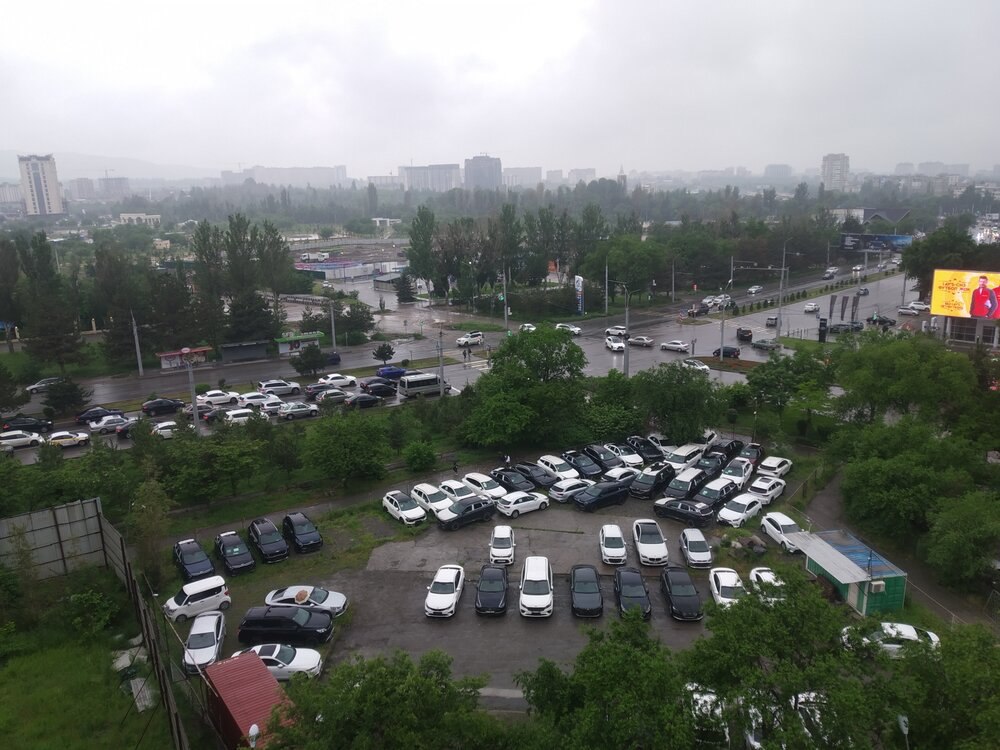
As part of preparations for a new urban development plan, Bishkek’s municipal authorities have conducted a comprehensive survey to understand how residents of the capital and its suburbs navigate the city. According to the results, 41% of respondents rely on private transportation, including personal vehicles and taxis, while 38% use municipal public transport, primarily buses. The remaining 21% get around on foot, by bicycle, or by scooter, including electric scooters. The most frequented destination for city residents is the downtown area, which accounts for the majority of work-related and other daily trips. The Bishkek City Administration stated that the survey data will be used to design a more efficient and balanced urban transportation system aimed at enhancing public transit services. Traffic congestion remains a critical issue in Bishkek, a city experiencing rapid population growth. According to the Ministry of Natural Resources, Ecology, and Technical Supervision, motor vehicles, particularly older models lacking catalytic converters, are responsible for approximately 30% of the city’s air pollution. Vehicle numbers in the capital have surged in recent years. Bishkek now hosts more than 700,000 vehicles, nearly double the road infrastructure’s intended capacity of 350,000. Over 300,000 of these vehicles are more than 15 years old, making them significant contributors to harmful emissions. In response, the city has taken steps to modernize its public transportation fleet. Recent initiatives include replacing diesel-powered buses with larger, more environmentally friendly models powered by liquefied petroleum gas (LPG).

From Jalal-Abad to Manas: Kyrgyzstan Writes Its Epic in Stone

On September 18, Kyrgyz President Sadyr Japarov signed a law renaming the city of Jalal-Abad to Manas. Parliament had previously approved the bill unanimously on 10 September 2025, with lawmakers declaring that the change aims to strengthen national ideology and perpetuate the legacy of the Kyrgyz people’s national hero, Manas. The law will come into force ten days after its official publication. History of Jalal-Abad The city long known as Jalal-Abad sits in southern Kyrgyzstan, about 520 kilometers from Bishkek, near the Uzbek border. It traces its origins to a 19th-century caravanserai and spa. Jalal-Abad was first recognized as a town in 1877 under the Russian Empire, and its status was reaffirmed in 1927 during the Soviet period. Today, it is a regional hub of light industry, agriculture, and services, with a population of more than 180,000. The city is famed for its mineral springs and the nearby walnut forests of the Ferghana foothills, which have been used for centuries as sources of food and medicine. Jalal-Abad has also been a focal point of Kyrgyz political life, serving as a southern stronghold during waves of protest that reshaped national politics. Why “Manas”? The Manas epic occupies a foundational place in Kyrgyz cultural identity. Recited by generations of manaschi (epic singers), it recounts the deeds of Manas, a legendary tribal leader who united the Kyrgyz and defended them from foreign enemies. The trilogy (Manas, Semetey, Seytek) runs to hundreds of thousands of lines, making it the longest epic poem in the world. UNESCO describes the work as “an oral encyclopedia of the Kyrgyz people,” a living tradition that preserves values of unity, honor, hospitality, and courage. Performances of the epic remain central to weddings, funerals, and public celebrations. By renaming Jalal-Abad to Manas, lawmakers are seeking to embed these ideals in the civic identity of one of Kyrgyzstan’s largest cities. Political Debate and Local Reactions The renaming bill was introduced by Kudaibergen Bazarbaev, head of the State Agency for Civil Service and Local Government Affairs, and supported by both the Jalal-Abad City Council and the president’s regional representative. The cost of the change is estimated at about 15 million Kyrgyz som (roughly $150,000), to be paid from the local budget. The debate in parliament highlighted the symbolic weight of the change. MP Mirlan Samyikozho told colleagues: “There should be no news on the Internet about Manas prostitutes, Manas corrupt officials, Manas rapists in the future.” Others suggested shifting the image of Manas away from the traditional horse-mounted warrior to that of a just ruler on a throne. Supporters say the change reflects the wishes of residents and strengthens national pride. Critics argue it diverts attention from pressing issues such as infrastructure and employment. On social media, reactions have been mixed. An Instagram post documenting the decision drew both celebratory comments about cultural pride and skeptical remarks about municipal spending priorities. The Epic as National Symbol For many Kyrgyz, the name Manas is synonymous with the nation itself. The epic is woven...

Kipling and Code: Tokayev Advocates Global AI Ethics Principles

Kazakhstan’s President Kassym-Jomart Tokayev has called for the creation of an international body to address the ethical dimensions of artificial intelligence (AI) and to draft universal legislation regulating its development and application. Speaking at the VIII Congress of Leaders of World and Traditional Religions in Astana, Tokayev emphasized that technologies such as AI, big data, and bioengineering are transforming societies at a pace that outstrips the development of ethical and legal frameworks. “New challenges arise, freedom of choice and privacy, digital equality and security, the use of artificial intelligence and many other technologies. Universal moral values and ideals must be included in the discussion of humanity’s digital future. Any technology should work for the benefit of people,” Tokayev said. He proposed the creation of an international commission on AI ethics to draft a set of universal principles for responsible AI use. “We are talking about a kind of ‘commandments for algorithms’ that imply respect for human dignity and the inadmissibility of discrimination when making life-defining decisions,” he explained. Tokayev said such “commandments” would require ongoing dialogue among spiritual leaders, scientists, and technology developers. Expanding beyond AI, Tokayev underlined the growing importance of spiritual diplomacy at both regional and global levels. He reiterated his previous proposal for a global peace movement under the auspices of the Congress, with religious leaders forming its moral foundation. “This initiative could unite not only the broader community of believers, but also politicians, representatives of international organizations, state institutions, experts, and, of course, youth,” Tokayev said. He also warned of mounting risks of global conflict, including the increasing threat of nuclear escalation and what experts have described as a “civilizational crisis”, a worldwide inability to reconcile opposing political ideologies. Citing Kipling, Tokayev noted that divisions between East and West may seem irreconcilable but argued that responsible statecraft and political leadership can bridge cultural and religious divides. Tokayev further expressed concern over the growing convergence of ultranationalism and patriotism, which he said may confuse younger generations. He also pointed to intensifying clashes between conservative and liberal ideologies, warning that such polarization is driving political instability in numerous countries. “In such complex realities, constructive diplomacy must play a key role as the main instrument for dialogue, overcoming alienation, and building trust at the international level,” he concluded.

Kazakhstan Criminalizes Forced Marriage in Landmark Legal Reform

Kazakhstan has introduced criminal liability for forced marriage for the first time, following the adoption of significant amendments to the country’s criminal legislation. Effective September 16, the reforms formally recognize coercion into marriage as a criminal offense. Penalties range from fines of up to $14,500 and corrective labor, to prison terms of up to 10 years in cases involving serious consequences. “These changes to criminal law are aimed at strengthening the protection of citizens' rights and freedoms,” the Ministry of Internal Affairs said in a statement. The legislation, titled On Amendments and Additions to Certain Legislative Acts on the Optimization of Criminal Legislation, also eliminates a loophole in Article 125 of the Criminal Code. Previously, individuals who voluntarily released a kidnapped person could avoid prosecution. That exemption has now been revoked. A new provision, Article 125-1, Coercion to Marry, has been introduced, criminalizing marriages entered into under duress or physical coercion. Penalties are more severe when the victim is a minor, when the crime is committed by a group, or when the perpetrator abuses an official position. Targeting Bride Kidnapping Practices The amendments aim in part to curb the persistent tradition of alyp qashu, the abduction of girls for the purpose of forced marriage. Despite its legal status as a crime, the practice still occurs in parts of the country. Human rights activists have highlighted that alyp qashu often involves physical and psychological abuse, with victims subjected to family pressure. Many are told that refusing to marry would bring shame or misfortune to their relatives. The psychological toll can be profound, leading to anxiety, depression, panic attacks, and social withdrawal. On July 16, President Kassym-Jomart Tokayev signed into law the specific criminalization of bride kidnapping. The Mangistau Region Prosecutor’s Office emphasized the importance of consent, stating: “Coercion into marriage is the conclusion of a marriage against a person's will through pressure or violence. Such an act is a gross violation of human rights.” The office also stressed that: “Kidnapping a girl without her consent is not a tradition, but a crime.” The legal reforms are designed to protect vulnerable people, particularly women and adolescents. By increasing penalties for forced marriages, Kazakhstan’s government signals a clear intent to confront deeply rooted practices that undermine basic human rights.

Kazakhstan Moves to Ban Electric Scooters from Sidewalks

Kazakhstan’s Ministry of Internal Affairs is preparing new legislation that would prohibit electric scooters from being used on sidewalks, Deputy Minister Igor Lepekha announced. Initial restrictions on scooters were introduced in 2023, requiring riders to limit their speed to 6 km/h on sidewalks. However, compliance has been minimal, largely due to limited state enforcement and the failure of kick-sharing companies to implement speed-limiting technologies. The issue resurfaced at the highest level on September 8, when President Kassym-Jomart Tokayev called for urgent measures to improve pedestrian safety. Lepekha stated that previously rejected amendments to scooter regulations have now been redrafted. “These proposals to tighten control have already been submitted to parliament by the Ministry of Internal Affairs, but a number of them did not find support. In this regard, new amendments have been developed jointly with deputies, providing for a ban on the movement of electric scooters on sidewalks,” he said. The Ministry also proposes new safety responsibilities for kick-sharing companies and wants to give local authorities the right to regulate scooter use within their jurisdictions. “The municipality could decide for itself on which streets and at what times they can be ridden and when they should be prohibited, thus defining zones,” Lepekha added. Since the beginning of the year, Kazakhstan has recorded 361 traffic accidents involving electric scooters, resulting in 365 injuries and one death. According to a government report, authorities documented 29,000 traffic violations by scooter riders in 2025 alone, with 8,000 devices impounded. As of August 29, the Ministry had recorded 213 accidents and 224 injuries, along with 24,000 violations and 2,500 scooters sent to impound lots. The figures indicate that in the two weeks following Tokayev’s directive, scooter-related violations increased by 5,000, and the number of impounded devices more than doubled. As The Times of Central Asia previously reported, enforcement has intensified particularly in Almaty, where the highest number of violations has been reported.
