• KGS/USD = 0.01144 0%
  • KZT/USD = 0.00211 0%
  • TJS/USD = 0.10454 -0.1%
  • UZS/USD = 0.00008 0%
  • TMT/USD = 0.28571 0.28%
  • KGS/USD = 0.01144 0%
  • KZT/USD = 0.00211 0%
  • TJS/USD = 0.10454 -0.1%
  • UZS/USD = 0.00008 0%
  • TMT/USD = 0.28571 0.28%
  • KGS/USD = 0.01144 0%
  • KZT/USD = 0.00211 0%
  • TJS/USD = 0.10454 -0.1%
  • UZS/USD = 0.00008 0%
  • TMT/USD = 0.28571 0.28%
  • KGS/USD = 0.01144 0%
  • KZT/USD = 0.00211 0%
  • TJS/USD = 0.10454 -0.1%
  • UZS/USD = 0.00008 0%
  • TMT/USD = 0.28571 0.28%
  • KGS/USD = 0.01144 0%
  • KZT/USD = 0.00211 0%
  • TJS/USD = 0.10454 -0.1%
  • UZS/USD = 0.00008 0%
  • TMT/USD = 0.28571 0.28%
  • KGS/USD = 0.01144 0%
  • KZT/USD = 0.00211 0%
  • TJS/USD = 0.10454 -0.1%
  • UZS/USD = 0.00008 0%
  • TMT/USD = 0.28571 0.28%
  • KGS/USD = 0.01144 0%
  • KZT/USD = 0.00211 0%
  • TJS/USD = 0.10454 -0.1%
  • UZS/USD = 0.00008 0%
  • TMT/USD = 0.28571 0.28%
  • KGS/USD = 0.01144 0%
  • KZT/USD = 0.00211 0%
  • TJS/USD = 0.10454 -0.1%
  • UZS/USD = 0.00008 0%
  • TMT/USD = 0.28571 0.28%

Viewing results 583 - 588 of 1289

Tajik Company Restores “Tatra Around the World” Expedition Bus

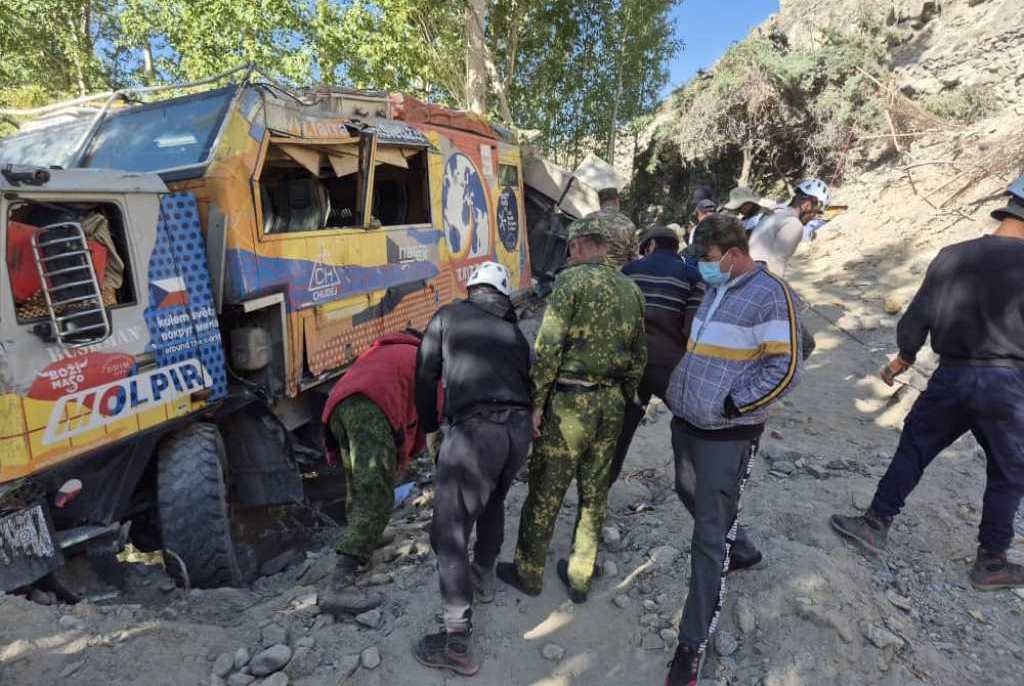
A minibus, involved in an accident in the Pamir Mountains during the "Tatra Around the World-2" expedition, is currently being repaired by a Tajik company. The accident occurred on August 5 , at 3,000 meters near the village of Tukhgoz in the Ishkashim district, Gorno-Badakhshan Autonomous Region, when the minibus veered down a slope and got caught in  trees. Fortunately, none of the nine tourists, rescued by residents and the Committee for Emergency Situations, were seriously injured. Eight members of the expedition returned home, whilst Marek Havricek remained with the vehicle  in Tajikistan. The minibus is now at the Obi Zulol factory, which has pledged to undertake and finance its repair. As soon as the vehicle is roadworthy, Havricek plans to travel through Tajikistan's neighboring countries and return to Europe. Once home, he is considering displaying the restored vehicle in a museum. The “Tatra Around the World” project, founded in 1987-1990, aimed to show people the real world, as opposed to that promoted through the prism of media and propaganda, and over the past five years has comprised expeditions to the Czech Republic, Iran, North Africa, South and North America, Turkey, Azerbaijan, Georgia, Turkmenistan, Russia, Uzbekistan and Kazakhstan. The last expedition started in February 2020 and prior to the accident, the minibus, designed to accommodate 15 passengers, had covered over 175,000 kilometers through Europe, Africa, America, and Central Asia.
Kazakhstan Set to Plant Two Billion Trees

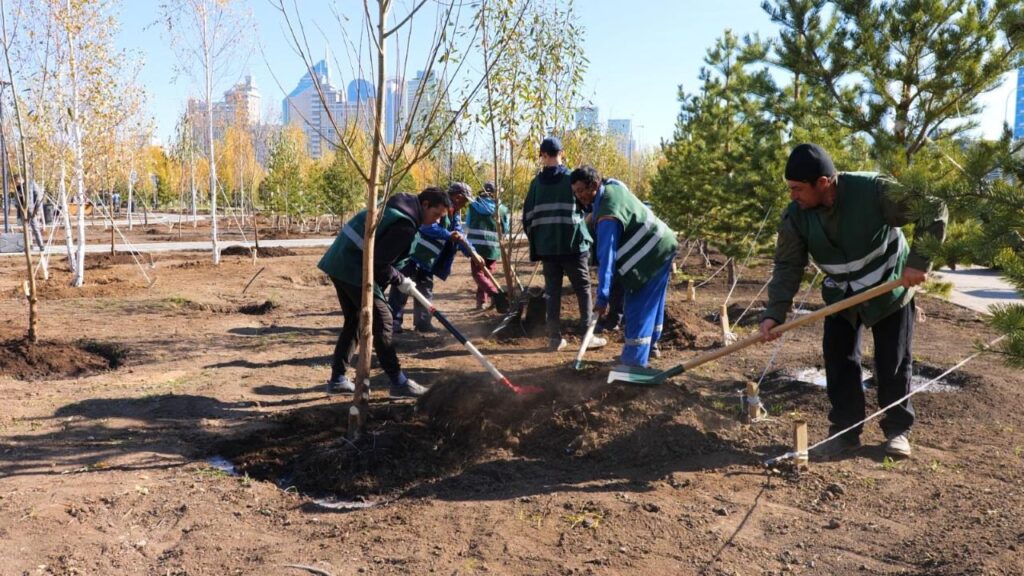
The government's press service reported that about 970 million saplings have been planted across Kazakhstan since 2021, and the country plans to plant over a billion more by the end of 2027. Minister of Ecology and Natural Resources Yerlan Nysanbayev said this at the October 8 government meeting on measures to expand the area under forests in Kazakhstan. Over the past five years, the area under forests in Kazakhstan has increased by 267,000 hectares. At the meeting, Prime Minister Olzhas Bektenov said: "The head of state has set the task of planting two billion trees, which will increase the forest area in the country to 14.5 million hectares. The expansion of forests and parks and the preservation of biodiversity for future generations are some of the priorities for improving the environmental situation. This is a very complex and long-term work. We need to make every effort to increase the area under forests and preserve the existing forests." The meeting focused on measures to protect forests from fires and illegal logging. Large wildfires in the past years have shown the forestry services' unpreparedness to counteract them. In this regard, the government is working to equip them with firefighting machinery and equipment. This year, 52 billion tenge ($106 million) has been allocated to purchase 1,384 pieces of firefighting equipment. Today, the early detection system of forest fires covers more than 900,000 hectares of forests. Its effectiveness has been proved by the example of the Burabay (Borovoye) National Park, where the average area of forest fires has been reduced 50-fold. According to Nysanbayev, another important issue is planting forests on the dried bottom of the Aral Sea. Over the past 30 years, trees and shrubs have been planted on more than 600,000 hectares of the former Aral Sea bed, including 413,000 hectares over the past four years.

Leading UAE Hotel Chain Explores Options in Uzbekistan

A world-famous chain of hotels in the UAE is exploring entering the Uzbekistan market. The announcement  follows talks between Uzbek diplomats and Phillip Crouse, vice president of the United Arab Emirates' Jumeirah Group, and an introduction of the company's team to the recent reforms implemented in Uzbekistan, as well as programs and regulations to increase the country's tourist attractiveness, existing tourist routes, flights between the two countries, and hotels. Representatives were also presented with options to privatize or reconstruct large hotel complexes in the country. The entry of the Jumeirah brand into the Uzbekistan market will further increase the country's number of luxury hotels and enhance its ever-expanding tourist market. Over the past seven years, the number of foreign tourists visiting Uzbekistan has tripled, the volume of tourism services has increased fivefold, and the number of hotels and accommodation facilities has increased tenfold. Last year, more than 6.6 million tourists visited the country, providing a revenue of some 2.1 billion dollars, and according to recent reports, Uzbekistan aims to increase the number of foreign tourists to 15 million by 2030. Jumeirah, part of Dubai Holding, is a global luxury hotel company with 26 properties, including resorts, city hotels, and serviced residences across the Middle East, Europe, and Asia.

Kazakhstan Bans Apple Imports to Support Domestic Producers

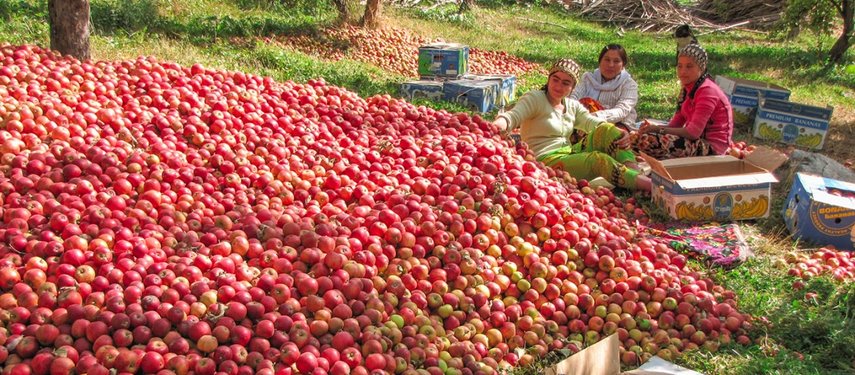
The government of Kazakhstan has temporarily banned the import of apples into the country by motor transport until the end of the year. The decision to introduce the ban was made and announced late in August, but the ban took effect on October 8. According to the Ministry of Agriculture, the ban will last during harvest to support domestic apple production. The move will allow domestic gardeners to sell apples at reasonable prices. During the off-season, apple imports will not be restricted. The government of Kazakhstan has taken support measures in the form of subsidies and preferential loans to develop domestic apple production. As a result, over the past five years, the domestic supply of apples has increased from 62.9% in 2019 to 80% in 2023. At the same time, local farmers are experiencing dumping from foreign producers. High competition with imported products reduces the profitability of domestic producers. With the parallel import of apples during harvest, Kazakhstanis need help selling their products. From January to July 2024, Kazakhstan imported about 107,000 tons of apples, 58% more than in the same period in 2023, from Poland, Iran, Uzbekistan, and China. During that period, apple imports from China increased 18-fold and from Iran — sevenfold. The ban does not apply to imports from fellow members of the Eurasian Economic Union—Armenia, Belarus, Kyrgyzstan, and Russia—or to the international transit of apples through Kazakhstan's territory. Kazakhstan is the birthplace of apples — particularly the famous aport apples, which grow in the Almaty region. Translated from Kazakh, Almaty means “place of abundance of apples.”

Kazakhstan to Crack Down on Motor Fuel Smuggling to Kyrgyzstan

On October 8, Kazakhstan’s Financial Monitoring Agency held a meeting on strengthening control over the smuggling of motor fuel from the country’s border regions. As gasoline prices in Kazakhstan are significantly lower than in neighboring Kyrgyzstan, gasoline is transported from the southern regions of Kazakhstan to northern Kyrgyzstan in passenger car gas tanks. In practical terms, drivers fill up their cars at Kazakh gas stations close to the border, then enter Kyrgyzstan and redistribute the gasoline. According to the Financial Monitoring Agency, up to 10,000 tons of fuel are exported this way monthly through the Kazakh-Kyrgyz border. Fuel is also illegally exported by railway tanks, with documents indicating other contents inside the tanks. At the meeting, the Kazakh government and law-enforcement agencies developed an algorithm of action to prevent the illegal export of motor fuel. Since the beginning of this year, Kazakh law enforcers have filed 21 criminal cases concerning the illegal export of almost 3,500 tons of fuel. Kazakh gasoline is sold in plastic bottles on northern Kyrgyzstan's roadsides and around Bishkek. The most popular gasoline, AI-92, is sold by roadside traders for 58 KGS per liter ($1 = 85 KGS), while authorized gas stations sell it for 67 KGS per liter. In 2023, Kyrgyzstan’s Tax Service confiscated 9,599 liters of illegal fuel, up from 3,422 liters in 2022.

ADB Allocates $15 Million to Tajikistan for Power Grid Reconnection in Central Asia

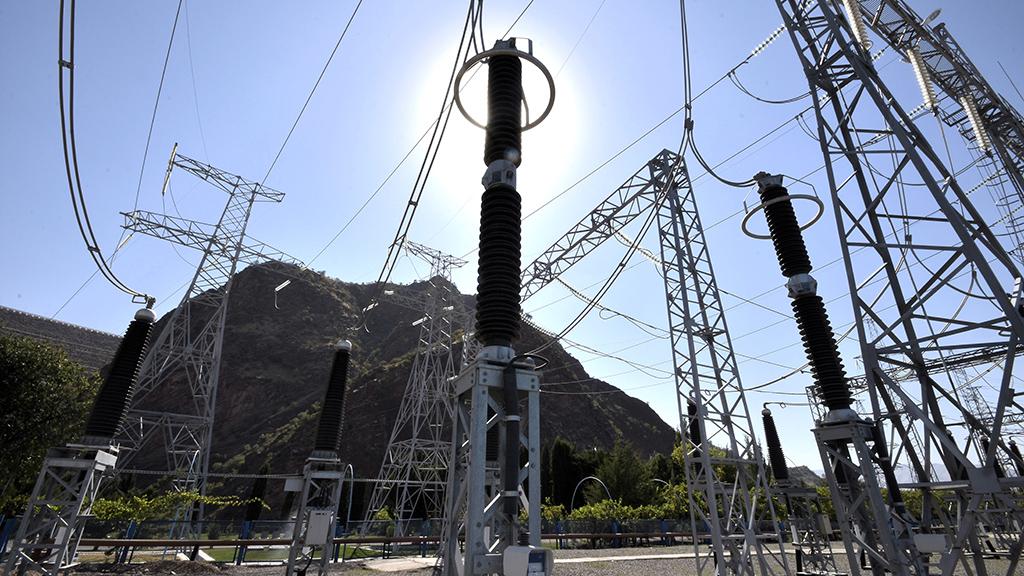
The Asian Development Bank (ADB) has approved a grant of $15 million for a project to reconnect Tajikistan’s power lines to the Central Asian unified electricity grid. The reconnection, it is reported, will be carried out through mutual relations with Uzbekistan. “Through the Central Asia Regional Economic Cooperation (CAREC) program, ADB actively promotes regional power trade among countries in Central Asia and beyond,” said ADB Director General for Central and West Asia Yevgeniy Zhukov. “Our support improves the sustainability of the regional power system and helps reduce greenhouse gas emissions in the region.” The additional funding will build a new 22-kilometer, 500-kilovolt power line in northern Tajikistan, connecting the Sughd substation to the New Syrdarya substation in Uzbekistan. This will increase the ability to send and receive electricity between Kazakhstan, Kyrgyzstan, Tajikistan, and Uzbekistan and improve the infrastructure to prevent blackouts. The project will also help ensure that Tajikistan’s energy system is ready to provide regulatory opportunities for the continued integration of renewable energy in the region. In the long term, it will become a key component of the electricity evacuation scheme for the Rogun hydropower plant in Tajikistan. Previously, ADB approved $17.5 million in grant assistance to improve women's agricultural skills and ensure food security in Tajikistan.