• KGS/USD = 0.01144 0%
  • KZT/USD = 0.00211 0%
  • TJS/USD = 0.10460 0%
  • UZS/USD = 0.00008 0%
  • TMT/USD = 0.28571 0.28%
  • KGS/USD = 0.01144 0%
  • KZT/USD = 0.00211 0%
  • TJS/USD = 0.10460 0%
  • UZS/USD = 0.00008 0%
  • TMT/USD = 0.28571 0.28%
  • KGS/USD = 0.01144 0%
  • KZT/USD = 0.00211 0%
  • TJS/USD = 0.10460 0%
  • UZS/USD = 0.00008 0%
  • TMT/USD = 0.28571 0.28%
  • KGS/USD = 0.01144 0%
  • KZT/USD = 0.00211 0%
  • TJS/USD = 0.10460 0%
  • UZS/USD = 0.00008 0%
  • TMT/USD = 0.28571 0.28%
  • KGS/USD = 0.01144 0%
  • KZT/USD = 0.00211 0%
  • TJS/USD = 0.10460 0%
  • UZS/USD = 0.00008 0%
  • TMT/USD = 0.28571 0.28%
  • KGS/USD = 0.01144 0%
  • KZT/USD = 0.00211 0%
  • TJS/USD = 0.10460 0%
  • UZS/USD = 0.00008 0%
  • TMT/USD = 0.28571 0.28%
  • KGS/USD = 0.01144 0%
  • KZT/USD = 0.00211 0%
  • TJS/USD = 0.10460 0%
  • UZS/USD = 0.00008 0%
  • TMT/USD = 0.28571 0.28%
  • KGS/USD = 0.01144 0%
  • KZT/USD = 0.00211 0%
  • TJS/USD = 0.10460 0%
  • UZS/USD = 0.00008 0%
  • TMT/USD = 0.28571 0.28%

Viewing results 163 - 168 of 266

Is the China–Kyrgyzstan–Uzbekistan Railway Project Losing Steam Again?

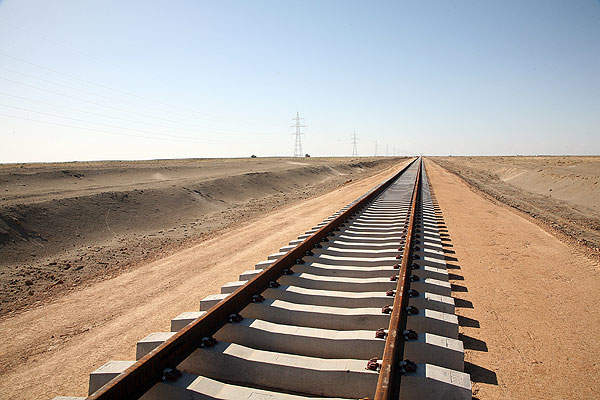
By Robert M. Cutler The China–Kyrgyzstan–Uzbekistan (CKU) railway was first proposed in 1997. There seemed finally to be a prospect for a start to the project after agreements at the Xi'an summit amongst China and the five Central Asian countries in May 2023. Construction on the 523-kilometre route was scheduled to begin several months after, but this has still not happened. Disagreements over the route and—still worse—over the funding risk relegating the project back to the drawing-boards where it has languished for over a quarter-century. After the initial agreement in 1997, it was these essentially unchanging disagreements over financing and the route within Kyrgyzstan that stalled negotiations, and over a final agreement of conditions for its construction in the early 2000s. These disagreements concern the geo-economic strategies of the respective parties, and they have not changed in over two decades.  China favors a shorter route, while Kyrgyzstan pushes for a longer one to benefit its domestic infrastructure. Specifically, Kyrgyzstan wants to use the railway's construction to establish better connections between the northern and southern parts of the country, which are separated by a mountain range.   Further difficulties in CKU implementation For Uzbekistan, a turning-point was its decision in 2017 to send railway experts to discuss the project with Kyrgyzstan. Then in 2019, Uzbekistan invited Turkey to co-finance the Kyrgyz section. The current cost of the whole project is estimated at $6 billion. A preliminary agreement has been reached on the division of this total, according to which each of the three parties will contribute 30 per cent (but at different stages of the project), with the source of the final 10 per cent including the cost of the feasibility study still to be determined. Despite this progress, public concerns in Kyrgyzstan over several critical practical issues remain unaddressed and continue to complicate a final agreement. These include the anticipated influx of Chinese workers, the professional development of local railway engineers, the allocation of investments for industrial projects along the railway corridor and the facilitation of increased exports of Kyrgyzstan's products to the Chinese market. These elements are essential for the long-term viability and success of the CKU railway initiative. Interestingly, these are very similar to the concerns of Kazakhstan that delayed the construction of the first (i.e., the Atasu–Alashankou) segment of the Kazakhstan–China oil export pipeline in the early 2000s. Moreover, China originally insisted on compensation from Bishkek for its contribution in the form of ownership of Kyrgyz mines, including the world’s second-largest iron-ore reserve at Zhetim Too, which Kyrgyz President Sadyr Japarov claims is worth at least $50 billion. It does not help matters that this site adjoins a large glacier, the water from which is crucial for irrigation of major Kyrgyz agricultural holdings.   Other Uzbek initiatives for infrastructure connectivity On 1 November 2023, at a forum of the Shanghai Co-operation Organization (SCO) meeting in Tashkent, transportation officials from Uzbekistan, Kyrgyzstan and Russia signed a memorandum to establish a new Kyrgyzstan–Russia trade corridor through Turkmenistan (who, incidentally,...

Central Asia Has a Problem, and It Is Russia

The wave of xenophobia targeting Central Asians in Russia that has followed the terrorist March 22 attack on Moscow’s Crocus City Hall presents many problems for Central Asia, including concerns about what sort of friend Russia really is. As reports of attacks on Central Asians in Russia multiplied in the last days of March, April saw a flurry of meetings of Central Asian leaders. Kazakh President Kassym-Jomart Tokayev met Uzbekistan President Shavkat Mirziyoyev in Khiva, Uzbekistan on April 4-5. At the same time, the chairman of Turkmenistan’s Halk Maslahaty (People’s Council), former President Gurbanguly Berdymukhammedov was in Tajikistan meeting with Tajik President Emomali Rahmon. Kyrgyz President Sadyr Japarov visited Kazakhstan on April 18-19, meanwhile, the same days that Uzbek President Mirziyoyev was in Tajikistan for talks with his counterpart Rahmon. Reports of their meetings focused on praising fraternal ties and signing bilateral agreements. There was no mention of any discussions about the rapidly unfolding dilemma with Russia. The people Russia claims staged the attack that left more than 140 people dead are Tajiks, some of whom acquired Russian citizenship, others who were migrant laborers. There are at least four million migrant laborers from Uzbekistan, Kyrgyzstan, and Tajikistan working in Russia and some estimates put the number at double that figure, or more. In the wake of the attack, all Central Asians fell under suspicion in Russia. Passengers from Central Asia arriving in Russia were held up at airports for extra document checks, sometimes for more than 24 hours. Russian police raided dormitories and other facilities where Central Asian migrant laborers were known to stay. The first four Tajik suspects apprehended were shown on Russian television. They had clearly been tortured. An FSB member had cut part of the ear off one of the suspects and fellow FSB troops filmed him forcing the severed piece of ear into the mouth of the suspect. Russia was a colonizer of Central Asia and the leaders of the five Central Asian countries are well aware of that history. Since the collapse of the Soviet Union in late 1991, whenever Central Asian and Russian officials meet, they speak of historically friendly ties and valued partnerships. It has often been difficult to make this image credible to Central Asia’s people, particularly after Russia launched its full-scale invasion of Ukraine in late February 2022. Some Russian nationalists, including politicians, have spoken about reclaiming “historic Russian land,” usually mentioning part or all of Kazakhstan. Chairman of Russia’s Investigative Committee Aleksandr Bastrykin said in May 2023 that military service in Ukraine should be mandatory for migrant laborers seeking Russian citizenship, and State Duma Deputy Mikhail Matveev backed this call, adding, “Where are our Tajik battalions?“ There are many other such examples since February 2022. Both Russian and Central Asian government officials have downplayed these remarks, saying they are the views of an individual and do not reflect the position of the Russian government. However, In January 2024, Deputy Speaker of Uzbekistan’s lower house of parliament Alisher Qodirov questioned why,...

What Will Uzbekistan’s Role in Central Asia’s Connectivity Be?

By Robert M. Cutler A new World Bank report on Central Asian connectivity published in April 2024 highlights the importance of the Middle Corridor, a trade route spanning Central Asia, the Caspian Sea, and the Caucasus, connecting China and East Asia with Georgia, Turkey, and Europe. This corridor is seen as a critical alternative to Russian-controlled routes, especially in light of recent geopolitical tensions. The World Bank identifies ten steps to address bottlenecks in the Middle Corridor, aiming to increase trade volumes by tripling them by 2030. This would significantly reduce travel times and increase trade volumes to 11 million tons, with proper investment and efficiency measures in place.   Uzbekistan and the Middle Corridor The report emphasizes the need for a "holistic" approach to improving transport connectivity in Central Asia. By this, it means a comprehensive and integrated strategy that combines improvements in infrastructure and logistics improvements with a reduction in border delays and tariffs, along with the harmonization of standards across countries. This includes improving both physical and digital infrastructure, enhancing governance and efficiency and addressing productivity issues amongst the state-owned enterprises that dominate the transport sectors in the region. The World Bank notes that Uzbekistan would profit from better rail connections with Kazakhstan; yet it does not identify any potentials for such projects. That is likely because a report by the Bank identified the Trans-Caspian International Trade Route (TITR) through southern Kazakhstan as the preferred program for international support.  Uzbekistan's participation in the Middle Corridor is still in a developmental stage. Tashkent has an active interest and a strategic geographic location, but concrete actions and project details are still emerging. There have been no public announcements about specific infrastructure projects or investments that Uzbekistan is undertaking within the Middle Corridor framework. It can be foreseen, however, that railway modernization should be high on the list of programs. There is, however, a new railway project - the Darbaza–Maktaaral line - currently underway in Kazakhstan that could be extended to improve connectivity with Uzbekistan. It is projected for completion in 2025. A second phase including an extension to Kazakhstan's Syrdarya station could then facilitate a further branch line from Syrdarya to Zhetysai, on the border with Uzbekistan. This project would reduce congestion at the existing Saryagash border crossing between the two countries and thus increase the capacity for transporting goods between the two countries by as much as 10 million tons per year.   The Middle Corridor and improvements to digital connectivity At present, the region has only limited connectivity.  The Central Asian countries have heavily invested in infrastructure since the turn of the century, but the region still lags behind middle-income countries in both investment and maintenance. Most areas continue to suffer from insufficient infrastructure and expensive services. These in turn hinder the potential for internal and external trade. The World Bank's report also provides a comprehensive analysis of the challenges and opportunities for enhancing connectivity in Central Asia. For this purpose, it focuses on both physical and...

Turkmenistan’s Gas and Türkiye’s Plans to Become a Gas Hub

A series of ongoing political consultations between Turkmenistan and Türkiye continued on 25–26 April, as a Turkmen delegation led by Deputy Minister of Foreign Affairs Ahmet Gurbanov visited Ankara, hosted by Turkish counterpart Burak Akçapar. Beyond the regular bilateral agenda of political-diplomatic, trade-economic and cultural-humanitarian cooperation, the two sides emphasized the implementation of bilateral agreements reached at the third Antalya Diplomatic Forum in early March, particularly the prospects for cooperation in the energy sector. On 1 March 2024, Turkmenistan and Türkiye signed two documents — a memorandum of understanding (MoU) and a letter of intent — aimed at strengthening cooperation in the natural gas sector. In theory, this seems to be a positive development for the two countries as well as for Europe. The two possible routes for Turkmen gas to reach Türkiye and Europe are (1) via the Caspian Sea and Azerbaijan, and (2) through Iran's existing pipeline infrastructure via a gas swap agreement. Neither one is likely to happen soon. The project to export Turkmen gas to Europe through a shore-to-shore high volume pipeline, at 31 billion cubic meters per year (bcm/y) is no longer alive after various parties have failed to realize it over the past quarter-century. It was bruited when it was announced that Turkmen President Serdar Berdimuhamedov planned to visit Brussels in late 2023 (which ended up not happening) and definitively killed when the initiative by American company Trans-Caspian Resources (headed by a retired U.S. ambassador to Turkmenistan) failed to persuade Ashgabat to construct short low-volume (8–11 bcm/y) "Platform Option" pipeline in the Caspian Sea.   Gas "swaps" and Türkiye’s ambitions The idea of a "Turkish gas hub" arose from Russia's search to depoliticize trade between Gazprom and European firms by facilitating a platform where Gazprom's origination of the gas would be obscured and anonymized. Buyers and sellers could meet through Turkish intermediation. Türkiye, however, seeks to draw advantage by imposing the condition of long-term contracts with Gazprom for gas sales at below-market prices. This would guarantee a role for the Turkish intermediaries and, moreover, ensure for them a profit margin through mandatory service fees. "Swap" operations mean an exchange of gas amongst Turkmenistan, Iran and Azerbaijan; however, this would involve only a few billion cubic meters. Even if all participants agree, several questions still remain: Will swap transactions be profitable, given the price of gas in Europe? Even if Iran agreed to a Turkmen gas swap, would Tehran execute the agreement in good faith? In fact, Tehran would prefer to offer its own gas to Turkish and European markets, rather than transit competitive Turkmen gas through his territory. In addition, the gas that Azerbaijan produces for export already has contracted buyers under long-term agreements. Azerbaijan would be interested in the Turkish gas hub only if it should in future produce surpluses of gas that cannot be sold under long-term contracts. Then, such surpluses could be sold at a gas hub under short-term contracts, assuming that transit and profitability are guaranteed.   Challenges to Türkiye’s...

Without Security, There Can Be No Development in Afghanistan

Indian author Arundhati Roy once said, “Either way, change will come. It could be bloody, or it could be beautiful. It depends on us.” Almost three years after Taliban’s resurgence to power in Afghanistan, there are practically no developments to highlight in its relations with the outside world. The situation remains at a dead end as the international community and the authorities in Kabul are stuck on intransigent issues, and as Afghanistan continues to face a humanitarian crisis. In the context of current geopolitical realities after the recent fall of its “democratic” regime, Afghanistan finds itself in a gap between the experiences of the past and a yet undetermined future. It has a unique opportunity to transcend its reputation as the “graveyard of empires” and determine its own fate while simultaneously integrating into the international community. How the de facto authorities in Afghanistan handle this opportunity will not only shape the future of the Afghan people and the region, but also influence the development of the entire global security paradigm. Currently, the Taliban have every opportunity to lay the foundation for a new model of regional and international security, which would allow them to create conditions for the return of Afghanistan to the system of normal international relations. But they need to act quickly. Rising tensions in the Middle East engage almost every global and regional power, and further escalation there will negatively affect the situation around Afghanistan. In this unpredictable geopolitical environment, the Taliban can either take the lead on new security arrangements or once again experience an undesirable worsening of the security situation that goes beyond their control.   A path forward is possible with the Taliban acting responsibly at the helm It seems that since the Anglo-Afghan wars of the 19th century, the world has become accustomed to seeing Afghanistan as a place where global geopolitical steam can be let off. But the Afghan people deserve progress, and various outside actors have offered different proposals. What the Taliban need is a chance at a breakthrough where they are the key player and can take full responsibility. The international community needs to allow such an opportunity to serve as a “maturity test” with which it can gauge the Taliban. At this important juncture, the international community must support Afghanistan in determining its own future. If external actors continue to promote political blueprints, Afghanistan will once again become a site for proxy wars, an arena of rivalry and a fertile ground for old narratives about international terrorism and other threats. Slamming the Taliban for their democratic failings, on which they clearly do not share the outsiders’ perspectives, will not yield productive results. For its part, if Kabul is really seeking to be a key player in Asia and a regular participant in international affairs, and if it seeks to realize its significant geographic and economic potential, then it must start implementing practical initiatives involving regional countries and international organizations in a dialogue on security. Maintaining internal security and stability...

Uzbekistan Seeks to Expand Trade Horizons with Europe

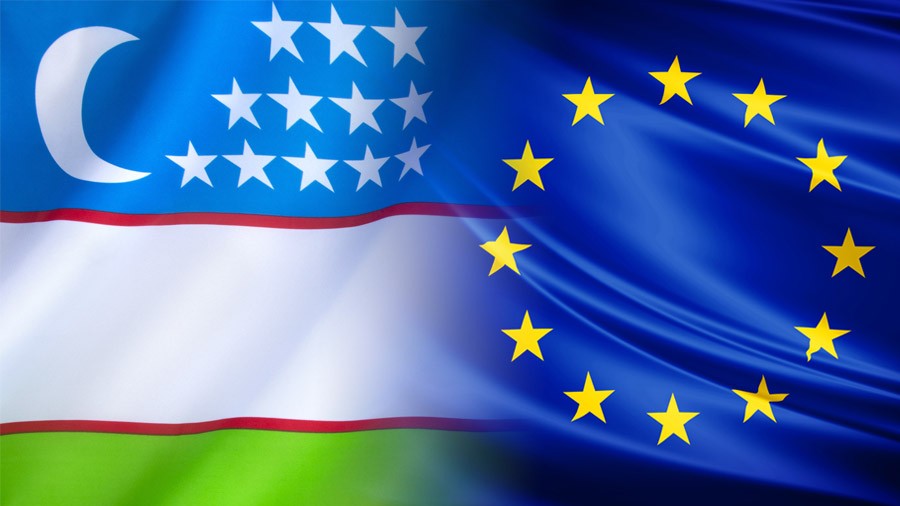
- Opinion by Robert Cutler   Uzbekistan's economic landscape has been evolving, with announcements of major reforms and international cooperation aimed at economic modernization and increasing its profile in global markets. Its partnership with the European Union (EU) has focused on critical raw materials. At the same time, Tashkent plans to reduce gas exports in favour of expanding petrochemical production and inviting foreign investment into its mining sector. In October 2023, the European Parliament (EP) had endorsed this policy direction by adopting a resolution on Uzbekistan based on a series of broad programmatic documents regarding Central Asia, including a previous Memorandum of Understanding (MoU) with Uzbekistan on energy cooperation. The EP also favorably mentioned the Enhanced Partnership and Cooperation Agreement (EPCA) concluded in July 2022 to "modernize" the EU's Partnership and Cooperation Agreement signed with Uzbekistan in 1999. A new MoU signed earlier this month by the European Commission’s Executive Vice-President Valdis Dombrovskis and Uzbekistan's Minister of Investment, Industry and Trade Laziz Kudratov foresees an ambitious intensification of the partnership. The agreement is touted as a step towards diversifying supply chains to Europe for critical raw materials (CRMs) required for the energy transition.   The EU's strategic economic partnership with Uzbekistan The new MoU follows on the EU's 25 October 2023 agreement with Uzbekistan during the Global Gateway Forum. That agreement had confirmed that Uzbekistan, with its reserves of metals such as silver, titanium, and lithium, would join the so-called Critical Raw Materials Forum. However, a critical evaluation of the MoU shows that a lot of hard work will be necessary to realize its plans and promises. In fact, the MoU represents a list of possibilities for cooperation without a guarantee of follow-through. The new partnership focuses on a number of areas of potential collaboration. These may be grouped under three general categories: (1) integrating CRM value and supply chains and their resilience; (2) mobilization of funding; and (3) cooperation on production, research, innovation and capacity building. The MoU itself admits that further specific cooperation is required to establish an operational roadmap that would specify particular joint actions for implementation. This partnership is in line with the EU's Global Gateway Initiative, which seeks to mobilize up to €300 billion in investments by 2027, although the initiative has been criticized for largely being a re-packaging of previously established programs without significant new funding. As far as Uzbekistan is concerned, the big unspoken problem is the need to enhance the country's economic competitiveness in global markets.   Uzbekistan's mineral resources exploration Only about 20 percent of Uzbekistan’s territory has been explored. Potential mineral resources are evaluated at US$5.7 billion, with the country’s explored reserves representing about US$1 billion of this amount. This unexplored potential represents a significant opportunity for further enhancing Uzbekistan's potential global competitiveness in the mineral resources sector, but only if transportation logistics can be economically put into place. According to the U.S. Geological Service, Uzbekistan also has reserves of other minerals - such as calcium, kaolin, rhenium and vermiculite...