
• KGS/USD = 0.01143 -0%
  • KZT/USD = 0.00193 -0%
  • TJS/USD = 0.10881 0%
  • UZS/USD = 0.00008 0%
  • TMT/USD = 0.28575 0%
  • KGS/USD = 0.01143 -0%
  • KZT/USD = 0.00193 -0%
  • TJS/USD = 0.10881 0%
  • UZS/USD = 0.00008 0%
  • TMT/USD = 0.28575 0%
  • KGS/USD = 0.01143 -0%
  • KZT/USD = 0.00193 -0%
  • TJS/USD = 0.10881 0%
  • UZS/USD = 0.00008 0%
  • TMT/USD = 0.28575 0%
  • KGS/USD = 0.01143 -0%
  • KZT/USD = 0.00193 -0%
  • TJS/USD = 0.10881 0%
  • UZS/USD = 0.00008 0%
  • TMT/USD = 0.28575 0%
  • KGS/USD = 0.01143 -0%
  • KZT/USD = 0.00193 -0%
  • TJS/USD = 0.10881 0%
  • UZS/USD = 0.00008 0%
  • TMT/USD = 0.28575 0%
  • KGS/USD = 0.01143 -0%
  • KZT/USD = 0.00193 -0%
  • TJS/USD = 0.10881 0%
  • UZS/USD = 0.00008 0%
  • TMT/USD = 0.28575 0%
  • KGS/USD = 0.01143 -0%
  • KZT/USD = 0.00193 -0%
  • TJS/USD = 0.10881 0%
  • UZS/USD = 0.00008 0%
  • TMT/USD = 0.28575 0%
  • KGS/USD = 0.01143 -0%
  • KZT/USD = 0.00193 -0%
  • TJS/USD = 0.10881 0%
  • UZS/USD = 0.00008 0%
  • TMT/USD = 0.28575 0%
21 December 2025

Viewing results 793 - 798 of 3723

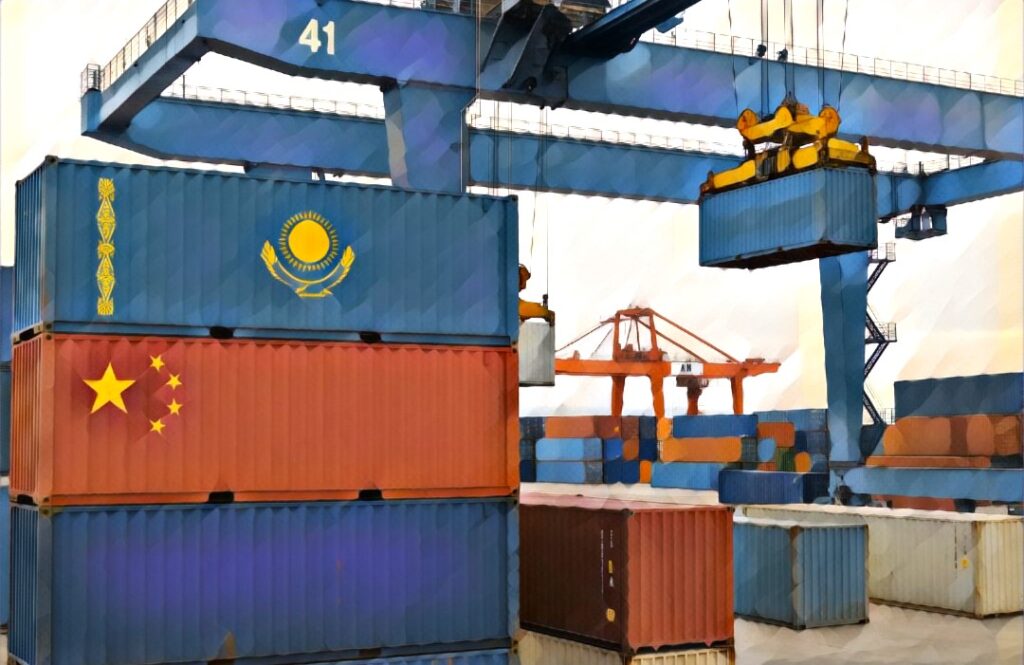
Kazakhstan Trade Deficit with China Quadruples in 2025

Kazakhstan’s trade deficit with China reached $1.8 billion in the first half of 2025, a sharp increase compared to $400 million for the whole of 2024. According to the Association of Financiers of Kazakhstan (AFK), the growth in trade turnover was driven almost entirely by rising imports of Chinese goods. A review published by AFK noted that Kazakhstan’s trade balance with China has remained in deficit since 2023, with the gap continuing to widen. Despite this, China remains Kazakhstan’s largest trading partner, accounting for more than 20% of the country’s total foreign trade. From January to June 2025, mutual trade between the two countries increased by 5.9% to $14.9 billion. However, Kazakhstan’s exports fell nearly 10%, while imports surged by 22.8%. “The decline in export revenues is mainly due to falling oil and metal prices and weaker demand from China, which increases the vulnerability of Kazakhstan’s export-oriented raw materials model,” AFK experts stated. Imports are expanding in line with rising domestic consumption and the rollout of large-scale infrastructure projects. China’s share of Kazakhstan’s trade turnover rose to 22.6% in the first half of 2025, up from 20.7% a year earlier. The growth was fueled by imports, which increased their share to 28.6% from 23.9%, while exports fell to 17.8% from 18.4%. Kazakhstan did record modest export gains in certain categories, including animal and plant products (+$164 million) and vehicles (+$160 million). These, however, were outweighed by sharp declines in mineral product exports (-$599 million) and metals (-$408 million). Imports from China grew most significantly in vehicles (+$1.2 billion), metals (+$279 million), and chemical products (+$231 million). The increase in vehicle imports was aided by a 14% drop in average car prices from China. Imports of food, furniture, construction materials, and consumer goods also rose. Trade settlements are also shifting. While the dollar remains the dominant contract currency, the yuan is gaining ground in import transactions, with the euro ranking third due to Kazakhstan’s ongoing trade ties with Europe. As a result, Kazakhstan’s trade deficit with China widened to $1.8 billion in January-June 2025, compared to $0.4 billion in the whole of 2024. “Imports are likely to continue to grow amid high consumer and investment demand, while exports will remain dependent on commodity prices and industrial dynamics in China. China is becoming an increasingly pronounced ‘economic magnet’ for Kazakhstan,” the AFK report concluded. As The Times of Central Asia previously reported, Kazakhstan is experiencing a slowdown in manufacturing activity in 2025 following record growth at the end of last year.

Blast at Scrap Metal Site in Kazakhstan Kills Three Uzbek Citizens

The bodies of three Uzbek citizens who died in an explosion at a scrap metal plant in Kazakhstan's Almaty region are being repatriated, according to Uzbek officials.    The deaths occurred on September 11 at the LGN Metal business in Baiserke village and local police have opened a criminal case for “violation of labor protection laws leading to death,” Uzbekistan’s Migration Agency said on Telegram on Saturday. It expressed condolences and said migration officers were helping the relatives of the dead. “Constant cooperation has been established with the Kazakh side during the investigation process,” the agency said.  Officials have not yet announced the cause of the blast. Plant owner Amirbek Sherbaev said a Chinese company rents the site and that it was possible that military ordnance was mixed in with scrap metal that had been received there, according to KTK, a television channel in Kazakhstan. KTK said defense ministry officials had joined the inquiry.

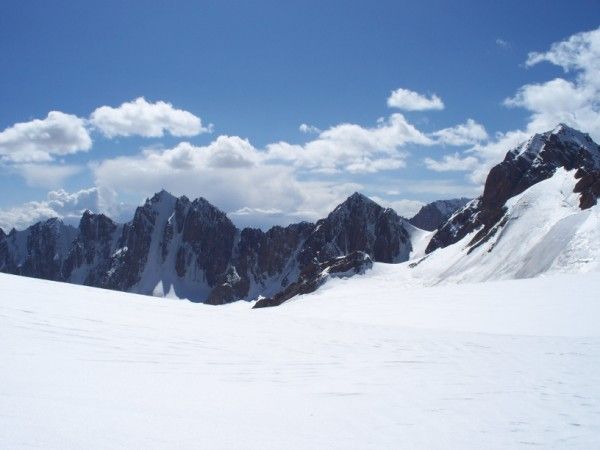
Kyrgyz Parliament Considers Tighter Climbing Rules After Mountain Deaths

Kyrgyzstan’s parliament is looking at ways to make mountaineering safer after the deaths and presumed deaths of several climbers this year, including a Russian woman who was stranded for days on the highest mountain in the country. The debate comes as authorities promote Kyrgyzstan’s spectacular mountain landscapes in an effort to attract more tourists.  A draft law that was introduced on September 4 in the country's parliament, the Jogorku Kenesh, would require mountaineers who plan to climb above 6,000 meters to get a permit and have insurance that covers medical assistance and evacuation. The bill, put forward by lawmaker Emil Toktoshev, also proposes the development of more infrastructure for mountaineering routes and bases and better communication about emergencies.  “In recent years, active development of mountaineering and mountain tourism has been observed in Kyrgyzstan, which requires legal regulation of this sphere,” says a note posted with the draft law on the parliament’s website. “Despite the growing number of ascents to mountain peaks, legislation in the field of mountaineering remains insufficient, creating legal gaps in matters of safety, environmental responsibility, and the issuance of permits,” the note says.  While high-altitude mountain climbing can be inherently risky, the drama surrounding the plight of Russian Natalya Nagovitsyna on Pobeda Peak, which is 7,439 meters above sea level, attracted international attention and prompted a push for more regulation to help to prevent such disasters. Nagovitsyna, whose husband, Sergey Nagovitsyn, died while climbing in Kyrgyzstan in 2021, broke a leg on Pobeda on August 12. Following risky attempts to rescue her, searchers conducted a high-altitude drone inspection of the mountain ridge where she had been left in early September and said there was no sign of life. There is widespread consensus that Nagovitsyna did not survive on the upper reaches of Pobeda, with minimal supplies and shelter in the brutal climate. Her body has not been recovered.  An Italian friend who had tried to help Nagovitsyna died, and another Russian climber died after climbing Pobeda and falling ill in a separate incident in August. Additionally, two Iranian climbers on Pobeda were reported missing and are presumed dead.   Anna Piunova, editor of Mountain.RU, a Russian website that covers climbing news, said that Nagovitsyna possibly should have climbed Pobeda with an experienced guide and that climbers in general should be aware of their limitations.  “And maybe, when you go into the mountains without a guide, without proper insurance covering PSR (search and rescue operations), in the company of strangers, with only a minimal kit, you need to clearly understand that you’ll have to rely only on yourself,” Piunova said on Instagram. “And choose routes according to your abilities, not your ambitions.” Rescue services and mountaineering infrastructure in Kyrgyzstan are less developed than in the Alps and parts of the Himalayas in Nepal.  The draft bill submitted by lawmaker Toktoshev says a permit system for mountaineers would allow state agencies to monitor climbing routes and react more quickly to emergencies such as avalanche risks and oxygen deficiency, using funds from...

Uzbekistan’s Garden Blossoms at the Osaka Expo

At Osaka Expo 2025, Uzbekistan is stepping onto the global stage with a pavilion that embodies the country’s theme: culture as the foundation of future societies. Created by the Uzbekistan Art and Culture Development Foundation (ACDF), the space celebrates heritage as both a legacy and a launchpad to connect communities, bridge generations, and spark global conversations. ACDF is no stranger to ambitious cultural projects. In Tashkent, it has staged the World Conference on Creative Economy, created the first Aral Culture Summit in Nukus, and is behind the renovation of the Centre for Contemporary Art. The Foundation is also working with star architect Tadao Ando on the design of a new National Museum and restoring the storied Palace of the Grand Duke of Romanov. Its research project, Tashkent Modernism XX/XXI, has already caught international attention with publications from Rizzoli New York and Lars Müller Publishers. [video width="1280" height="720" mp4="https://timesca.com/wp-content/uploads/2025/09/IMG_6020-online-video-cutter.com_.mp4"][/video] Recently, ACDF has been igniting fresh cultural currents. In Bukhara, the UNESCO-listed jewel of the Silk Road, the debut of the first-ever Biennial, Recipes for Broken Hearts, has transformed the ancient city into a vibrant stage for contemporary creativity. As we approached the pavilion, the queue was already packed and closed off to latecomers still straggling in. Before entry, a guide explained in Japanese the concepts in motion. Designed by internationally acclaimed ATELIER BRUCKNER, the installation unfolds under the theme Garden of Knowledge: A Laboratory for a Future Society, inspired by Uzbekistan’s fertile soil and fragrant gardens where wisdom and originality take root. Built with materials sourced in Japan, the structure features 10,000 hand-glazed bricks crafted by a master artisan from Uzbekistan. Its design has already earned international acclaim, winning the prestigious Red Dot: Best of the Best, and taking home gold at the German Design Award. Inspired by Khiva and the Khorezm region’s rich architectural and intellectual legacy, it’s a two-storey 750 square meter space that blends the ancient with forward-thinking design, mirroring the life cycle of a garden. Khiva, a UNESCO World Heritage city, has long been a crossroads of learning where scholars, artisans, and merchants exchanged ideas within its madrasahs and courtyards. It reimagines this heritage as a contemporary space for gathering and exchange. [caption id="attachment_36099" align="aligncenter" width="2560"] Exhibit: transport of the future; image: TCA, Stephen M. Bland[/caption] Brick and clay symbolize earth and ancestry, while cypress wood cultivated near Osaka underscores environmental responsibility. The triangular plot draws from the tumar, a traditional Central Asian amulet of protection, while a floor-level garden evokes Uzbekistan’s landscapes. Visitors follow a symbolic journey from planting seeds of knowledge to harvesting ideas, exploring zones aligned with UNESCO’s goals, including quality education, clean energy, resilient infrastructure, and innovation. [caption id="attachment_36097" align="aligncenter" width="2560"] Exhibit blending the ancient and the modern; image: TCA, Stephen M. Bland[/caption] The experience begins in the soil, a ground-floor gallery that highlights Uzbekistan’s shift toward a green economy through renewable energy, eco-friendly transport, and energy-efficient housing, along with landmark projects such as the revitalization of the Aral Sea Basin. From there,...

Kazakh Film Brings History and Culture to the 2nd Golden Panda Awards

Chengdu, famed for its pandas and fiery cuisine, takes the spotlight from September 12–13 as it hosts the 2nd Golden Panda Awards, drawing filmmakers and cinephiles from around the world to celebrate storytelling in all its forms. The Golden Panda Awards use China’s favorite furry ambassador as a symbol of friendship and cross-cultural connection. Around 65 works have been shortlisted, with 27 awards to be presented across four categories: Film, TV Series, Documentary, and Animation. Notably, 54.5% of the finalists are international productions, selected from 5,343 entries submitted from 126 countries and regions. One of the standout contenders this year is Qash (Run), nominated for Best Actor in a Leading Role, Best Actor in a Supporting Role, Best Cinematography, and Best Original Score. Starring Yerkebulan Daiyrov and Ondassyn Bessikbassov, the Kazakh film is set against the backdrop of the mass famine of 1931–1933, which wiped out nearly a third of the population. Directed by Aisultan Seitov, the film follows Isatai, a gravedigger tasked by his village head with delivering a message to the nearest city in hopes of saving the starving villagers. Crossing the vast steppe, Isatai faces harrowing trials, including surreal hallucinations driven by hunger and despair. Also known as Asharshylyk, the tragedy was the result of forced collectivization and sedentarization imposed by the Soviet regime. In his drive for rapid industrialization, Stalin ordered the transformation of Kazakhstan’s traditional nomadic, clan-based society into collective farms, where individuals were compelled to meet strict state quotas for meat and grain. The abrupt policy shift, coupled with reckless implementation, led many herders to slaughter their livestock either for immediate food or to sell in hopes of meeting grain requirements. Ultimately, this devastated the pastoral economy and fueled mass famine. [caption id="attachment_36103" align="aligncenter" width="1024"] Director Aisultan Seitov (center) meets fans of Qash in Shanghai, June 14, 2023; image: VCG[/caption] Qash marks the feature-film debut of director Aisultan Seitov, who first gained recognition as a music video producer. Inspired by the growing presence of culturally distinctive films on international screens, Seitov was drawn to make a full-length film. The narrative took shape after a close friend shared a childhood story of his grandfather fleeing his village with his older brother. In interviews, Seitov has said he hopes to showcase Kazakh culture to the world while crafting a story that resonates universally. That aligns neatly with the festival’s own motto: celebrate diversity, spark dialogue, and remind us that stories, whether about pandas, people, or epic journeys, are what bring civilizations together. Beyond celebrating award winners, the Golden Panda Awards serve as a dynamic hub for international film professionals to exchange ideas and explore potential collaborations. Judges, creators of nominated works, and influential directors, producers, actors, and experts from home and abroad come together for in-depth discussions on topics ranging from digital-intelligence empowerment to the art of light and shadow. Collaborative dialogues, exhibitions, and new project launches further expand opportunities for creative partnerships. This September, Sichuan Province transforms into a cinematic playground with events called “Let’s...

Twelve Years On, Tajikistan’s Police Reform Struggles to Deliver Real Change

Launched in 2013, Tajikistan’s police reform aimed to modernize law enforcement, increase transparency, and build public trust. Twelve years later, while some progress is acknowledged, experts say the main objectives remain largely unfulfilled. Signs of Progress Sadriddin Saidov, chairman of the Sughd regional branch of the Bar Association, notes improved accessibility to law enforcement. “Now citizens can file complaints through hotlines or electronically, which means people can reach out at any time,” he said. In remote areas, mobile police units, minibuses outfitted as service offices, now provide legal consultations and assistance. Gulchehra Kholmatova, Head of the Legal Assistance Group of the Civil Society Coalition against Torture and Impunity in Tajikistan, said there is increasing dialogue between civil society and the state. NGOs are more frequently invited to discuss human rights issues and, in some cases, are granted access to detention centers. Recent legislative changes have guaranteed detainees access to legal counsel and introduced safeguards against abuse. With international support, Tajik police officers now undergo human rights training aimed at preventing torture. Human rights advocate Larisa Aleksandrova cites specific gains in addressing domestic violence. The number of inspectors focused on preventing family violence has risen from 14 to 22, improving the registration and response to complaints. “The number of appeals to police regarding domestic violence has risen, and case registration has improved,” she said. Where the Reform Falls Short Yet many argue these reforms are more cosmetic than structural. Lawyer Bakhtiyor Nasrulloev contends the process resembles “degradation” rather than progress. “Access to local police stations has become more complicated due to multi-level controls and guards. This creates the impression that the police are distancing themselves from society, not moving closer,” he said. Nasrulloev criticized the reform as superficial, focusing on new uniforms and rebranding without addressing systemic issues. Kholmatova notes that public oversight of detention facilities remains weak, and torture cases often go unpunished. Aleksandrova adds that the reform slogan, “My police protect me,” has yet to become reality. “Nothing changes fundamentally. Even those who want to work honestly are constrained by a rigid system of control and subordination,” she said. Experts point to lingering Soviet-era practices, where success is measured by the number of cases opened rather than investigative quality. For Saidov, a key obstacle is low public engagement. “Reforms will succeed only if citizens actively express their opinions and proposals,” he said. Aleksandrova also highlights insufficient gender sensitivity in police responses to discrimination and domestic violence. What Experts Propose To move forward, Nasrulloev has called for a major restructuring that would separate investigative bodies from the Ministry of Internal Affairs and remove them from prosecutorial control. He also suggested making district inspectors and patrol officers accountable to local governments to better address community needs. He recommended merging overlapping departments, including criminal investigations, drug control, and organized crime units, to reduce bureaucracy and increase efficiency. Kholmatova highlighted the need for independent monitoring, greater transparency, and training that follows international human rights standards. Aleksandrova proposed mandatory video recordings of interrogations and the...
