
• KGS/USD = 0.01144 0%
  • KZT/USD = 0.00212 0%
  • TJS/USD = 0.10456 0.19%
  • UZS/USD = 0.00008 0%
  • TMT/USD = 0.28490 0%
  • KGS/USD = 0.01144 0%
  • KZT/USD = 0.00212 0%
  • TJS/USD = 0.10456 0.19%
  • UZS/USD = 0.00008 0%
  • TMT/USD = 0.28490 0%
  • KGS/USD = 0.01144 0%
  • KZT/USD = 0.00212 0%
  • TJS/USD = 0.10456 0.19%
  • UZS/USD = 0.00008 0%
  • TMT/USD = 0.28490 0%
  • KGS/USD = 0.01144 0%
  • KZT/USD = 0.00212 0%
  • TJS/USD = 0.10456 0.19%
  • UZS/USD = 0.00008 0%
  • TMT/USD = 0.28490 0%
  • KGS/USD = 0.01144 0%
  • KZT/USD = 0.00212 0%
  • TJS/USD = 0.10456 0.19%
  • UZS/USD = 0.00008 0%
  • TMT/USD = 0.28490 0%
  • KGS/USD = 0.01144 0%
  • KZT/USD = 0.00212 0%
  • TJS/USD = 0.10456 0.19%
  • UZS/USD = 0.00008 0%
  • TMT/USD = 0.28490 0%
  • KGS/USD = 0.01144 0%
  • KZT/USD = 0.00212 0%
  • TJS/USD = 0.10456 0.19%
  • UZS/USD = 0.00008 0%
  • TMT/USD = 0.28490 0%
  • KGS/USD = 0.01144 0%
  • KZT/USD = 0.00212 0%
  • TJS/USD = 0.10456 0.19%
  • UZS/USD = 0.00008 0%
  • TMT/USD = 0.28490 0%

Viewing results 2347 - 2352 of 5755

Kyrgyzstan Prepares for Rapid Growth in E-Commerce

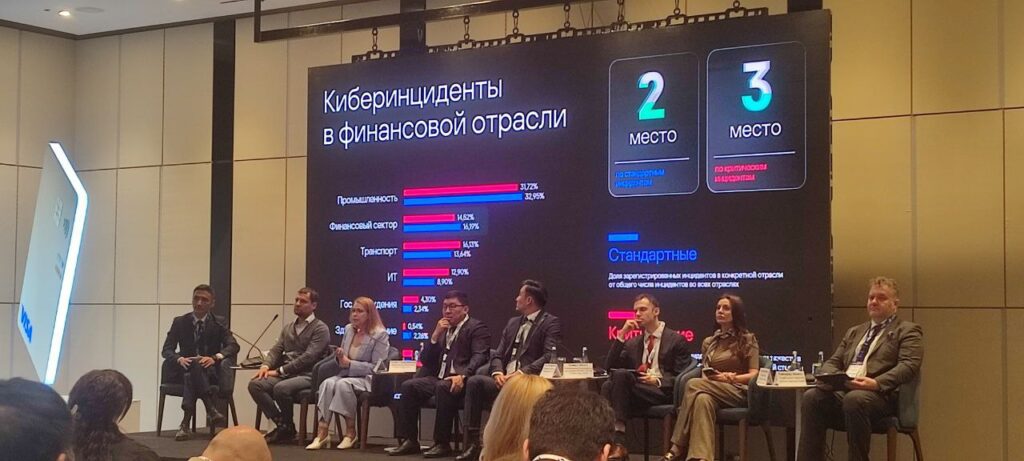
Speaking at the 11th Bishkek International Finance Forum (BIFF 2025), Prime Minister Adylbek Kasymaliyev stated that Kyrgyzstan is open to cooperation in digital finance, welcomes investment in the banking sector, and seeks to exchange expertise with international partners. Kasymaliyev emphasized that digital transformation is integral to the global sustainable development agenda and that Kyrgyzstan is steadily implementing digital solutions to build a modern, trust-based financial ecosystem. “Today, we stand at the threshold of a new digital era, where data processing technologies are transforming not only the financial system but also the foundations of public administration and socio-economic development. That is why digitalization is a strategic priority of the Kyrgyz Republic’s state policy,” said the head of the Cabinet. Since 2023, Kyrgyzstan has actively promoted a cashless payment system using QR codes integrated with bank cards, e-wallets, and mobile applications. QR code payments have become routine for many citizens. The government is also developing digital platforms to support small and medium-sized businesses and expanding infrastructure for fintech startups. Kasymaliyev noted that the introduction of the digital som will mark a key milestone in the country's digital transformation. “After President Sadyr Japarov signed the law introducing the digital som, the implementation of this strategic initiative began. It will affect virtually all sectors of the economy and represents a significant step in developing the national digital economy,” he said. Banking sector representatives stressed that forums like BIFF are essential not only for advancing electronic finance but also for addressing cybersecurity challenges. The forum has emerged as a platform for discussing innovative strategies to combat digital fraud. Anna Kulashova of the Russian cybersecurity company, Kaspersky Lab, highlighted that the widespread adoption of digital financial technologies also increases exposure to cyber threats. “We are ready to share our knowledge and experience in the field of cybersecurity. We are open to developing cooperation in this area,” she said. Visa representatives praised Kyrgyzstan’s pace of digitalization. According to Visa’s Evgeny Lesnyak, the country is frequently used as a testbed for innovative financial solutions. “In many countries, paying for public transport with contactless methods is still difficult. In Kyrgyzstan, this service has been available for four years via QR codes using Visa cards. That’s rare even in developed markets. We see Kyrgyzstan as a platform for testing innovations. Your solutions are exportable and help launch new services in other countries,” he said. Aibek Kurenkeev, President of the E-Commerce Association and moderator of the forum, told The Times of Central Asia that Kyrgyzstan has gained valuable experience in modernizing its financial system. However, he stressed that rapid technological development requires greater openness and regional knowledge exchange. “We heard engaging presentations on the stock market, Kyrgyzstan’s entry into international capital markets, protection against cyber threats, new payment solutions, and mechanisms such as the self-prohibition system for issuing loans. The forum brought together diverse experts, and I believe we’ve laid a solid foundation for a sustainable, transparent, and inclusive digital future,” he said. Kurenkeev noted that fintech is one of Kyrgyzstan’s...

Kyrgyz MPs Propose Ban on Pornographic Websites

A group of Kyrgyz parliamentarians has introduced draft legislation aimed at banning the distribution of pornographic content online. The proposal, currently under review, has sparked a mixed response among lawmakers. The bill seeks to restrict access to websites hosting pornographic material and establish legal liability for their distribution. Under the draft law, the Ministry of Digital Development would be required to block access to online resources featuring prohibited content within 24 hours of receiving a complaint. Alternatively, the site owners must remove the content upon request from an authorized state body. If they fail to comply, the site could be blocked for up to two months. The bill also grants any citizen the right to file a complaint with authorities if they encounter pornographic content online. However, the initiative has drawn criticism from some MPs. Deputy Dastan Bekeshev questioned whether the proposed legislation duplicates existing laws. He pointed out that Kyrgyzstan already has legal provisions banning harmful content for children, including pornography. “Do we need another law? Isn’t the previous one enough? We’ve already banned child pornography. Maybe adults should be allowed access to such content, at least with a password?” he asked. “In Japan, for example, people watch pornography, and nothing happens, the country continues to develop. If you ban everything online, people will start looking for it on the streets.” Bekeshev argued that while the goal may be to promote public morality, such measures often fail and can even be counterproductive. “We need to begin with ourselves and lead by example,” he added. In response, Marat Togaev, Deputy Minister of Culture, Information, and Youth Policy, explained that the current law only permits blocking websites registered within Kyrgyzstan. The new bill, he said, is designed to extend enforcement to websites regardless of jurisdiction. Following parliamentary debate, the bill passed its first reading. Togaev noted that while telecom operators have the technical capability to block pornographic websites, they cannot prevent users from accessing such content via VPNs.

Strained Currents: Managing the Syr Darya’s Waters

On both banks of the Syr Darya, apartments are springing up. The embankment itself is undergoing extensive renovation. Trucks crawl along, their weight pounding the freshly lain asphalt into shape. Its acrid whiff rankles in the nose for some distance. Kyzylorda’s new Akim, Nurzhan Akhatov, appointed in August 2024, is determined to make the most of his short term in office, explains Kanat Utegenov, founder of LLP ECO GUARD, an ecological laboratory. This makes the new landscaping important. “There is a lot of construction… it is visually noticeable to the population,” he told The Times of Central Asia. “Unfortunately, the economics of it have not necessarily been calculated.” Utegenov cites a new stadium on the left bank of the river as an example of one of these potential white elephant projects. Worse still, all this landscaping is dependent on one critical factor which is only partly under the control of the Akim, and only partly under the control of Kazakhstan. That issue is water. [caption id="attachment_32630" align="aligncenter" width="1600"] The low-running Syr Darya passing through Kyzylorda, Kazakhstan; image: TCA, Joe Luc Barnes[/caption] In late April, the view that a ritzy new apartment buys you is one of sad, sandy banks. Wading birds plod methodically through the mud, looking for worms. The dirty grey river does not so much flow but keeps up a ponderous momentum, inching its way northwest. Some of this water will reach the North Aral Sea, which is being propped up on life support by the Kokaral Dam. Utegenov attributes the low water level as being partly due to climatic change. “Winter has become milder and almost snowless,” he said, adding that it’s not unusual to see a low river in spring. “This is when the rice is planted; all the water goes to the irrigation canals.” Governments across the region are doubling down on rice production, says Bulat Yessekin, an expert on environmental and water policy in Central Asia. However, he points out that growing rice is incredibly inefficient in this part of the world. “If we take into account the full irrigation cycle, five tons (5,000 liters) of water are used to cultivate just one kilo of rice,” he told TCA. However, Kazakhstan’s government is keen to trumpet successes. The use of laser leveling technology in rice fields has helped save over 200 billion liters of water by distributing it more evenly. According to Kazakh state media, this has meant that the yield from each hectare of rice crop has increased by around 60-70%. This has done little to convince Yessekin, who believes this is little more than a sticking plaster. “There was no such need for technology before as there was enough water. Now, such technology has become necessary because otherwise, they will simply not be able to grow the crop. In countries with much greater precipitation, such as Thailand or India, you can grow it, but here there are no prospects for rice. Sooner or later people need to move to other crops.” Yessekin...

Global Declaration on Saving Disappearing Glaciers Signed in Dushanbe

The first high-level international conference focused on the global crisis of glacier melt concluded this week in Dushanbe, marking a major milestone in global environmental cooperation. The event brought together over 2,500 participants from 80 countries, including scientists, NGO representatives, heads of delegations, and international donors. The Dushanbe Declaration A key outcome of the conference was the adoption of the Dushanbe Declaration, a collective commitment to coordinated international action to safeguard glaciers. The document outlines urgent concerns: glaciers are retreating at an alarming rate, threatening the freshwater supply of millions who rely on mountain rivers. “Every piece of glacier lost is a step toward greater threats to the future of humanity,” said Tajikistan's President Emomali Rahmon. The declaration calls for immediate measures including reductions in greenhouse gas emissions, shifts to environmentally sustainable production, and the implementation of advanced monitoring systems. An international coalition was also announced, comprising states, scientific institutions, civil society organizations, and environmental movements. This coalition will oversee the declaration's implementation, facilitate knowledge exchange, attract investment, and foster climate technology innovation. Glacier Protection and Knowledge Access Fund To support practical initiatives, participants agreed to establish an international Glacier Protection and Knowledge Access Fund. The fund will finance scientific expeditions, the installation of glacier monitoring systems, freshwater source restoration projects, and the dissemination of eco-friendly technologies. Countries with limited resources will be prioritized. Education emerged as another central theme. The conference advocated for integrating glacier studies into school and university curricula, and for community-based environmental literacy programs, particularly for youth. Greater public awareness, participants emphasized, is essential for fostering long-term climate resilience. Andrea Celeste Saulo, Secretary-General of the World Meteorological Organization, highlighted the chronic underfunding of climate science. “Funding for science remains extremely limited, even though it is science that enables us to predict risks and develop response measures,” she said, urging both governments and businesses to invest in sustainable monitoring systems. Tajikistan Joins IUCN A significant development during the conference was Tajikistan’s accession to the International Union for Conservation of Nature (IUCN), joining over 1,400 global members. This move grants Tajikistan access to a broad network of expertise, funding opportunities, and international partnerships, thereby enhancing its role in global environmental policy. In his speech, Rahmon shared sobering statistics: in 2023 alone, glaciers lost an estimated 600 gigatons of fresh water, contributing to rising sea levels and ecosystem instability. Since 2000, the world has lost nearly one-third of its mountain glaciers, and a projected two-degree rise in temperature could eliminate another third. He proposed a seven-point plan, including strengthening international cooperation, early warning systems, and resource mobilization. Central Asia Under Threat The urgency is particularly acute for Central Asia. Over the last 50-60 years, Tajikistan has lost up to 30% of its glacier area and about 20% of its volume. More than 1,000 glaciers have vanished in the past 23 years. According to the UN Environment Programme, over 50% of Central Asia’s glaciers could disappear by 2050, endangering water access for over 64 million people, especially in rural and...

Kazakhstan Improves Standing in Global Anti-Money Laundering Ranking

Kazakhstan has made significant progress in the Basel AML Index, moving up to 111th place out of 164 countries in the 2025 global ranking for quantifying money laundering. The index, published by the Basel Institute on Governance, ranks countries from highest to lowest risk, meaning Kazakhstan's lower position reflects improved performance and reduced vulnerability. According to a recent analysis by Finprom.kz, Kazakhstan now ranks among the top three performers in the Commonwealth of Independent States (CIS), surpassed only by Armenia (129th) and Moldova (112th). The country’s index score improved from 4.71 in 2024 to 4.65 in 2025, signaling enhanced resilience in anti-money laundering (AML) measures. At the other end of the CIS spectrum, Turkmenistan (23rd), Tajikistan (30th), and Kyrgyzstan (45th) were listed among the top 50 countries facing the highest money laundering risks. Belarus (53rd), Azerbaijan (74th), Uzbekistan (81st), and Ukraine (82nd) fared slightly better but remained behind Kazakhstan in terms of overall AML performance. Globally, Myanmar, Haiti, and the Democratic Republic of the Congo recorded the highest risk levels. In contrast, San Marino, Iceland, and Finland topped the rankings as the countries least susceptible to money laundering activities. Analysts caution that the Basel Index does not measure actual volumes of money laundering, but rather evaluates countries based on the potential risk and their institutional capacity to prevent and combat financial crime. Stronger Law Enforcement Activity in 2025 Domestically, Kazakhstan has also seen a surge in law enforcement activity. In the first four months of 2025, authorities registered 77 criminal offences under the legalisation of criminal proceeds article, 2.8 times more than during the same period in 2024, when 28 cases were reported. The capital, Astana, led with nine cases, up from two in January-April 2024. Shymkent followed with eight cases (up from three), and Almaty recorded seven (up from four). Significant increases were also reported in the Almaty region (from one to six cases) and the Karaganda region (from one to five). These figures point to intensified law enforcement efforts and a greater capacity to detect and prosecute money laundering-related crimes.

Kyrgyzstan Begins Construction of Its First Wind Power Plant

Kyrgyzstan has begun construction of its first-ever wind power plant, marking a significant step toward diversifying the country’s energy mix and addressing chronic electricity shortages. The ferroconcrete foundation was recently laid near the city of Balykchy on the northern shore of Lake Issyk-Kul, according to the Ministry of Water Resources, Agriculture, and Processing Industry. The 100-megawatt (MW) wind farm will be developed in two phases: Phase One: 21 turbines with a combined capacity of 50 MW Phase Two: 20 turbines, each with a capacity of 2.5 MW The first wind turbine, rated at 1 MW, is expected to be commissioned in August 2025. Once fully operational, the facility will generate up to 250 million kilowatt-hours (kWh) of electricity annually, offsetting emissions equivalent to those produced by 35,000 cars. The wind farm will supply power not only to the Issyk-Kul region but will also contribute to electricity exports through the CASA-1000 (Central Asia-South Asia) transmission project. This regional initiative aims to export surplus summer electricity from Kyrgyzstan and Tajikistan to Afghanistan and Pakistan. The government has emphasized that expanding renewable energy sources is essential for resolving the country’s long-standing energy deficit and attracting much-needed investment in the sector. Despite having the potential to produce 142 billion kWh annually, Kyrgyzstan’s current electricity output is only about 14 billion kWh, roughly 10% of its hydropower capacity. In 2024, the country’s total electricity consumption reached 18.3 billion kWh, up 1.1 billion kWh from the previous year. Hydropower plants accounted for the bulk of production, generating 12.77 billion kWh. Coal-fired thermal plants contributed 1.76 billion kWh, while small private hydropower stations produced 156.2 million kWh. Solar installations added just 0.17 million kWh. To bridge the shortfall, Kyrgyzstan imported 3.63 billion kWh of electricity in 2024, an increase of 141.7 million kWh from 2023.
