• KGS/USD = 0.01144 0%
  • KZT/USD = 0.00209 0%
  • TJS/USD = 0.10528 0%
  • UZS/USD = 0.00008 0%
  • TMT/USD = 0.28571 0%
  • KGS/USD = 0.01144 0%
  • KZT/USD = 0.00209 0%
  • TJS/USD = 0.10528 0%
  • UZS/USD = 0.00008 0%
  • TMT/USD = 0.28571 0%
  • KGS/USD = 0.01144 0%
  • KZT/USD = 0.00209 0%
  • TJS/USD = 0.10528 0%
  • UZS/USD = 0.00008 0%
  • TMT/USD = 0.28571 0%
  • KGS/USD = 0.01144 0%
  • KZT/USD = 0.00209 0%
  • TJS/USD = 0.10528 0%
  • UZS/USD = 0.00008 0%
  • TMT/USD = 0.28571 0%
  • KGS/USD = 0.01144 0%
  • KZT/USD = 0.00209 0%
  • TJS/USD = 0.10528 0%
  • UZS/USD = 0.00008 0%
  • TMT/USD = 0.28571 0%
  • KGS/USD = 0.01144 0%
  • KZT/USD = 0.00209 0%
  • TJS/USD = 0.10528 0%
  • UZS/USD = 0.00008 0%
  • TMT/USD = 0.28571 0%
  • KGS/USD = 0.01144 0%
  • KZT/USD = 0.00209 0%
  • TJS/USD = 0.10528 0%
  • UZS/USD = 0.00008 0%
  • TMT/USD = 0.28571 0%
  • KGS/USD = 0.01144 0%
  • KZT/USD = 0.00209 0%
  • TJS/USD = 0.10528 0%
  • UZS/USD = 0.00008 0%
  • TMT/USD = 0.28571 0%

Viewing results 2563 - 2568 of 5832

Kazakhstan and the UAE Elevate Strategic and Economic Partnership

Kazakhstan and the United Arab Emirates (UAE) are taking their long-standing partnership to new heights. President Kassym-Jomart Tokayev hosted Abu Dhabi Crown Prince Sheikh Khalid bin Mohammed bin Zayed Al Nahyan at the Akorda presidential residence, underscoring the deepening ties between the two nations. A Key Middle Eastern Partner Sheikh Khalid’s official visit was marked by a ceremonial welcome and substantive high-level talks. President Tokayev emphasized the growing breadth of the Kazakh-Emirati relationship, which now extends well beyond economics into sectors such as energy, transport, digital technologies, and education. “The UAE is among Kazakhstan’s top ten foreign investors,” Tokayev noted, citing a more than twofold increase in Emirati direct investment in 2024, a record high. During the Crown Prince’s visit, over 20 commercial agreements were signed, totaling approximately $5 billion. These projects are expected to further catalyze bilateral cooperation and open new avenues for mutual investment. Strategic Agreements Following the talks, an official document exchange ceremony was held. Key agreements included: Transport Cooperation - A memorandum between the Kazakh Ministry of Transport and the UAE Ministry of Energy and Infrastructure; Judicial Cooperation - A memorandum between the respective Ministries of Justice; Energy Infrastructure - An agreement between Samruk-Kazyna JSC and Masdar for continuous power supply (up to 500 MW) and energy storage (up to 2,000 MW); Digital Transformation - Agreements between Samruk-Kazyna JSC and AIQ, and QazaqGaz and AIQ, focusing on oil and gas sector digitalization; Financial Collaboration - A memorandum between Samruk-Kazyna JSC and Abu Dhabi Commercial Bank; High-Performance Computing - An agreement to establish a supercomputer cluster with Pre-sight; Maritime Expansion - A protocol between KazMunayGas and Abu Dhabi Ports Group on developing Kazakhstan’s merchant fleet; Healthcare Investment - A memorandum on financing and constructing a maternity hospital in Turkestan; Aviation Infrastructure - An agreement on investing in the Nursultan Nazarbayev International Airport and its surroundings; Green Energy - Announcement of the ratified agreement for a major wind power project. Expanding Cooperation Horizons President Tokayev and Sheikh Khalid also participated in the Kazakhstan-UAE Business Forum, where Tokayev reiterated the significance of expanding trade, economic, and investment ties. He highlighted the UAE’s role as Kazakhstan’s top partner in the Gulf, with cumulative Emirati investment exceeding $4.3 billion. Tokayev underscored his administration’s economic reforms aimed at fostering a more attractive investment climate, including the establishment of the Investment Promotion Council to support foreign businesses. He identified energy, logistics, finance, high technology, and agriculture as priority areas for future cooperation. Institutional and Cultural Engagement During the visit, the leaders toured the Astana International Financial Centre (AIFC), where they were briefed on the operations of the Financial Services Regulatory Committee, the stock exchange, and the International Arbitration Center. Currently, 46 UAE companies are registered residents at the AIFC. The delegation also visited the Sheikh Khalifa bin Zayed Al Nahyan Lyceum No. 84, where they observed students’ progress in Arabic language studies. Later, they attended the Ethnoaul exhibition, showcasing Kazakh cultural heritage. The visit highlighted the shared commitment of Kazakhstan and the UAE...

Kazakh Lawmakers Advocate HPV Vaccination for Boys

Kazakh lawmakers are urging the government to expand its human papillomavirus (HPV) vaccination program to include boys, arguing that the virus poses serious health risks to both sexes. Askhat Aimagambetov, a deputy of the Mazhilis (the lower house of parliament), announced the initiative on his Telegram channel, stating that the proposal reflects the concerns of Kazakhstani parents. Along with fellow parliamentarians, Aimagambetov has formally appealed to the Ministry of Health. “Currently, girls in Kazakhstan can receive free HPV vaccinations. This is a major achievement and a decision that saves thousands of lives. But HPV is not a ‘female virus.’ It can cause not only cervical cancer, but also cancers of the larynx, mouth, rectum, and in men,” Aimagambetov wrote. He emphasized that many countries already offer HPV vaccination to boys on an equal basis with girls. “That is why we have proposed to make the vaccine available voluntarily. It is hard to find in pharmacies, so the state must ensure access for all who want it. Boys are also at risk. Their health should not be overlooked,” he added. Health Minister Akmaral Alnazaraeva recently stated that the ministry is considering expanding the eligibility list for HPV vaccination to include boys and adults. Since September last year, Kazakhstan has offered voluntary HPV vaccination to 11-year-old girls as part of efforts to prevent cervical cancer.

Uzbekistan to Chair ADB Board, Host 2026 Annual Meeting in Samarkand

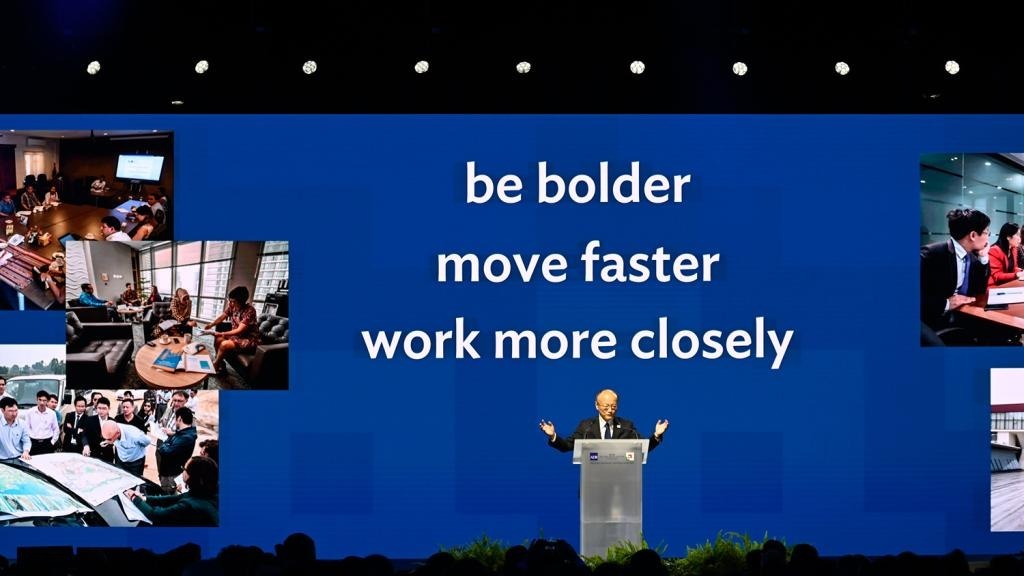
Uzbekistan is poised to assume a greater leadership role within the Asian Development Bank (ADB) following key announcements at the institution’s 58th Annual Meeting of the Board of Governors, held on May 6-7 in Milan, Italy. Uzbekistan’s delegation, led by Deputy Prime Minister Jamshid Khodjaev, participated in the high-level event. According to the Ministry of Investments, Industry and Trade of Uzbekistan, the meeting concluded with the formal announcement that Uzbekistan will chair the ADB Board of Governors for the 2025-2026 term. Khodjaev was confirmed as the board’s next chair, a move widely seen as a reflection of the growing trust and confidence of international financial institutions in Uzbekistan’s reform trajectory. Additionally, it was agreed that Samarkand will host the ADB’s 59th Annual Meeting in May 2026. During the Milan meeting, the parties also signed an ambitious cooperation program outlining 23 new projects valued at $3.6 billion, to be implemented over the next two years. These initiatives will target strategic sectors such as education, drinking water supply, transport, and technical assistance. The announcement builds on an existing track record of cooperation. Recent projects include a $125 million ADB loan aimed at modernizing Uzbekistan’s water systems. This initiative encompasses the installation of smart water meters, mapping of water infrastructure, modernization of customer service centers, and training for utility staff, all intended to enhance national water security and service efficiency. Uzbekistan’s expanding partnership with the ADB is expected to accelerate its social and economic development objectives, particularly as the country continues to pursue wide-ranging reforms and infrastructure upgrades.

Kazakhstan Launches Dredging Project to Expand Aktau Port on Key Trans-Caspian Corridor

Kazakhstan’s Ministry of Transport has initiated dredging works at the Caspian Sea port of Aktau, aiming to enhance the capacity and navigational safety of a critical hub on the Trans-Caspian International Transport Route (TITR), also known as the Middle Corridor. The Aktau port, located in the Mangistau region, is being deepened by 1.5 to 2 meters using specialized dredging equipment supplied by European contractor Jan De Nul. Mobilization of the equipment is set to be completed in May, with full dredging operations scheduled for completion by the fourth quarter of 2025. The project is expected to significantly increase the port's terminal capacity. Currently, Aktau handles approximately 15 million tons of cargo annually, including up to 140,000 twenty-foot equivalent units (TEUs). This infrastructure enhancement forms part of Kazakhstan’s broader strategy to develop the TITR, a key transit corridor linking China to Europe through Central Asia and the Caucasus. According to the Ministry of Transport, container traffic via the TITR through Kazakhstan surged by 3.5 times in the first quarter of 2025, reaching 25,000 TEUs, up from 7,200 TEUs during the same period in 2024. In a related development, Kazakhstan completed dredging works at another major Caspian port, Kuryk, in November 2024. That project, also executed by Jan De Nul Kazakhstan LLP, was finished in just four months. The water depth at Kuryk was increased to 7-8 meters, substantially enhancing its handling capacity and reinforcing its strategic importance on the Trans-Caspian route.

L’Étranger: Paris Hosts the Reclusive Leader of Turkmenistan

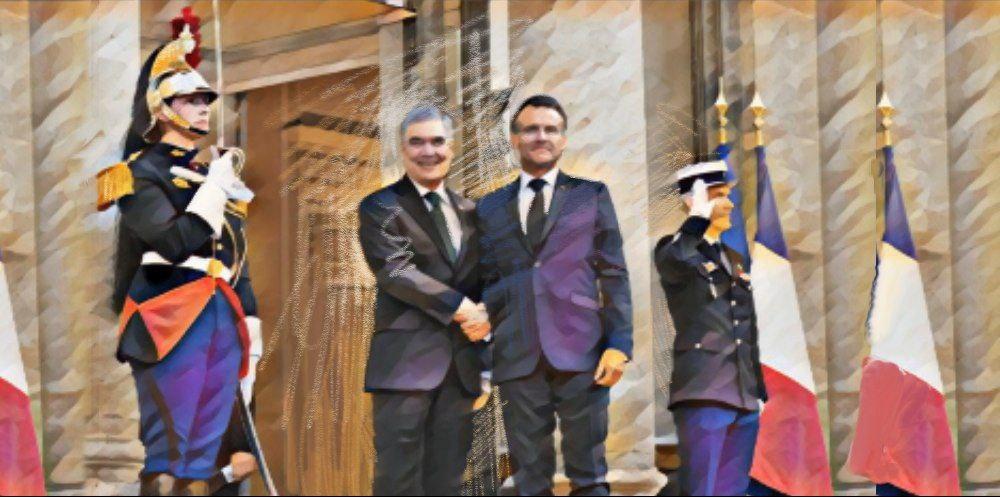
Gurbanguly Berdimuhamedov, Turkmenistan’s longtime ruler, no longer holds the title of president; that has been passed, along with much of the public burden, to his son. He now reigns from the shadows as Hero-Arkadag (“Hero-Protector”), but he retains the ability to open doors. Nearly 14 years after his last official visit, Berdimuhamedov landed at Paris’ Orly airport last Monday. He was in France ostensibly to attend the Franco-Turkmen Economic Forum, but the visit also saw him ushered into the Élysée Palace for an audience with President Emmanuel Macron. Characteristically, his presence in Paris was kept quiet, receiving very little coverage even in the French media. “It was much less discussed than the near-concurrent visit of the Syrian leader, Ahmed Al-Charaa,” Michaël Levystone, co-founder of l'Observatoire de la Nouvelle Eurasie, a Paris think tank told The Times of Central Asia. “You have to understand that Turkmenistan is a country that is virtually unknown to the general public in France – and for good reason: it goes out of its way to remain extremely discreet!” Nevertheless, the visit marks a rare moment of high-level Western diplomacy with one of the world’s most opaque regimes, as well as an extremely uncommon public diplomatic appearance from Berdimuhamedov Senior since ceding formal power in 2022. The questions are why France? And why now? What Was Discussed The two readouts of the encounter were notably different. The Élysée offered a terse summary on its website, noting vaguely that the meeting “provided an opportunity to review the bilateral relationship between Turkmenistan and France as well as regional issues.” Macron then followed this up with an equally laconic post on X, noting that the two had “signed several agreements between Turkmenistan and France in the areas of energy transition, infrastructure, education, and culture. They demonstrate the strengthening of our cooperation. We also took stock of major regional and international crises, including Russia's war of aggression against Ukraine and the situation in the Middle East.” On the other hand, the state-run news service Turkmenistan Today provided what can only be described as a detailed travelogue, noting the many dignitaries who had the pleasure of meeting the Hero-Arkadag on his whistle-stop tour of the City of Lights. According to the Turkmens, the visit yielded a flurry of agreements. A memorandum of understanding was inked between state-owned Türkmengaz and French tech firm Kayrros SAS, while France’s Thales Alenia Space Group signed a framework deal to provide Ashgabat with a second communications satellite. There were further promises of joint work on green energy, education, and archaeological research. A Foot in the Door One French company in particular is responsible for much of the engagement between the two countries. As part of his trip to Paris, Berdimuhamedov met with construction magnate Martin Bouygues, CEO of the firm that bears his family’s name. [caption id="attachment_31644" align="aligncenter" width="2560"] The Presidential Palace and ministries complex, built by the French company Bouygues; image: TCA, Stephen M. Bland[/caption] “Bouygues has built numerous monumental buildings in Ashgabat since Turkmenistan's independence,” Levystone told...

Kazakhstan’s Young Workforce Grows, But Sectoral Gaps Persist

The youth labor market in Kazakhstan remains a vital topic amid the country’s ongoing economic transformation. According to analysts from Finprom.kz, approximately 1.8 million young people aged 15 to 28 were employed across the country in 2024, an increase of 0.6% compared to the previous year. Regional Distribution of Youth Employment The highest concentration of young workers is in Almaty, where 243,200 young people are employed, up 5% from 2023. Almaty is followed by the Turkestan region. In contrast, the Ulytau, North Kazakhstan, and Zhetysu regions recorded the lowest figures for youth employment. Of the total number of employed youth, 1.4 million (77.7%) work as salaried employees. Additionally, the country is home to 331,900 young individual entrepreneurs, 58,300 self-employed workers, 2,700 founders or participants in economic partnerships, joint-stock companies, or cooperatives, and 2,400 engaged in private practice. Sectoral Breakdown Among all employed young people, the largest group, 424,400 individuals, are professionals, although this marks a 1.3% decrease from the previous year. They are followed by service and sales workers (291,700), unskilled laborers (281,700), technical and support staff (195,100), and industrial, construction, and transport workers (142,600). In terms of industry sectors, youth are primarily employed in wholesale and retail trade, automotive repair, education, and agriculture, including forestry and fishing. The lowest youth employment is seen in utilities (water and electricity supply) and real estate. Youth Unemployment: A Gradual Decline Youth unemployment is on the decline. In 2024, the number of unemployed individuals aged 15 to 28 dropped to 62,000, a 6.7% decrease from 2023. The unemployment rate stood at 3.7% among 16 to 24-year-olds and 3% among those aged 25 to 28. For comparison, the overall unemployment rate for the working-age population in Kazakhstan reached 4.7%. Almaty recorded the highest number of unemployed youth (11,100), followed by Astana (7,800) and the Almaty region (7,700). Ulytau, Pavlodar, and North Kazakhstan regions reported the lowest youth unemployment figures. As for the length of time spent job hunting in 2024, 18,200 young people searched for one to three months, 16,200 for three to six months, and 16,000 for less than a month. A smaller share, 7,500, searched for more than six months, and 4,000 had been looking for work for over a year. Broader Context and Causes of Unemployment Nationwide, 448,200 Kazakhstani citizens were unemployed in the fourth quarter of 2024. The unemployment rate was 4.2% among men (211,100) and 5.1% among women (237,100). The most affected age groups were 35 to 54 (256,900 people) and 55 to 64 (69,700). The most frequently cited reasons for unemployment included family responsibilities (61,400), layoffs or company closures (50,300), and difficulty finding suitable jobs (112,500). Other contributing factors were domestic duties (44,200), health issues (17,500), and challenges securing employment post-graduation (16,600). Policy Implications Experts highlight the importance of developing flexible employment policies tailored to the evolving labor market. Enhancing conditions for self-employment and youth entrepreneurship is seen as a potential key strategy for reducing youth unemployment in the long term.