• KGS/USD = 0.01143 0%
  • KZT/USD = 0.00212 0%
  • TJS/USD = 0.10799 -0.09%
  • UZS/USD = 0.00008 0%
  • TMT/USD = 0.28571 0%
  • KGS/USD = 0.01143 0%
  • KZT/USD = 0.00212 0%
  • TJS/USD = 0.10799 -0.09%
  • UZS/USD = 0.00008 0%
  • TMT/USD = 0.28571 0%
  • KGS/USD = 0.01143 0%
  • KZT/USD = 0.00212 0%
  • TJS/USD = 0.10799 -0.09%
  • UZS/USD = 0.00008 0%
  • TMT/USD = 0.28571 0%
  • KGS/USD = 0.01143 0%
  • KZT/USD = 0.00212 0%
  • TJS/USD = 0.10799 -0.09%
  • UZS/USD = 0.00008 0%
  • TMT/USD = 0.28571 0%
  • KGS/USD = 0.01143 0%
  • KZT/USD = 0.00212 0%
  • TJS/USD = 0.10799 -0.09%
  • UZS/USD = 0.00008 0%
  • TMT/USD = 0.28571 0%
  • KGS/USD = 0.01143 0%
  • KZT/USD = 0.00212 0%
  • TJS/USD = 0.10799 -0.09%
  • UZS/USD = 0.00008 0%
  • TMT/USD = 0.28571 0%
  • KGS/USD = 0.01143 0%
  • KZT/USD = 0.00212 0%
  • TJS/USD = 0.10799 -0.09%
  • UZS/USD = 0.00008 0%
  • TMT/USD = 0.28571 0%
  • KGS/USD = 0.01143 0%
  • KZT/USD = 0.00212 0%
  • TJS/USD = 0.10799 -0.09%
  • UZS/USD = 0.00008 0%
  • TMT/USD = 0.28571 0%

Viewing results 1 - 6 of 8

Turkmenistan’s Chief Mufti Replacement Recalls Earlier Dismissals

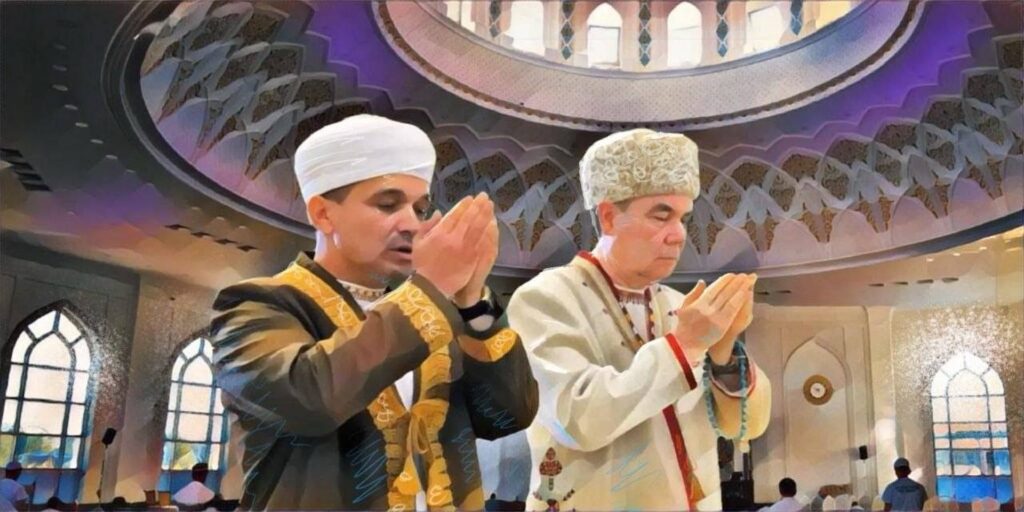
Only two people in Turkmenistan, the chairman of the Halk Maslahaty (People’s Council) and the president, have what could be considered job security. Everyone else is expendable, at a moment’s notice, and that extends to the country’s top clergy. Turkmenistan has replaced the country’s top mufti, and while the reasons for the sudden move are not clear, the removal process is very familiar for Turkmenistan. Frantic Friday On June 19, the mufti of all Turkmenistan, Yalkap Hojagulyyev, led Friday prayers at the Turkmenbashi Ruhy Mosque in Gypjak, some 11 kilometers from the capital, Ashgabat. Saparmurat “Turkmenbashi” Niyazov was Turkmenistan’s first president. The country’s compliant parliament and Halk Maslahaty bestowed the title of “Turkmenbashi,” meaning head of the Turkmen, on Niyazov. Gypjak was Niyazov’s home village, and when he was alive, he spent $100 million building a mosque that could accommodate 10,000 worshipers. After he died in late 2006, he was laid to rest at the nearby mausoleum built specially for him and his family. The June 19 Friday prayers were attended by a special visitor, Malaysian Prime Minister Anwar Ibrahim, who also paid his respects at Niyazov’s mausoleum. After prayers ended, the top figures from the muftiate, the spiritual board overseeing Islamic affairs in Turkmenistan, and select elders from around Turkmenistan met at the mosque for a discussion. That discussion included the announcement that the muftiate had appointed a new chief mufti. That person was Rahman Gurbanmyradov. Gurbanmyradov, who had been the head mufti for Ahal Region, was not at the meeting in Gypjak. He was saying prayers at the Seyit Jemaleddin Mosque in Ak Bugday District, Ahal Region, for a sadaqah (voluntary giving of charity) organized by Halk Maslahaty Chairman Gurbanguly Berdimuhamedov. Berdimuhamedov was marking the first Friday of the Islamic year 1448, which started on June 16. Back in Gypjak, senior clerics and elders were also considering what to name the new mosque being built in the newly built city of Arkadag, some 30 kilometers outside Ashgabat. Berdimuhamedov succeeded Turkmenbashi as president and held the office for roughly 15 years. During that period, government officials and state media gave him the title “Arkadag,” or “Protector.” Not surprisingly, when one of the elders at the Gypjak meeting proposed naming the new mosque in Arkadag city the Arkadag Spiritual Mosque, there was unanimous support. Why Hojagulyyev was fired is unclear, though there is speculation that Berdimuhamedov had been angry with the mufti since 2023, when Hojagulyyev brought his wife to make the Hajj at state expense. Hojagulyyev had been the head mufti since 2019. Turkmenbashi Tames the Clergy First President Niyazov is credited with bringing the entire state apparatus under his full control in the first years after Turkmenistan’s 1991 independence. However, it took him longer to achieve the total submission of Islamic clergy. Toward the end of 1999, leading Islamic cleric and scholar Khoja Ahmed Orazgylych criticized Niyazov’s public support for the traditional New Year celebration that included dancing around a Christmas tree." The practice dated back to the...

Turkmenistan’s President Serdar Berdimuhamedov Awarded Academic Titles

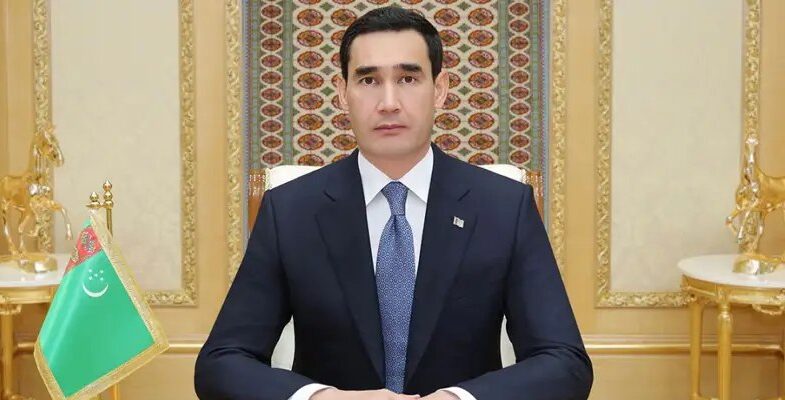
Turkmenistan’s President Serdar Berdimuhamedov has been awarded the title of professor in economic and political sciences and elected as an academician of the Academy of Sciences of Turkmenistan. The announcement was made by the state-run Golden Age. The award ceremony took place at the Academy of Sciences on the eve of Science Day, observed annually in Turkmenistan on June 12. According to the official statement, Berdimuhamedov received the professorship for his “outstanding contributions to scientific-production, innovation-industrial, socio-economic, and scientific-technical transformations,” as well as for promoting modern science and expanding international cooperation. The academy also said his election as an academician reflected his role in socio-economic development, the modernization of healthcare, support for science and education, the introduction of new technologies into the economy, and raising Turkmenistan’s international standing. The 44-year-old president has now followed a path similar to that of his father, Gurbanguly Berdimuhamedov, the country’s former president, who is widely known by the title Arkadag, or “Protector.” Gurbanguly Berdimuhamedov holds titles including Doctor of Medical Sciences, Doctor of Economics, professor, and academician of the Academy of Sciences. The elder Berdimuhamedov has authored more than 60 books covering topics ranging from medicine and philosophy to culture, spirituality, Akhal-Teke horses, Alabai dogs, and sports. Serdar Berdimuhamedov has so far published four books. President Berdimuhamedov graduated in 2001 from the Turkmen Agricultural University named after Saparmurat Niyazov, Turkmenistan’s first president, with a degree in engineering technology. Between 2008 and 2011, he served as counselor-envoy at Turkmenistan’s embassy in Russia while studying international relations at the Diplomatic Academy of Russia’s Foreign Ministry. In August 2014, he defended his PhD-equivalent dissertation at the Academy of Sciences of Turkmenistan, and in July 2015 received a Doctor of Technical Sciences degree.

Turkmenistan Highlights International Outreach at Cabinet Meeting

A recent Cabinet meeting in Turkmenistan highlighted contacts with many countries and international organizations, reinforcing a perception that the tightly managed nation is taking more steps, however limited, to engage the world. Appearing via video link, President Serdar Berdimuhamedov presided over the May 1 meeting of ministers who covered economic growth, oil and natural gas production, scientific research, and other national priorities in a review of the year so far. But international outreach was a big part of the high-level discussion in an energy-rich Central Asian country often defined as opaque and restrictive. An account of the meeting by the Turkmenistan State News Agency (TDH) ticked off statistics: 220 delegations visited Turkmenistan this year, 400 delegations from Turkmenistan visited other countries, 711 negotiations and other meetings occurred in the country with foreign states and international agencies, and 57 more international documents were added to Turkmenistan’s legal code. “The development of diplomatic relations through foreign embassies is one of the important directions of the foreign policy work of neutral Turkmenistan,” said the report, referring to the country’s policy of non-alignment and not getting involved in the internal affairs of other countries. “Work on promoting relations with the countries of the Middle East is also ongoing,” it said. Iraq opened its embassy in Ashgabat in March, 17 years after Turkmenistan and Iraq established diplomatic relations in 2009. On May 4, Rashid Meredov, Turkmenistan’s foreign minister, spoke by telephone with Iranian Foreign Minister Abbas Araghchi about regional security, Caspian issues, and other matters, according to the Turkmen Foreign Ministry. The ministry’s statement did not mention the Iran conflict or uncertainty surrounding the ceasefire with the United States. Turkmenistan’s international campaign is consistent with a pattern seen across Central Asia, where governments have sought to diversify their trade and diplomatic ties while maintaining close relations with the region’s major powers, Russia and China. Turkmenistan, however, still exports most of its natural gas to China, its largest trading partner. At the same time, Turkmenistan is intensifying efforts to integrate into the global trading system, with officials reaffirming plans to move towards membership in the World Trade Organization (WTO). It is the last post-Soviet republic to start WTO accession talks. Turkmenistan’s leaders are also working on their international profiles. Berdimuhamedov attended an ecological summit of regional leaders in Kazakhstan last month. His father and predecessor, Gurbanguly Berdimuhamedov, traveled to the U.S. in February, China in March, and Austria in April. This month, he is due to travel to the Russian city of Kazan. Although government transparency is limited in Turkmenistan, father and son appear to run the country through a power-sharing arrangement. Outsiders are getting more glimpses of Turkmenistan. The capital, Ashgabat, hosted an international tourism conference in April. This month, the Reuters news agency reported on a trip there after being given what it said was “rare access” to travel in the country. It remains unclear, however, whether any efforts to engage with the outside world will materially change daily life in Turkmenistan, where people...

Xi Jinping and Berdymuhamedov Sr. Discuss Expansion of China-Turkmenistan Partnership

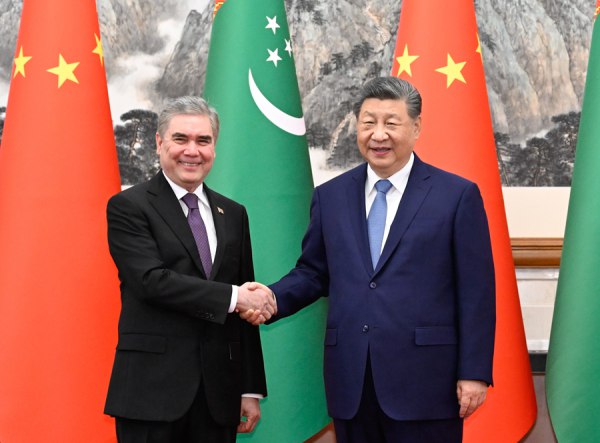
Chinese President Xi Jinping held talks with Gurbanguly Berdymuhamedov, Turkmenistan's former president and leader of its People's Council, during the latter’s official visit to China. The meeting took place on March 18 at the Diaoyutai State Guesthouse in Beijing, according to a statement from China’s Ministry of Foreign Affairs. Xi noted that China had recently completed its annual parliamentary meetings, commonly referred to as the “Two Sessions,” during which key socio-economic priorities were outlined. He said the country’s new development agenda would support modernization efforts and create additional opportunities for international cooperation. The Chinese president said that mutual political support remains central to the comprehensive strategic partnership between Beijing and Ashgabat. He reaffirmed China’s readiness to continue backing Turkmenistan on issues related to sovereignty, territorial integrity, and its internationally recognized policy of permanent neutrality. Xi and Berdymuhamedov discussed expanding cooperation in the energy sector, particularly natural gas supplies, as well as in trade, investment, transport connectivity, agriculture, artificial intelligence, the digital economy, and clean energy. Both leaders also highlighted the importance of aligning China’s Belt and Road Initiative with Turkmenistan’s plans to revitalize historic Silk Road trade routes. Humanitarian cooperation was another focus of the talks, including plans to develop educational and cultural exchanges and establish joint centers. The leaders also discussed coordination on regional security challenges, including efforts to counter terrorism, separatism, and extremism. Berdymuhamedov reaffirmed Turkmenistan’s commitment to the One China principle and expressed readiness to deepen bilateral cooperation in energy, infrastructure, and trade. He said closer ties with China were important for Turkmenistan’s long-term economic development and again noted Beijing’s support for the country’s neutrality policy. Chinese Foreign Minister Wang Yi also attended the meeting. As previously reported by The Times of Central Asia, the visit followed Berdymuhamedov’s trip to the United States in mid-February, the details of which were not fully disclosed. Shortly after his return, Turkmenistan’s President, Gurbanguly's son Serdar Berdymuhamedov, dismissed the country’s ambassador to the U.S. and its permanent representative to the United Nations. No official explanation was provided for the personnel changes.

Gurbanguly Berdymuhamedov’s Unannounced Visit to Florida Draws Attention

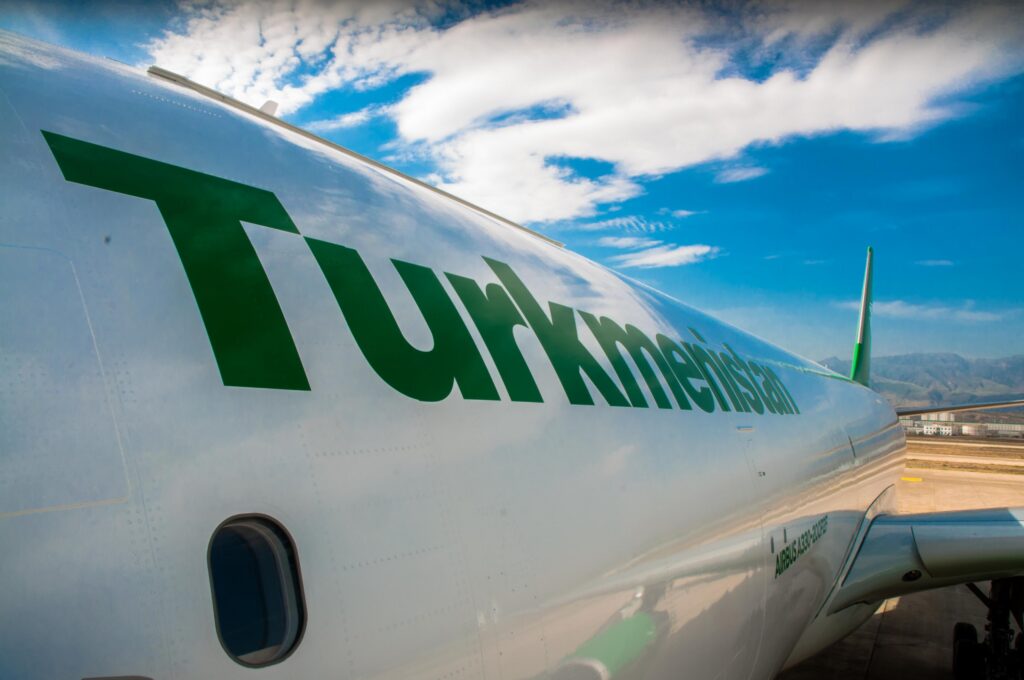
From February 16 to 18, Gurbanguly Berdymuhamedov, Turkmenistan's former president and current Chairman of the Halk Maslahaty, Turkmenistan’s highest representative body, visited the U.S. state of Florida. Turkmen state media did not disclose details of the visit’s program, limiting coverage to a brief report on the trip. Berdymuhamedov arrived at Fort Lauderdale-Hollywood International Airport aboard a government Boeing 777 (tail number EZ-A780). Local journalists and aviation observers reported possible damage to the aircraft’s horizontal stabilizer. The green-and-white liveried airliner remained parked at the airport for several days. Aaron Rosen, president of the World Affairs Council of Miami, noted that the visit coincided with renewed U.S. interest in Central Asia. According to Rosen, the region is strategically significant due to its energy resources, geopolitical location, and security considerations. He also referred to recent statements by Turkmenistan’s Foreign Ministry emphasizing the importance of dialogue with Washington to develop constructive relations. U.S. media reported that Berdymuhamedov’s trip overlapped with President Donald Trump’s weekend stay at his Mar-a-Lago residence, located approximately a 45-minute drive from Fort Lauderdale-Hollywood International Airport. Local 10 News footage showed heightened security measures and a VIP passenger boarding the Boeing 777 prior to departure. The aircraft left Florida several days later. Separately, a government Boeing 737 (tail number EZ-A700) arrived from Ashgabat, refueling in Glasgow before continuing to Florida. After a brief stop in Florida, the Boeing 737 returned to Turkmenistan, making an additional refueling stop in Munich. Turkmen authorities have not officially disclosed the purpose of Berdymuhamedov’s visit.  Turkmenistan’s current president is Serdar Berdymuhamedov, Gurbanguly Berdymuhamedov’s son.

Turkmenistan Marks 30 Years of Neutrality

On December 12, 2025, Turkmenistan marks the 30th anniversary of a UN decision granting Turkmenistan the status of a neutral country. Defining what “permanent neutrality” means for Turkmenistan is impossible, as it is a flexible term used to justify a range of policies, both domestic and foreign. This vague special status has not provided many benefits, but has helped Turkmenistan’s leadership isolate the country and create one of the most bizarre and repressive forms of government in the world today.   Last Item on the Day’s Agenda On Tuesday, December 12, 1995, the UN General Assembly’s (UNGA) 90th plenary meeting reconvened at 15:20 to consider items 57 to 81 on its agenda. Item 81 was the draft resolution on “permanent neutrality of Turkmenistan.” The UNGA president at that time, Freitas do Amaral, noted to the Assembly that the draft resolution “was adopted by the First Committee without a vote,” and asked if the Assembly wished “to do likewise.” The Assembly did, and after a few brief remarks about the next Assembly meeting on December 14, the session ended at 18:05. That is how the UN officially granted Turkmenistan the status of neutrality. A Great Event The passing of the resolution on Turkmenistan’s neutrality status might have been a case of going through the motions at the UN, but it was a huge event in Turkmenistan. Turkmenistan’s first president, Saparmurat Niyazov, had been campaigning internationally for his country to have “positive” neutrality status since 1992. After this was accomplished, Niyazov often proclaimed this special UN recognition as a great achievement for the country and for himself personally. [caption id="attachment_40725" align="aligncenter" width="2560"] Ashgabat’s Independence Square, previously known as Neutrality Square and originally as Karl Marx Square; image: TCA, Stephen M. Bland[/caption] December 12 was quickly announced as a national holiday. On the first anniversary of the UN decision in 1996, the former Karl Marx Square in Ashgabat was renamed “Neutrality Square.” Shortly after, an olive branch motif was added to Turkmenistan’s national flag, symbolizing the country’s neutral status. In 1998, on the third anniversary of UN-recognized neutrality, the 75-meter-high Arch of Neutrality was unveiled in Ashgabat. A 12-meter gold statue of Niyazov that rotated to face the direction of the sun crowned the structure. Niyazov died in December 2006, and in 2010, the Arch of Neutrality was moved from the city center to the outskirts of the Turkmen capital and unveiled again on December 12, 2011. It has been undergoing renovation and will be unveiled yet again on the 30th anniversary of neutrality. [caption id="attachment_40726" align="aligncenter" width="2099"] Former-President Niyazov's likeness atop the Arch of Neutrality; image: TCA, Stephen M. Bland[/caption] In 2002, Niyazov pushed through a law changing the names of the months of the year and days of the week. December became “Bitaraplyk,” the Turkmen word for neutrality, and continued to officially be called that until 2008, when Niyazov’s successor finally revoked the changes and restored the traditional names. That successor, Gurbanguly Berdimuhamedov, embraced the special permanent neutrality status and, in...