
• KGS/USD = 0.01144 0%
  • KZT/USD = 0.00212 0%
  • TJS/USD = 0.10456 0.19%
  • UZS/USD = 0.00008 0%
  • TMT/USD = 0.28490 0%
  • KGS/USD = 0.01144 0%
  • KZT/USD = 0.00212 0%
  • TJS/USD = 0.10456 0.19%
  • UZS/USD = 0.00008 0%
  • TMT/USD = 0.28490 0%
  • KGS/USD = 0.01144 0%
  • KZT/USD = 0.00212 0%
  • TJS/USD = 0.10456 0.19%
  • UZS/USD = 0.00008 0%
  • TMT/USD = 0.28490 0%
  • KGS/USD = 0.01144 0%
  • KZT/USD = 0.00212 0%
  • TJS/USD = 0.10456 0.19%
  • UZS/USD = 0.00008 0%
  • TMT/USD = 0.28490 0%
  • KGS/USD = 0.01144 0%
  • KZT/USD = 0.00212 0%
  • TJS/USD = 0.10456 0.19%
  • UZS/USD = 0.00008 0%
  • TMT/USD = 0.28490 0%
  • KGS/USD = 0.01144 0%
  • KZT/USD = 0.00212 0%
  • TJS/USD = 0.10456 0.19%
  • UZS/USD = 0.00008 0%
  • TMT/USD = 0.28490 0%
  • KGS/USD = 0.01144 0%
  • KZT/USD = 0.00212 0%
  • TJS/USD = 0.10456 0.19%
  • UZS/USD = 0.00008 0%
  • TMT/USD = 0.28490 0%
  • KGS/USD = 0.01144 0%
  • KZT/USD = 0.00212 0%
  • TJS/USD = 0.10456 0.19%
  • UZS/USD = 0.00008 0%
  • TMT/USD = 0.28490 0%

Viewing results 2617 - 2622 of 5755

Money Seized from Corrupt Kazakh Officials to Fund Water Pipelines

In Kazakhstan's Akmola region, water supply systems will be built in the towns of Kosshy and Makinsk using funds seized from corrupt officials. The government of Kazakhstan reported that more than 1 billion KZT (approximately $2 million) from the Special State Fund has been allocated for this purpose. Water Supply for Kosshy and Makinsk A total of 476.7 million KZT (about $925,000) has been allocated to complete the construction of a water supply network in Kosshy. The project envisions full centralization of the town’s water supply. Currently, approximately 50 kilometers of pipeline have already been laid, with the total network planned to span 64.1 kilometers. The facility is expected to be operational by the end of this year. The town’s existing infrastructure is designed for 30,000 residents, while the official population has already surpassed 50,000. According to Kosshy’s General Development Plan, the number of residents could reach 150,000 by 2038. In Makinsk, the reconstruction of water supply networks is ongoing. The project includes laying 72.7 kilometers of new pipes. To date, 45 kilometers have been completed using previously allocated funds. A new allocation of 606.4 million KZT (around $1.2 million) will enable the full completion of the project, ensuring centralized water supply for the town’s more than 18,000 residents. Returned Assets Benefit Society Recovering illegally withdrawn assets has become a key priority of Kazakhstan’s Anti-Corruption Service. This work, based on the principle of “follow the money,” is a major component of the national anti-corruption strategy. Since 2022, over 1.12 trillion KZT ($2.1 billion) has been recovered for the state and quasi-state sector entities. Asset recovery efforts are conducted both domestically and internationally, using cooperation channels such as GlobE, CARIN, and ARIN. Schools, Medical Centers, and Water Pipelines: How Returned Funds Are Used The Special State Fund has already financed approximately 280 projects in education, healthcare, social protection, sports, and the modernization of engineering and water networks. Earlier this year, it was reported that 1.4 billion KZT (around $2.7 million) would be used to build water facilities in 11 villages in the Aktobe region.  Additionally, in April, 2.5 billion KZT (approximately $4.8 million) was allocated for the reconstruction of the main water pipeline in Turkestan region. These efforts are expected to significantly improve water supply for residents of several rural settlements. The Ministry of Education also announced that 28 new schools will be built using funds recovered from corrupt officials, providing education to 22,000 children.  The initiative to use recovered assets for the development of social infrastructure highlights the tangible benefits of anti-corruption efforts, with the projects in Kosshy and Makinsk standing as prime examples of how returned funds can directly improve the lives of citizens.
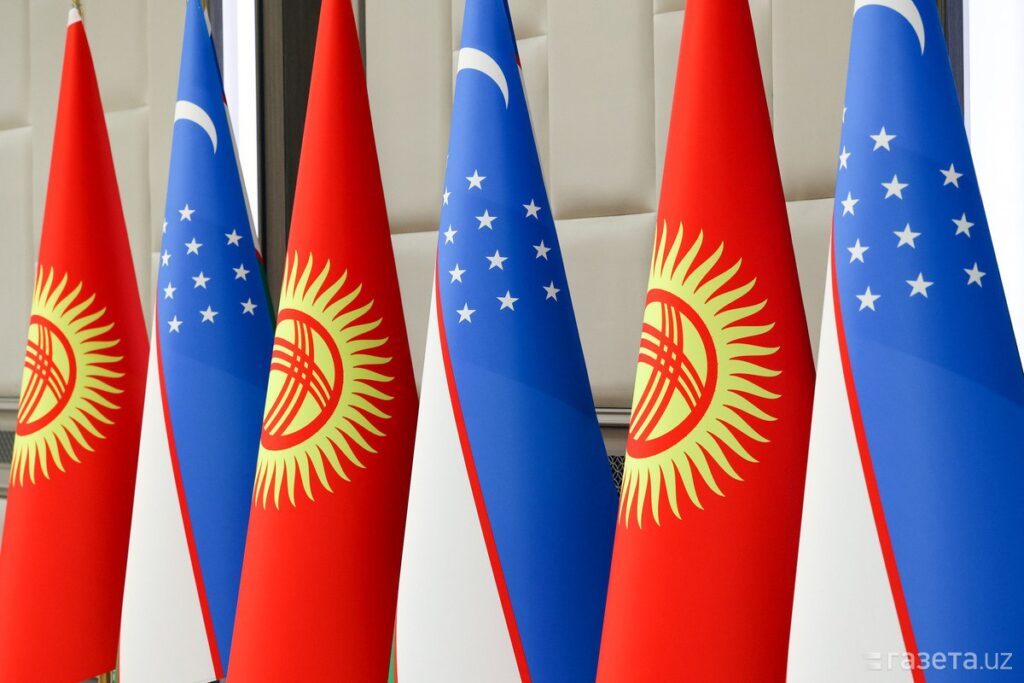
Uzbekistan and Kyrgyzstan Reach Deal to Share Chashma Water Spring

Uzbekistan and Kyrgyzstan have reached an agreement to jointly use the Chashma water spring, located along their shared border. According to Uzbekistan’s government portal, both countries have confirmed the main terms of the agreement, ensuring that Uzbek citizens can access the spring freely. They also agreed not to undertake any actions that would hinder full use of the spring by citizens of either side. The agreement was reached during a meeting held in Tashkent on April 24, led by Uzbek Prime Minister Abdulla Aripov and Kyrgyz Deputy Prime Minister Kamchybek Tashiev. During the meeting, the delegations also approved a protocol concerning the final unsettled section of the border. Both sides emphasized that the Chashma spring is a shared treasure of the Uzbek and Kyrgyz peoples. Under the agreement, Uzbekistan will have access to two-thirds of the spring’s water. Any activities that could impact the quantity or quality of the water must be coordinated with the Uzbek side. The two countries also agreed to finalize and sign a comprehensive agreement on the joint use of the Chashma spring and the final demarcation of the state border as soon as possible. The talks were praised for helping to ease border crossings for citizens and goods. Both sides stressed the need to promptly update and sign a protocol to amend the 2004 agreement on border checkpoints to make cross-border travel more convenient for citizens. The delegations agreed to convene another meeting of the working groups soon. At the conclusion of the talks, a protocol summarizing the agreements was signed. The Chashma spring has been a sensitive issue in the past. In May 2020, a conflict erupted during a joint irrigation canal cleaning operation at the spring, resulting in injuries. According to Uzbekistan’s Foreign Ministry, 187 Uzbeks were injured, while Kyrgyzstan’s Health Ministry reported that 25 individuals were hospitalized.

China and Central Asia Deepen Ties at Almaty Foreign Ministers’ Meeting

The sixth meeting of foreign ministers in the “Central Asia-China” format was held in Almaty, attended by the foreign ministers of Kazakhstan (Murat Nurtleu), China (Wang Yi), Kyrgyzstan (Jeenbek Kulubaev), Tajikistan (Sirojiddin Muhriddin), Uzbekistan (Bakhtiyor Saidov), and a representative of Turkmenistan.  The main topics of discussion included strengthening political dialogue, expanding trade and economic ties, enhancing transport interconnectivity, and jointly countering global challenges. The ministers also addressed sustainable development and environmental security, outlining steps to improve the architecture of multilateral cooperation based on the principles of equality and mutual respect. A key item on the agenda was preparation for the second China-Central Asia Summit scheduled for this year. The foreign ministers engaged in in-depth political coordination and exchanged views on expanding cooperation across various fields. Challenges of Globalization and China's Position Chinese Foreign Minister Wang Yi expressed concern over growing trends of anti-globalization and protectionism. He criticized the United States for launching a “tariff war” against more than 180 countries, stating that it had undermined international trade rules and the stability of the world economy.  "China will consistently promote a high degree of openness, share opportunities with the world, and take responsibility for upholding international norms," Wang Yi emphasized. China proposed five areas for deepening cooperation with Central Asia: building political trust, promoting trade and investment, improving cooperation mechanisms, jointly celebrating historical anniversaries, and developing humanitarian ties. Positions of the Central Asian Countries The Central Asian foreign ministers highly supported China's proposal to build a "community of common destiny" and expressed intentions to intensify joint efforts under the Belt and Road Initiative. Particular attention was paid to facilitating trade, enhancing transportation connectivity, boosting industrial investment, and promoting agricultural development. The ministers reaffirmed their commitment to combating the "three forces of evil", terrorism, extremism, and separatism and to strengthening cooperation within the United Nations framework. A joint communiqué was adopted following the meeting, reaffirming the parties' commitment to good-neighborliness, sustainable development, and deepening partnership.  Kazakhstan at the Center of Integration Processes Kazakhstan’s Foreign Minister Murat Nurtleu highlighted that the leaders of Central Asian countries had set clear guidelines for cooperation in trade, energy, transport logistics, education, and science.  "In 2024, trade turnover between Central Asia and China reached a record $95 billion, with Kazakhstan accounting for 46% of that total," Nurtleu said. He noted that combining the region’s potential with China’s economic opportunities paves the way for a new architecture of strategic partnership. Plans to launch tourist railway routes between China and Central Asian countries were also discussed, and 2025 was declared the Year of Tourism of Uzbekistan in China. Bilateral Meetings on the Margins of the Event On the sidelines of the forum, Wang Yi held separate meetings with his counterparts from Kyrgyzstan, Tajikistan, and Uzbekistan.  With Kyrgyz Foreign Minister Jeenbek Kulubaev, Wang discussed expanding practical cooperation and accelerating the China-Kyrgyzstan-Uzbekistan railway project. Talks with Tajik Foreign Minister Sirojiddin Muhriddin focused on strengthening strategic partnership and promoting initiatives within the Belt and Road framework. With Uzbek Foreign Minister Bakhtiyor Saidov,...

Water Level in Lake Balkhash Steadily Rising

Over the past year, the water level in Lake Balkhash has risen by 0.12 meters, and the volume of water has increased by 2 billion cubic meters, according to Kazakhstan’s Ministry of Water Resources and Irrigation.  Located 175 miles northwest of Almaty, Kazakhstan’s largest city, Lake Balkhash is the world’s fifteenth-largest lake. In May 2024, reports indicated that Balkhash’s water level had risen by 0.23 meters since the start of the year, largely due to increased rainfall and snowmelt floods during spring. Since the beginning of 2025, 3.8 billion cubic meters of water have been released from the Kapchagay reservoir in Almaty region into Lake Balkhash. The lake’s water volume largely depends on the transboundary Ili River, which originates in China and supplies about 70% of Balkhash’s inflow. The river’s flow is regulated by the Kapchagay reservoir. This year, Lake Balkhash is expected to receive a total of 12 billion cubic meters of water from the reservoir. According to Minister of Water Resources and Irrigation Nurzhan Nurzhigitov, the ministry will meet with French experts next week to begin preparations for a master plan to conserve Lake Balkhash through 2040. The Times of Central Asia previously reported that in December 2024, Kazakhstan’s Ministry of Water Resources and Irrigation signed a cooperation agreement with the French Development Agency (AFD) and the French Geological Survey (BRGM, Bureau de Recherches Géologiques et Minières) to preserve Lake Balkhash.  Under the agreement, the French side will allocate a grant of 1.35 million euros to Kazakhstan’s Ministry of Water Resources and Irrigation to support the development of sustainable water management practices for the lake. The project includes a comprehensive study of the Lake Balkhash basin and the creation of a long-term preservation plan extending through 2040.

Visa-Free Deal Under Review After Arrests of Uzbek Citizens in Dubai

The visa-free arrangement between Uzbekistan and the United Arab Emirates could be in jeopardy because of the increase in alleged violations by Uzbek citizens in the emirates, according to Uzbekistan’s Ministry of Foreign Affairs. The leadership of the Dubai Criminal Investigation Department told Uzbek diplomats in a meeting that 15 Uzbek nationals had been detained in an incident and an investigation was underway, Akhror Burkhanov, spokesman for the Uzbek ministry, said on Telegram. Several Uzbek media outlets have reported that two groups of Uzbeks clashed in a street brawl this month and that some of them were stabbed. Some reports said one person was killed. In the meeting between Uzbek and UAE officials, it was noted “that the recent increase in violations committed by Uzbek citizens could affect the visa-free regime between the two countries,” Burkhanov said in the post on Friday. He said the foreign ministry is working with law enforcement agencies on the matter and urged Uzbek citizens “to refrain from actions that tarnish the honor of our compatriots abroad.” In March, a court in Abu Dhabi sentenced three Uzbek citizens to death after they were convicted of abducting and murdering Zvi Kogan, an Israeli-Moldovan rabbi whose body was discovered in the Emirati city of Al Ain in November 2024. A fourth person convicted in the killing was sentenced to life in prison. An emissary for the ultra-Orthodox Chabad Hasidic movement in the UAE, Kogan also served as an aide to his brother-in-law, Levi Duchman, the Chief Rabbi of the UAE, who normalized ties with Israel in late 2020, a move met with skepticism in the UAE and across the wider Muslim world. Israel said the killing of Kogan was an act of terror. Some Uzbek citizens, meanwhile, have encountered problems trying to enter the United Arab Emirates. The visa-free regime between Uzbekistan and the United Arab Emirates started early last year. Citizens can travel to each other´s countries without a visa if they don’t stay any longer than 30 days. “This measure is considered an important step towards enhancing joint cooperation in the fields of politics, economics, culture, education and other areas of common interest,” the UAE’s Ministry of Foreign Affairs said.

Unlocking Potential: Education Reform Necessary for Central Asia’s Economic Rise

Central Asian countries have made remarkable progress in providing universal access to education, showcasing their commitment to developing their human capital. According to recent data, the region boasts impressive enrolment rates, with students averaging 12.6 years of primary and secondary education — nearing the maximum limit of 14 years. Even more striking is that approximately 40% of young adults successfully graduate from universities, exceeding the global average of 31%, and private education in the region is also growing competitively, with the number of higher education institutions in particular doubling in the last two to five years, reflecting the region's commitment to higher education. Despite the significant strides made in access to education and levels of academic achievement, a disconcerting trend is emerging: students' academic performance is declining. This troubling shift becomes apparent through the diminishing scores recorded on standardized assessments, most notably the Program for International Student Assessment (PISA), which gauges the competencies of 15-year-olds globally. Over the last decade, the decline in math scores among Central Asian students has been particularly alarming, reflecting a staggering regression equivalent to the loss of an entire year of formal schooling. This deterioration in academic performance raises critical concerns, as it jeopardizes not only the prospects of these students but the whole region's broader economic potential and workforce capabilities. The implications of such a decline are profound, threatening to undermine the foundation of growth and innovation that education is meant to support. Mental arithmetic is traditionally defined as the ability to perform precise calculations without any reliance on external tools such as paper, pencils, mechanical calculators, or computers. This skill, widely known is crucial in a child's mathematical education and development. In Central Asia, mental arithmetic has gained immense popularity as an educational approach, particularly targeting children between the ages of 4 and 16. This method emphasizes the cultivation of mental calculation skills through various engaging tools, with the abacus being one of the most prominent. Instead of depending solely on written calculations or electronic devices, this approach aims to enhance a child’s cognitive abilities, fostering essential skills such as mental retention, focus, and practical problem-solving strategies. Moreover, it instills confidence in their mathematical capabilities while nurturing a genuine appreciation for the subject. By mastering mental arithmetic, students improve their mathematical prowess and gain significant advantages — especially for those aspiring to enter fields such as policymaking that rely heavily on Information technology, science, statistics, and economics. While modern technology has introduced tools like calculators and sophisticated spreadsheets to handle complex computations, the benefits of proficient mental math skills are undeniable. Such skills can significantly enhance a policymaker’s efficiency, accuracy, and decision-making capabilities in various real-world scenarios. Here are some reasons why these skills are crucial: Faster Data Analysis and Estimations Economists often deal with large datasets, percentages, and financial projections. Mental arithmetic helps them quickly estimate trends, identify errors, and make fast decisions without always relying on tools. Improved Problem-Solving and Logical Thinking Mental math strengthens the brain’s cognitive flexibility, helping economists...