• KGS/USD = 0.01144 0%
  • KZT/USD = 0.00203 0%
  • TJS/USD = 0.10448 -0.19%
  • UZS/USD = 0.00008 0%
  • TMT/USD = 0.28490 0%
  • KGS/USD = 0.01144 0%
  • KZT/USD = 0.00203 0%
  • TJS/USD = 0.10448 -0.19%
  • UZS/USD = 0.00008 0%
  • TMT/USD = 0.28490 0%
  • KGS/USD = 0.01144 0%
  • KZT/USD = 0.00203 0%
  • TJS/USD = 0.10448 -0.19%
  • UZS/USD = 0.00008 0%
  • TMT/USD = 0.28490 0%
  • KGS/USD = 0.01144 0%
  • KZT/USD = 0.00203 0%
  • TJS/USD = 0.10448 -0.19%
  • UZS/USD = 0.00008 0%
  • TMT/USD = 0.28490 0%
  • KGS/USD = 0.01144 0%
  • KZT/USD = 0.00203 0%
  • TJS/USD = 0.10448 -0.19%
  • UZS/USD = 0.00008 0%
  • TMT/USD = 0.28490 0%
  • KGS/USD = 0.01144 0%
  • KZT/USD = 0.00203 0%
  • TJS/USD = 0.10448 -0.19%
  • UZS/USD = 0.00008 0%
  • TMT/USD = 0.28490 0%
  • KGS/USD = 0.01144 0%
  • KZT/USD = 0.00203 0%
  • TJS/USD = 0.10448 -0.19%
  • UZS/USD = 0.00008 0%
  • TMT/USD = 0.28490 0%
  • KGS/USD = 0.01144 0%
  • KZT/USD = 0.00203 0%
  • TJS/USD = 0.10448 -0.19%
  • UZS/USD = 0.00008 0%
  • TMT/USD = 0.28490 0%

Viewing results 1405 - 1410 of 2233

Central Asia – EU Political and Security Cooperation

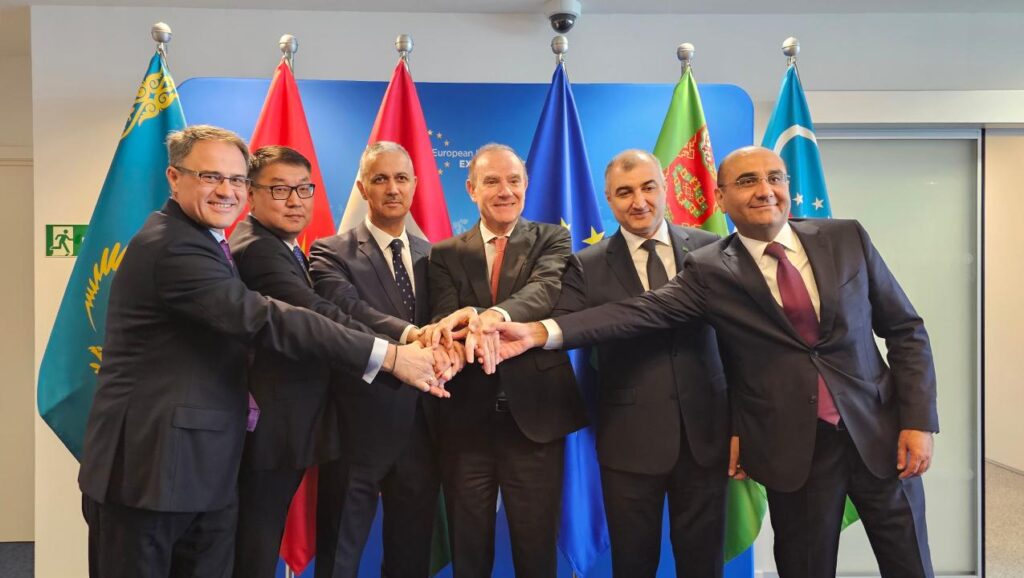
On June 5, Brussels hosted the 11th round of the annual High-Level Political and Security Dialogue between the European Union and Central Asia. Chaired by Enrique Mora, Deputy Secretary-General for Political Affairs of the European External Action Service, the meeting was attended by Deputy Ministers of Foreign Affairs of Kazakhstan, the Kyrgyz Republic, Tajikistan, Turkmenistan, and Uzbekistan. As reported by Kazakhstan’s Foreign Ministry, the agenda comprised the implementation of the Joint Roadmap for Deepening Ties between Central Asia and the EU, the dynamics of transport, trade, economic, energy and climate relations, and common security challenges regarding Afghanistan. Roman Vassilenko, Deputy Minister of Foreign Affairs of Kazakhstan, presented several initiatives relating to energy, trade and water resources management aimed at enhancing interregional cooperation with the EU. Outlining the priorities of Kazakhstan’s chairmanship of the International Fund for Saving the Aral Sea (IFAS), he highlighted a program for continuous monitoring of the basin ecosystem. To be implemented over the next three years, the initiative will provide a mechanism for long-term intraregional cooperation on the Aral issue. Vassilenko also reiterated the need for Central Asian countries to synchronize efforts in the fields of effective irrigation, the operation of water and energy facilities, and the implementation of environmental measures. The European External Action Service reported that in turn, the EU had reaffirmed its willingness to support efforts to intensify its cooperation on security with Central Asia, especially in areas concerning management of water-related challenges, energy and climate change, and connectivity. The High-Level Political and Security Dialogue was the latest conference to be held within the context of increased engagement between Central Asia and the European Union. Central Asia’s Heads of State and the President of the European Council had previously met on 27 October 2022 and 2 June 2023.  At a further EU-Central Asia Ministerial meeting on 23 October 2023 in Luxembourg, the 27 EU Foreign Ministers adopted a Joint Roadmap for Deepening Ties between the EU and Central Asia with concrete actions for strengthening cooperation, most notably regarding security. The EU and Central Asian countries are now planning the first-ever EU-Central Asia Summit for later this year.    
Kazakhstan’s President Tokayev Foresees a Bigger Role for Middle Powers in Solving the World’s Problems

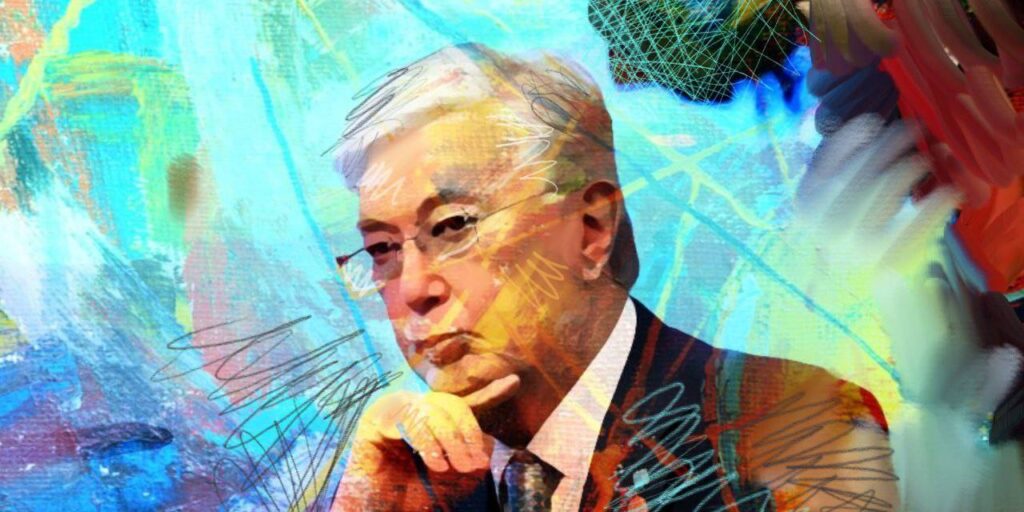
Middle powers, sometimes called “swing states”, may rank below superpowers and great powers in terms of their international influence and capacity, but are still quite instrumental in world affairs as they can often remain neutral in big conflicts and benefit from such factors as their geostrategic location, natural resource wealth, diplomatic and economic strength, and/or military capabilities. They can play a key role in overcoming fragmentation of the world economy and secure supply chains through such transit routes as the Middle Corridor. Today, middle powers have the agility to navigate complex political situations in many parts of the world that greater powers simply lack whether due to their own internal dynamics or because they lack the trust of the parties involved in certain conflicts and issues. In terms of realizing the green transition, middle powers can help secure supplies of critical minerals and other key materials. These countries are also often proponents of finding multilateral solutions to international problems.  Kazakhstan is currently among the world’s influential middle powers. On the positive role his country can play, President Kassym-Jomart Tokayev recently wrote in a Euronews opinion piece that, “nations like ours possess the economic strength, military capabilities, and, perhaps more importantly, political will and diplomatic acumen necessary to exert significant sway in the global arena on issues ranging from food and energy security, green transition, and IT to the sustainability of supply chains.” These strengths are particularly relevant amidst a global discord where, in Tokayev’s words, “the traditional powerhouses – the world’s economic and political behemoths – are increasingly unable to work together”. Countries like Kazakhstan, on the other hand, “can ensure stability, peace and development in their immediate regions and beyond” and “carve paths toward compromise and reconciliation”. Kazakhstan has deepened its cooperation with other middle powers within Central Asia and the Caucasus to address cross-border challenges such as water security and countering terrorism and narcotrafficking. Its collaboration with Azerbaijan and Turkey has been critical to actualizing the Middle Corridor project that opens Central Asia to Western markets. Kazakhstan is working closely with European states to guarantee their energy needs. For Asian countries, Kazakhstan has come into focus as an attractive foreign investment destination. These middle power collaborations have been formalized through highest-level bilateral meetings. Tokayev has carried out dozens of such meetings in 2024 year alone.  Having come from a long diplomatic career himself, it is encouraging to see President Tokayev’s ongoing support for multilateralism and international cooperation. Kazakhstan will co-chair the inaugural One Water Summit later this year with France to address the global water crisis including the effects of climate change, biodiversity loss and pollution. The event is key to bringing together affected countries and communities from around the world. Additionally, leading regional efforts to counter the effects of climate change, Kazakhstan has offered to host a UN Regional Centre for Sustainable Development Goals on Central Asia and Afghanistan. The country is also undertaking initiatives to advance peace talks between Armenia and Azerbaijan. “With major powers increasingly unwilling to...

Peace for Women and Children Returning from Syria to Tajikistan

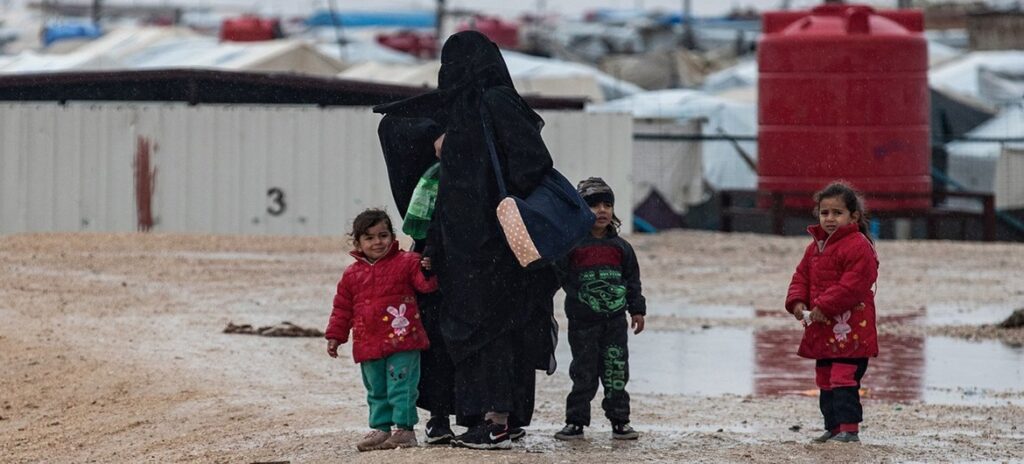
Dozens of women and children returning from Syria have now been reunited with their loved ones in Tajikistan and according to the  Ministry of Health, are adapting to a peaceful life. The return of Tajik citizens, primarily women and children, who left for Syria's combat zone and fell prey to terrorist organizations, has continued  since 2022. On 27 September 2023, the Government of Tajikistan introduced a program to aid their rehabilitation. According to , Kudratullo Kurbonzoda, head of the Social Protection Department of Tajikistan's Ministry of Health and Social Protection,  over the past two years, 334 people, including 259 children, have been returned from Syrian prisons to their homeland and having passed through the program's three stages, are settling in well. “Their health and mental state have recovered," commented Kurbonzoda Ku, adding that thanks to the program, even those without documents, such as passports or birth certificates, have been able to contact their families wherever they are in the country. A further 47 people who returned in April are currently  under the supervision of the agency's specialists and receiving assistance from doctors and psychologists, as well as from education and internal affairs officials. Referencing  the program's guidelines, Kurbonzoda added that in addition to financial and material assistance, the government  recommended the placement of  the children in schools and kindergartens, and provision of training and jobs for women.

International Development Association Allocates $25 million to Kyrgyz Universities.

The International Development Association (IDA) has announced it will  provide Kyrgyzstan with a $25 million interest-free loan over 50 years, with a ten-year grace period. The loan includes an allocation of $19.7 million to be divided between  five of the country's universities. The Academy of Medicine will receive $4 million, $1.3 million of which will be invested in laboratories for biochemical research, genetics, and molecular biology; $900,000 on equipment for pathomorphological research, and $800,000 on equipment for a laboratory for pharmaceutical bioequivalence studies. The remaining $1 million will be spent on laboratories, IT equipment, and software for new and expanded educational programs. Kyrgyz State Technical University will be allocated $3.2 million,  $2.2 million of which will be used for equipment and software for three laboratories, IT equipment, and software. The Kyrgyz National University (KNU) will also receive $3.2 million with $1.7 million allocated for scientific and IT equipment and software for teaching laboratories. The remaining $1.5 million will be spent on laboratories, IT equipment, and software for educational programs. Osh State University (OSU) will receive $2.8 million, with $300,000 reserved for the purchase of an ultrasound machine for breast examination, $1.5 million for an MRI machine, and $1 million for laboratory and IT equipment and software programs. The University of Agriculture has been allocated  $3.75 million, with $800,000 to be used to purchase equipment for an infectious animal disease diagnostic laboratory, $1.2 million for molecular genetic equipment, $550,000 for equipment for a histology and immunohistochemistry laboratory, $400,000 for equipment for the Department of Veterinary Medicine and Food Safety, and $800,000 for laboratory and IT equipment and software. The national budget will cover $5.3 million of the loan funds whilst the universities will pay off the remaining amount through revenue provided by laboratory services.

Uzbekistan-EU Trade Reaches 5.13 billion Euros

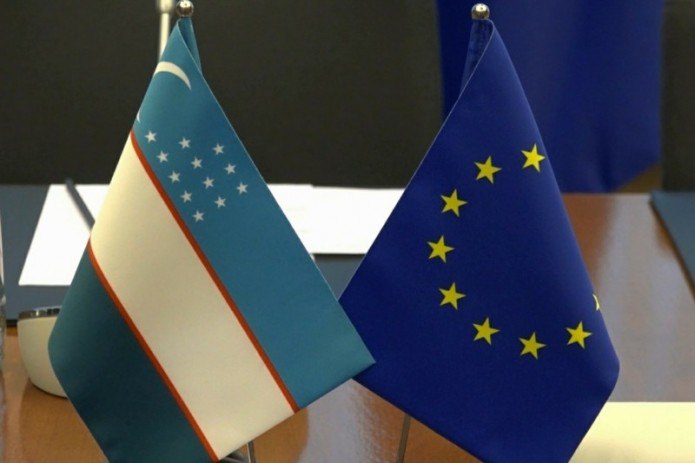
In 2023, the trade turnover between Uzbekistan and the European Union increased by 11% to 5.13 billion euros. As reported by  EU Ambassador to Uzbekistan, Charlotte Adrian, exports from the EU to the Republic of Uzbekistan amounted to 4.35 billion euros, and imports from Uzbekistan to the EU,  780 million euros. By way of comparison, she then stated that in 2022,  EU exports to Uzbekistan reached 3.77 billion euros, an increase of 63.9%, and imports from Uzbekistan to the EU rose by 77.1% to 845 million euros, resulting in around 70%  growth of trade turnover. “Behind these figures," announced Adrian, " are stories of how our businesses have made bold decisions to invest in Uzbekistan.”   This year celebrates the 30th anniversary of diplomatic relations between Uzbekistan and the European Union and on behalf of the EU, the ambassador praised  Uzbekistan's “ambitious path of reforms" and pledged:   “We will continue to assist Uzbekistan using all the instruments at our disposal, including the Generalized Scheme of Preferences Plus (GSP+). We will also continue to support Uzbekistan's accession to the World Trade Organization or EPCA (European Petrochemical Association), which will open a new chapter of our partnership." She added that by following its the path of reforms, Uzbekistan will create a level playing field which she hoped would encourage more interest from European companies.

Two Uzbek Universities Enter the QS World Rankings

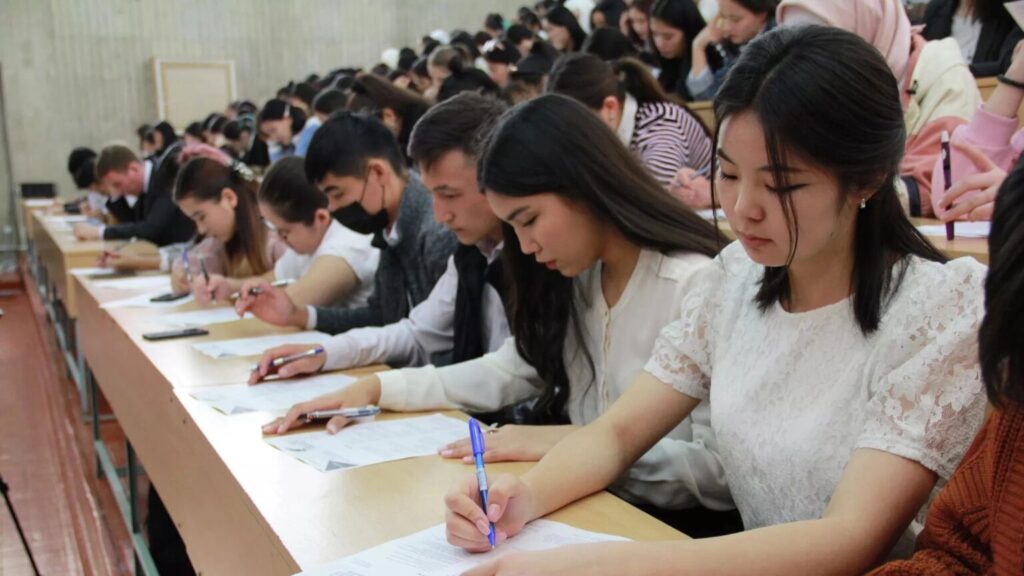
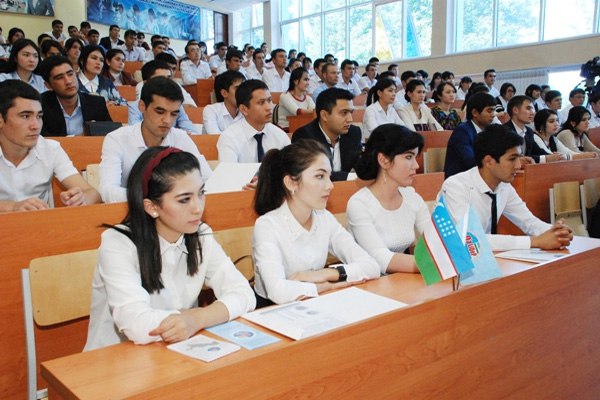
The higher education analytics firm Quacquarelli Symonds has published its latest annual table of the world’s best universities -- the QS World University Rankings 2025. For the first time in the ratings' history, two Uzbek universities — the Tashkent Institute of Irrigation and Agricultural Mechanization Engineers (TIIAME) National Research University (547th place) and the Mirzo Ulugbek National University of Uzbekistan (781st place) — were included in the ranking. Under the QS "academic reputation" indicator, TIIAME National Research University is among the top 300 universities in the world. The National University of Uzbekistan has produced renowned scientists who have made significant contributions to the advancement of global science. The Times of Central Asia has previously written about Botir Kobilov, who received a doctoral degree from Harvard Business School. Damir Musayev, another Uzbek, defended his doctoral thesis in genetics at Yale University in the United States and received his Doctor of Science degree.