As UN’s Guterres Returns to Central Asia, Kazakhstan Advances Its Role as Regional Convenor
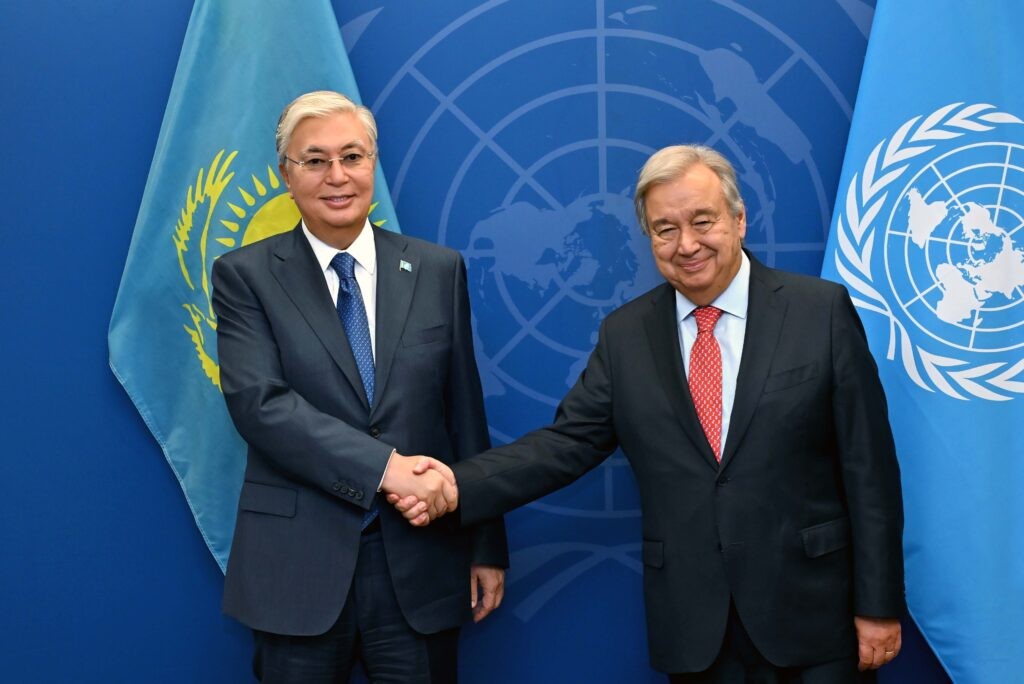
UN Secretary-General António Guterres returned to Central Asia this weekend, joining President Kassym-Jomart Tokayev in Astana to inaugurate a new UN Regional Center for Sustainable Development Goals (SDGs), with a scope covering Central Asia and Afghanistan. The initiative is meant to support regional economies, ease migration pressures, and introduce a framework for incremental political stabilization in Afghanistan. After Astana, Guterres is expected in Awaza, Turkmenistan, where he will address a UN conference focused on the challenges facing landlocked developing countries (LLDCs), notably trade, infrastructure, and regional resilience. It is Guterres's first visit to the region since July 2024, when he visited all five Central Asian republics. This time, the context has shifted. Long considered a peripheral space, or merely a corridor between larger powers, Central Asia has now become integral to multilateral thinking. The SDG Center in Almaty and the LLDC forum in Ashgabat reflect that change. Institutions are catching up to geography. Kazakhstan’s role is pivotal. Under Tokayev’s presidency, it has moved steadily into a position of structural convenor. That position rests on four broad dynamics: the diplomatic adjustments in the region following Russia’s war in Ukraine; the emergence of the Middle Corridor; Afghanistan’s reentry into regional frameworks via development; and the UN’s own internal recalibrations. The first is strategic drift away from Moscow. Since 2022, Kazakhstan has maintained a working relationship with Russia while expanding cooperation with China, the EU, and the Gulf. The tone has been restrained, but the implications are more consequential. This is a definitive move that has allowed the country to present itself as a non-aligned anchor for multilateral initiatives. The second is logistical. The Trans-Caspian International Trade Route (TITR, Middle Corridor) connects China to Europe across Kazakhstan, the South Caucasus, and Turkey. Its significance has grown as Russian routes become riskier. Almaty’s selection as the SDG Center’s home is no coincidence: it manifests the marriage of infrastructure with diplomacy. The third dynamic centers on Afghanistan. Direct diplomacy remains difficult here, but the need to address such issue-areas as humanitarian need, border tension, and migration does not go away. The SDG Center’s inclusion of Afghanistan in its mandate offers a different path: containment through technical coordination. That model works only where the host is both stable and neutral and Kazakhstan, under Tokayev’s reforms, fits that bill. Fourth is the institutional side. Since 2020, Guterres has promoted what he calls “networked multilateralism,” which seeks to shift in how the UN extends itself into contested spaces. The idea is to move from template-based programming drawn up in central bureaucratic offices to regionally adapted coordination centers. The Almaty SDG Center fits that mold. It is not a field office but a mechanism for structured interdependence in a space that resists more direct approaches. On August 3, Guterres and Tokayev signed the host-country agreement. The legal formalities were expected, but the clear signal given is that the UN is willing to treat Central Asia not simply as a collection of national teams, but as a zone where development...