• KGS/USD = 0.01144 0%
  • KZT/USD = 0.00216 0%
  • TJS/USD = 0.10663 0%
  • UZS/USD = 0.00008 0%
  • TMT/USD = 0.28530 0%
  • KGS/USD = 0.01144 0%
  • KZT/USD = 0.00216 0%
  • TJS/USD = 0.10663 0%
  • UZS/USD = 0.00008 0%
  • TMT/USD = 0.28530 0%
  • KGS/USD = 0.01144 0%
  • KZT/USD = 0.00216 0%
  • TJS/USD = 0.10663 0%
  • UZS/USD = 0.00008 0%
  • TMT/USD = 0.28530 0%
  • KGS/USD = 0.01144 0%
  • KZT/USD = 0.00216 0%
  • TJS/USD = 0.10663 0%
  • UZS/USD = 0.00008 0%
  • TMT/USD = 0.28530 0%
  • KGS/USD = 0.01144 0%
  • KZT/USD = 0.00216 0%
  • TJS/USD = 0.10663 0%
  • UZS/USD = 0.00008 0%
  • TMT/USD = 0.28530 0%
  • KGS/USD = 0.01144 0%
  • KZT/USD = 0.00216 0%
  • TJS/USD = 0.10663 0%
  • UZS/USD = 0.00008 0%
  • TMT/USD = 0.28530 0%
  • KGS/USD = 0.01144 0%
  • KZT/USD = 0.00216 0%
  • TJS/USD = 0.10663 0%
  • UZS/USD = 0.00008 0%
  • TMT/USD = 0.28530 0%
  • KGS/USD = 0.01144 0%
  • KZT/USD = 0.00216 0%
  • TJS/USD = 0.10663 0%
  • UZS/USD = 0.00008 0%
  • TMT/USD = 0.28530 0%

Viewing results 553 - 558 of 2047

Kazakhstan Limits Duty-Free Smartphone Imports to Two Per Person Annually

Kazakhstan's Ministry of Finance plans to amend regulations governing the volume of goods citizens may import for personal use without paying customs duties. According to a draft order published on the Open NPAs (Normative Legal Acts) website, individuals will be allowed to bring in no more than two new smartphones and two new tablets per year, duty-free, from outside the Eurasian Economic Union (EAEU). The proposed changes, open for public discussion until April 22, also cap duty-free imports at one new laptop, one new bicycle, one baby stroller, and one car per person annually. All restrictions apply exclusively to newly manufactured goods in factory packaging. Used versions of these items, except for cars, will not be subject to quantity limits. Additionally, individuals may import up to five pieces of jewelry and one item of fur clothing (including headwear) per year, provided each item differs by name, size, or style. These restrictions are part of a broader effort by authorities to curb the illegal import and resale of consumer goods, especially smartphones. As The Times of Central Asia reported earlier this year, Kazakhstan intensified efforts in March to clamp down on the smuggling of smartphones into the domestic market. The new limits on personal-use imports are a key part of this crackdown. However, questions remain as to why the regulations do not cover used smartphones, which are also commonly trafficked through unofficial channels.

Unpacking the Effects of Trump’s Tariffs on Central Asia

Trade analysts across Central Asia generally agree that the immediate impact of the United States' tariff policy on the export dynamics of their nations will likely be minimal, as observed in past experiences, except for Kazakhstan. However, there is a palpable concern regarding potential unforeseen consequences arising from a broader global trade conflict. Notably, the timing of the Trump administration's announcement regarding global tariffs on imports coincides with a period when Central Asian countries are actively working to enhance their regional trade relationships. This new tariff policy raises significant doubts about the authenticity of recent U.S. efforts to promote increased trade and investment in the region. The mixed signals coming from Washington may lead Central Asian leaders to re-evaluate their current trade partnerships, especially as they consider the benefits of strengthening ties with China and Russia against the attractiveness of expanding commerce with the United States. Similarly, the European Union may find an opportunity to improve its position, while India could leverage the Chabahar route (a multi-modal transportation route connecting India, Iran, Afghanistan, and potentially Central Asia and Europe). It is worth noting that the market is primarily situated in Asia, and this alternative could have adverse long-term effects on the United States. Kazakhstan, acknowledged as the United States’ largest trading partner in Central Asia, is poised to face significant repercussions from introducing new tariffs set at 27%. In 2024, trade relations between the U.S. and Kazakhstan reached an impressive total of $3.4 billion, with $1.1 billion in U.S. exports to Kazakhstan and $2.3 billion in imports from Kazakhstan to the U.S. However, a statement from the Kazakh Trade Ministry indicates that exports to the U.S. primarily consist of crude oil, uranium, silver, and other raw materials, all exempt from these tariffs. In 2024, Kazakhstan exported only $95.2 million worth of goods, which will now incur surcharges – a relatively modest figure compared to the country’s overall foreign trade turnover of $141.4 billion. Trade analysts suggest that Kazakhstan has little cause for concern, viewing this situation more as a psychological impact than a serious economic threat. Resource-driven Central Asian economies, such as Kazakhstan, may even find enhanced opportunities in the expanding Asian market. Trade dynamics in Central Asia reveal a complex landscape, especially concerning the United States. In 2024, Uzbekistan managed to export a modest $42.4 million worth of goods to the US, a small fraction considering its total foreign trade turnover, which reached an impressive $66 billion for that year. This stark contrast highlights the limited engagement of Uzbekistan in the American market. With its total trade turnover of $16 billion in 2024, Kyrgyzstan similarly struggled with exports to the US, which amounted to merely $16.7 million. This reflects a broader trend where Central Asian economies exhibit low volume exports to the US, suggesting significant barriers or challenges in establishing a foothold in this lucrative market. Tajikistan's economic performance presented an even more sobering picture. Recording a total trade turnover of $8.9 billion, the country achieved only $4.6 million...

Opinion – Storm Clouds Over Kazakhstan: Oil Slump and Global Risks Threaten Economic Stability

The persistent decline in Brent crude prices is the latest sign of a looming 'perfect storm' for Kazakhstan’s economy, the largest in Central Asia. With the mining sector comprising nearly half of its GDP and oil as a cornerstone resource, the nation’s economic stability is facing a cascade of potential shocks. Oil Prices and Budget Vulnerability Kazakhstan is grappling with significant economic headwinds amid forecasts of a global recession and declining energy prices. In April 2025, OPEC+, including Kazakhstan, unexpectedly agreed to raise oil production by 411,000 barrels per day, pushing prices below $65 per barrel. Given the country's reliance on hydrocarbon exports, such price drops jeopardize state revenues. Analysts say Kazakhstan needs oil prices to remain above $42.30 per barrel in 2025 to maintain fiscal stability. However, the threat extends beyond oil. As energy journalist Oleg Chervinsky noted on his Telegram channel, global commodity prices across the board are falling, a signal that recession is imminent. “The bad news for Kazakhstan is that prices are dropping not only for oil but for all raw materials,” Chervinsky wrote. “JP Morgan estimates the global recession probability at 60%. Even though oil and gas are exempt from Donald Trump’s new tariffs, the broader protectionist policies could fuel inflation, curb growth, and escalate trade tensions”. Trump's Trade War and Kazakhstan President Donald Trump’s sweeping tariffs are designed to limit low-cost imports and incentivize domestic production. Kazakhstan has been hit with a 27% tariff, the highest among the Central Asian nations. Its strategic location within China’s Belt and Road Initiative positions it as a potential re-export hub, prompting higher trade scrutiny. Kazakhstan’s Ministry of Trade and Integration has downplayed the immediate economic impact, noting that U.S.-bound exports account for less than 5% of total trade, and the country still holds a $1 billion trade surplus with the U.S. While the direct fallout may be limited, the broader implications of a global trade war could severely strain Kazakhstan’s economy. If a global recession takes hold, demand for Kazakhstan’s key exports, oil, uranium, and metals, will drop, dragging prices down further. Currency Pressures and Investor Retreat With shrinking export revenues, the tenge faces devaluation, leading to inflation, rising import costs, and weakened consumer purchasing power. In addition, recessions typically dampen foreign direct investment, especially in emerging markets like Kazakhstan, where perceived risk grows amid uncertainty. The China Factor The U.S.-China trade conflict is another critical variable. Trump’s strategy aims to undercut Beijing’s economic strength, but for Kazakhstan, China is its largest trading partner, representing over 15% of foreign trade. A slowdown in China would reduce demand for Kazakhstani raw materials and transit services. Such a downturn could also jeopardize President Kassym-Jomart Tokayev’s ambition to establish Kazakhstan as a vital trade corridor between China and Europe. While the Belt and Road Initiative is unlikely to collapse, reduced cargo flows would strain state revenues. China is also the primary buyer of Kazakhstan’s copper, aluminum, and ferroalloys. Any industrial slowdown there immediately impacts Kazakhstan's export volumes. Converging Risks Taken...

Kazakhstan to Promote Agritourism to Boost Rural Economies

Kazakhstan is taking steps to develop agritourism, with new legislation aimed at allowing farmers to engage in ecotourism on their land. According to government officials, the initiative is expected to generate jobs and raise incomes in rural areas. Agritourism involves urban residents visiting farms and agricultural enterprises. It typically includes two formats: passive and active. In the passive model, visitors observe farm life, interact with animals from a distance, and take part in photo shoots in fields and rural settings. The active model allows tourists to participate in agricultural activities such as caring for livestock and crops, harvesting produce, and even assisting with equipment repairs. Minister of Tourism and Sports Yerbol Mirzabasynov announced at a recent government meeting that the draft law currently under review by the Mazhilis, the lower house of Kazakhstan’s parliament, includes provisions to support agritourism as part of broader reforms in the tourism sector. “It is planned to grant farmers the right to engage in agritourism on their plots. Currently, there are more than 200,000 small farms across the country. This measure will create additional jobs for rural residents and improve the welfare of rural communities,” Mirzabasynov stated. In addition to agritourism, Kazakhstan plans to promote mountain tourism. Mirzabasynov noted that a comprehensive development plan has already been drafted for the Almaty mountain cluster. “According to international experience, the average spending by mountain tourists is about $350, compared to $50 for beach tourism,” he said. “In addition to Almaty, other regions, particularly East Kazakhstan, also have strong potential. Construction is underway on airports in Katon-Karagay and Zaisan to support this development.” The ministry is also working on upgrading national parks to enhance ecotourism. In recent years, eight visitor centers have been constructed, with tourist trails equipped with basic infrastructure. “Similar initiatives will be implemented in other regions to foster various types of tourism,” Mirzabasynov added. “Particularly important areas include ethno-cultural tourism, children and youth tourism, medical and wellness tourism, business travel, caravanning, and auto-tourism.” According to the Ministry of Tourism and Sports, Kazakhstan hosted 10.5 million domestic tourists and welcomed 15.3 million foreign visitors last year. As The Times of Central Asia previously reported, Kazakhstan introduced the Neo Nomad Visa in late 2024, allowing foreign nationals to stay in the country for up to one year.

China’s Jiangsu Province and Soho Holding Group to Build Multifunctional Center in Astana

Kazakhstan’s Minister of Trade and Integration, Arman Shakkaliyev, visited China on April 3, where he met with officials from Jiangsu Province and representatives of Jiangsu Soho Holding Group in Nanjing, the province’s capital. During the meeting, the Chinese side presented design concepts for a planned multifunctional center to be built in Kazakhstan’s capital, Astana, in 2026. According to the trade ministry, the future center will strengthen Kazakh-Chinese trade and business relations. It will serve as a venue for showcasing Chinese and Kazakh goods, hosting business negotiations, registering trade transactions, and providing consulting services. The complex will also include a trade pavilion, a cultural center, and an office for Jiangsu Soho Holding Group. The sides also discussed plans to hold a Jiangsu Province goods exhibition in Astana from June 11 to 13, to coincide with the upcoming Central Asia-China summit. As part of his visit, Shakkaliyev toured the Central Asia-Jiangsu Trade Center and the National Pavilion of Kazakhstan in Nanjing, which opened in September 2024. The trade center is a multifunctional platform promoting exports from Kazakhstan, Uzbekistan, Tajikistan, and Turkmenistan, and is designed to increase Central Asian access to the Chinese market. Shakkaliyev also held talks with Eurasia Construction Capital Co. Ltd, which is planning to launch an investment project in Kazakhstan’s Atyrau region to establish a private special economic zone (SEZ) or industrial park. The initial investment is estimated at $100 million. Seven major Chinese companies, specializing in petrochemical products, renewable energy, and construction materials, have expressed interest in participating in the SEZ. The minister affirmed the government’s full support for the initiative, highlighting its potential to develop high value-added production in Kazakhstan.

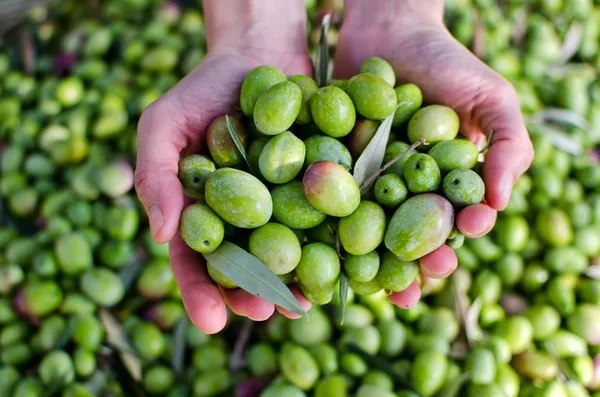
Kazakhstan Launches $20 Million Olive Cultivation and Oil Production Project

A major agricultural initiative valued at $20 million is underway in Kazakhstan, where the country’s first olive plantations have been established. By 2025, the total cultivated area is expected to reach 100 hectares. Laying the Groundwork for Investment Kazakhstan’s Minister of Agriculture, Aidarbek Saparov, recently met with George Svanidze, President of Global Olive Corporation, to discuss the ongoing implementation of the olive cultivation and olive oil production project. Launched in 2023, the project is a joint effort involving Kazakh companies QVM Technology, Ordabasy Group, and Ervira, in partnership with Georgia’s Olive Georgia. Initial pilot plantations were established in the Zhetysu, Turkestan, and Mangistau regions, where over 6,000 olive seedlings were planted, an effort that achieved a remarkable 99.7% survival rate. From Pilot Plantings to Industrial Production In spring 2024, the project expanded with new seedlings imported from Spain and Turkey. By the end of 2025, the cultivated area is expected to reach 100 hectares, with the first harvest anticipated within five years. Saparov emphasized the strategic value of the initiative, which aligns with Kazakhstan’s broader efforts to expand its food processing industry: “Our goal is to increase the share of processed agricultural products to 70%. The development of the olive industry is strategically important for the agro-industrial complex. We are committed to providing comprehensive support for this project,” Saparov said. Target: One Million Trees and Domestic Oil Production George Svanidze outlined ambitious plans to establish a sustainable olive industry in Kazakhstan, including planting up to one million olive trees, constructing a modern olive oil production facility, and setting up a nursery for seedling propagation. “We are ready to bring in international experts, train Kazakhstani agronomists, and share advanced technologies,” said Svanidze. According to preliminary estimates, annual yields could reach 150,000 tons of olives, enabling the production of up to 30,000 tons of olive oil. Kazakh partner QVM Technology confirmed the Ministry of Agriculture’s active support for the project. The meeting concluded with the signing of a Memorandum of Understanding and the preparation of a Road Map outlining the key implementation stages. Exotic Crops on Kazakh Soil Kazakhstan has previously experimented with cultivating non-native crops. In Turkestan region, bananas are grown successfully on a five-hectare plantation, yielding around 1,000 tons. Local authorities are also supporting efforts to expand tropical fruit cultivation, including mangoes and avocados, on a planned 90-hectare site. These initiatives reflect Kazakhstan’s commitment to modernizing its agricultural sector, diversifying crop production, and enhancing both food security and export potential.