• KGS/USD = 0.01144 0%
  • KZT/USD = 0.00217 0%
  • TJS/USD = 0.10637 -0.19%
  • UZS/USD = 0.00008 0%
  • TMT/USD = 0.28530 0%
  • KGS/USD = 0.01144 0%
  • KZT/USD = 0.00217 0%
  • TJS/USD = 0.10637 -0.19%
  • UZS/USD = 0.00008 0%
  • TMT/USD = 0.28530 0%
  • KGS/USD = 0.01144 0%
  • KZT/USD = 0.00217 0%
  • TJS/USD = 0.10637 -0.19%
  • UZS/USD = 0.00008 0%
  • TMT/USD = 0.28530 0%
  • KGS/USD = 0.01144 0%
  • KZT/USD = 0.00217 0%
  • TJS/USD = 0.10637 -0.19%
  • UZS/USD = 0.00008 0%
  • TMT/USD = 0.28530 0%
  • KGS/USD = 0.01144 0%
  • KZT/USD = 0.00217 0%
  • TJS/USD = 0.10637 -0.19%
  • UZS/USD = 0.00008 0%
  • TMT/USD = 0.28530 0%
  • KGS/USD = 0.01144 0%
  • KZT/USD = 0.00217 0%
  • TJS/USD = 0.10637 -0.19%
  • UZS/USD = 0.00008 0%
  • TMT/USD = 0.28530 0%
  • KGS/USD = 0.01144 0%
  • KZT/USD = 0.00217 0%
  • TJS/USD = 0.10637 -0.19%
  • UZS/USD = 0.00008 0%
  • TMT/USD = 0.28530 0%
  • KGS/USD = 0.01144 0%
  • KZT/USD = 0.00217 0%
  • TJS/USD = 0.10637 -0.19%
  • UZS/USD = 0.00008 0%
  • TMT/USD = 0.28530 0%

Viewing results 559 - 564 of 2035

EU-Central Asia Summit Opens New Opportunities for Kazakhstan

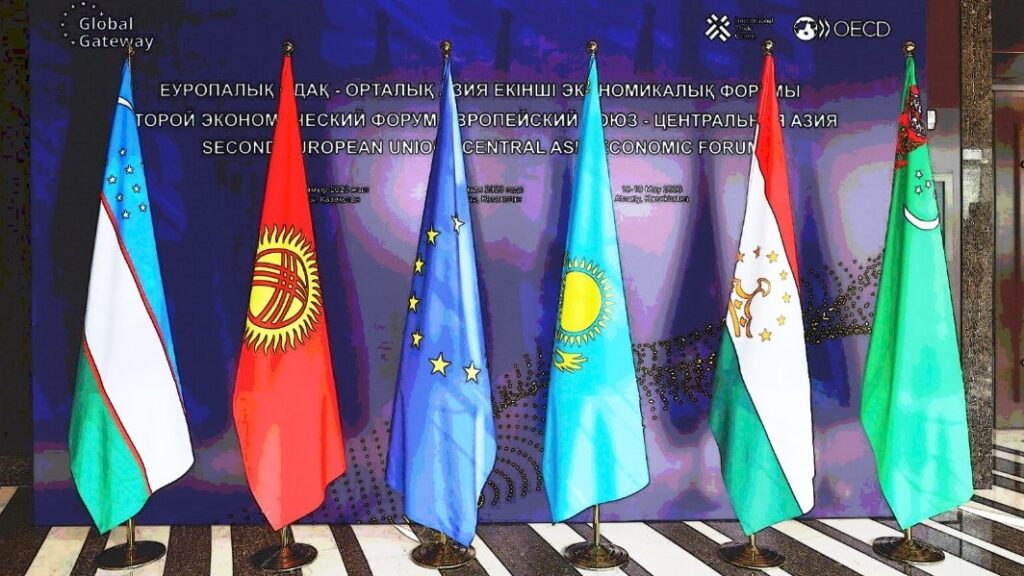
The first-ever summit between the European Union and the five Central Asian countries opened on April 3 in Samarkand, Uzbekistan. The meeting marks a milestone in regional diplomacy, as both sides seek to deepen cooperation amid growing geopolitical shifts. Kazakhstan, in particular, is entering the summit with growing international clout, thanks to its stable economic performance and balanced foreign policy approach. European Council President António Costa and European Commission President Ursula von der Leyen are representing the EU at the summit, which is being chaired by Uzbek President Shavkat Mirziyoyev. According to official sources, the summit aims to demonstrate mutual geopolitical interest and expand collaboration between Europe and Central Asia across key areas. The agenda includes strengthening multilateral ties, addressing shared security threats, enhancing economic and investment cooperation, and advancing collaboration under the EU’s Global Gateway initiative. Focus areas also include energy, climate neutrality, connectivity, and green transition, along with mobility and cultural exchange. The EU is already the region’s second-largest trading partner, accounting for 22.6% of Central Asia’s total foreign trade in 2023. It is also the largest source of foreign investment, responsible for over 40% of the region’s total inflows. Kazakhstan's President Kassym-Jomart Tokayev is attending the summit, following a bilateral meeting with President Mirziyoyev in Almaty on March 29. Also expected to participate are Kyrgyz President Sadyr Japarov, Tajik President Emomali Rahmon, and Turkmen President Serdar Berdimuhamedov. At the summit, the EU is set to unveil a substantial investment package for Central Asia, with priority sectors including transportation infrastructure, critical raw materials, energy transmission, and digitalization. European Commission President von der Leyen emphasized that Central Asia’s significant natural resources and industrial potential align with Europe’s sustainability goals. “Europe aims to create a complete value chain, not merely purchase raw materials. This is vital for generating local employment and upholding high environmental and social standards,” she said. Additional EU funding will be directed toward green energy projects and improvements to Uzbekistan’s water infrastructure. According to Tair Nigmanov, an international relations expert, the EU’s increased engagement stems from heightened geopolitical rivalry. “We are situated between major powers like Russia and China. The EU, as another global player, wants Central Asia to remain neutral and not gravitate toward any single power center,” Nigmanov told Inform.kz. “To that end, it is offering investment, trade opportunities, and political assurances.” For Kazakhstan, the summit presents a strategic platform to attract investment, reinforce its non-aligned stance, and leverage its growing geopolitical relevance in an increasingly multipolar world.


Kazakhstan’s Oil Exports Uninterrupted Despite Caspian Pipeline Consortium Berth Suspensions

Despite the suspension of two out of three offshore berths operated by the Caspian Pipeline Consortium (CPC), Kazakhstan’s oil exports are proceeding without disruption, according to the Ministry of Energy of the Republic of Kazakhstan. The ministry stated that there are currently no restrictions on the receipt or shipment of oil through the CPC system. Transshipment is being carried out on schedule via VPU-3, the third remote mooring unit, which has been in operation since 2014. “Shipments are proceeding normally and according to schedule through the VPU-3 offshore mooring device, which remains operational,” the Ministry of Energy announced. Temporary Suspension of VPU-1 and VPU-2 Earlier, CPC announced the temporary suspension of VPU-1 and VPU-2 following an unscheduled inspection conducted by Russia’s Rostransnadzor. The inspections are part of a broader review of marine infrastructure safety across the Azov-Black Sea basin, launched in the wake of an oil product spill in the Kerch Strait in December 2024. Following the inspection, regulatory authorities issued protocols and directives mandating the temporary shutdown of the two berths until the violations identified are addressed. In the meantime, all CPC shipments have been consolidated through VPU-3. Consortium shareholders have been formally notified of the developments. Similar Measures at Transneft Facility The crackdown on safety violations has extended beyond the CPC. The eighth oil-loading berth operated by JSC Novorossiysk Commercial Sea Port (NCSP Group), part of Russia’s Transneft, has also been suspended for 90 days. The suspension followed the identification of safety violations related to the handling of hazardous cargo. Transneft has been ordered to correct the deficiencies by June 30. Strategic Significance of CPC The CPC is Kazakhstan’s most critical export route for crude oil, linking the giant Tengiz Field with the Yuzhnaya Ozereyevka Terminal on the Black Sea. The pipeline stretches 1,510 kilometers, including 452 kilometers within Kazakhstan, and has an annual capacity of up to 81.5 million tons. In 2024, Kazakhstan exported 54.9 million tons of oil via CPC, accounting for approximately 80% of the country's total oil exports. Security Concerns: Drone Attacks Raise Alarms Security concerns continue to loom over the CPC infrastructure. In February, the Kropotkinskaya station was targeted by seven drones. While the Ministry of Energy reassured that oil deliveries remained unaffected, the incident heightened concerns about operational stability. Although Russia and Ukraine later agreed not to target CPC facilities, Russia alleges that its air defense systems intercepted another drone attack on March 24, the third such incident in a month. Oil market analyst Olzhas Baidildinov voiced skepticism about the durability of the ceasefire arrangement. “We shouldn’t count on an end to attacks on CPC infrastructure,” Baidildinov said. “There’s unwarranted optimism in Kazakh media and among some experts, especially against the backdrop of record oil output in February-March. A decline in both oil production and exports seems inevitable, along with a drop in KazMunayGas’ dividend income from CPC and budget revenues.” He also warned that irregular operations could damage infrastructure designed for continuous, stable use. “Oil pipelines are engineered for consistent operational...

How Kazakhstan and Azerbaijan Are Rewiring the Middle Corridor

Kazakhstan's acceleration of its strategic alignment with Azerbaijan signals more than bilateral convergence. It reflects a deeper structural reconfiguration of Eurasian connectivity, a reconfiguration that is not additive but integrative. As documented in multiple announcements and institutional moves across March 2025, their cooperation has crossed the threshold from parallel development to systemic coordination. This evolving dynamic illustrates the emergence of a regionally endogenous axis that, without proclaiming itself as such, is shaping the wider functional geometry of Eurasia. At the material core of this shift is the Middle Corridor — the Trans-Caspian International Transport Route (TITR) — linking China to Europe via Central Asia, the Caspian Sea, and the South Caucasus. While long viewed as a technical alternative to the Northern and Southern corridors, the Middle Corridor is now exhibiting the dynamics of what in systems theory would be called self-amplifying dynamic feedback loops. (The technical term is “autopoiesis,” literally “self-creation” of “self-production.”) In particular, institutional feedback, infrastructure reinforcement, and regulatory adaptation are all feeding into one another in ways characteristic of an autonomously emergent macroregional logic. Kazakhstan’s announcement in December 2024 of the financing of a new terminal at Alat port in Azerbaijan, on which construction began in 2025, illustrates this logic in material form. Simultaneously, Kazakhstan is upgrading its Aktau port, backed by Chinese capital from Lianyungang, to triple its container throughput by 2028. This situation exemplifies the transformation of quantity into quality. Specifically, the upgrades are instantiating a network strategy that values not only volumes but also redundancy, flexibility, and strategic optionality. The new fiber-optic cable agreement signed in March 2025 further reinforces this convergence. A 380-kilometer undersea connection between Sumqayit and Aktau — part of the broader Digital Silk Road — will reduce latency between the two countries from hours to milliseconds. In system-theoretic terms, this is not merely a technical augmentation. It converts the corridor from a physical transit route into a distributed digital platform capable of supporting real-time adaptive coordination. This shift from “throughput” to “synchronization” is foundational. It also deepens the infrastructure-energy-information triad that has become characteristic of new macroregional systems. Kazakhstan’s expanded use of the Baku-Tbilisi-Ceyhan (BTC) pipeline, projected to carry 1.7 million tons of its oil in 2025, is not simply diversification. It is the strategic concretization of Azerbaijan’s role as a downstream node for Central Asian hydrocarbons. This is occurring alongside green transition signaling, including a modest floating solar project at Lake Boyukshor and a trilateral renewable energy agreement between Kazakhstan, Azerbaijan, and Uzbekistan. The repurposing of hydrocarbon corridors for hybrid energy flows is not substitution but overlay, in effect a dual-pathway system. Meanwhile, capital commitment is reinforcing the commercial aspect. A $300 million joint investment fund announced by the two countries has already designated the construction of an intermodal terminal at Alat as its inaugural project. Additional integration comes from the UAE-backed $50 million grain terminal at Kuryk, which will further diversify the system's carrying capacity by drawing agro-logistics into the corridor's functionality. In my recent article on the...

Kazakhstan Faces Big U.S. Tariffs, but Minerals Could be Exempted

Kazakhstan will be hit with the largest U.S. tariffs among Central Asian states after President Donald Trump announced duties on goods from global trading partners, vowing to end what he calls unfair treatment of the United States even as concerns grow that a vast trade war carries grave risks for economies around the world. According to a White House list released on Wednesday, Kazakhstan charges 54% tariffs on American goods and its own products will therefore be subject to duties of 27% when they arrive in the United States. A minimum baseline of 10% tariffs will also be applied to goods from Kyrgyzstan, Uzbekistan, Tajikistan, and Turkmenistan. However, Kazakhstan has large reserves of minerals that could have applications in energy and other industries and might be exempted under terms of the Trump administration’s plan. The measure against Kazakhstan reflects what the White House calls “an individualized reciprocal higher tariff” on countries with which the United States has its biggest trade deficits. The U.S. says its tariffs on nations around the world, which are to take effect in the coming days, can be increased if trading partners retaliate or can go down if those partners collaborate with Washington on economic and security matters. The fallout from the Trump administration’s move remains to be seen, with many economists and other analysts warning that falling markets and the threat of higher prices, including in the United States, are a sign of the economic upheaval to come. But a possible loophole for some Central Asian countries lies in the U.S. statement that some goods will not be subject to the tariffs. They include copper, pharmaceuticals, semiconductors, lumber, bullion, and “energy and other certain minerals that are not available in the United States.” Kazakhstan said this week that it had discovered a huge rare earth metals deposit in the central region of Karaganda. By some estimates, the deposit could contain roughly 20 million tons of the coveted materials and is among the larger of more than a dozen similar deposits found in the country. “The identified rare earth deposits and promising areas, if further confirmed, could position Kazakhstan as a global leader in rare earth element reserves and enable the rapid development of a high-tech rare earth metals industry,” the Ministry of Industry and Construction said, according to the Orda news organization. Those natural resources are of interest to the United States. On March 12, U.S. Secretary of State Marco Rubio spoke with Kazakh Foreign Minister Murat Nurtleu and the U.S. “looks forward to working with Kazakhstan to deepen economic ties in the energy, telecommunications, and critical minerals sectors,” the U.S. State Department said. U.S. tariffs and Central Asian resources are also likely to be discussed at a meeting of regional and European Union leaders in Samarkand, Uzbekistan, on Friday. The EU is seeking to expand trade ties with Central Asia as its longtime alliance with the United States unravels over trade and security matters. More on this breaking story will follow.

Italian Company Eyes Tomato Product Manufacturing in Kazakhstan

Italy’s Tramite Group is exploring opportunities to establish a tomato paste production facility in Kazakhstan, as part of broader efforts to boost agro-industrial cooperation between the two countries. On April 1, Kazakhstan’s Minister of Agriculture, Aidarbek Saparov, met with Gianantonio Tramet, founder and general manager of Tramite Group, to discuss tomato cultivation and processing in Kazakhstan, according to a statement from the Ministry of Agriculture. Tramet noted that his company is actively seeking partners to supply natural food products from Kazakhstan, citing the country's favorable climate for growing high-quality produce. Italy currently imports 180,000 tons of tomato paste annually, and Tramite Group is considering shifting part of this demand to be met through production in Kazakhstan and other Central Asian countries. Agro-Industrial Cluster in Shardara Tramite Group plans to collaborate with Kazakhstan’s Agriqa Farms LLP, which has launched a project to develop an export-oriented agro-industrial cluster in town of Shardara, in the central Turkestan region. The initiative will begin in May 2025 with the construction of a 22-hectare greenhouse complex. It will also include: A tomato paste processing plant with a planned capacity of 3,360 tons per day An alfalfa granulation facility A fruit and vegetable drying and freezing plant In 2026, the project will expand to install drip irrigation systems across 8,000 hectares of farmland. Saparov welcomed the initiative and reaffirmed Kazakhstan’s commitment to supporting large-scale agro-processing ventures. He assured Tramite Group of comprehensive government assistance for the joint Kazakh-Italian enterprise.

Central Asia’s Billionaires Make Forbes Rich List in 2025

Forbes has released its annual list of the world’s billionaires for 2025, featuring a record 3,028 individuals, 247 more than last year. Their combined wealth has surged to $16.1 trillion, nearly $2 trillion more than in 2024. The United States leads the list with 902 billionaires, followed by China with 516 (including Hong Kong), and India with 205. Rankings were based on stock prices and exchange rates as of March 7, 2025. Elon Musk, CEO of Tesla and SpaceX, once again tops the list with an estimated net worth of $342 billion, nearly double his fortune from the previous year. Meta CEO Mark Zuckerberg ranks second with $216 billion, while Amazon founder Jeff Bezos remains in third with $215 billion. Billionaires with Central Asian Ties Among the global elite is Alisher Usmanov, a billionaire with Uzbek roots. Ranked 125th, his net worth is estimated at $16.7 billion. Usmanov holds stakes in the steel and mining conglomerate Metalloinvest, as well as investments in Xiaomi and various telecom, mining, and media companies. Though he currently resides in Tashkent, Usmanov holds Russian citizenship and remains under U.S., U.K., and EU sanctions imposed following Russia’s invasion of Ukraine. Kazakhstan’s Wealthiest on the List Kazakhstan is well represented on this year’s list. Vyacheslav Kim, chairman of Kaspi Bank, ranks 464th with a net worth of $7.1 billion. Timur Turlov, CEO of Freedom Holding, follows at 605th with $5.8 billion. Vladimir Kim, another prominent Kazakh businessman, is ranked 620th with $5.7 billion. Dinara Kulibayeva and Timur Kulibayev, ranked jointly at 673, hold an estimated fortune of $5.3 billion. Kulibayeva, daughter of former president Nursultan Nazarbayev, and her husband are majority shareholders in Halyk Bank and have extensive investments in the oil and gas sector. Kulibayev also founded Altyn Alma, an investment firm that later became Almex LLP. Another Kazakh billionaire, Bulat Utemuratov, is ranked 979th with an estimated fortune of $3.7 billion.