
• KGS/USD = 0.01143 0%
  • KZT/USD = 0.00216 0%
  • TJS/USD = 0.10633 -0.28%
  • UZS/USD = 0.00008 0%
  • TMT/USD = 0.28571 0%
  • KGS/USD = 0.01143 0%
  • KZT/USD = 0.00216 0%
  • TJS/USD = 0.10633 -0.28%
  • UZS/USD = 0.00008 0%
  • TMT/USD = 0.28571 0%
  • KGS/USD = 0.01143 0%
  • KZT/USD = 0.00216 0%
  • TJS/USD = 0.10633 -0.28%
  • UZS/USD = 0.00008 0%
  • TMT/USD = 0.28571 0%
  • KGS/USD = 0.01143 0%
  • KZT/USD = 0.00216 0%
  • TJS/USD = 0.10633 -0.28%
  • UZS/USD = 0.00008 0%
  • TMT/USD = 0.28571 0%
  • KGS/USD = 0.01143 0%
  • KZT/USD = 0.00216 0%
  • TJS/USD = 0.10633 -0.28%
  • UZS/USD = 0.00008 0%
  • TMT/USD = 0.28571 0%
  • KGS/USD = 0.01143 0%
  • KZT/USD = 0.00216 0%
  • TJS/USD = 0.10633 -0.28%
  • UZS/USD = 0.00008 0%
  • TMT/USD = 0.28571 0%
  • KGS/USD = 0.01143 0%
  • KZT/USD = 0.00216 0%
  • TJS/USD = 0.10633 -0.28%
  • UZS/USD = 0.00008 0%
  • TMT/USD = 0.28571 0%
  • KGS/USD = 0.01143 0%
  • KZT/USD = 0.00216 0%
  • TJS/USD = 0.10633 -0.28%
  • UZS/USD = 0.00008 0%
  • TMT/USD = 0.28571 0%

Viewing results 61 - 66 of 437

Kazakhstan, Kyrgyzstan, and Uzbekistan Agree on Joint Water and Energy Measures

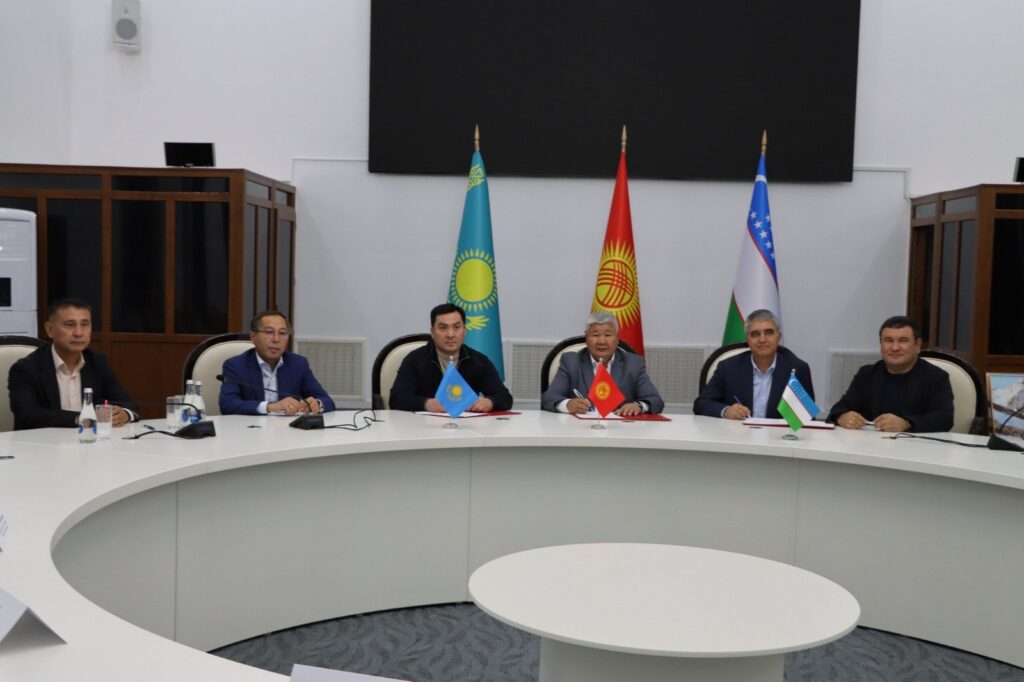
Kazakhstan, Kyrgyzstan, and Uzbekistan have reached a landmark agreement on coordinated water and energy management, signaling a deepening commitment to cross-border cooperation amid growing seasonal and climate-related challenges. The agreement was formalized on September 7 in Cholpon-Ata, Kyrgyzstan, during a meeting of energy ministers and water management authorities from the three countries. The protocols define mutual obligations for water releases and electricity exchanges, with the goal of balancing the region’s energy needs and preserving critical water resources. Under the terms of the agreement, Kyrgyzstan will release water from the Toktogul Hydroelectric Power Plant (HPP) reservoir to downstream Kazakhstan and Uzbekistan. In return, Kyrgyzstan will receive electricity from both countries through spring 2026. According to the Kyrgyz Ministry of Energy, the arrangement is designed to optimize the use of water stored in Toktogul and to secure reliable electricity supplies for Kyrgyzstan during the 2025-2026 autumn-winter period. Regional Power Transit Agreements The protocols also include provisions for cross-border electricity transit: from Russia to Kyrgyzstan via Kazakhstan’s grid, and from Turkmenistan to Kyrgyzstan through Uzbekistan’s transmission network. The Toktogul HPP, situated on the Naryn River, a major tributary of the Syr Darya, is Kyrgyzstan’s largest power facility, generating roughly 40% of the country’s electricity. It serves a dual function: providing domestic energy and regulating water flows that are essential for irrigation in downstream Kazakhstan and Uzbekistan. In winter, Kyrgyzstan often increases power output from Toktogul to meet heating demand, but this can significantly lower reservoir levels, jeopardizing irrigation supplies the following spring. The new agreement is intended to reduce this risk by enabling Kazakhstan and Uzbekistan to supply electricity during peak winter months, allowing Kyrgyzstan to conserve water. Kazakhstan’s Ministry of Energy emphasized that the trilateral deal is crucial to maintaining water levels in Toktogul and ensuring sufficient irrigation for southern Kazakhstan during the next growing season. Broader Regional Energy Cooperation Separately, Kazakhstan and Uzbekistan signed an agreement for the supply of approximately 900 million kilowatt-hours of electricity between March and December 2026. The electricity is expected to cover anticipated shortages in Kazakhstan’s southern power grid and further underscores the growing interdependence of Central Asia’s energy and water systems.

Kazakhstan Initiates International Program to Save the Caspian Sea

The ongoing shallowing of the Caspian Sea is no longer a national issue, it is emerging as a significant international challenge. Kazakh President Kassym-Jomart Tokayev emphasized that the crisis requires collective action and the adoption of an intergovernmental program. Since the early 2000s, the Caspian Sea’s water level has been steadily declining. As previously reported by The Times of Central Asia, by the summer of 2025, the sea had fallen below 29 meters relative to global sea level, marking a historic low. The northern basin, which borders Russia and Kazakhstan, is drying up particularly rapidly, due in large part to decreased flow from the Volga River. This is not the first time Kazakhstan has raised concerns about the Caspian Sea on the international stage. According to Tokayev, “the need to develop an intergovernmental program to preserve the Caspian Sea has matured.” The president believes that participation should extend beyond the five littoral states, Russia, Iran, Azerbaijan, Turkmenistan, and Kazakhstan, to include other nations invested in the region’s environmental health. He recalled that during his visit to China in early September, he proposed the creation of a specialized international organization. “This is not only a problem for one country, but for a number of states,” Tokayev stressed in his annual address to the nation. At the same time, the president acknowledged that Kazakhstan faces its own internal water management challenges. Losses in some irrigation and water channels reach 50-60%, and resource accounting is still being carried out using outdated technologies. “As for the culture of conserving natural resources, especially water, we must admit that we have big problems here: as they say, the horse didn’t lie down,” Tokayev remarked. To address these issues, he proposed creating a unified digital platform for water resources, powered by artificial intelligence. This platform would enable accurate hydrogeological monitoring and the development of a national water balance. Tokayev said this system would provide the foundation for a long-term water policy and help attract investment into the sector. Tokayev also stressed that environmental safety should become part of Kazakhstan’s national ideology. He highlighted the ongoing Taza Kazakhstan (“Clean Kazakhstan”) initiative, which began in 2024. Under this project, approximately 860,000 hectares of land have been cleaned and over 4 million trees planted. “If such active work continues, Kazakhstan will become a truly green country, an inspiring example and a valuable legacy for future generations,” Tokayev said. He also called for the introduction of a unified standard for environmental education, from schools to universities.

Kazakhstan Gifts 1,500 Saiga Antelopes to China

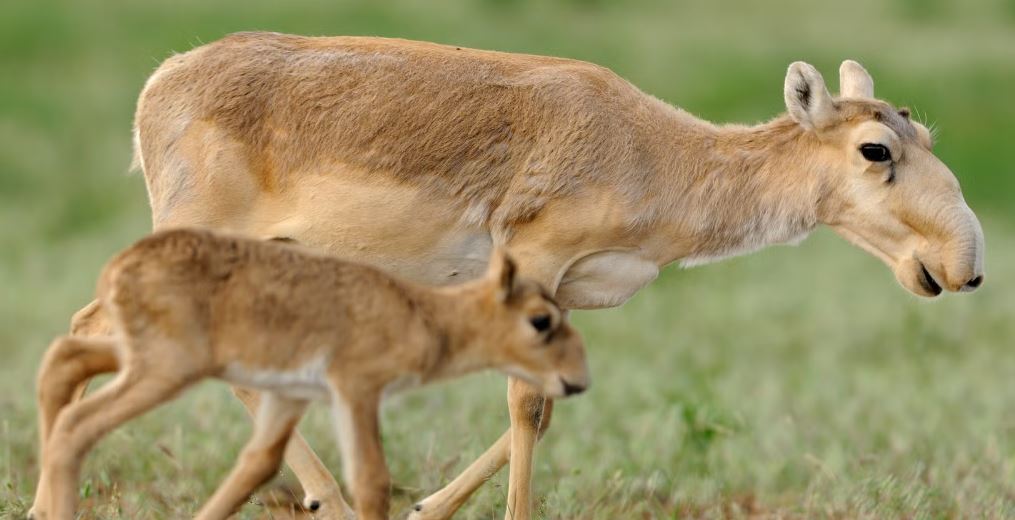
Kazakhstan has gifted 1,500 saiga antelopes to China, stepping in to support China’s own efforts to restore the species beyond Central Asia. Loved for its handsome, bulbous nose, the saiga is found in large numbers across the Kazakh steppe. Once endangered in Kazakhstan, numbering as few as 40,000 in 2005, the antelope is in fact now overpopulated, as numbers have reached a record 4.1 million in 2025. As such, Kazakhstan has been looking for ways to reduce its population while nurturing environmental and diplomatic ties with China. In turn, China has long been interested in reviving the saiga, but previous attempts have not been successful. Dastan Kusmanov, an ecologist and PhD candidate at the Nazarbayev University Graduate School of Public Policy, told The Times of Central Asia: “I believe that the saiga being gifted to China is an environmental measure. If a new saiga population is established in China, this is an overall benefit for the species’ survival, because if anything happens to the existing saiga population in Kazakhstan, the species still has a chance to survive elsewhere.” Kusmanov added, “It’s also beneficial for the environment in China. Saigas are an officially extinct species in China, but you need ungulate animals for the benefit of the environment. Ungulates are animals that eat grass and trample soil to make it softer. Through their diet, they then take seeds from one place to another through their excrement. Saigas also serve as a food source for wolves and eagles, so they are a vital part of the ecosystem and food chain.” The ecologist emphasized that losing 1500 animals from Kazakhstan’s steppe will not harm the species in the country: “As the gift of 1,500 saigas is less than 0.04% of over 4 million saigas in Kazakhstan, it will not have a negative impact on the existing Kazakhstan population.” Dr. Kanat Baigarin, Chief Officer for Sustainable Development at Nazarbayev University, agreed with Kusmatov that this new herd would help to protect the saiga species as a whole. “The more widely the saiga population is distributed,” Baigarin told The Times of Central Asia, “the more resilient it becomes to epidemics and other threats. This is a unique example of how countries can work together to restore endangered species.” “It's important to plan ahead for food resources, animal adaptation, and transboundary protection: this way, the project can serve as a foundation for broader environmental cooperation.” Meanwhile, neighboring Kyrgyzstan is focusing on species recovery. The Times of Central Asia previously reported that in May this year, Kyrgyzstan launched a conservation initiative to reintroduce another ungulate species, the jayran or goitered gazelle, along the southern shore of Lake Issyk-Kul.

Afghanistan Appeals for Quake Relief; Central Asia Likely to Help

Uzbekistan and Tajikistan, which border Afghanistan, have often taken the lead among Central Asian countries in providing relief to Afghan communities after deadly earthquakes. Once again, Afghanistan is desperately in need after a 6.0 magnitude earthquake killed at least 800 people and injured many more in the eastern part of the country late Sunday. The Taliban government has appealed for international aid to help survivors of the quake as Afghanistan struggles with other problems, including the legacy of decades of war, a cut-off of U.S. aid for medical and other services under the administration of President Donald Trump, and the return of many Afghan citizens who were expelled from neighboring Pakistan and Iran. The death toll is likely to rise because some villages that were hit by the quake are in mountainous areas that are difficult to reach, and bad weather has hindered rescue efforts. There was devastation across four eastern provinces in Afghanistan, including Nangarhar and Kunar, according to the United Nations. The U.S. Geological Survey said the epicenter of the earthquake was 27 kilometers east-northeast of the Afghan city of Jalalabad, which is Nangarhar’s provincial capital and lies near the border with Pakistan. President Kassym-Jomart Tokayev of Kazakhstan “expressed deep condolences to the leadership of Afghanistan in connection with the numerous human casualties as a result of the earthquake in that country,” the presidency said on Telegram. Uzbekistan and Tajikistan have provided humanitarian aid to Afghanistan after past earthquakes, including in 2022 and 2023, and have also helped with logistics as the United Nations and non-governmental groups transported relief supplies across their borders. Turkmenistan, which also shares a border with Afghanistan, has had involvement in such efforts as well. Central Asian countries have been building relations with Afghanistan in recent months, seeking to diversify trade routes while remaining concerned about security threats and other obstacles to stability. The Trans-Afghan Corridor construction project, for example, would provide easier access to Indian Ocean ports for regional countries. It would constitute a core railway that runs from Termez, southern Uzbekistan through Kabul, Afghanistan, and onward to Peshawar, Pakistan. Some Central Asian countries have expressed concern about human rights in Afghanistan, including the treatment of women and girls, but have not made the issue a centerpiece of their growing ties with the Taliban.

Kazakhstan Develops Water-Efficient Rice Variety to Combat Climate and Irrigation Challenges

The Ibrai Zhakhayev Kazakh Scientific Research Institute of Rice Growing is trialling a new moisture-saving rice variety in the Kyzylorda region. The variety, known as “Syr Sulu,” is designed to mature more quickly and use significantly less water compared to traditional strains. Syr Sulu matures within 105-110 days and offers high yields, up to 80-85 centners per hectare with proper agricultural practices. By comparison, Russian rice varieties typically cultivated in the Kyzylorda region require 120-125 days to reach maturity, resulting in higher water consumption. "The water situation in the southern regions of Kazakhstan makes it necessary to find and develop new ways to save water. Given global climate change, such crop varieties could become a compelling alternative to existing water-intensive varieties. The results of this research will have a positive impact on the development of agriculture and reduce water consumption in rice fields," said a representative of the Kazakh Rice Institute. Moisture Retention Innovations In parallel, the institute is working with the Ministry of Water Resources and Irrigation to continue trials of the Hungarian product Water Retainer, a soil treatment designed to preserve moisture. In 2025, the product is being tested on irrigated land in the Almaty, Zhambyl, Kyzylorda, Karaganda, Akmola, and Zhetysu regions. "The first stage of testing, in which four research institutes participated, showed that the product reduces the growing season of rice and achieves significant water savings. Traditionally, rice is watered for 90 days, but with the use of the preparation, 51 days are sufficient," said Lazzat Dzhusipova, Director of the Ministry's Department of Scientific and Innovative Technologies. Broader Water Challenges As previously reported by The Times of Central Asia, the Eurasian Development Bank (EDB) released a comprehensive assessment of Central Asia’s water and energy challenges in April 2025. The study found that much of the region’s water infrastructure is outdated and inefficient, leading to the loss of 40-55% of available water. The EDB estimates that, without urgent modernization, Central Asia could face an annual water deficit of 5-12 cubic kilometers by 2028.

Kazakhstan Establishes New Nature Reserve in Zhambyl Region

The Merke Regional Nature Park has been established in Kazakhstan's southern Zhambyl region. Granted the status of a protected natural area, the park aims to preserve the unique ecosystems of the foothill and mountain zones of the Western Tien Shan. Covering 86,632 hectares, Merke is home to rare and endemic species, including snow leopards, argali sheep, Indian porcupines, and Turkestan lynxes. The park also opens avenues for developing ecotourism, environmental education, and inclusive community engagement in sustainable land use. Future plans include infrastructure development, job creation, and the implementation of scientific and educational programs. Its establishment was made possible through strong collaboration among government bodies, scientific institutions, local communities, and international partners, including the United Nations Development Programme (UNDP). “UNDP supports Kazakhstan’s efforts to expand its protected area system and strengthen environmental policy at the regional level. Merke Park is a strong example of how local initiatives contribute to global biodiversity goals and climate resilience,” said Katarzyna Wawiernia, UNDP Resident Representative in Kazakhstan. As part of ongoing cooperation between Kazakhstan and the UNDP, ten new specially protected natural areas have already been created nationwide, including the Akzhayik, Altyn-Dala, and Ile-Balkhash nature reserves, as well as the Buyratau, Zhongar Alatau, and Tarbagatai national parks. Additionally, six existing protected areas have been expanded. For the first time, Kazakhstan has also established the Kapshagay-Balkhash and Yrgyz-Torgay-Zhylanshyk ecological corridors, spanning 2.9 million hectares, to safeguard the migration routes of rare animal species.
