• KGS/USD = 0.01144 0%
  • KZT/USD = 0.00216 0%
  • TJS/USD = 0.10659 0%
  • UZS/USD = 0.00008 0%
  • TMT/USD = 0.28530 0%
  • KGS/USD = 0.01144 0%
  • KZT/USD = 0.00216 0%
  • TJS/USD = 0.10659 0%
  • UZS/USD = 0.00008 0%
  • TMT/USD = 0.28530 0%
  • KGS/USD = 0.01144 0%
  • KZT/USD = 0.00216 0%
  • TJS/USD = 0.10659 0%
  • UZS/USD = 0.00008 0%
  • TMT/USD = 0.28530 0%
  • KGS/USD = 0.01144 0%
  • KZT/USD = 0.00216 0%
  • TJS/USD = 0.10659 0%
  • UZS/USD = 0.00008 0%
  • TMT/USD = 0.28530 0%
  • KGS/USD = 0.01144 0%
  • KZT/USD = 0.00216 0%
  • TJS/USD = 0.10659 0%
  • UZS/USD = 0.00008 0%
  • TMT/USD = 0.28530 0%
  • KGS/USD = 0.01144 0%
  • KZT/USD = 0.00216 0%
  • TJS/USD = 0.10659 0%
  • UZS/USD = 0.00008 0%
  • TMT/USD = 0.28530 0%
  • KGS/USD = 0.01144 0%
  • KZT/USD = 0.00216 0%
  • TJS/USD = 0.10659 0%
  • UZS/USD = 0.00008 0%
  • TMT/USD = 0.28530 0%
  • KGS/USD = 0.01144 0%
  • KZT/USD = 0.00216 0%
  • TJS/USD = 0.10659 0%
  • UZS/USD = 0.00008 0%
  • TMT/USD = 0.28530 0%

Viewing results 55 - 60 of 437

New Kazakh-German Nexus Institute to Tackle Central Asia’s Climate Challenges

The Kazakh-German University (DKU), the National Academy of Sciences of Kazakhstan, and the Kazakh National Agrarian Research University (KazNARU), with support from Germany’s Hanns Seidel Foundation, have announced the creation of a new scientific and educational hub, the Kazakh-German Nexus Institute. A New Center for Sustainable Solutions The Nexus Institute will be headquartered at KazNARU in Almaty and aims to integrate the expertise of Kazakhstani and international scientists to address Central Asia’s pressing environmental issues. Its core mission is to develop comprehensive solutions in land and water management, energy, and ecology. Key priorities include: Developing effective policies for sustainable land and water use Introducing digital tools for monitoring natural resources Training professionals to respond to climate-related challenges Promoting practices that prevent land degradation and desertification German Support and Collaboration German institutions, led by the Hanns Seidel Foundation, will offer both technical and financial support. Planned initiatives include joint research projects, strategic planning sessions, and the development of modern educational platforms. The establishment of the Nexus Institute is considered a significant milestone in strengthening Kazakh-German scientific collaboration. It also contributes to building institutional capacity that aligns with the UN Sustainable Development Goals (SDGs), particularly in the areas of environmental sustainability and climate resilience. Forum in Almaty: A Platform for Regional Dialogue The initiative gained further momentum during the international forum “Central Asia’s Sustainable Development Goals in a Changing Global Order,” held in Almaty on September 19. Co-organized by DKU, the National Academy of Sciences of Kazakhstan, and Germany’s University Alliance Ruhr, the event convened stakeholders from academia, government, business, and international organizations. Participants underscored shared priorities, including: Climate resilience and energy transition Scientific integration into public policy Cross-border cooperation Development of sustainable value chains Future areas of collaboration include: Creating roadmaps tailored to the region’s mountainous and glacial ecosystems Expanding academic mobility and research exchange Strengthening technology transfer mechanisms Advancing frameworks for climate risk financing The launch of the Nexus Institute and the Almaty forum signal a new phase in Kazakh-German cooperation, focused on forging actionable strategies for sustainable development and climate adaptation across Central Asia.

Asia’s Top Three Towns for Air Quality All in Kazakhstan, Finds New Study

A new study into global air quality by the independent website HouseFresh has found that Kazakhstan is home to some of the world’s cleanest towns. The report also notes that one Kazakh city is also among the most polluted.  Using data from IQAir’s 2024 research, HouseFresh examined the average PM2.5 level – the number of small particles in the air – for over 8,800 towns with a population over 10,000. It found that the world’s most polluted town is Byrnihat in India, with a PM2.5 level of 128.2 particles per cubic meter (µg/m³). The cleanest air globally is in the Kazakh town of Shu. Shu, a rail freight hub in the country’s southeastern Zhambyl region, close to the border with Kyrgyzstan, had an average PM2 level of 1.5 µg/m³ in 2024.  Kazakhstan is in fact home to the three cleanest towns in Asia, with the next places after Shu being Zhezkazgan in the central Ulytau region (2.3 µg/m³), and the southwestern town of Beyneu, outside Mangystau (3.4 µg/m³).  Kazakhstan’s government has pledged that the country will become ‘climate neutral’ by 2060. It is aiming for its towns to follow the lead of cities such as New York and Beijing, which have more than halved their air pollution with measures such as cleaner public transport, modernized heating systems, and emissions regulation. However, Kazakhstan generally ranks highly in lists of the most polluted countries, due to its large-scale and outdated industrial infrastructure. Dust in the south of the country can also affect air quality. Due to this, the much larger central city of Karaganda, a center for Kazakhstan’s coal mining industry, remains one of the world’s most polluted cities. With average PM2.5 levels of 104.8 µg/m³ in 2024, the impact on the health of its half a million residents is equivalent to them smoking over 1,700 cigarettes per year.

Astana Forum Signals Growing Momentum for Green Projects

Kazakhstan is positioning itself as a regional hub for green energy, with hydrogen emerging as a central focus. This direction was highlighted at the Second Central Asian and European Forum on Decarbonization Diplomacy, where hydrogen featured prominently on the agenda. At the forum, the Ministry of Energy presented an updated Concept for Hydrogen Energy Development aimed at attracting investment and laying the groundwork for the country’s first large-scale hydrogen projects. “By the end of this year, we expect to adopt legislation that will provide the foundation for hydrogen energy development in Kazakhstan. For us, this is not merely a goal, it is a strategic choice, just like green energy more broadly. Forums like this one help transform ideas into tangible partnerships,” said Deputy Energy Minister Ilyas Bakytzhan. The central question raised at the forum was how to convert growing interest into actual investment. Institutions including the World Bank, European Bank for Reconstruction and Development (EBRD), Asian Development Bank (ADB), United Nations Development Programme (UNDP), and the International Renewable Energy Agency (IRENA) expressed willingness to consider pilot projects in Kazakhstan. However, experts warned that financial commitments will depend on the establishment of long-term hydrogen supply contracts and a transparent certification framework. [caption id="attachment_36294" align="alignnone" width="300"] Deputy Energy Minister Bakytzhan Ilyas, @gov.kz[/caption] While viable business models are still evolving, Kazakhstan has the potential to become a key hydrogen supplier to Europe and Asia. In the early stages, however, building domestic demand, in sectors such as metallurgy, transportation, and energy, will be critical. A balanced strategy that prioritizes both export orientation and local industrialization is seen as essential for long-term project sustainability. Forum participants identified several key challenges: High capital requirements and extended payback periods Integration with renewable energy infrastructure Exposure to volatile global pricing and certification standards The need for green financing tools and risk insurance mechanisms A significant development at the forum was the signing of a cooperation agreement between Kazakhstan’s Ministry of Energy and the Hydrogen Diplomacy Office (H2-Diplo GIZ). The agreement provides access to European technical expertise and advisory support, including the design of financing structures. Experts agree that the next few years will be decisive. Kazakhstan must show that it can provide a stable and predictable investment climate. The Astana forum made clear that international institutions and private investors are already showing interest. The determining factor now will be the quality and credibility of the regulatory framework the country establishes.

Opinion: Turning Deserts Into Fields of Hope

Desertification is a global crisis threatening the livelihoods of 3.2 billion people worldwide. From China’s vast green belt along its largest desert to Central Asia’s unified efforts to halt land degradation on arid plains, the fight against encroaching sand continues. These initiatives offer hopeful examples of human endeavor in restoring degraded lands and safeguarding the future of our planet. In the heart of southern Xinjiang lies the Taklamakan Desert, a vast expanse known as the “sea of death” for its extreme arid and inhospitable conditions. Covering 330,000 square kilometers - an area almost the size of Finland - it is China’s largest desert and the world’s second-largest shifting desert. Here, dunes stretch endlessly, and sandstorm days comprise one-third of the year. For generations, the Taklamakan Desert has threatened surrounding villages, farmlands, and transportation routes, squeezing the living space of those who dwell on its edges. Nearly 80% of the desert sands are in constant motion, while seasonal floods from melting snow on the mountains add further instability, leaving homes and livelihoods at risk. The danger is long-term: at one point, the Taklamakan risked merging with the nearby Kumtag Desert, placing even greater pressure on human settlements. How To Contain The Sands Faced with the challenge, China launched an ambitious initiative: building a shield of vegetation to encircle the Taklamakan Desert, planting desert-tolerant species such as desert poplar, red willow, saxaul, and even roses. This massive project took more than 40 years to complete. By the end of 2023, 2,761 kilometers (about 1,716 miles) of the belt had been established. A year later, the final 285 kilometers - the most challenging section - was closed through the dedicated efforts of 600,000 people. On November 28, 2024, in Yutian County on the desert’s southern edge, the last seedlings were planted into the sands, completing a 3,046-kilometer green belt. This vast ecological barrier stabilizes the Taklamakan Desert’s edge, prevents sandstorms, and protects the fragile ecology. In addition, the green belt provides wild animals in the desert with safe conditions for survival, breeding, and migration. A Bold Green Strategy Against Desertification The Taklamakan Desert control project is a part of China's Three-North Shelterbelt Forest Program, or TSFP, the world's largest afforestation program aimed at curbing desertification. Launched in 1978, this ambitious program seeks to slow the progress of desertification and reduce the frequency of sandstorms by planting vast stretches of trees and resilient plant species across the arid and semi-arid regions in northern China, where sandstorms pose a constant threat to local farmlands and residents. Official data shows that forest coverage in areas covered by the TSFP has risen from 5% in 1977 to 13.8% today. More than 60% of regions prone to soil erosion have been effectively controlled, and roughly 30 million hectares of farmland have been safeguarded from desert expansion. Turning Lands of Despair into Fields of Hope: A Shared Mission The challenges faced in northern China echo across the globe. From the Sahel in Africa to the Middle East and Central...

East Kazakhstan Researchers Use AI and Drones to Boost Soil and Crop Management

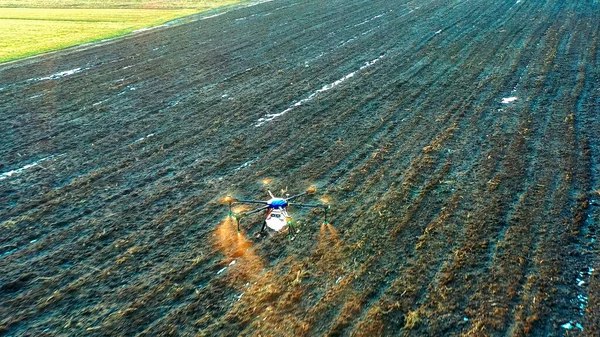
Researchers at Sarsen Amanzholov University in Ust-Kamenogorsk, East Kazakhstan, have developed a digital system that integrates drone imagery with artificial intelligence (AI) to assess soil quality and crop health with high precision. The system enables farmers to monitor soil and plant conditions in ways previously inaccessible. Drones equipped with multispectral cameras capture images across five spectral bands: red, blue, green, near-infrared, and mid-infrared. “This approach makes it possible to ‘see’ what is invisible to the human eye, soil moisture levels, chlorophyll content, early signs of plant disease, or land degradation,” said Almasbek Maulit, a researcher at Sarsen Amanzholov University. “AI algorithms analyze the images, differentiate between crops and weeds, identify patterns of spread, and even generate automatic maps of infected areas. This enables farmers to take targeted action from local treatment of problem zones to adjusting crop rotation or cultivation methods.” The system offers several key benefits: Optimized use of fertilizers and plant protection products, reducing costs Early detection of problems, minimizing crop losses Improved profitability through better sowing and crop management strategies Reliable land quality assessments for investors and state authorities The project is part of Kazakhstan’s broader strategy to integrate high-tech solutions into agriculture, a sector that remains a cornerstone of the national economy. Earlier this year, The Times of Central Asia reported that engineers in Karaganda unveiled prototypes of drones designed for public safety applications. By merging AI with drone-based imaging, scientists in East Kazakhstan are helping to position the country’s agribusiness sector for smarter, more sustainable practices and long-term growth.

Kazakhstan Sees Record Water Recovery in Northern Aral Sea

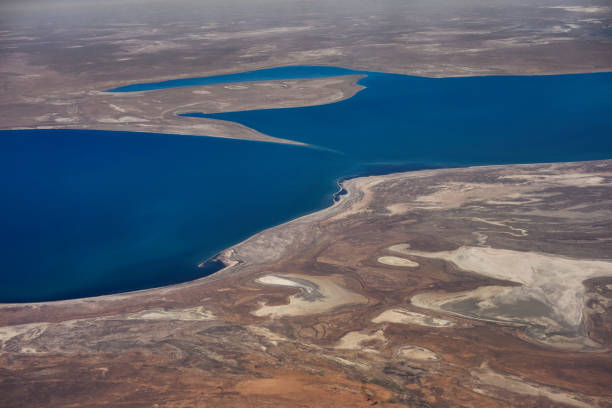
Kazakhstan’s Ministry of Water Resources and Irrigation has reported a record increase in the volume of water in the Northern Aral Sea, exceeding national and international expectations. Water Returns to the Sea Since 2023, approximately 5 billion cubic meters of water have flowed into the basin, bringing the total reserve to 24.1 billion cubic meters. This figure surpasses the target set under Kazakhstan’s Water Resources Management Concept, which had aimed for only 20.6 billion cubic meters by 2025. The current level was not expected to be reached before 2029. Minister of Water Resources and Irrigation Nurzhan Nurzhigitov said that with the support of a World Bank grant, a feasibility study is underway to raise the Kokaral Dam by two meters and construct a new hydraulic facility. The project is designed to stabilize water levels in the Akshatau and Kamystybas lake systems. “The project aims to increase both the volume and quality of water in the Northern Aral Sea, restore the Syr Darya delta, reduce salt dispersion from the exposed seabed, develop the fishing industry in the Kyzylorda region, and improve living conditions for local communities,” the minister stated. International Cooperation Deputy Minister Nurlan Aldamzharov has said the second phase of the initiative envisions raising the Northern Aral’s capacity to 35 cubic kilometers. He emphasized the critical role of regional cooperation, particularly with Kyrgyzstan, Tajikistan, and Uzbekistan, as the sea’s recovery depends on sustained inflows from the Syr Darya River. Ministry spokesperson Moldir Abdualyeva attributed the recent progress to “water diplomacy, effective resource allocation, and conservation efforts.” Environmental and Social Impact The increase in water volume has led to a corresponding expansion of the sea’s surface area. As of February 2025, the Northern Aral covered 3,065 square kilometers, an increase of 111 square kilometers over the past three years. This has reduced salinity levels and enabled the return of 22 fish species to the ecosystem. The annual fish catch now totals around 8,000 tons, offering renewed economic opportunities for local communities. To further support the region, Kazakhstan has raised subsidies for farmers implementing water-saving technologies, increasing compensation rates from 50% to 80%. Officials say the measure is intended to conserve water while promoting sustainable agriculture in surrounding areas. The Small Aral Sea, or Northern Aral, was formed in 1987 during the broader desiccation of the Aral Sea and preserved following the construction of the Kokaral Dam. In 2012, it was added, alongside the Syr Darya delta, to the Ramsar List of Wetlands of International Importance. Kazakhstan assumed the rotating chairmanship of the International Fund for Saving the Aral Sea (IFAS) in 2024, further strengthening its leadership role in regional water cooperation and ecosystem restoration.