• KGS/USD = 0.01144 0%
  • KZT/USD = 0.00204 0%
  • TJS/USD = 0.10398 0%
  • UZS/USD = 0.00008 0%
  • TMT/USD = 0.28490 0%
  • KGS/USD = 0.01144 0%
  • KZT/USD = 0.00204 0%
  • TJS/USD = 0.10398 0%
  • UZS/USD = 0.00008 0%
  • TMT/USD = 0.28490 0%
  • KGS/USD = 0.01144 0%
  • KZT/USD = 0.00204 0%
  • TJS/USD = 0.10398 0%
  • UZS/USD = 0.00008 0%
  • TMT/USD = 0.28490 0%
  • KGS/USD = 0.01144 0%
  • KZT/USD = 0.00204 0%
  • TJS/USD = 0.10398 0%
  • UZS/USD = 0.00008 0%
  • TMT/USD = 0.28490 0%
  • KGS/USD = 0.01144 0%
  • KZT/USD = 0.00204 0%
  • TJS/USD = 0.10398 0%
  • UZS/USD = 0.00008 0%
  • TMT/USD = 0.28490 0%
  • KGS/USD = 0.01144 0%
  • KZT/USD = 0.00204 0%
  • TJS/USD = 0.10398 0%
  • UZS/USD = 0.00008 0%
  • TMT/USD = 0.28490 0%
  • KGS/USD = 0.01144 0%
  • KZT/USD = 0.00204 0%
  • TJS/USD = 0.10398 0%
  • UZS/USD = 0.00008 0%
  • TMT/USD = 0.28490 0%
  • KGS/USD = 0.01144 0%
  • KZT/USD = 0.00204 0%
  • TJS/USD = 0.10398 0%
  • UZS/USD = 0.00008 0%
  • TMT/USD = 0.28490 0%

Viewing results 829 - 834 of 1905

How Christmas is Celebrated in Central Asia

In predominantly Islamic countries, celebrating Christian Christmas reflects a spirit of tolerance and peaceful coexistence. On December 25, people of all backgrounds are welcome to join the celebrations. Catholics and Protestants are minority Christian groups in Central Asia. Catholicism was introduced to the region as early as the 12th century, but Christianity was eradicated during the Timurid era and later revived under the Russian Empire. Today, Catholics and Protestants in the region are largely descendants of German and Polish immigrants, as well as employees of foreign embassies and international companies. Kazakhstan In Kazakhstan, unlike Orthodox Christmas on January 7, December 25 is not a public holiday. There are no large-scale national festivities, but many Kazakhstani people extend warm greetings to their Catholic neighbors. According to the 2021 census, Catholics account for 0.57% of the population (about 19,000 people) and Protestants 0.28% (approximately 9,500) within a total Christian population of over three million​. Despite the small number of adherents, festive services are held in major cities. The Church of the Holy Trinity in Almaty hosts Midnight Mass and other celebrations, and St. Joseph's Church in Astana also offers services. Both cities organize organ music concerts that attract many non-Catholic attendees. Other cities, including Karaganda, Atyrau, Pavlodar, Petropavlovsk, Kostanai, and Ust-Kamenogorsk, also have Catholic parishes​. Kazakhstan’s Catholic communities observe traditions that appeal to many, regardless of religion. Christmas fairs, nativity scenes, and festive dishes such as roasted goose, ducks, pies, and Christmas cookies add to the celebrations. Carols and children’s theatrical performances are also a highlight. Christmas services are conducted in Russian, Polish, and English, reflecting the region’s diversity​. Kyrgyzstan Catholic communities in Kyrgyzstan are notably multi-ethnic. At the Roman Catholic parish of St. Michael the Archangel in Bishkek, attendees include professionals and students from India, Pakistan, and other nations. According to estimates, the Catholic population in Kyrgyzstan is approximately 1,500, with numbers growing due to newcomers​. A unique tradition in Kyrgyzstan is the preparation of twelve fasting dishes on Christmas Eve, symbolizing the months of the year and the twelve apostles. This tradition marks the end of the four-week Advent fast and the beginning of the festive mass on the evening of December 24​. Tajikistan, Turkmenistan, and Uzbekistan The Catholic community in Tajikistan is small, numbering about 100, mostly foreigners. The two parishes in the country include one in Dushanbe, while missionaries manage a kindergarten at a correctional labor colony in Nurek. In Turkmenistan, the congregation in Ashgabat is also small, with Christmas services conducted in Russian, English, and Turkmen​. In Uzbekistan, Christmas celebrations are held in Tashkent and Samarkand, with services occasionally conducted in Korean. The Catholic communities in these countries, while small, maintain vibrant celebrations, with Protestants and some Orthodox Christians also participating​. A Time for Unity and Celebration In Central Asia, Protestant and Orthodox Christians often join Catholic Christmas celebrations. The festivities on December 25, featuring Santa Claus and other traditions, mark the beginning of winter holidays and are cherished by people of all faiths.
Kazakhstan to Become a BRICS Partner on January 1, 2025

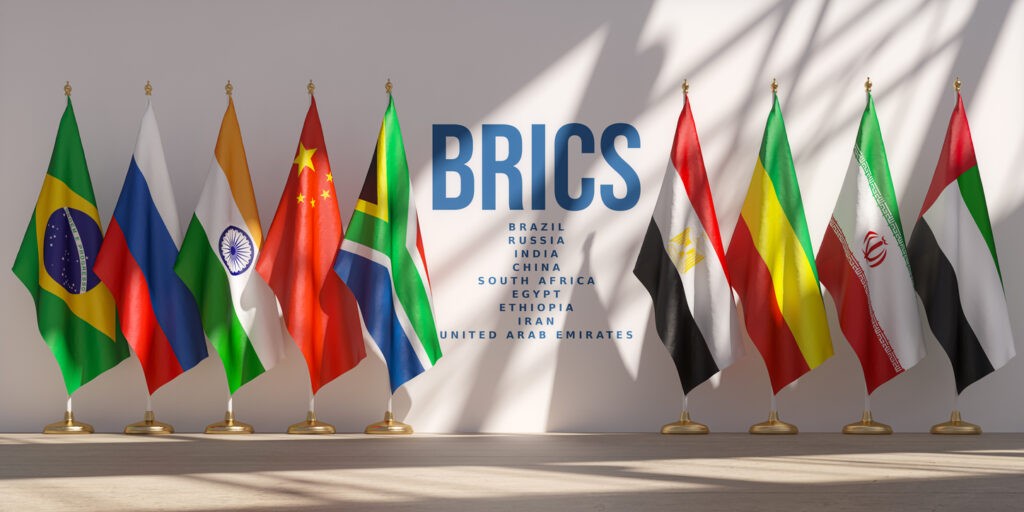
Kazakhstan will officially join BRICS as a partner state on January 1, 2025, according to Yuri Ushakov, an assistant to Russian President Vladimir Putin. Ushakov stated that Russia has received confirmation from several countries expressing readiness to become BRICS partners. “One of the important results of the BRICS summit in Kazan was the establishment of the category of BRICS partner countries and agreement on a list of 13 states. Appropriate invitations were sent to these states. Confirmations of readiness to become a BRICS partner state have been received from Belarus, Bolivia, Indonesia, Kazakhstan, Cuba, Malaysia, Thailand, Uganda, and Uzbekistan,” Ushakov announced​. Kazakhstan’s Position on BRICS Partnership Kazakhstan’s Ministry of Foreign Affairs has confirmed the country’s status as a BRICS partner state, effective from January 1, 2025​. However, the press secretary to Kazakh President Kassym-Jomart Tokayev, Berik Uali, previously stated that the country does not plan to seek full BRICS membership in the foreseeable future. Uali cited the multi-stage application process and considerations regarding the association's development prospects as reasons for this decision​. BRICS, comprising Brazil, Russia, India, China, and South Africa, aims to promote economic, political, and cultural cooperation among member states. As a partner, Kazakhstan will engage with BRICS without taking on the obligations or privileges of full membership. This development marks a significant step in Kazakhstan’s international engagement strategy while reflecting its cautious approach to deeper involvement in the bloc.

Astana’s Long-Awaited LRT Project Set to Launch Next Year

Zhenis Kassymbek, the Akim (governor) of Kazakhstan’s capital Astana, has announced that the city’s first light rail transit (LRT) line will launch by the end of next year, marking a significant milestone in a 13-year-long construction project fraught with delays and controversies. The LRT project, envisioned as a high-speed transport system running on elevated tracks to bypass traffic, began construction in 2011. Initially, the line was slated for completion by 2017 to coincide with the EXPO international exhibition. It was intended to connect the Astana-Nurly Zhol railway station with the capital’s airport. While the railway station opened on time, the LRT project was halted in 2013 due to high costs and concerns over its financial viability. The project was revived in 2015 when Astana’s Akimat signed a construction deal with a consortium of Chinese companies, China Railway International Group Limited and Beijing State-Owned Assets Management Co., Ltd. However, further delays occurred when funds — amounting to over 80 billion tenge ($200 million at the time) — were frozen in the accounts of the now-defunct Bank of Astana. Construction began with the installation of support pillars, but the Chinese contractors abandoned the project due to funding issues. In 2019, Kazakhstan’s investigative authorities intervened. Talgat Ardan, the former head of Astana LRT, and Kanat Sultanbekov, an ex-deputy mayor of Astana, were accused of embezzling nearly 30 billion tenge. This included inflating project costs and awarding overpriced contracts. Both were sentenced in absentia to seven years in prison in May 2023. Despite initial skepticism from President Kassym-Jomart Tokayev, who questioned the project’s ridership potential given its 22-kilometer length and route, the decision was made to proceed. Former Akim Altay Kulginov argued that dismantling the incomplete infrastructure would cost more than completing it. Under Kassymbek, construction has progressed. “The first LRT trains will arrive in August or September next year. We expect to have 15 trains operational by fall, with technical testing by the end of 2024 and full service in early 2026,” Kassymbek stated during a briefing. The elevated tracks are nearing completion, with rail-laying in progress. Signal installation is set to begin in spring. The Akimat anticipates the line will serve approximately 20,000 passengers daily. The fare for LRT rides has yet to be finalized. Kassymbek announced that the pricing would remain affordable. However, he stopped short of providing specifics. In 2017, the proposed fare was 300 tenge per ride, three times the cost of a bus ticket at that time. Current bus fares in Astana range from 110 tenge for regular routes to 250 tenge for express routes. Given the LRT’s total project cost of $1.88 billion, fares significantly higher than bus rates may be needed to achieve profitability. Despite this, the LRT could address pressing issues, such as Astana’s daily traffic jams. Currently, buses are the only public transport option in the city. “We aim to expand roads, increase bridges, and enhance public transport to encourage residents to switch from private vehicles,” Kassymbek said. He also suggested that Turkestan and...

Kazakh President Picks New Economy Minister Amid Reforms, Uncertainty

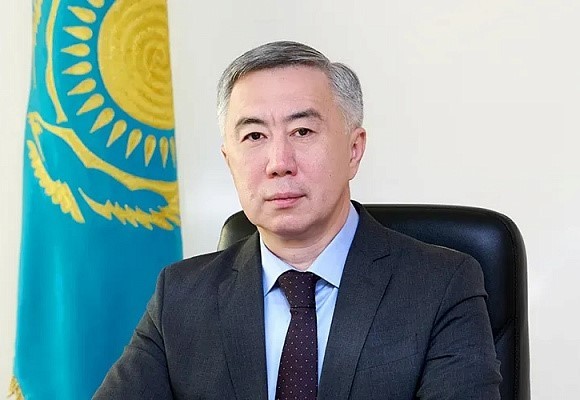
Kazakh President Kassym-Jomart Tokayev replaced the economy minister on Saturday, a move that came as Kazakhstan struggles with a depreciating currency even though it earned international praise for economic prudence in recent months. The Cabinet change also comes ahead of the January inauguration of U.S. President-elect Donald Trump, who has warned of more tariffs in his second term. Nurlan Baibazarov, who was appointed as deputy prime minister and national economy minister in February, was replaced by Serik Zhumangarin, an experienced hand whose previous posts included deputy economy minister, trade minister and head of Kazakhstan’s Agency for Protection and Development of Competition. He was also among the several deputy prime ministers in the Cabinet and retains that title as well. Zhumangarin was tasked in his new job with ensuring Kazakhstan’s economic growth, implementing structural changes and improving budget and tax policies, according to the prime minister’s office. “In addition, the Ministry of National Economy needs to pursue a balanced policy of business support and a balanced policy of tariff regulation in order to ensure economic growth in priority sectors,” the office said. While global economic policy-makers are preparing for uncertainty over planned tariffs and other measures when Trump takes office, the president-elect and Tokayev agreed in a telephone conversation this month to collaborate on trade, investment and other areas. In September, the Moody's Ratings agency upgraded Kazakhstan's long-term local and foreign currency issuer ratings to Baa1 from Baa2 and changed the outlook to stable from positive. Moody’s applauded institutional and economic reforms in Kazakhstan, as well as efforts to diversify and move away from hydrocarbons, but warned of the risk of geopolitical tensions and “secondary” sanctions related to Western economic pressure on Russia because of the war in Ukraine. In October, the International Monetary Fund predicted GDP growth in Kazakhstan of 3.9% for 2024, with growth expected to increase in 2025 despite uncertainty. It applauded what it called Kazakhstan’s tight monetary policy and commitment to exchange rate flexibility. Even so, Kazakhstan’s currency later came under increased pressure. The central bank said early this month that it had spent more than $1 billion in foreign exchange interventions since mid-November in an effort to stabilize the declining currency, which passed the threshold of 500 tenge to the U.S. dollar and hit record lows. Kazakh officials attributed the drop to the global appreciation of the dollar, a decrease in oil prices, the falling Russian ruble and other factors. Born in 1969 in Aktobe, Kazakhstan, Zhumangarin, the new economy minister, has also worked on competition and antitrust regulation for the Eurasian Economic Commission, a regulatory body that oversees the Eurasian Economic Union. The group aims at integrating the economies of the former Soviet states of Kazakhstan, Kyrgyzstan, Russia, Armenia and Belarus.

Kazakhstan’s Construction Sector Pushes for Easier Access to Migrant Labor

The Chairman of the Union of Builders of Kazakhstan (UBK), Talgat Yergaliyev, has called for simplifying the hiring process for foreign labor in Kazakhstan’s construction industry, citing a severe workforce shortage. “Today, our young people prefer office jobs, and no one wants to work in production. Year after year, the number of workers in the labor market is shrinking, and even government agencies are facing staffing shortages. In the construction industry, this problem is even more pronounced,” Yergaliyev said during a joint press conference with the National Chamber of Entrepreneurs of Kazakhstan, Atameken. “That’s why we propose following Russia’s example by attracting foreign labor to the construction sector.” However, Yergaliyev noted that Kazakhstan lacks mechanisms to support the large-scale hiring of migrant workers. By comparison, Russian construction companies pay 80,000 rubles ($790) annually for a patent to hire foreign workers, while a similar permit in Kazakhstan costs construction firms nearly double—700,000 KZT ($1,300) or more. Yergaliyev also acknowledged that low wages are a significant factor deterring Kazakhs from working in construction. “To retain Kazakhstani workers on construction sites today, they must be paid between $800 and $2,000. Otherwise, they will move to other sectors where the work is less demanding,” he explained. The labor shortage in Kazakhstan's construction industry is reaching critical levels. According to The Times of Central Asia, there are currently about 111,000 unfilled vacancies in the sector, and authorities project that this deficit could double by 2030​. Despite this growing need, Kazakhstan’s Ministry of Labor and Social Protection reduced the foreign labor quota in November, potentially exacerbating the issue. Yergaliyev's proposal underscores the urgent need to address the labor shortfall while balancing fair wages for local workers with the costs of hiring migrant labor.

Moldovan Businessmen Hail Tokayev’s Role in Resolving Stati Dispute

On December 18, the protracted legal dispute between Kazakh authorities and Moldovan businessmen Anatol and Gabriel Stati over oil and gas assets was finally resolved. Following the agreement, the Stati representatives expressed gratitude to Kazakh President Kassym-Jomart Tokayev for his leadership in reaching the settlement. The Ministry of Justice of Kazakhstan reported that the resolution concludes a legal saga that spanned 15 years and impacted Kazakhstan's reputation as an investment-friendly nation. The ministry stated that the government, the National Bank of Kazakhstan, and the Stati parties, with the support of Tristan Oil’s leading creditors, successfully finalized the settlement process. “The signed Final Settlement Agreement forms the basis for the termination of all ongoing disputes, with no possibility of reopening them in the future. The specific terms of the agreement remain confidential,” the Ministry of Justice emphasized. Daniel Chapman, CEO of Argentem Creek Partners - investment manager for funds that are creditors of Tristan Oil Limited, the Stati family’s investment vehicle - praised the resolution. “This settlement and Kazakhstan’s approach to ensuring a fair resolution underscore the country’s respect for investor rights. We thank President Tokayev for his leadership, which has positively reshaped how foreign investors view Kazakhstan. We look forward to collaborating on new projects,” Chapman said. Kazakhstan’s Minister of Justice, Azamat Yeskarayev, noted the settlement’s significance for the nation’s economic future. “The resolution of this longstanding dispute creates additional opportunities for economic growth and investment,” he said, emphasizing that no funds from the national budget were used in the settlement process. The case had involved extensive litigation across multiple jurisdictions over 15 years. While the exact legal costs incurred by Kazakhstan remain undisclosed, the settlement signals a major step forward in resolving disputes with foreign investors and rebuilding trust.