• KGS/USD = 0.01143 0%
  • KZT/USD = 0.00216 0%
  • TJS/USD = 0.10633 -0.28%
  • UZS/USD = 0.00008 0%
  • TMT/USD = 0.28571 0%
  • KGS/USD = 0.01143 0%
  • KZT/USD = 0.00216 0%
  • TJS/USD = 0.10633 -0.28%
  • UZS/USD = 0.00008 0%
  • TMT/USD = 0.28571 0%
  • KGS/USD = 0.01143 0%
  • KZT/USD = 0.00216 0%
  • TJS/USD = 0.10633 -0.28%
  • UZS/USD = 0.00008 0%
  • TMT/USD = 0.28571 0%
  • KGS/USD = 0.01143 0%
  • KZT/USD = 0.00216 0%
  • TJS/USD = 0.10633 -0.28%
  • UZS/USD = 0.00008 0%
  • TMT/USD = 0.28571 0%
  • KGS/USD = 0.01143 0%
  • KZT/USD = 0.00216 0%
  • TJS/USD = 0.10633 -0.28%
  • UZS/USD = 0.00008 0%
  • TMT/USD = 0.28571 0%
  • KGS/USD = 0.01143 0%
  • KZT/USD = 0.00216 0%
  • TJS/USD = 0.10633 -0.28%
  • UZS/USD = 0.00008 0%
  • TMT/USD = 0.28571 0%
  • KGS/USD = 0.01143 0%
  • KZT/USD = 0.00216 0%
  • TJS/USD = 0.10633 -0.28%
  • UZS/USD = 0.00008 0%
  • TMT/USD = 0.28571 0%
  • KGS/USD = 0.01143 0%
  • KZT/USD = 0.00216 0%
  • TJS/USD = 0.10633 -0.28%
  • UZS/USD = 0.00008 0%
  • TMT/USD = 0.28571 0%

Viewing results 907 - 912 of 2196

Central Asia Poised to Outpace Global Growth in 2025, IMF Projects (With One Exception)

The year 2025 is anticipated to bring moderate growth for the global economy, according to forecasts by the International Monetary Fund (IMF). Global GDP is projected to grow by 3.2%, reaching $115.3 trillion at current prices. While global growth is expected to remain stable, it is weaker than initially forecast. The IMF notes that the economic outlook for the United States has improved, but growth expectations for other advanced economies, particularly in Europe, have been downgraded. Emerging markets and developing economies continue to grapple with a range of challenges, including production disruptions, shipping delays, geopolitical conflicts, civil unrest, and extreme weather events. These factors have tempered growth prospects in regions such as the Middle East, Central Asia, and sub-Saharan Africa. In contrast, emerging Asia is experiencing robust growth, fueled by strong demand for semiconductors and electronics, underpinned by substantial investments in artificial intelligence. Additionally, public investment in China and India is driving regional economic expansion. However, the IMF forecasts that global growth will average 3.1% annually over the next five years, a pace slower than pre-pandemic levels. Global Economic Highlights In 2025, the United States is expected to retain its position as the world’s largest economy, with a GDP of $30.3 trillion at current prices. China will follow with $19.5 trillion, while Germany is projected to rank third at $4.9 trillion. Japan and India will occupy fourth and fifth places, with GDPs of $4.4 trillion and $4.3 trillion, respectively. Central Asia Outlook In Central Asia, Uzbekistan’s economy is forecast to expand by 5.7%, reaching $127.4 billion at current prices, according to the IMF. This growth rate positions Uzbekistan as one of the region’s fastest-growing economies. Kazakhstan, the largest economy in Central Asia, is expected to achieve 4.6% growth, with GDP reaching $306.6 billion. Kyrgyzstan’s GDP is forecast to grow by 5%, reaching $17.3 billion at current prices. Tajikistan’s economy is expected to grow by 4.5%, with GDP projected at $14.1 billion. Turkmenistan is forecast to experience slower growth, with its GDP increasing by 2.3% to reach $91.1 billion.
Building Bridges Across Eurasia: Kazakhstan’s Strategic Push for Transport Integration

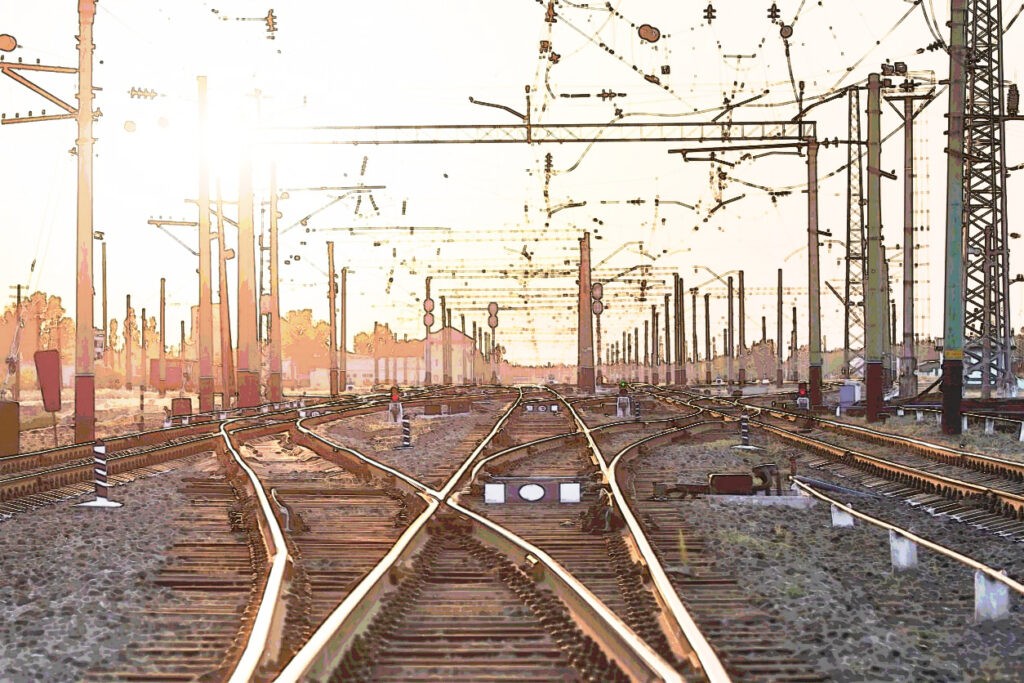
The development of the economic systems of Europe and Asia is outpacing the level and pace of integration in the transportation systems of the countries located between them. This problem can be solved by creating an overland chain across the entire Eurasian space. As part of the development of its transit potential, Kazakhstan has started to form the backbone of such a terminal network. All work on creating transport networks has been entrusted to the national company, Kazakhstan Temir Zholy (KTZ), which plans to integrate all modes of transport to offer a comprehensive range of client services under a 'one-stop-shop' principle and enhance international operations. Establishing a terminal network outside of the republic will improve freight logistics and help build efficient supply chains. This decision is driven by market demands for cargo delivery, which go beyond mere transportation needs and require the provision of a comprehensive transportation product by a single logistics operator. Where Cargo Flows Begin Developing cooperation with China plays a crucial role in integrating Eurasian transport space. In 2023 alone, transit freight traffic between Kazakhstan and China reached a record 28.3 million tons. This success was partially due to the development of a terminal network in China - the Kazakhstan-China logistics terminal in the Pacific port of Lianyungang has been operating for ten years, and the largest dry port in Central Asia, Khorgos – Eastern Gate, operates on the border. The transport system between these two ports facilitates the delivery of goods from China's eastern coast to Europe via the Caspian Sea, ensuring the shortest delivery times. Adding the new Kazakh terminal in Xi'an to this transport chain has optimized logistics processes and boosted transportation performance. In the first eight months of 2024, container transit from China along the Trans-Caspian International Transport Route (TITR) increased 20-fold thanks to the freight terminal in Xi'an, a project was implemented in partnership with the Chinese company, Xi'an Free Trade Port Construction and Operation. Focusing on EAEU Transport Potential Significant steps have been taken to harness the transport potential of the Eurasian Economic Union (EAEU) countries. In April, construction began on a new terminal at the Selyatino station near Moscow. A trilateral Kazakhstan-Russia-China agreement on creating the CRK Terminal transport and logistics center has been signed by KTZ, SlavtransService, and Xi'an Free Trade Port Construction and Operation. This logistics hub, based in one of the largest dry ports in Selyatino, will develop direct transport links between Xi'an, Russia, and other countries. Its launch is expected this year. Additionally, in the fall of 2024, KTZ signed a Memorandum of Understanding with Chinese and Belarusian partners to build a new logistics terminal in the Belarusian city of Svisloch. Caspian Priority To further integrate Kazakhstan into the key Trans-Caspian International Transport Route (TITR) plans are underway to create an inter-modal freight terminal in Azerbaijan's Alyat port. An agreement for the project's implementation has been signed between SK-AIH Investment Fund Ltd, KTZ, Baku International Sea Trade Port CJSC, and Xi'an Free Trade Port Construction and...

Celebrating Global Family Day: Honoring Uzbek and Kazakh Traditions That Unite Generations

Every year, January 1 marks Global Family Day, an idea first introduced in 1997, when the United Nations launched the International Decade for the Culture of Peace and Non-Violence for the Children of the World. By 1999, the had UN invited its members to dedicate the first day of the year to developing strategies for peace, and since then this day has been observed annually as a reminder of the role families play in fostering a peaceful and compassionate world. This year, The Times of Central Asia takes a closer look at family customs in Uzbekistan and Kazakhstan, nations where family values are deeply woven into the fabric of life. In Uzbekistan, family is at the heart of society. Respect for elders and care for the young are not just taught — they are lived and celebrated daily. Parents and children share close relationships, turning to one another for advice and support. [caption id="attachment_27179" align="aligncenter" width="1217"] Chimildiq canopy; image: Facebook Discover Kashkadarya[/caption] Traditions add a rich layer to these connections, keeping families united. Weddings, for example, are deeply symbolic. One notable custom is the Chimildiq, a ceremonial canopy for newlyweds which marks the start of their life together and serves as a space for blessings and well-wishes for their future. Another beloved tradition is the Beshik tuyi, a joyous celebration of a baby’s first cradle wherein relatives and neighbors come together to share in the happiness of welcoming a new life, underscoring the communal nature of Uzbek culture. “As an Uzbek woman, I’ve always been fascinated by the beauty and meaning behind our customs,” Rohila Mullayeva told TCA. The mother-in-law to three brides, for more than 20 years Mullayeva has been serving as a kayvoni, one appointed by women to preside over table work at weddings and other ceremonies. “They’re not just rituals but expressions of love, respect, and hope for the future,” she said. “Take Chimildiq, for instance - a special moment for young couples starting their journey together. One of the rituals in the ceremony is when the bride and groom give each other honey on their fingers. This is a sweet symbol of the joyful moments they hope to share in their life ahead. Another part of the ceremony is both meaningful and playful — when the groom attaches boiled eggs his bride’s dress. This gesture is a heartfelt wish for the couple to have many children. “Then there’s the Beshik tuyi, the cradle ceremony, which is one of the most cherished traditions in our culture. When a bride gives birth to her first child, she is honored in a beautiful custom called Sallabandon, which is part of Beshik tuyi. An elderly grandmother, someone respected for having a big family, places a salla, a headdress wrapped in a special cloth, on the bride’s head,” Mullayeva explained. “During this ceremony, a kurpacha — a soft, colorful quilt — is placed under the bride’s feet, a gesture of respect and care. The meaning behind Sallabandon is deeply symbolic; it...

Gender Expectations in Kazakhstan: How Boys and Girls are Raised Differently

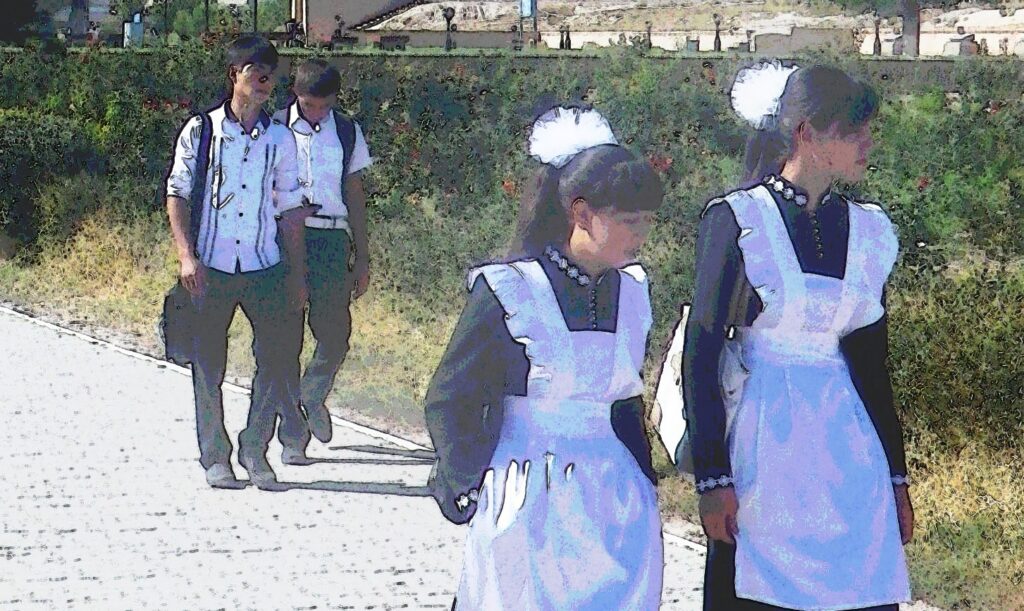
From childhood, boys and girls in Kazakhstan are raised with clearly defined roles based on gender stereotypes. These attitudes are instilled through the family, media, and educational system, creating pressure on children to conform to specific expectations. Boys are prepared for leadership and career success, while girls are prepared for family life and the role of model kelinka (daughter-in-law). The UNDP Analytical Report (2024) emphasizes that patriarchal attitudes still persist in Kazakhstan. These stereotypes are transmitted through key institutions of socialization, including the family, educational institutions, and the media, and shape the perception of gender roles as strictly fixed. Expectations for boys and girls are established from an early age. For boys, parents often buy cars, construction sets, and tool kits, reinforcing the idea that a man is a protector, provider, and builder. Boys are expected to do well in school and go to university. The phrase "You are a man; you must be strong" often defines their upbringing. It is believed that a boy should be raised to be independent and able to earn money. Daniyar, 20, student from Almaty: "When I was a teenager, I was constantly told that I should be responsible and strong. Crying or showing weakness was considered a shame. I couldn't even express my emotions freely. I think this had a big impact on my worldview. Madiyar, 22, artist: "Like many boys, I faced the belief that creativity was not for men. Until I achieved some success, my parents constantly discouraged me, not because it didn't seem lucrative, but simply because I'm a man." Girls are given dolls, toy kitchens, and dishes from an early age to instill domestic skills. Parents often say: "You must learn to cook to be a good wife.” Girls are taught to be obedient, modest and caring. Family conversations often boil down to the fact that a girl should marry and become an exemplary kelinka, responsible for caring for her husband, his parents, and their children. Aizhan, 25, Taraz: "When I was a child, my brother could do whatever he wanted - go out, play with friends, but I was constantly told: "Wash the dishes" or "Learn to cook, who will marry you otherwise?". No one talked about my education, it was considered not as important as being able to bake baursaks (a Kazakh sweet bread).” Karima, 26, a teacher from Astana: "In our family, education for girls was not considered a priority. I was often told: "You will get married, why do you need higher education?" I had to fight this stereotype to go to university.” Lera, 21, student, Astana: "I didn't really face any problem in choosing a profession. My parents encouraged my choice to enroll in physics. However, at the university, gender inequality is rampant. Some professors are always saying that math is not for women or that we came here to find husbands. I think that's a big problem, too." In addition to parental guidance, traditional Kazakh gender roles are reinforced through the media. Traditional...

“Success is Possible in Kazakhstan”: An Interview with Fashion Brand Qazaq Republic

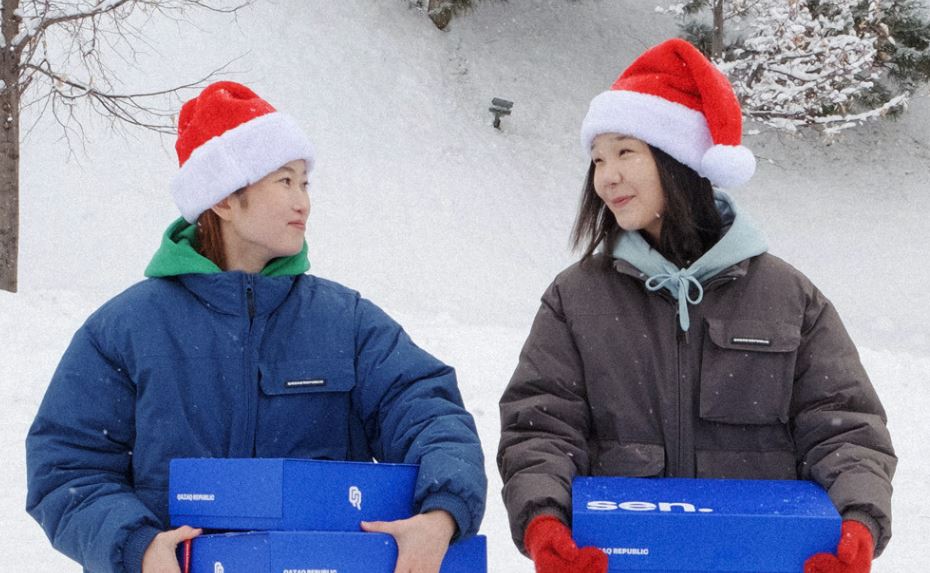
Qazaq Republic has become a popular brand among young people in Kazakhstan. The brand has become a success story for entrepreneurship within Kazakhstan and Central Asia. The Times of Central Asia spoke with Yermek Kazym, co-founder and CEO, to learn more about the brand, its message, and how it achieved its success. TCA: Qazaq Republic celebrates Kazakhstan’s heritage through fashion. What inspired the brand's creation, and what is its story? When the founder of Qazaq Republic, Saken Joldas, was studying in the US, he would always bring gifts from Kazakhstan for his friends. But the available options were always uninspiring. This led him to dream about creating something more appealing to showcase modern Kazakhstan's vibrant youth culture and style. In 2016, when the mayor of Almaty announced a competition to design a new city logo, Saken shared his designs with the public. He created digital versions of the design to print on mugs and t-shirts and posted them on Facebook. The response from the community was incredible—people loved the concept and showed great interest in purchasing the items. That’s how the idea for the brand began to take form, starting right in his kitchen. The first big order came from the Duty-Free store at Almaty Airport. They requested around 30 t-shirts to sell. As the business grew, Qazaq Republic was given space at the biggest toy and bookstore in Almaty, Meloman. With the rise in sales, we decided to open QR’s very first store. When designing it, we even considered adding a coffee shop in case the store didn’t work out. QR’s first store opened in November 2019 on 47 Mametova street, but then the pandemic hit. While malls were closing, our store had the advantage of being a standalone store. To help people feel better during difficult times, we created unique cotton masks with the phrase “Bari jaqsy bolady” (Everything will be alright). Instead of selling them, we gave them free of charge with orders over 5,000 tenge. Customers started placing smaller orders just to get these masks, giving us a strong sense of support and confidence that we were on the right track. TCA: Could you walk us through the creative process of designing a typical Qazaq Republic collection? We’ve built a solid foundation now. People used to think we were just buying ready-made items and putting our logo on them, but that's not the case. Like global brands such as Nike and Ikea, we design our products in Kazakhstan while outsourcing production and manufacturing to trusted partner factories in Turkey and China. We oversee every detail, from creating labels and designs to developing patterns, ensuring complete control over the process. This approach allows us to concentrate more on perfecting our products. The brand's uniqueness lies in creating products that make everyday life comfortable and functional while staying modern and high-quality. TCA: Who is the target audience for Qazaq Republic, and how has it evolved since the brand’s inception? When we first launched our brand, we assumed it...

Public Opinion Survey: One in Five Kazakhs Considering Emigrating

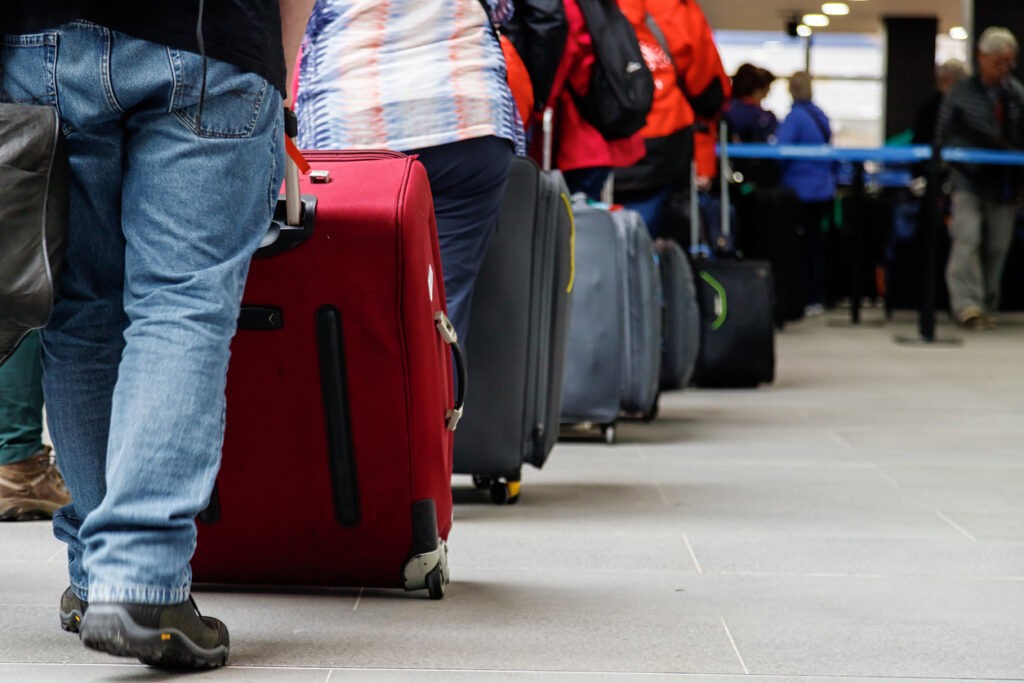
One in five Kazakhstanis is contemplating leaving the country, citing low income and a lack of confidence in the future as the primary reasons, according to a survey by the Bureau of Express Monitoring of Public Opinion DEMOSCOPE. The study, titled “Attitude of Kazakhstanis to the Problem of Brain Drain,” was conducted in partnership with the MediaNet International Journalism Center, PAPERLAB research center, and supported by the Konrad Adenauer Foundation.  Migration Sentiment in Numbers The survey revealed that: 21% of respondents are considering emigration. 6.9% intend to leave within the next two to three years. 5.6% wish to move but lack the means to do so. 8.4% are open to moving under certain conditions. However, the majority - 78.5% - do not plan to emigrate in the foreseeable future. Young and middle-aged respondents were the most interested in moving abroad. Among 18-29-year-olds, a quarter said that they wanted to emigrate, while nearly 30% of those in their 30s are considering relocation. Reasons for Leaving The top motivations for emigration included: Higher wages (24.5%) Better prospects for themselves and their children (23.9%) Access to better jobs (14%) Opportunities for quality education (11.7%) Self-development (13.2%) Improved healthcare services (4.9%) Younger respondents were more focused on education and self-development, while older individuals prioritized long-term opportunities. Emigration Trends and Impacts Despite growing migration sentiments, official data for the first three quarters of 2024 show a positive migration balance. Over 20,000 people moved to Kazakhstan, while 10,200 emigrated. However, the qualitative characteristics of migration raise concerns. Many who leave are skilled professionals, including engineers, economists, teachers, and lawyers. A detailed analysis of migration patterns highlights this trend. Popular Destinations and Public Opinion The most desired emigration destinations are: United States (7.7%) Russia (6.2%) European countries (5.1%) Turkey (4.6%) Canada (2.6%) However, 35% of respondents had no specific preference for a destination. Societal attitudes toward emigration remain largely understanding, with 63.3% expressing support for those who choose to leave. Only 11.4% voiced disapproval. Looking ahead, 39% of respondents anticipate a rise in the outflow of skilled workers, while 21.7% predict an increase in immigration to Kazakhstan. Addressing the Brain Drain Experts stress that mitigating the brain drain will require a systematic approach, including: Improving living standards. Enhancing access to quality education and healthcare. Ensuring security and economic stability. The survey, conducted across 17 regions of Kazakhstan, included 1,100 participants. The margin of error does not exceed 3% with a 95% confidence level.