• KGS/USD = 0.01144 0%
  • KZT/USD = 0.00207 0%
  • TJS/USD = 0.10419 -0.1%
  • UZS/USD = 0.00008 0%
  • TMT/USD = 0.28530 -0.14%
  • KGS/USD = 0.01144 0%
  • KZT/USD = 0.00207 0%
  • TJS/USD = 0.10419 -0.1%
  • UZS/USD = 0.00008 0%
  • TMT/USD = 0.28530 -0.14%
  • KGS/USD = 0.01144 0%
  • KZT/USD = 0.00207 0%
  • TJS/USD = 0.10419 -0.1%
  • UZS/USD = 0.00008 0%
  • TMT/USD = 0.28530 -0.14%
  • KGS/USD = 0.01144 0%
  • KZT/USD = 0.00207 0%
  • TJS/USD = 0.10419 -0.1%
  • UZS/USD = 0.00008 0%
  • TMT/USD = 0.28530 -0.14%
  • KGS/USD = 0.01144 0%
  • KZT/USD = 0.00207 0%
  • TJS/USD = 0.10419 -0.1%
  • UZS/USD = 0.00008 0%
  • TMT/USD = 0.28530 -0.14%
  • KGS/USD = 0.01144 0%
  • KZT/USD = 0.00207 0%
  • TJS/USD = 0.10419 -0.1%
  • UZS/USD = 0.00008 0%
  • TMT/USD = 0.28530 -0.14%
  • KGS/USD = 0.01144 0%
  • KZT/USD = 0.00207 0%
  • TJS/USD = 0.10419 -0.1%
  • UZS/USD = 0.00008 0%
  • TMT/USD = 0.28530 -0.14%
  • KGS/USD = 0.01144 0%
  • KZT/USD = 0.00207 0%
  • TJS/USD = 0.10419 -0.1%
  • UZS/USD = 0.00008 0%
  • TMT/USD = 0.28530 -0.14%

Viewing results 607 - 612 of 1395

WHO and UNDP to Upgrade Kazakhstan’s Virological Labs

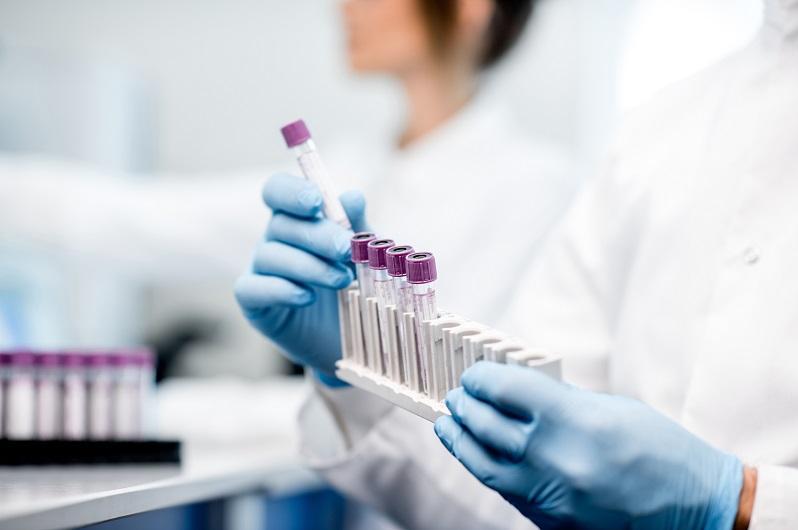
Kazakhstan’s Ministry of Healthcare, the World Health Organization (WHO) Office in Kazakhstan, and the United Nations Development Programme (UNDP) have announced a strategic partnership to upgrade the country's critical health infrastructure, supported by a three-year grant from the Pandemic Fund. As reported by UNDP in Kazakhstan, the collaboration will better prepare Kazakhstan for potential pandemics by enhancing its management of response to infectious diseases. Key components of the initiative include renovating and modernizing Almaty's virological laboratory and the construction of another in Turkestan. Both facilities will incorporate SMART (Self-Monitoring Analysis and Reporting Technology)  as well as “green” technologies to ensure sustainability and environmental responsibility. The project also includes the renovation of the National Scientific Center of Especially Dangerous Infections in Almaty to improve the infrastructure, functionality, and safety standards of its virological and bacteriological laboratories, and the modernization of  sanitary and quarantine checkpoints across Kazakhstan. Russia earlier reported on the alleged existence of US laboratories developing biological weapons in Kazakhstan. Issued by the Kremlin-controlled media in the wake of Russia’s invasion of Ukraine, the report's claims have been staunchly denied by Zauresh Zhumadilova, Director General of the National Scientific Center of Especially Dangerous Infections under the Ministry of Health of Kazakhstan. According to Zhumadilova, all laboratories in Kazakhstan belong to the government and are controlled by the country’s Ministry of Health. In June, Kazakhstan’s Deputy Minister of Culture and Information Kanat Iskakov, also commented on rumors concerning the alleged existence of foreign biological laboratories in Kazakhstan and reiterated, “The [Kazakh] Ministry of Foreign Affairs and authorized bodies have several times stated that there are no biological laboratories run by the USA or any other country, in Kazakhstan." He added that the  research center in Almaty, fully funded by the state, is run by local specialists. Reuters has reported that artificial intelligence (AI) was behind the fake news, originated in China, about the existence of U.S. laboratories allegedly developing biological weapons in Kazakhstan. Referencing the U.S. Department of Homeland Security (DHS) 2024 Homeland Threat Assessment, the agency stated that a Chinese government-controlled news site using a generative AI platform, had promoted a previously circulated false claim that the United States was running a lab in Kazakhstan to create biological weapons for use against China. According to DHS, China and other adversaries are developing AI technologies that could undermine U.S. cyber defenses, including generative AI programs that support malware attacks. In response, Reuters reports that the Biden administration is poised to launch a new front to safeguard the U.S. from AI technologies developed by China and Russia, and comments on the potential employment of AI by U.S. adversaries to wage aggressive cyberattacks or even create potent biological weapons.
Central Asian Countries Unite To Support Women and Children Repatriated From Conflict Zones

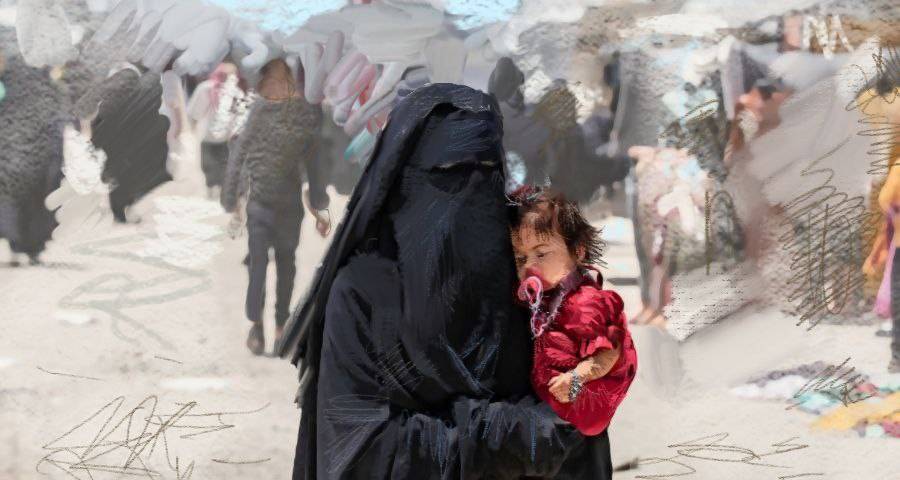
UNICEF Uzbekistan reports that Kazakhstan, Kyrgyzstan, Tajikistan, and Uzbekistan are actively working to improve the support system for women and children returning from conflict zones, such as Iraq and Syria. In support of the European Union's project “The second phase of EU-UN support to Central Asian states for their citizens returning from conflict zones,” delegations from the above met to discuss their shared experiences and means of providing necessary support and services for successfully reintegrating women and children into society. Uzbekistan was one of the first countries in Central Asia to start repatriating its citizens from conflict zones. Since 2019, the country has undertaken several missions to return women and children stranded in conflict zones as part of operations known as “Mehr” (“kindness” in Uzbek). The “Mehr-1” and “Mehr-2” operations have enabled the Government of Uzbekistan to repatriate many of its citizens, and in cooperation with the government of Iraq and UNICEF, offer a safe haven in their motherland for children deprived of basic necessities such as food, clean water, and medical care while living in war zones and refugee camps. On their return, repatriated citizens are placed in special sanatoriums where they are provided with hot food, clothing, and the services of doctors, therapists, and teachers. To date, Uzbekistan has successfully repatriated 531 citizens, including 331 children, 125 women, and 27 men. The country's initiative has been praised internationally and noting  its focus on the interests of children and supporting the family unity and society, Ní Aoláin, a UN expert has stateed that, “The Uzbek model of repatriation and reintegration provides a roadmap for other governments to return their nationals from conflict zones." Kazakhstan, likewise, has committed to the repatriation of its citizens from areas previously controlled by the Islamic State, and has launched operations “Jusan” and “Rusafa”, implemented with a high level of coordination between various government agencies, including national security services, diplomats, and the military. One of the most essential repatriations took place within the framework of the “Jusan” operation, launched in 2019. The name “Jusan” means bitter wormwood; native to Kazakhstan and a symbol of homesickness. Through this operation, hundreds of women and children were rescued from dangerous refugee camps in Syria, including the notorious Al-Hol Camp. Maryam, one of the women repatriated during the “Jusan” operation, said that the "first time a delegation from Kazakhstan arrived was to collect data on Kazakh citizens in the Al-Hol Camp. They promised to come back for us soon. A month of waiting felt like an eternity to us.” According to women from the tent camp, the shortage of drinking water and provisions, essential medicines, and the unbearable heat aggravated the situation and led to constant conflicts between residents. The humanitarian operations “Jusan” and “Rusafa” enabled the return of 725 people to Kazakhstan, including 188 women and 522 children, most of whom were under twelve years of age. Kazakhstan's success in such operations has been  attributed to the high level of investment by the state. According to Gabit Konusov,...

Kazakhstan and China Move to Green Cooperation

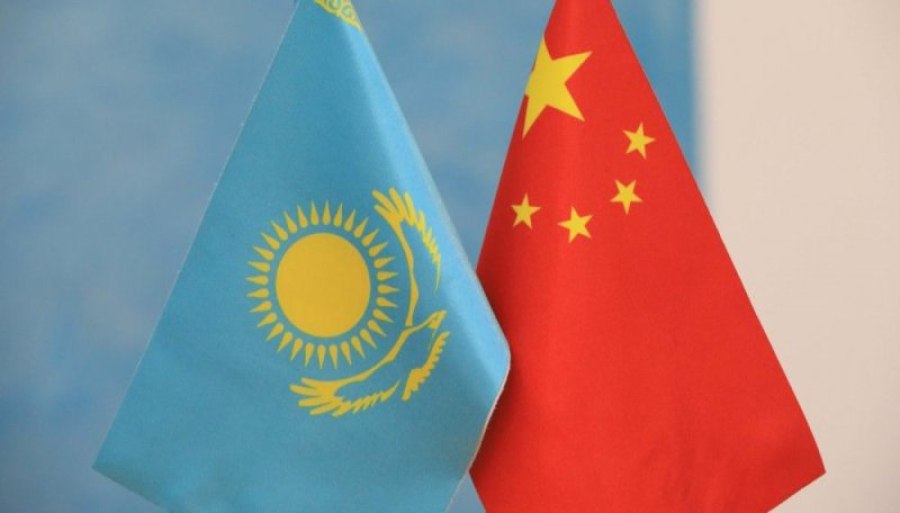
Kazakhstan’s International Center for Green Technologies and Investment Projects and the China-SCO Technology Transfer Center have signed a Memorandum of Understanding to develop joint projects in green technologies. The signing occurred at the Kazakhstan-China trade and economic cooperation forum, "Golden Bridge to Green Cooperation," held in Beijing last week. The forum discussed the Green Silk Road initiative, a key element of China's Belt and Road Initiative that aims to promote sustainable development and support global efforts for green transformation. Speaking at the forum, Kazakhstan's Minister of Trade and Integration, Arman Shakkaliyev, emphasized the importance of the Green Silk Road initiative for the sustainable development of Kazakhstan, China, and the global community. "The transition to carbon neutrality requires a comprehensive approach. green investments, greening trade corridors, and working towards a carbon-neutral economy are key aspects of our strategy," Shakkaliyev said. He also noted Kazakhstan and China's ambitious plans to expand economic cooperation and achieve a bilateral trade turnover of $80 billion, with a focus on investments in agriculture, new energy, automotive manufacturing, and the production of high-value-added products. According to Shakkaliyev, in 2023, China invested about $2 billion in Kazakhstan, 16.4% more than in 2022, and the total volume of Chinese investments in the Kazakh economy has now exceeded $25 billion. He also emphasized the potential of switching to electric vehicles and using green technologies in cargo transportation to improve environmental performance and increase the efficiency of trade corridors.

Kazakh-German Consortium to Build Cargo-Passenger Airport in Khorgos–Eastern Gate SEZ

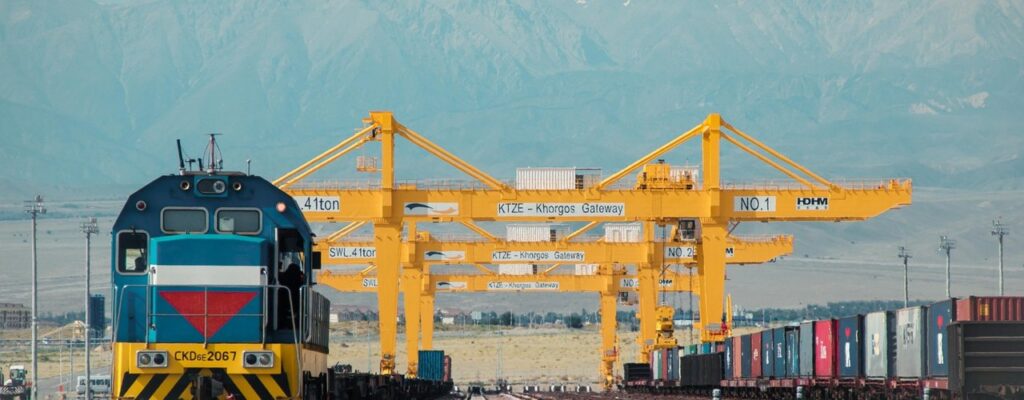
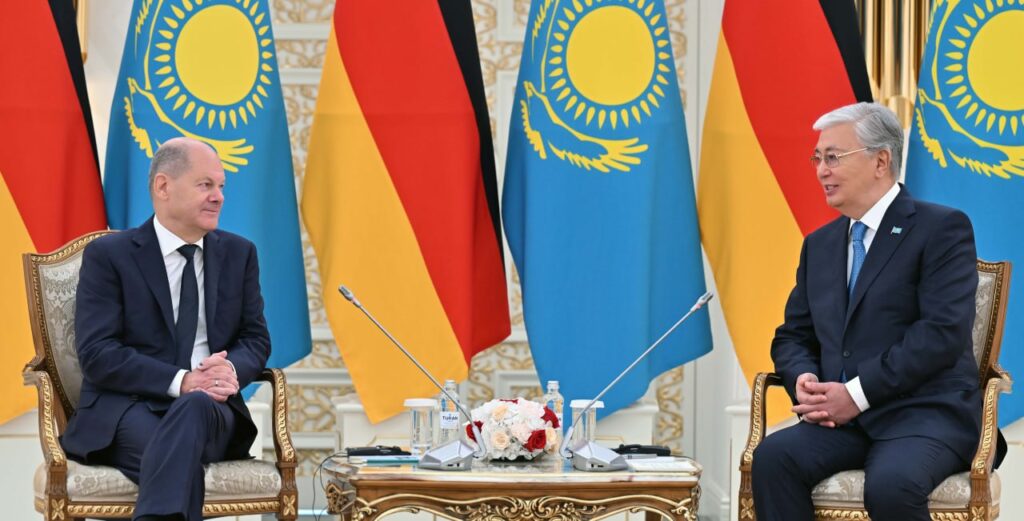
On September 16, Kazakhstan’s Ministry of Transport and Kazakh-German consortium SKYHANSA signed a framework agreement on a project to construct a cargo-passenger airport in the special economic zone (SEZ) Khorgos-Eastern Gate on the border between Kazakhstan and China. The document was signed as part of the official visit of Germany’s Federal Chancellor Olaf Scholz to Kazakhstan. The Khorgos–Eastern Gate SEZ is located in Kazakh territory, one kilometer from the state border and China’s border city, Khorgos. The SEZ is strategically located on the route of the Western Europe – Western China highway. It is also a central hub on the Trans-Caspian International Transport Route (TITR) that connects China and Europe. The SEZ includes a dry port and a multimodal logistics zone. The first stage of construction of a China-Kazakhstan industrial park on the territory of the SEZ began in November 2023. The Kazakh-German project involves the construction of an airport with a passenger terminal capable of handling up to 500 passengers per hour, a cargo terminal capable of handling up to 250,000 tons per year, a fuel storage facility capable of holding 550,000 tons, a technical center for servicing aircraft, and tourism, shopping, and entertainment facilities. Private investments in the project are expected to exceed $500 million, and more than 300 permanent jobs will be created. The administration of Kazakhstan’s Zhetysu region, where the SEZ is located, has now allocated a land plot for the airport's construction, and the investor plans to begin construction works after concluding the Investment Agreement.

Tokayev: Russia is “Militarily Invincible”

During a meeting in Astana with German Chancellor Olaf Scholz, Kazakhstan's President Kassym-Jomart Tokayev spoke about resolving the Russian-Ukrainian war. According to Tokayev, further escalation of the war will only lead to irreparable consequences for all mankind and, above all, for all countries directly involved in the war. Tokayev said: “The fact is that Russia is militarily invincible. Unfortunately, a good chance to achieve at least a truce was lost with the refusal to conclude the Istanbul Agreement. But the opportunity for peace still exists. We need to carefully consider all peace initiatives put forward by various states, come to a decision to stop hostilities, and then move on to discussing territorial issues. In our opinion, the peace plan of China and Brazil deserves support.” Tokayev reminded the public that Kazakhstan has the world's longest delimited land border with Russia. He further stated that “cooperation between our countries is developing within the framework of strategic partnership and alliance. In Kazakhstan, we have genuine sympathy for the Ukrainian people and their distinctive culture. There have never been any disagreements between our states. The embassy of our country continues to function in Kyiv.” While his comments about seeking peace before discussing territorial issues may seem like Tokayev is backing Russia, in 2022, he said that Kazakhstan would not recognize the independence of the so-called Donetsk and Luhansk people's republics (“DNR” and “LNR”). Speaking about the 'republics', he noted that the two basic principles of the UN Charter -- the right to self-determination for nations, and the territorial integrity of states -- have come into mutual contradiction. On this topic, Tokayev noted: "It is estimated that if the right of self-determination for a nation is realized on the globe, then instead of the current 193 states, more than 500-600 states will emerge on Earth. It will be chaos. For this reason, we do not recognize Taiwan, Kosovo, South Ossetia, or Abkhazia. We will apply this principle to all quasi-state territories, which, in our opinion, includes Luhansk and Donetsk.”

Climate Crisis May Drastically Reduce Production in Central Asia

Central Asia may face serious economic losses due to climate change, which may reach a 6.5% annual decline in production by 2060. These figures were announced by Bo Li, Deputy Managing Director of the International Monetary Fund (IMF), at the “New Economic Challenges for Long-Term Development” forum. According to Bo, the Caucasus and Central Asia region is particularly vulnerable to climate change. Soaring temperatures and increasing frequency of droughts and floods are reducing crops, destroying infrastructure, and lowering living standards. “According to IMF estimates, if no action is taken to slow down climate change, Central Asia will lose up to 6.5% of its output annually by 2060,” Bo said. He noted that possible losses could be reduced with joint actions such as reducing carbon emissions, transitioning to a green economy, and adapting to changing climate conditions. As an example, Bo noted the efforts of Kyrgyzstan, that has already started to increase electricity tariffs and reduce energy subsidies, allowing the country to adapt to climate challenges and create new jobs in the “green” sector. Many Central Asian countries are taking steps to reform the energy sector and introduce “green” technologies. For example, Kazakhstan is actively cooperating with several countries to develop renewable energy and reform the energy sector. One key example is the partnership with the United States under the USAID Power Central Asia program. This initiative supports Kazakhstan and other Central Asian countries in modernizing energy markets, introducing clean energy, and encouraging private investment in renewable energy. Uzbekistan is undergoing a major reform of its energy system to reduce subsidies and promote renewable energy. The country plans to increase the share of renewable energy to 25% by 2030, which includes solar and wind energy projects. These measures will help Uzbekistan improve energy efficiency and reduce carbon dioxide emissions. In Tajikistan, USAID is implementing the Power Central Asia program, which supports energy cooperation in the region and encourages using renewable energy to help reduce dependence on fossil fuels and modernize energy systems.