• KGS/USD = 0.01144 0%
  • KZT/USD = 0.00211 0%
  • TJS/USD = 0.10515 0.48%
  • UZS/USD = 0.00008 0%
  • TMT/USD = 0.28530 0%
  • KGS/USD = 0.01144 0%
  • KZT/USD = 0.00211 0%
  • TJS/USD = 0.10515 0.48%
  • UZS/USD = 0.00008 0%
  • TMT/USD = 0.28530 0%
  • KGS/USD = 0.01144 0%
  • KZT/USD = 0.00211 0%
  • TJS/USD = 0.10515 0.48%
  • UZS/USD = 0.00008 0%
  • TMT/USD = 0.28530 0%
  • KGS/USD = 0.01144 0%
  • KZT/USD = 0.00211 0%
  • TJS/USD = 0.10515 0.48%
  • UZS/USD = 0.00008 0%
  • TMT/USD = 0.28530 0%
  • KGS/USD = 0.01144 0%
  • KZT/USD = 0.00211 0%
  • TJS/USD = 0.10515 0.48%
  • UZS/USD = 0.00008 0%
  • TMT/USD = 0.28530 0%
  • KGS/USD = 0.01144 0%
  • KZT/USD = 0.00211 0%
  • TJS/USD = 0.10515 0.48%
  • UZS/USD = 0.00008 0%
  • TMT/USD = 0.28530 0%
  • KGS/USD = 0.01144 0%
  • KZT/USD = 0.00211 0%
  • TJS/USD = 0.10515 0.48%
  • UZS/USD = 0.00008 0%
  • TMT/USD = 0.28530 0%
  • KGS/USD = 0.01144 0%
  • KZT/USD = 0.00211 0%
  • TJS/USD = 0.10515 0.48%
  • UZS/USD = 0.00008 0%
  • TMT/USD = 0.28530 0%

Viewing results 127 - 132 of 620

Kazakhstan Launches Digital Highway Assistance Service

Kazakhstan has introduced a new digital service enabling drivers to notify fellow motorists about emergency situations on the road, an initiative designed to foster mutual assistance and reduce traffic incidents. Using a mobile application, drivers can input the license plate number of a vehicle they observe in trouble and send an anonymous alert to its owner. The system covers common scenarios such as a flat tire, an open window, a car blocking the road, activated alarms, or situations where another vehicle has collided with a parked car. The list of alert types may expand over time, and all messages are sent anonymously and free of charge to both sender and recipient. “If you notice that a car has been left with an open window or is blocking the driveway, all you have to do is enter the license plate number and select the situation. The driver will receive an anonymous notification,” said Zhaslan Madiev, Minister of Digital Development, Innovation and Aerospace Industry. “We expect that this service will become a tool of mutual support and civil responsibility among drivers and will lead to the minimization of emergency situations on the roads.” The initiative was developed in collaboration with the Ministry of Internal Affairs. The two institutions also plan to integrate augmented reality and computer vision technologies into Kazakhstan’s driver licensing procedures. Expanding Digital Public Services Kazakhstan continues to expand its portfolio of digital services in the transportation sector. According to Arman Kenzhegaliev, Chairman of the state corporation Government for Citizens, the country delivered 3 million vehicle-related services in the past year, including digital signing of sale and purchase agreements, expedited production of registration plates, and online auto insurance issuance. “We plan to launch a platform for document processing, introduce biometric identification, and implement a service to check vehicle history,” said Kenzhegaliev. In 2024, Kazakhstan expects to provide 341 million public services, 91% of them remotely. Currently, 92% of all public services are accessible online. Digital ID Cards and Data Protection By the end of April, Kazakhstan will roll out a digital alternative to physical identity cards. The new system, which has already undergone testing, allows citizens to verify their identity through the eGov platform, upload a photo and signature, pay online, and receive an SMS once the document is ready. To protect personal data, a new government-run data access control service has been launched. Citizens will now receive notifications when someone attempts to access their personal data and can block unauthorized attempts in real time. As previously reported by The Times of Central Asia, Kazakhstan is also investing in infrastructure to support the introduction of artificial intelligence systems, with international partners, including those from Singapore, contributing to the development of data centers and digital frameworks across the country.


Kazakhstan to Curb SIM Card Issuance Amid Rising Digital Fraud

Kazakhstan is considering new restrictions on the number of SIM cards individuals and legal entities can possess, in a bid to combat growing digital fraud. The proposal was announced by First Deputy Prosecutor General Timur Tashimbayev during a parliamentary session where the corresponding bill is under discussion. Targeting Scams Through Regulation The draft legislation proposes a cap, either five or ten SIM cards per individual, as well as the introduction of video verification during registration, mirroring procedures used in the financial sector. “Unfortunately, anyone can currently purchase SIM cards with virtually no oversight. They’re sold in stores, handed out during promotions, and it’s nearly impossible to track who is using them and for what purpose,” Tashimbayev said. In collaboration with mobile operators, the Prosecutor General’s Office has also developed methods to detect so-called SIM boxes, devices used to mask international internet calls as local traffic. In the past year, law enforcement seized 78 such devices and over 50,000 SIM cards connected to illegal operations. Data and Legislative Developments Since 2019, Kazakhstan has mandated registration of mobile devices through a combination of IMEI number, SIM card, and the subscriber’s Individual Identification Number (IIN), creating a digital footprint for each user. Despite this, new forms of fraud continue to emerge. In 2023, discussions began around biometric identification for remote telecom services. The plan would require users to provide facial recognition data when registering SIM cards, a move aimed at deterring the use of fake identities. Reclaiming the Numbering Plan In October 2024, Vice Minister of Digital Development Askhat Orazbek announced plans to return control over the country’s numbering plan to the state. Under the proposal, new numbers would be issued via the eGov portal and its mobile app. The initiative also includes differentiating SIM cards by purpose. While private users will face strict limits, legal entities will be required to justify the need for each card issued. “We will cap the number of SIM cards per person. Legal entities issuing them on a large scale must provide documentation justifying their use,” Orazbek stated. Universal SIM Cards on the Horizon Alongside restrictions, Kazakhstan is considering the rollout of universal SIM cards. Enabled by a draft law on virtual telecom operators, these cards would be compatible with the nearest base stations of any network provider, thanks to shared infrastructure access. Adapting to New Digital Threats With cyber fraud becoming increasingly sophisticated, Kazakhstan is taking a multi-pronged approach to enhance digital security. The proposed limits on SIM card ownership, enhanced registration protocols, and the development of virtual operators are central to this evolving strategy to combat telecom-related crime.

Kazakhstan Mandates Sports Federations to Help Detect Extremism

Sports federations in Kazakhstan will now be required to assist in preventing extremism and terrorism, under new provisions in the updated Law “On Physical Culture and Sport.” The amendment stems from concerns over the growing influence of religious movements in the sports environment, according to Vice-Minister of Tourism and Sports Serik Zharasbayev. Speaking to reporters on the sidelines of a Senate session, Zharasbayev explained that the measure is being implemented in cooperation with the National Security Committee. “This provision was introduced in collaboration with the National Security Committee due to the need to address emerging risks. We are working within the framework of the Anti-Terrorist Center and have already developed a roadmap through 2027,” he said. Previously, sports federations were not involved in national security matters, but Zharasbayev stated that “the time has come” for them to take part in identifying potential threats and reporting relevant information to state authorities. Currently, the focus is strictly on preventive measures. In April, specialists from the Anti-Terrorist Center will begin traveling to the regions to provide detailed briefings on the new requirements. “By the end of April or early May, we’ll meet with all federations to clarify these norms. For now, it's solely about prevention,” he added. The government also plans to involve theologians with experience in countering extremist ideologies as part of the outreach. The urgency of the issue was underscored by President Kassym-Jomart Tokayev during the fourth session of the National Kurultai in Burabay in early March. “Mazhilis deputy Yermurat Bapi has raised concerns about the country’s religious climate. Kurultai members Daniya Kydyrbayeva and Olzhas Suleimen have also noted the growing influence of non-traditional religious movements among youth, especially in the sports sector,” Tokayev said. He reaffirmed that while freedom of religion is constitutionally protected, “disorder and permissiveness are unacceptable.” The president called for preventing destructive ideologies and using regulatory frameworks to promote national unity. The new obligation for sports federations is part of a broader legislative package recently passed by the Senate in two readings. According to Deputy Asem Rakhmetova, the amendments aim to improve legal frameworks in the field of physical culture and sports, while also clarifying the division of powers between central and local executive bodies as part of ongoing administrative reforms. In total, the bill modifies two codes and five laws. Similar concerns have arisen outside Kazakhstan. In Russia, State Duma deputy Sergei Mironov recently requested that the Prosecutor General’s Office investigate MMA clubs for possible links to radical groups. He warned that the “uncontrolled functioning” of such organizations could pose a threat to state security, citing reports that terrorists involved in the Crocus City Hall attack had trained at one such club. Kazakhstan’s sports organizations are now being tasked with responsibilities beyond their traditional scope. As Zharasbayev put it, “Federations must pay attention to such risks”, and this is no longer optional, but a formal obligation under the law.

Kazakhstan Senate Approves Ban on Budget Funding for Foreign Athletes

The Senate, Kazakhstan’s upper house of parliament, has passed amendments to the Law on Physical Culture and Sports that ban the use of state funds to finance foreign athletes, commonly known as "legionnaires." The bill is now awaiting President Kassym-Jomart Tokayev’s signature to become law. Ending State Support and Introducing Salary Caps Kazakhstan’s efforts to reduce foreign dominance in national sports date back to 2020. Initial measures included capping the number of foreign players allowed on the field in football and hockey, as well as restricting their funding through state budgets. However, according to Vice-Minister of Tourism and Sports Serik Zharasbayev, these regulations, embedded in competition rules and government resolutions, have not been consistently enforced at the regional level. The new legislation aims to enshrine these restrictions in law. “Regarding the financing of legionnaires: the bill prescribes a prohibition on funding these individuals from the state budget and quasi-governmental sector. However, funding from extra-budgetary sources, such as sponsorships, remains permissible,” Zharasbayev explained. The law will also empower the Ministry of Tourism and Sports to set financial limits for clubs in football, hockey, and other team sports. “This legislation will allow us to define how much each club is eligible to receive from the budget and to cap salaries of football and hockey players accordingly,” the Vice-Minister said. He added that the savings would be redirected to support grassroots youth sports, although he could not specify the projected amount. Budget Caps for Sports Clubs While specific funding limits have yet to be determined, Zharasbayev noted that the combined annual allocation from national and regional budgets is about 400 billion KZT (approximately $797 million). Currently, football and hockey clubs may receive up to 1.2 billion KZT (around $2.4 million) annually, while other sports, such as basketball and volleyball, are capped at 450 million KZT ($897,000). “For the 14 clubs in the Kazakhstan Premier League, a cumulative 30 billion KZT was allocated in 2024. It’s within this sum that we aim to identify potential savings,” Zharasbayev said. He reported that 325 foreign players competed in Kazakhstan’s three professional football divisions last year. Some have since obtained Kazakhstani citizenship, making them eligible for state funding. The new law, however, will apply only to future contracts. “Existing contracts will remain in effect until their expiration, as the law is not retroactive. Still, we have advised clubs not to sign new contracts with foreign players starting in 2025,” Zharasbayev stated. He also emphasized the need to regulate domestic athletes’ salaries, citing “unreasonably high payments” as a growing concern. A separate legal act is in development to address the issue. Scandals Within the Football Federation The legislation comes amid ongoing investigations into financial misconduct under the previous leadership of the Kazakhstan Football Federation. The Prosecutor General’s Office reported violations amounting to 3 billion KZT (nearly $6 million), including unjustified bonuses, misused funds for infrastructure, questionable player transactions, and embezzlement related to athlete meals. Specifically, over 300 million KZT ($597,000) in unwarranted bonuses were issued, and more than...

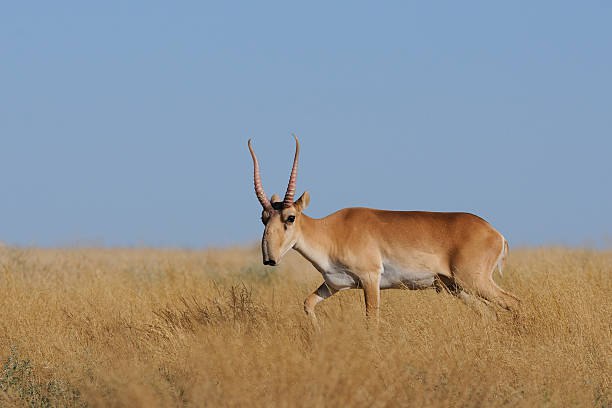
Kazakhstan Considers Resuming Saiga Culling Amid Ecological and Agricultural Tensions

Kazakhstan’s Minister of Ecology and Natural Resources, Yerlan Nysanbayev, has addressed the growing debate over the potential resumption of saiga culling, acknowledging that while no decision has yet been made, consultations with scientists and environmental experts are ongoing​. Conservation or Population Control? Speaking at a government briefing, Nysanbayev emphasized the complexity of the issue. “We expect a second meeting. Science needs time to comprehensively study the situation, assess obligations, and determine whether population regulation is necessary or if alternative measures are viable,” he said. The minister acknowledged that the conflict between wildlife and agricultural interests is becoming increasingly apparent. “There are epizootic risks involved. A very balanced decision is required here,” he added. Regulation Methods: Culling or Capture? When asked about potential population control methods, Nysanbayev responded candidly. “It could be corral-based capture or shooting, what other options are there? But the final decision is still under scientific review.” The idea of regulating saiga populations first stirred controversy in 2022 when farmers in West Kazakhstan and Akmola regions reported widespread crop damage caused by the animals. Fields were trampled, fences destroyed, and harvests consumed. Some farmers even called for a state of emergency​. By autumn 2023, saigas were added to the official list of animals subject to population control. Authorities initially aimed to capture 200,000 saigas, but technical challenges led to a shift toward culling. Meat processing plants began producing canned saiga meat for local consumption​. Shifting Policies and Political Pressure However, on February 10, 2024, the Ministry of Ecology suspended the population control initiative following consultations with Kazakh and international experts​. In April, President Kassym-Jomart Tokayev declared his intent to ban saiga culling altogether, calling the antelope a “symbol of the Kazakh steppe”​. Yet the issue resurfaced in March 2025 during a meeting of the National Kurultai. Tokayev again urged the government to reassess the situation, citing appeals from the AOYL political party and local residents. “Agriculture is suffering. Epizootic risks are growing. Overall, pressure on the ecosystem has increased,” he said​. Global Context and Local Dilemma According to Energyprom.kz, global wildlife populations have declined by an average of 73% over the past 50 years. While Kazakhstan’s saiga population has rebounded significantly thanks to anti-poaching efforts and conservation policies, the country now faces a new dilemma: how to reconcile ecological preservation with agricultural stability​. Minister Nysanbayev confirmed that a final decision will be made later this year but what form it will take remains uncertain.

Power Shifts in Central Asia: The Unpredictable Path of Leadership

European Union Commissioner for International Partnerships Josef Sikela has concluded his tour of Central Asia, a visit conducted against the backdrop of global geopolitical turbulence. Unlike previous engagements, where European officials often criticized the region’s leadership for a lack of democratic progress, Sikela refrained from making demands on local governments. Historically, Europe has accused Central Asian states of authoritarianism and the entrenchment of long-serving leaders. However, the idea that power is uniquely permanent in the region is increasingly questioned. Critics point to Western examples, such as Angela Merkel’s 16-year tenure as Germany’s chancellor, and alleged electoral manipulation within the EU, such as in Romania, where elections were annulled after an undesired candidate’s victory. Meanwhile, in Central Asia, even presidents once considered “eternal” have eventually left office, sometimes peacefully, sometimes under turbulent conditions. Kyrgyzstan: The Unpredictable Outlier Kyrgyzstan is often described as a "democratic exception" within Central Asia, yet its history is marked by political instability and frequent leadership changes, arguably more so than in many of the world’s most conflict-prone regions. The country’s first president, Askar Akayev, held power from 1990 to 2005. Though re-elected three times, his rule ended in March 2005 when protests erupted over parliamentary election results that heavily favored pro-government candidates. Demonstrators stormed the Government House in Bishkek, prompting Akayev to flee. Reports, though unverified, claimed he was smuggled out wrapped in a carpet. Following Akayev’s ouster, Kurmanbek Bakiyev took power, but his rule ended in 2010 after violent unrest. His downfall was allegedly facilitated by Kazakhstan’s intelligence services, and he later found political asylum in Belarus under President Alexander Lukashenko. Since Bakiyev’s departure, Kyrgyzstan has continued to experience political turbulence. Presidents Almazbek Atambayev (2010-2017) and Sooronbai Jeenbekov (2017-2020) both left office under pressure. Atambayev’s tenure saw a diplomatic fallout with Kazakhstan, while Jeenbekov resigned in 2020 amid protests over parliamentary elections. His successor, Sadyr Japarov, remains in office, but whether he will complete his term is an open question. Uzbekistan: Reform Within Limits Islam Karimov, Uzbekistan’s first post-Soviet leader, ruled for over 26 years before his death in 2016. While he maintained a strictly centralized government, his tenure was also marked by violent crackdowns, most notably the Andijan uprising in 2005, which resulted in a Western diplomatic fallout​. His successor, Shavkat Mirziyoyev, has introduced some reforms, loosening restrictions on civil liberties and the economy. However, the fundamental structure of state control remains intact, with opposition movements still tightly monitored. Kazakhstan: From Nazarbayev to Tokayev Kazakhstan’s transition from Nursultan Nazarbayev to Kassym-Jomart Tokayev is often described as managed succession rather than a genuine power shift. Nazarbayev, who led Kazakhstan for nearly three decades, officially stepped down in 2019, yet retained significant influence until the January 2022 unrest, which forced him to relinquish much of his remaining power. These protests, initially sparked by fuel price hikes, rapidly escalated into anti-government riots. While official accounts describe the unrest as an attempted coup orchestrated by figures within Nazarbayev’s inner circle, critics suggest Tokayev used the crisis to consolidate power....