• KGS/USD = 0.01144 0%
  • KZT/USD = 0.00212 0%
  • TJS/USD = 0.10456 0.19%
  • UZS/USD = 0.00008 0%
  • TMT/USD = 0.28490 0%
  • KGS/USD = 0.01144 0%
  • KZT/USD = 0.00212 0%
  • TJS/USD = 0.10456 0.19%
  • UZS/USD = 0.00008 0%
  • TMT/USD = 0.28490 0%
  • KGS/USD = 0.01144 0%
  • KZT/USD = 0.00212 0%
  • TJS/USD = 0.10456 0.19%
  • UZS/USD = 0.00008 0%
  • TMT/USD = 0.28490 0%
  • KGS/USD = 0.01144 0%
  • KZT/USD = 0.00212 0%
  • TJS/USD = 0.10456 0.19%
  • UZS/USD = 0.00008 0%
  • TMT/USD = 0.28490 0%
  • KGS/USD = 0.01144 0%
  • KZT/USD = 0.00212 0%
  • TJS/USD = 0.10456 0.19%
  • UZS/USD = 0.00008 0%
  • TMT/USD = 0.28490 0%
  • KGS/USD = 0.01144 0%
  • KZT/USD = 0.00212 0%
  • TJS/USD = 0.10456 0.19%
  • UZS/USD = 0.00008 0%
  • TMT/USD = 0.28490 0%
  • KGS/USD = 0.01144 0%
  • KZT/USD = 0.00212 0%
  • TJS/USD = 0.10456 0.19%
  • UZS/USD = 0.00008 0%
  • TMT/USD = 0.28490 0%
  • KGS/USD = 0.01144 0%
  • KZT/USD = 0.00212 0%
  • TJS/USD = 0.10456 0.19%
  • UZS/USD = 0.00008 0%
  • TMT/USD = 0.28490 0%

Viewing results 13 - 18 of 614

Kazakhstan’s Reservoirs Prepared for Spring Flooding

Kazakhstan’s authorities have announced that the country’s water management infrastructure is prepared for the spring flood period. According to the Ministry of Water Resources and Irrigation, the total available storage capacity in the country’s large reservoirs exceeds the projected volume of snowmelt inflows, with the highest water levels currently recorded in the eastern regions. Flood preparedness has remained a priority for the government since 2024, when Kazakhstan experienced its most severe spring flooding in 80 years. The disaster affected dozens of settlements and forced the evacuation of more than 120,000 people, drawing sharp criticism of local authorities. In response, the central government intensified coordination efforts and preventive measures. As of February, the ministry reported that the total available storage capacity in large reservoirs exceeds 14.3 billion cubic meters. Projected spring inflows are estimated at between 9.1 billion and 13.9 billion cubic meters. The ministry also announced inspections of hydraulic infrastructure and ongoing repair work at 39 facilities. Major repairs have been completed at the Charske Reservoir in the Abai region, the Akzhar Reservoir in Shymkent, the Sholak Dam in the Aktobe region, and the reconstructed dam in the village of Stepnoye in the Kostanay region. In addition, riverbed preparation measures are underway. Under the 2025-2027 Roadmap for River Rehabilitation, nearly 167 kilometers of riverbeds in western, central, and northern regions have already been cleaned and deepened. In 2026, similar work is planned across six additional regions, covering approximately 193 kilometers. Kazakhstan has also strengthened coordination with neighboring countries. In 2025, a joint working group was established with Russia to address flooding and elevated water levels, including along the transboundary Ural River. The final forecast for water levels in the basin is expected in early March. According to Kazakh officials, the Russian side has stated that water discharges from the Iriklinskoye Reservoir during the flood period will not exceed 200 cubic meters per second. An emergency notification and monitoring system for transboundary water flows along the Irtysh River is also in operation with China, including regular exercises and communication checks. The Times of Central Asia previously reported that in 2025 Kazakhstan began releasing water from key reservoirs as early as January to increase available storage capacity ahead of the spring flood season.

Kazakhstan Moves to Require Content Creators and Online Course Authors to Confirm Qualifications

Kazakhstan is preparing new legislative measures that would tighten requirements for content creators and authors of online courses who publish educational content. Under the proposed rules, such materials would have to include confirmation of the author’s relevant education or professional qualifications. The initiative is outlined in an official response by Prime Minister Olzhas Bektenov to a parliamentary inquiry regarding the regulation of online educational content. According to Bektenov, a draft law on online platforms and mass media has already been developed, along with amendments to the Code of Administrative Offenses. The proposed legislation would require users of online platforms who distribute educational courses or training materials in a specific field to disclose information confirming their qualifications, including details of a diploma or certificate. The government also plans to introduce administrative liability for online platforms operating in Kazakhstan that fail to comply with authorized bodies’ orders to remove illegal content. Authorities note that existing legislation already provides for advertising and selling unregistered medicines and prescription drugs. Bektenov stated that state bodies continuously monitor social networks and cooperate with the administrations of major platforms, including Meta and TikTok, to remove prohibited content. According to him, up to 91% of identified violating materials are removed from TikTok. Oversight is also conducted through the Cyber Surveillance system, which tracks advertisements related to pyramid schemes, online casinos and drug trafficking. Over the past year, authorities identified and blocked more than 13,800 pieces of content promoting drugs, more than 34,700 posts advertising online casinos and over 13,500 materials involving citizens in pyramid schemes. Access to the relevant resources was restricted, and site owners were issued warnings. The Times of Central Asia previously reported that members of the Senate, the upper house of parliament, had proposed introducing licensing requirements for content creators in response to widespread violations of the ban on advertising online casinos on social networks and messaging platforms.

Cost of Holding Referendum on Kazakhstan’s New Constitution Estimated at $42 Million

The cost of holding a national referendum on the adoption of Kazakhstan’s new Constitution is preliminarily estimated at 20.8 billion tenge (KZT), or approximately $42 million at the current exchange rate. The figure was announced at a press conference by Mikhail Bortnik, a member of Kazakhstan’s Central Election Commission. According to Bortnik, the estimate is currently under review by the Ministry of Finance, and the final amount will be approved at a later stage. These expenses are not included in the approved republican budget for 2026; funding is expected to be allocated from the government reserve. Approximately 75% of the total sum is projected to be spent on remuneration for members of precinct election commissions involved in organizing and conducting the vote. Another CEC representative, Azamat Aimanakumov, stated that 12,416,759 citizens will be eligible to participate in the referendum. A total of 10,413 polling stations will be opened. Of these, 9,779 will be located at voters’ places of registration, while 634 will operate at temporary places of residence, including 82 polling stations abroad in 64 countries. Polling station commissions are scheduled to receive voter lists on February 22. Citizens will be notified of the time and place of voting between February 27 and March 4. Ballots are to be delivered to polling stations between March 12 and 14. March 14 has been designated a day of silence, during which campaigning is prohibited. Voting is scheduled for March 15, 2026. CEC Deputy Chairman Mukhtar Erman said that invitations to observe the referendum have been sent to relevant organizations in more than 30 countries, including European and American states, leading Asian countries, and members of the Commonwealth of Independent States. Separate invitations to international organizations will be issued by the Ministry of Foreign Affairs. Accreditation of foreign observers will close on March 9. The draft of the new Constitution has been published on the website of the Constitutional Court of Kazakhstan. Under Article 94 of the draft, if approved in the referendum, the new Basic Law will enter into force on July 1, 2026, and the current Constitution will cease to have effect on the same date. The Times of Central Asia previously reported that work on the draft Constitution was being conducted on an accelerated timetable, after President Kassym-Jomart Tokayev announced a package of political reforms, including a proposal to transition to a unicameral parliament.

Opinion: Kazakhstan’s Constitutional Referendum – Strategic Reset or Institutional Consolidation?

Kazakhstan will hold a nationwide referendum on March 15 to adopt an entirely new constitution – an initiative President Kassym-Jomart Tokayev describes as a decisive break from the country’s super-presidential legacy. The draft, published on February 12 after deliberations by a Constitutional Commission, proposes far-reaching institutional reforms. Among the most notable changes are the replacement of the bicameral parliament with a unicameral body known as the Kurultai; the reinstatement of a vice presidency; and the constitutionalization of commitments to digital transformation, economic modernization, and strengthened sovereignty. The government presents the reform as a necessary modernization of the state in response to global turbulence. Yet the scope and timing of the proposal indicate that the referendum is as much about strategic recalibration as it is about institutional redesign. The Accelerated Timeline The speed of the process has drawn considerable attention. In September 2025, Tokayev advised against rushing constitutional reform and suggested that 2027 would allow sufficient time for public consultation. However, by February 2026, the referendum had been scheduled for mid-March. This abrupt shift suggests a deliberate political calculation rather than simple administrative urgency. One factor under discussion is the legal effect of adopting a wholly new constitution. While reforms in 2022 limited presidents to a single seven-year term, the introduction of a new constitutional order could create ambiguity regarding the continuity of those limits. Even if not explicitly intended as a reset mechanism, such a transformation inevitably introduces flexibility into questions of tenure and succession. Geopolitical pressures also help explain the acceleration. Tokayev has pointed to profound changes in global trade, security alignments, and technological competition. In a world increasingly shaped by sanctions regimes and geoeconomic fragmentation, Kazakhstan seeks to project institutional coherence and responsiveness. Constitutional reform, in this sense, becomes a signal of adaptive capacity. At the same time, the draft completes the political transition that began after the unrest of January 2022. Although earlier amendments removed former President Nursultan Nazarbayev’s constitutional privileges, the 1995 framework remained largely intact. The new proposal replaces that structure altogether, extinguishing residual legal ties to the Nazarbayev era and consolidating a distinct political phase under Tokayev’s leadership. Sovereignty as Constitutional Doctrine A defining feature of the draft is the elevation of sovereignty, independence, territorial integrity, and the unitary nature of the state to foundational, effectively immutable principles. This language carries clear geopolitical resonance, particularly in the aftermath of Russia’s invasion of Ukraine. While Kazakhstan continues to pursue a multi-vector foreign policy, the constitutional entrenchment of territorial integrity reinforces the state’s insistence on inviolable borders. The draft also expands restrictions on foreign financing of political parties and introduces stricter transparency rules for foreign-funded non-governmental organizations. These provisions reflect a doctrine of symmetrical distance: limiting political influence from any external actor, whether Russia, Western governments, or other international stakeholders. The emphasis is not ideological alignment but institutional insulation. Language and Identity: Managed Ambiguity The most domestically sensitive amendment concerns the status of Russian. The draft alters the phrasing from Russian being used “on an equal...

Six Months to Rewrite the State: Kazakhstan Accelerates Its Constitutional Reset

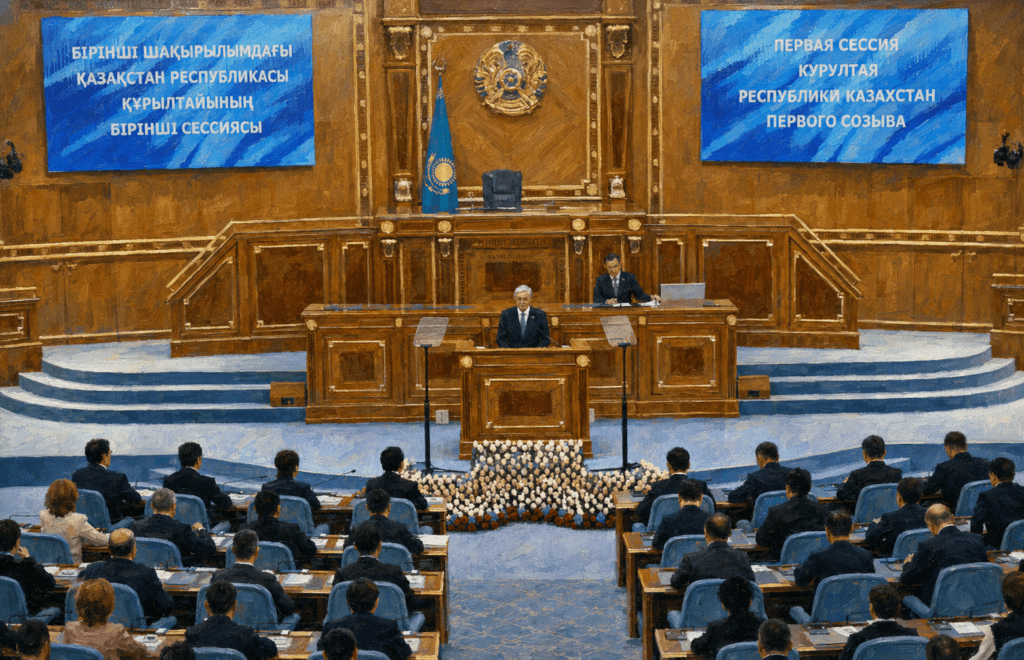
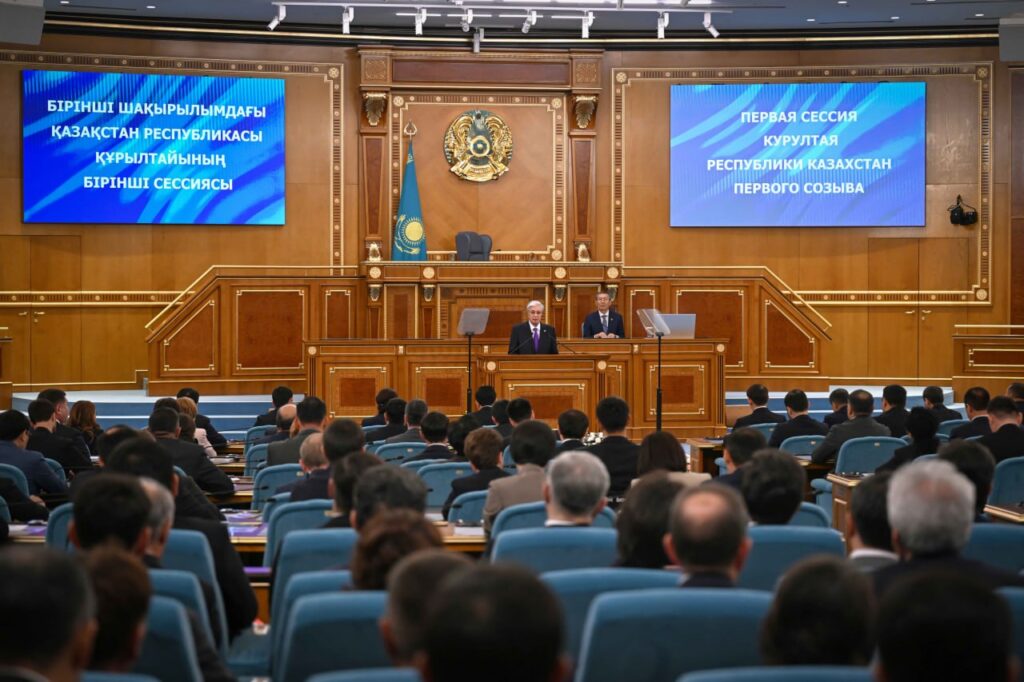
Speaking on September 8, 2025, in his Address to the People of Kazakhstan in Parliament, President Kassym-Jomart Tokayev outlined plans for new political reforms. At the time, nothing in his remarks suggested either the scale of the changes his initiative would entail or the speed with which they would be implemented. Yet on March 15 of this year, Kazakh citizens will vote in a referendum on a new draft Constitution, developed at high speed over roughly six months, including a period of state-organized public consultations and expert review. According to materials published on the Constitutional Court’s page on the state portal, where the final version of the draft Basic Law was published, the starting point for constitutional reform was Tokayev’s proposal to create a unicameral Parliament. The president announced the idea on September 8, 2025. A month later, on October 8, an order was signed establishing a working group on parliamentary reform. Over the following months, the group reviewed more than 2,000 proposals from citizens and experts. At the fifth session of the National Kurultai in January 2026, Tokayev summarized the proposals on parliamentary reform, the scope of which had already expanded beyond restructuring Parliament to revising the Constitution as a whole. On January 21, a Constitutional Commission was established, comprising 130 members, including representatives of the National Kurultai, legal experts, officials from central government agencies, media executives, chairpersons of maslikhats, members of regional public councils, and academics. The first draft of the Basic Law was published on January 31. On February 11, a “referendum” version of the draft was presented to the president, incorporating comments received, including his own. Tokayev had outlined his remarks the previous day during an expanded government meeting. The question to be put to voters in March is: “Do you accept the new Constitution of the Republic of Kazakhstan, the draft of which was published in the mass media on February 12, 2026?” What is particularly notable is that on September 8, the president had cautioned against haste, calling parliamentary reform a “very serious issue” and stating that rushing it would be inappropriate. “This reform must be the subject of detailed discussion in civil society, among experts, and, of course, in the current Parliament… I believe that, given the extraordinary nature of the reform, the discussion will take at least a year, after which a nationwide referendum could be held in 2027, and then the necessary amendments could be made to the Constitution,” Tokayev said at the time. A little over five months later, however, the country is preparing for changes that extend beyond the initial proposal to abolish the upper house. At a government meeting, Tokayev emphasized that “no one is setting the task of negating the significance of the current Constitution, which has played a huge role in all of our country's achievements over the past 30 years. “Nevertheless, it should be noted that it was adopted when our country was just getting on its feet and bears the imprint of the first...

Kazakhstan To Hold Referendum on New Constitution On March 15

Kazakhstan will hold a constitutional referendum on March 15 in what President Kassym-Jomart Tokayev has described as “a complete reboot” to modernize government and introduce more institutional accountability. The date of the referendum was announced in a notice that was published on the presidential website on Wednesday. It said the draft of the proposed new constitution will appear in the media on Thursday, and the question to be posed to voters in March is: "Do you accept the new Constitution of the Republic of Kazakhstan, the draft of which was published in the mass media on February 12, 2026?" The Central Election Commission will oversee the referendum, according to the notice. The outlines of the proposed changes are already circulating publicly in Kazakhstan, which has made a number of amendments to the current constitution dating from the mid-1990s. The planned changes include replacing the current bicameral parliament with a single chamber and introducing the post of vice president. “The proposed amendments will allow for the redistribution of powers, strengthen the balance in the system of checks and balances, and, most importantly, increase the effectiveness and sustainability of all political institutions,” Tokayev has said. Analysts view the shift from personality-driven rule to more institutionalized governance as a step toward building a more resilient state capable of managing leadership transitions and broadening stakeholder participation. While the foundation for greater representation is being laid, critics say progress should move faster, particularly in expanding political and civic space. If sustained, however, the current trajectory could open the way to deeper and more durable reform through strengthened institutional processes.