• KGS/USD = 0.01144 0%
  • KZT/USD = 0.00211 0%
  • TJS/USD = 0.10526 0%
  • UZS/USD = 0.00008 0%
  • TMT/USD = 0.28530 0%
  • KGS/USD = 0.01144 0%
  • KZT/USD = 0.00211 0%
  • TJS/USD = 0.10526 0%
  • UZS/USD = 0.00008 0%
  • TMT/USD = 0.28530 0%
  • KGS/USD = 0.01144 0%
  • KZT/USD = 0.00211 0%
  • TJS/USD = 0.10526 0%
  • UZS/USD = 0.00008 0%
  • TMT/USD = 0.28530 0%
  • KGS/USD = 0.01144 0%
  • KZT/USD = 0.00211 0%
  • TJS/USD = 0.10526 0%
  • UZS/USD = 0.00008 0%
  • TMT/USD = 0.28530 0%
  • KGS/USD = 0.01144 0%
  • KZT/USD = 0.00211 0%
  • TJS/USD = 0.10526 0%
  • UZS/USD = 0.00008 0%
  • TMT/USD = 0.28530 0%
  • KGS/USD = 0.01144 0%
  • KZT/USD = 0.00211 0%
  • TJS/USD = 0.10526 0%
  • UZS/USD = 0.00008 0%
  • TMT/USD = 0.28530 0%
  • KGS/USD = 0.01144 0%
  • KZT/USD = 0.00211 0%
  • TJS/USD = 0.10526 0%
  • UZS/USD = 0.00008 0%
  • TMT/USD = 0.28530 0%
  • KGS/USD = 0.01144 0%
  • KZT/USD = 0.00211 0%
  • TJS/USD = 0.10526 0%
  • UZS/USD = 0.00008 0%
  • TMT/USD = 0.28530 0%

Viewing results 19 - 24 of 620

Six Months to Rewrite the State: Kazakhstan Accelerates Its Constitutional Reset

Speaking on September 8, 2025, in his Address to the People of Kazakhstan in Parliament, President Kassym-Jomart Tokayev outlined plans for new political reforms. At the time, nothing in his remarks suggested either the scale of the changes his initiative would entail or the speed with which they would be implemented. Yet on March 15 of this year, Kazakh citizens will vote in a referendum on a new draft Constitution, developed at high speed over roughly six months, including a period of state-organized public consultations and expert review. According to materials published on the Constitutional Court’s page on the state portal, where the final version of the draft Basic Law was published, the starting point for constitutional reform was Tokayev’s proposal to create a unicameral Parliament. The president announced the idea on September 8, 2025. A month later, on October 8, an order was signed establishing a working group on parliamentary reform. Over the following months, the group reviewed more than 2,000 proposals from citizens and experts. At the fifth session of the National Kurultai in January 2026, Tokayev summarized the proposals on parliamentary reform, the scope of which had already expanded beyond restructuring Parliament to revising the Constitution as a whole. On January 21, a Constitutional Commission was established, comprising 130 members, including representatives of the National Kurultai, legal experts, officials from central government agencies, media executives, chairpersons of maslikhats, members of regional public councils, and academics. The first draft of the Basic Law was published on January 31. On February 11, a “referendum” version of the draft was presented to the president, incorporating comments received, including his own. Tokayev had outlined his remarks the previous day during an expanded government meeting. The question to be put to voters in March is: “Do you accept the new Constitution of the Republic of Kazakhstan, the draft of which was published in the mass media on February 12, 2026?” What is particularly notable is that on September 8, the president had cautioned against haste, calling parliamentary reform a “very serious issue” and stating that rushing it would be inappropriate. “This reform must be the subject of detailed discussion in civil society, among experts, and, of course, in the current Parliament… I believe that, given the extraordinary nature of the reform, the discussion will take at least a year, after which a nationwide referendum could be held in 2027, and then the necessary amendments could be made to the Constitution,” Tokayev said at the time. A little over five months later, however, the country is preparing for changes that extend beyond the initial proposal to abolish the upper house. At a government meeting, Tokayev emphasized that “no one is setting the task of negating the significance of the current Constitution, which has played a huge role in all of our country's achievements over the past 30 years. “Nevertheless, it should be noted that it was adopted when our country was just getting on its feet and bears the imprint of the first...

Kazakhstan To Hold Referendum on New Constitution On March 15

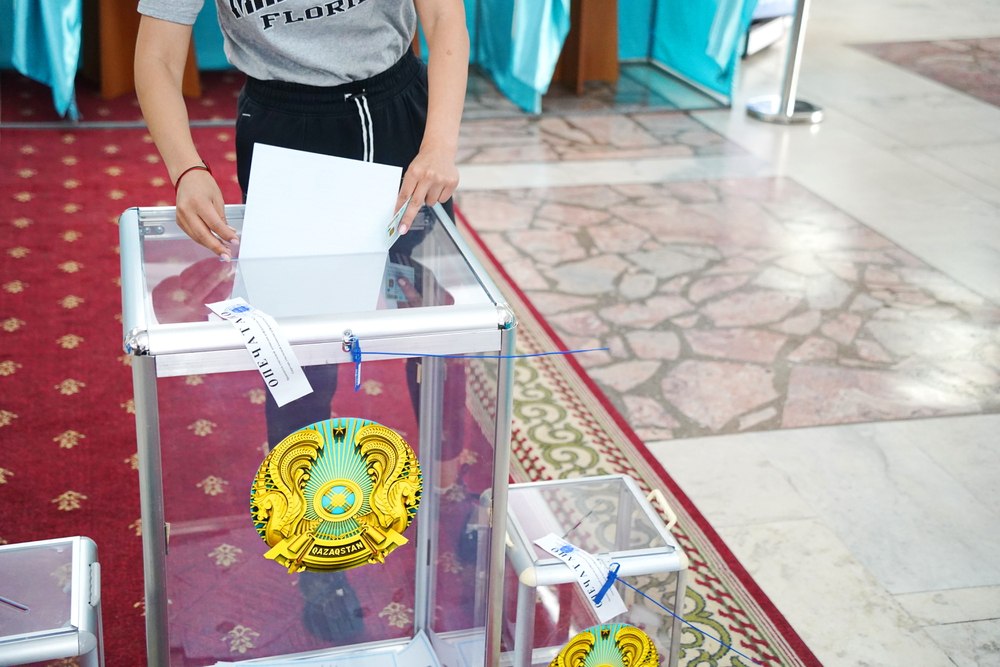
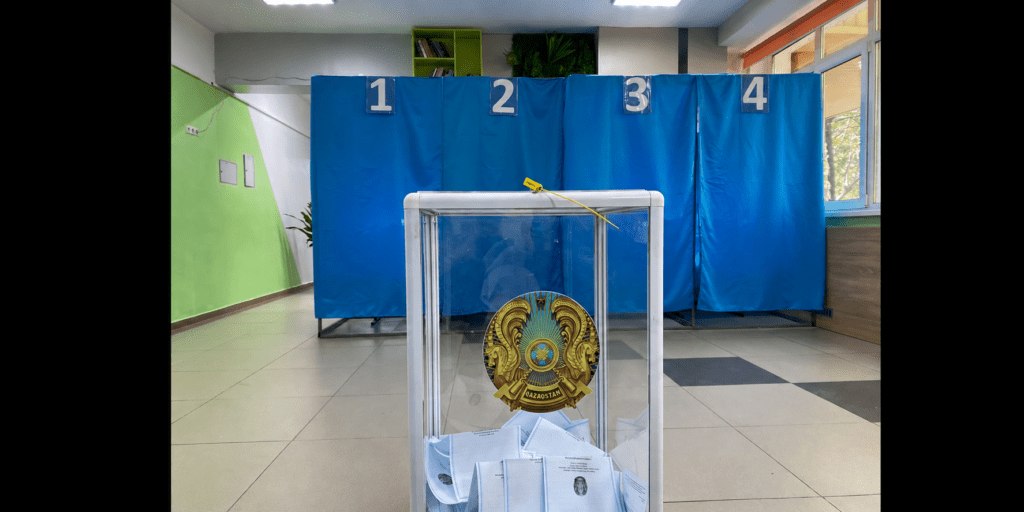
Kazakhstan will hold a constitutional referendum on March 15 in what President Kassym-Jomart Tokayev has described as “a complete reboot” to modernize government and introduce more institutional accountability. The date of the referendum was announced in a notice that was published on the presidential website on Wednesday. It said the draft of the proposed new constitution will appear in the media on Thursday, and the question to be posed to voters in March is: "Do you accept the new Constitution of the Republic of Kazakhstan, the draft of which was published in the mass media on February 12, 2026?" The Central Election Commission will oversee the referendum, according to the notice. The outlines of the proposed changes are already circulating publicly in Kazakhstan, which has made a number of amendments to the current constitution dating from the mid-1990s. The planned changes include replacing the current bicameral parliament with a single chamber and introducing the post of vice president. “The proposed amendments will allow for the redistribution of powers, strengthen the balance in the system of checks and balances, and, most importantly, increase the effectiveness and sustainability of all political institutions,” Tokayev has said. Analysts view the shift from personality-driven rule to more institutionalized governance as a step toward building a more resilient state capable of managing leadership transitions and broadening stakeholder participation. While the foundation for greater representation is being laid, critics say progress should move faster, particularly in expanding political and civic space. If sustained, however, the current trajectory could open the way to deeper and more durable reform through strengthened institutional processes.

Tokayev to Personally Oversee Probe Into Medical Insurance Fund Embezzlement

President Kassym-Jomart Tokayev has pledged to personally oversee the investigation into large-scale embezzlement from Kazakhstan’s Social Medical Insurance Fund (SMIF) and has instructed the government to accelerate the rollout of a unified national healthcare information system. The move follows a series of alarming revelations about systemic fraud in the medical insurance system. In January, Prime Minister Olzhas Bektenov ordered that control of the SMIF be transferred to the Ministry of Finance to bring financial flows under tighter oversight. Subsequent audits uncovered widespread violations, including the registration of fictitious patients, the billing of unnecessary medical services, duplicate financing of procedures, and even the provision of treatments to deceased citizens. The findings have been submitted to law enforcement agencies for investigation. Addressing an expanded government meeting, Tokayev stated that fraudulent activity in the social sector had reached “unprecedented proportions,” and emphasized that the Prosecutor General’s Office and other relevant bodies must investigate all instances of wrongdoing, regardless of the statute of limitations or the individuals involved. “I will personally oversee the investigation process,” the president declared. Tokayev attributed much of the abuse to the absence of a unified digital infrastructure in Kazakhstan’s healthcare system. More than 30 separate and unintegrated information systems are currently in use, creating serious gaps in oversight and traceability. In response, the president has ordered the government to finalize the development of a single, centralized state medical information system by December 1. The new platform is expected to provide full traceability of services and financial transactions, and to digitize all SMIF operations. Tokayev emphasized that digitization is essential for ensuring transparency and the proper use of public funds. As The Times of Central Asia previously reported, earlier this year, the government also announced it would cover health insurance contributions for more than one million unemployed citizens.

In the Line of Duty: Hazing, Tragedy, and Reform in Kazakhstan’s Armed Forces

Kazakhstan mandates universal military conscription for men between the ages of 18 and 27, with a standard service term of 12 months. Tens of thousands of young men are drafted into the military each year during two annual call-up periods. Evasion is illegal, yet public attitudes toward mandatory service are increasingly ambivalent. Officially, military service is presented as an honorable civic duty, with promises of educational preferences and social benefits upon completion. In practice, many young Kazakhs seek ways to avoid conscription, motivated not just by the disruption of a year out of civilian life, but by fears of hazing and abuse. ‘Hazing’ refers to a covert system of informal hierarchy in which senior conscripts intimidate and mistreat new recruits.  Although the Ministry of Defense claims such practices were eradicated in the 2010s through reform and a transition to a mixed staffing model combining conscripts and contract soldiers, hazing has remained a persistent issue. According to a Demoscope survey from September 2025, 37.8% of Kazakhstanis said violence and informal power structures in the army are excessive. Among respondents aged 18–29, support for a full transition to a professional contract army was significantly higher, reflecting broader concerns about conditions and safety. For many families, a draft notice is not a matter of honor but a potential sentence. The Dark Side of the Barracks: Fatalities and Scandals Kazakhstan’s armed forces have faced a troubling number of peacetime deaths in recent years, prompting growing public concern. Between 2020 and 2022, 259 servicemen died across the armed forces and other security agencies, with at least 11 more deaths reported in early 2023. In late 2025, MP Nartay Sarsengaliyev noted that 270 soldiers had died in three years. In January 2026 alone, three incidents raised alarms: a National Guard serviceman died in Shymkent on January 6; another soldier died from a gunshot wound in Ust-Kamenogorsk on January 23; and a serviceman in the Zhambyl region died from a firearms injury on January 27. While the causes ranged from illness to the accidental mishandling of weapons, many families suspect hazing and abuse as underlying factors. Several high-profile cases from 2025 further damaged public trust. In January, 18-year-old Dastan Kurmanbek was found dead from a gunshot wound in a Saryozek unit; the military declared it a suicide, but his family alleged murder. That spring, 18-year-old Salamat Sabitov, who was drafted despite serious health issues according to his family, died of meningitis just one month into his service. In September, 19-year-old Dinmukhamed Shynarbek was found dead in a military unit in the Almaty region; officials again claimed suicide, but relatives rejected the explanation and demanded an independent investigation. Officers have also been implicated in violence. In summer 2024, a conscript in the Mangystau region was reportedly shot in the face by a superior officer. One of the most publicized cases was that of 22-year-old National Guard soldier Yerbayan Mukhtar, who suffered a severe head injury under suspicious circumstances in a barracks bathroom in December 2023. Though military doctors...

Kazakh Civil Servants Fined Nearly $100,000 for Poor Public Services

In 2025, Kazakh civil servants were fined a total of $99,300 for violations related to the provision of public services, according to the Agency for Civil Service Affairs (ACSA). The agency reported that 917 administrative reports were filed against 442 officials for infractions such as missed deadlines, improper procedures for issuing permits, and unjustified refusals of service. Of those held accountable, 375 were local government employees and 67 represented central government agencies. In addition to financial penalties, 1,636 public employees faced disciplinary measures, 1,331 from local administrations and 305 from ministries and central agencies. Among them, 27.3% were in managerial positions. Over the course of the year, more than 478,000 violations in the provision of public services were identified: 130,751 in central government bodies and 347,692 at the local level. These included 147,105 instances of missed deadlines. The rights of 12,340 service recipients were restored as a result of investigations. The ACSA also received 2,737 complaints related to public service quality. Most grievances concerned local government officials, state-owned enterprises, and agencies involved in land administration. Following these complaints, 481 unscheduled inspections were conducted, leading to the restoration of the rights of 233 citizens. In total, the agency carried out 4,316 control measures in 2025. These resulted in 720 formal submissions and 2,164 orders to rectify violations, 2,026 of which were executed. As previously reported by The Times of Central Asia, Kazakhstan is prioritizing digital transformation to enhance public service delivery. A unified electronic platform for the construction industry is scheduled for launch in 2026, aiming to streamline bureaucratic processes and increase transparency.

Kazakhstan’s Draft Constitution and the Reordering of State Authority

Kazakhstan’s current constitutional reform is no longer limited to parliamentary redesign. A draft updated basic law has been released for public discussion, and it presents the effort as a review of the state’s political architecture culminating in a nationwide referendum. The draft is described as the product of months of work initiated by President Kassym-Jomart Tokayev, with large-scale changes proposed for the country’s political system. A replacement-style text, an explicit state-architecture rationale, and a referendum endpoint together signal a reform agenda that reaches beyond legislative mechanics to the overall distribution of authority, the protection of fundamental rights, and strengthening of the rule of law. Kazakhstan’s current constitution was adopted by referendum in August 1995, replacing the January 1993 basic law. It has been amended repeatedly, including significant revisions in 1998, 2007, 2011, and 2022. The 2022 referendum package was a particularly extensive set of amendments. It presented a model of a presidential republic with a strong parliament, redistributed selected powers from the presidency to parliament, and created new parliamentary mechanisms. It also strengthened the ombudsman, enabled direct citizen appeals to the Constitutional Court, established a commissioner framework for socially vulnerable categories, established a ban on the death penalty, and set a single seven-year presidential term without the possibility of reelection. From Proposal to Draft Basic Law The current draft emerged from a process launched under Tokayev in late 2025. In September 2025, he proposed moving to a unicameral parliament, which set the reform’s initial direction. A working group was established in October 2025 to develop proposals, and in January 2026, a commission was formed to carry the work forward. The commission was chaired by Elvira Azimova, head of the Constitutional Court of Kazakhstan, linking the drafting process to the institution that reviews the basic law. The commission’s work moved beyond incremental amendments. It reviewed proposals affecting seventy-seven constitutional articles, about 84% of the current text, and that breadth drove the decision to prepare a fundamentally new basic law rather than another package of revisions. Rewriting most of the operative text shifts the reform from a parliamentary adjustment to a redesign of the state’s governing framework. The resulting draft is structured as a replacement-style document, with an updated preamble and a reorganization into eleven sections and ninety-five articles. The institutional centerpiece of the draft is a shift from a two-chamber parliament to a single chamber and to proportional representation for electing deputies. The proposed supreme legislative body, the Kurultai, would have 145 deputies, slightly fewer than the combined 148 members of the current Mazhilis and Senate of Kazakhstan. The draft also grants the Kurultai expanded powers, pairing structural consolidation with a change in how legislative authority is organized, including oversight, political accountability, and approval of key state appointments and conciliation procedures. Alongside the proposed legislature, the draft creates a national dialogue platform, the People's Council of Kazakhstan, described as the highest advisory body representing citizens’ interests and granted the right of legislative initiative. This adds a second channel for agenda-setting with...