• KGS/USD = 0.01144 0%
  • KZT/USD = 0.00212 0%
  • TJS/USD = 0.10432 0%
  • UZS/USD = 0.00008 0%
  • TMT/USD = 0.28490 0%
  • KGS/USD = 0.01144 0%
  • KZT/USD = 0.00212 0%
  • TJS/USD = 0.10432 0%
  • UZS/USD = 0.00008 0%
  • TMT/USD = 0.28490 0%
  • KGS/USD = 0.01144 0%
  • KZT/USD = 0.00212 0%
  • TJS/USD = 0.10432 0%
  • UZS/USD = 0.00008 0%
  • TMT/USD = 0.28490 0%
  • KGS/USD = 0.01144 0%
  • KZT/USD = 0.00212 0%
  • TJS/USD = 0.10432 0%
  • UZS/USD = 0.00008 0%
  • TMT/USD = 0.28490 0%
  • KGS/USD = 0.01144 0%
  • KZT/USD = 0.00212 0%
  • TJS/USD = 0.10432 0%
  • UZS/USD = 0.00008 0%
  • TMT/USD = 0.28490 0%
  • KGS/USD = 0.01144 0%
  • KZT/USD = 0.00212 0%
  • TJS/USD = 0.10432 0%
  • UZS/USD = 0.00008 0%
  • TMT/USD = 0.28490 0%
  • KGS/USD = 0.01144 0%
  • KZT/USD = 0.00212 0%
  • TJS/USD = 0.10432 0%
  • UZS/USD = 0.00008 0%
  • TMT/USD = 0.28490 0%
  • KGS/USD = 0.01144 0%
  • KZT/USD = 0.00212 0%
  • TJS/USD = 0.10432 0%
  • UZS/USD = 0.00008 0%
  • TMT/USD = 0.28490 0%

Viewing results 325 - 330 of 611

Kazakhstan Weighs Down on Human Trafficking

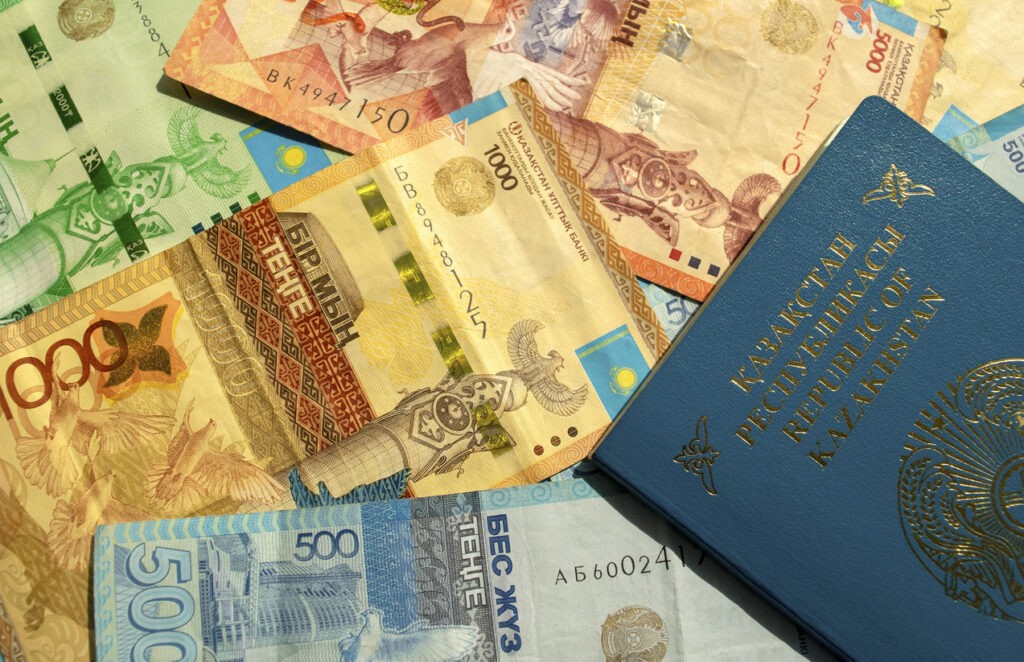
In response to data issued by international experts citing the current level of  human trafficking in Kazakhstan, President Kassym-Jomart Tokayev has just signed a law to address the situation. First and foremost, the new law aims to protect and provide social support for victims, the majority of whom are migrant workers, people with disabilities, solitary pensioners, young women and children. Referencing statistics, First Deputy Minister of Internal Affairs Marat Kozhaev announced that 19 criminal cases were opened in Kazakhstan for child trafficking in 2023, with an additional six already logged this year. He explained that most of the children are sold within the country to meet the demand of people unable to have their own. Such cases involve staff from perinatal centers and orphanages, as well as people with unwanted pregnancies. Child trafficking is a lucrative business which continues apace despite the threat of a jail sentence of up to 18 years. According to the police, there were cases this year of parents asking for between KZT100,000 to KZT2 million, equivalent to 208 -4,168 US$, for their new-borns. Young mothers often look for potential buyers online, even while pregnant. Under the recent law, the Criminal Code has been amended to include “crimes related to trafficking in persons”, covering kidnapping, unlawful confinement, human trafficking (including trafficking minors), prostitution, etc. Amendments have also been made to the Administrative Code aimed at preventing the sale of children, including new-borns, through the introduction of the clause: “Failure of officials to report incidents of abandonment of new-borns, admission and delivery of orphans and children without parental care.” Incidents of human trafficking are invariably tragic. In most cases, the victims usually poor or homeless, are taken by force or deception to remote corners of the country, where forced to work on peasant farms, they are subjected to backbreaking labor, beatings, and a lack of medical care for months or years. The situation becomes more complicated if the victim is a migrant from Uzbekistan, Kyrgyzstan, or Turkmenistan. Such workers often without the documentation to work legally, are attracted by promises of decent pay and then literally put in chains. Another illegal business is begging. Not long ago, on a street in Almaty, volunteers rescued a lone, elderly person who had been forced through beatings and starvation to beg for several months. As a result of the beggar's testimony, a gang of slave traders was arrested the following day. Enforced prostitution is also common, particularly amongst low-income families and orphans. International experts have repeatedly warned Kazakh authorities of the need to increase its legal levers to tackle human trafficking. In 2020, the US placed Kazakhstan on its watch list which as Kazakhstan’s commissioner for human rights Elvira Azimova, said at the time, was a direct response to the country's number of victims. “The official numbers of identified cases of human trafficking and criminal prosecution in Kazakhstan are significantly lower than in neighbouring countries - including Kyrgyzstan and Uzbkistan -  for whose population Kazakhstan is a destination. This may...

Energy Minister: Kazakhstan Needs Liquefied Gas For Petrochemical Industry

Kazakhstan’s Minister of Energy, Almasadam Satkaliyev, believes that liquefied petroleum gas (LPG) should primarily be used as a raw material for the country’s growing petrochemical industry, instead of its current widespread use as fuel for motor vehicles. “Liquefied petroleum gas is not used as [motor] fuel anywhere in the world. Instead, it is used as an important raw material for producing products with high added value,” Satkaliyev said at a government meeting on July 16, chaired by Prime Minister Olzhas Bektenov. Regarding data from the Ministry of Internal Affairs, Minister Satkaliyev said that in 2023, Kazakhstan had 582,000 motor vehicles running on LPG, an 18% increase compared to 2022 (491,000). Cheaper than gasoline, LPG is Kazakhstan's most popular and economical fuel for vehicle owners. The minister said that due to low prices for LPG, the country's motorists continue switching to this fuel type, thus increasing its consumption. Earlier reports said that in 2023, LPG consumption in Kazakhstan increased by 400,000 tons, or 28%, compared to 2022. Last year, LPG consumption volumes amounted to 2.2 million tons compared to 1.8 million tons in 2022. According to analysts, in 2024, LPG consumption in Kazakhstan may increase by another 200 thousand tons and reach 2.4 million tons. Satkaliyev continued by saying that the Energy Ministry had been allocating part of the LPG produced in Kazakhstan to industrial enterprises producing petrochemical products. Thus, there is a shortage of LPG, which stands at 20%—25%. According to the minister, Kazakhstan produced 1.6 million tons of LPG in 2023, and the projection for 2024 is the same: 1.6 million tons. The minister emphasized that three plants in Kazakhstan use LPG as a raw material for producing polypropylene and methyl tert-butyl ether. These projects have attracted $2.7 billion in investments and created 1.7 thousand jobs. Plans are in place for a project to produce butadiene, which will use butane from the Tengiz field as a raw material. The project will cost $1.4 billion and create 750 permanent jobs and up to 7,500 jobs in related industries. There are projects for the production of alkylate and polypropylene, which plan to invest $300 million and create 2 thousand jobs. The energy minister emphasized that implementing these important investment projects requires 345 thousand tons of LPG per year and asked the prime minister to ensure that the government prioritizes the use of LPG for the needs of the petrochemical industry.

Kazakhstan Seeks to Increase Local Content in Oil and Gas Equipment Production

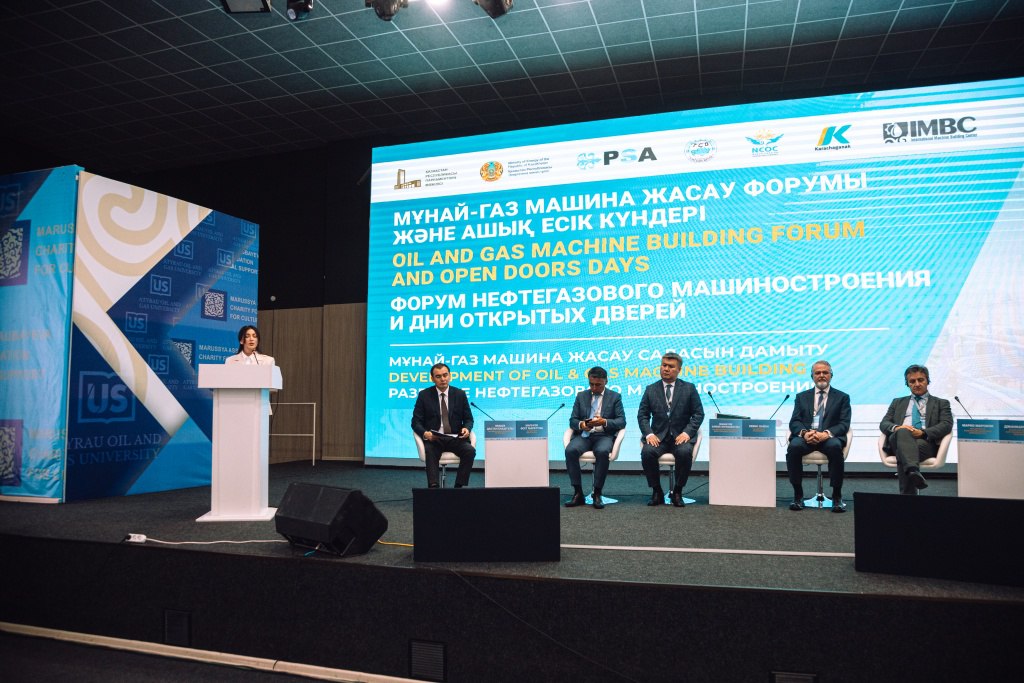
From July 10 to 12, the Kazakhstani city of Atyrau hosted the Oil and Gas Machine Building Forum. The Forum aimed to develop local content and support domestic manufacturers of oil and gas equipment and local suppliers of works and services for the sector. The event also included Open Doors Days for three major oil and gas operators in Kazakhstan: Tengizchevroil, North Caspian Operating Company, and Karachaganak Petroleum Operating B.V. As reported by the Kazakh Ministry of Energy, these three major subsoil users account for 70% of all oil and gas equipment purchases in Kazakhstan. Speaking at the Forum, Vice Minister of Energy Alibek Zhamauov said that both Kazakhstan’s president and prime minister outlined several specific tasks aimed at developing local content in the oil and gas sector. Particular attention, they said, should be paid to increasing the share of Kazakhstani goods, works and services in the sector’s purchases, creating new as well as modernizing existing production facilities, localizing the production of the most popular products in Kazakhstan, as well as moving design offices to the country, with the mandatory involvement of local engineers and design companies. Due to efforts of the Ministry of Energy, in May of this year contracts were signed between Tengizchevroil, North Caspian Operating Company, and Karachaganak Petroleum Operating B.V. and domestic manufacturers for the purchase of locally made oil and gas equipment worth $240 million. Speaking at the Forum, Leyla Gimranova, Deputy Director of the Project Department at Kazakh Invest, emphasized that oil and gas engineering could become a new growth point in developing domestic added-value production and import substitution. She said that last year, Kazakhstan produced oil and gas equipment for $72.7 million and imported such equipment for $1 billion. “This is a significant difference that needs to be reduced. Therefore, we are actively working to identify priority goods for import substitution, the production of which is possible based on existing domestic enterprises," Gimranova said.

It Wasn’t Like This Under Nazarbayev: Kazakhstan’s Party Political Landscape

Speaking on June 27 on the eve of Media Workers Day at a reception where awards were presented to distinguished journalists, Kazakh President Kassym-Jomart Tokayev paid special attention to the powers of the head of state. Tokayev emphasized that the term of presidential powers approved in the referendum is a reality that will not be altered through amendments to the Constitution. This means that in 2029, Kazakhstan will see a new president, chosen through a legal expression of its citizens' will. This new president will not appear out of nowhere; they will likely be nominated by one of the existing political parties, which will enter the electoral battle for the Mazhilis deputy mandates in 2028. The party leading this significant two-year electoral race will have its nominee occupy the presidency of Kazakhstan. The topic of the "problem-2029" is already a subject of discussion within the corridors of power. The current president's team has a dual task - ensuring the continuity of democratic and liberal transformations while preventing a resurgence of the Old Kazakhstan. Having been unable to change the country's leadership in 2022, Tokayev's opponents will likely pursue an institutional route. Historically, former president Nursultan Nazarbayev used a similar strategy, having first elected democratically, then extending his powers via a referendum, and gradually amending the Constitution to consolidate his rule without seeking further public approval. Could a current political party be used as a Trojan horse in such a scenario? Here are the players on the present political landscape. Amanat The most influential party in Kazakhstan, Amanat, which formerly supported Elbasy (Father of the Nation) Nursultan Nazarbayev, was founded in 1999 through the merger of several political organizations, with the largest being the Party of People's Unity of Kazakhstan (PNUK). Known as Otan and then Nur Otan (“Radiant Fatherland”) until it was rebranded in 2022, although modern sources attribute this merger to Nazarbayev, he was reportedly not focused on party building at that time. The Otan party, which resulted from the merger, emerged shortly after the early presidential election of 1999, where Nazarbayev won with a "modest" 80.97% of the vote. The runner-up in the election, Serikbolsyn Abdildin claimed that there had been widespread voter fraud and a failure to tally ballots properly, whilst the U.S. Department of State commented that the undemocratic nature of the election "cast a shadow on bilateral relations". In 2006, Otan held two congresses, during which three more political organizations joined: the Asar Party, founded by Nazarbayev's eldest daughter Dariga and her then-husband Rakhat Aliyev, as well as the Civic and Agrarian Parties, previously part of the AIST pre-election bloc. Following these mergers, Otan was renamed Nur Otan. After Rakhat Aliyev was charged, initially with the kidnapping and then with the murder of two executives at a bank he controlled in 2007, Dariga and her son took over his stake, swelling her fortune. In 2013, Forbes named her one of the fifty richest Kazakhs with assets of US$595 million, including a vast media empire. Under...

Will Kazakhstan Manage to Save the National Fund?

Experts report that Kazakhstan's National Fund has seen cumulative withdrawals of $100 billion over the past decade. The sovereign wealth fund, managed by the National Bank of the Republic of Kazakhstan, has often been used to meet state needs. Despite this, with the National Fund for Children program set to launch in 2024, President Tokayev has instructed an increase in its assets. The National Fund was established in 2000 by a decree from former President Nursultan Nazarbayev. It consolidates state assets held in the national bank account of the Republic of Kazakhstan. The fund's income is derived from two sources: tax receipts from the oil and gas sector and earnings from managing its assets. Starting in 2024, the National Fund for Children program will receive 50% of the fund's annual income. Business analyst Abzal Narymbetov explained that the fund's initial influx came from the sale of a 5% stake in the Tengiz oil field for $660 million in 2001. At its inception, the fund was intended to benefit future generations. However, various crises and management errors have frequently forced the government to dip into what is often called the "people's piggy bank." Likening the National Fund to a similar structure in Norway, Narymbetov states that the fund's accumulation peaked at more than $70 billion in 2014. "Since then, the NF has diverted money to 'urgent current needs,' such as bailing out commercial banks, supporting national companies, and filling holes in the state budget. At the moment, less than $60 billion remains in the fund. Kazakhstan began accumulating oil money with the production of 0.8 million barrels in 2001. Norwegian and Kazakh oil production has been in the same range of 1.8-2.0 million barrels for the last eight years. In other words, Kazakhstan and Norway have been producing in the same range for the last eight years; however, we spend significantly more. "For example, the Norwegian Petroleum Fund (renamed the state pension fund) was established by the government in 1990. Money was first invested in 1996, but the first figures that can be traced are $23 billion in 1998. The oil money, in my opinion, has been wisely invested in different assets. As a result, it has reached a record level of $1.4 trillion today," said Narymbetov. The analyst pointed to research by economists indicating that if money from the National Fund of Kazakhstan had not been used for current spending needs, it would now exceed $150 billion. He also cited a study suggesting that if oil prices drop to $30 per barrel, the fund's reserves could be depleted within five years. Twenty years ago, Kazakhstan had high expectations for the National Fund, hoping it would act as a financial savior during crises and provide support for young citizens. In 2022, President Tokayev announced plans to increase the National Fund's assets to $100 billion. "Everything that rightfully belongs to the people of Kazakhstan will serve their interests. For this purpose, we will ensure effective fund management and enhance its investment income,"...

Nuclear Race: Will Central Asia Build a Nuclear Power Plant?

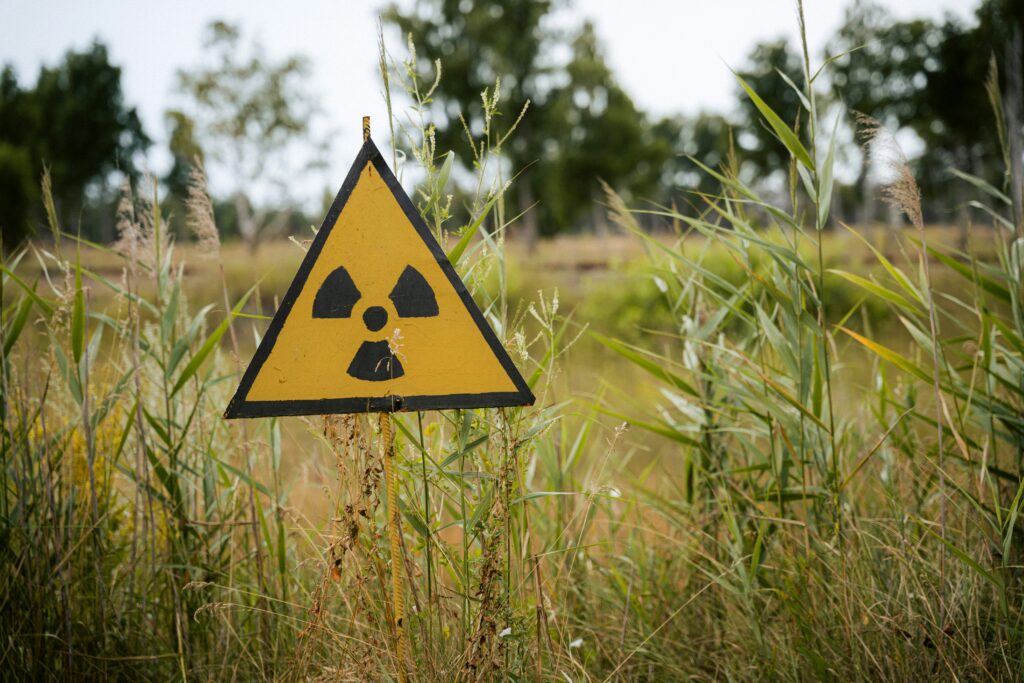
The answer to the question posed in the title remains uncertain. While Uzbekistan has plans to construct a nuclear power plant and Kazakhstan is set to hold a referendum this fall to gauge public opinion on building one, progress is sluggish. Tashkent has postponed the start of construction, and the issue sparks heated debate in Kazakhstan. The First Nuclear Power Plant in Central Asia Historically, Central Asia did host a nuclear facility. Located on the shore of the Caspian Sea in Kazakhstan, this was not a conventional nuclear power plant but a fast neutron reactor known as BN-350. The reactor was the core of the Mangistau Nuclear Power Plant, designed to transform the Mangyshlak Peninsula by providing energy to the city of Aktau (formerly Shevchenko) and powering large-scale desalination plants that supplied drinking water to the arid region. [caption id="attachment_20031" align="aligncenter" width="366"] BN-350[/caption] Operational from 1973 until its shutdown in 1999, the BN-350 reactor was decommissioned due to the allocation of U.S. funds for new desalination and heating equipment and the disposal of its remaining fuel. The extensive maintenance and decommissioning work on the BN-350 have given Kazakhstani nuclear physicists significant experience with such complex and hazardous technology. However, younger generations in Kazakhstan are largely unaware of the BN-350 reactor’s existence. Their knowledge of nuclear physics is often limited to the harrowing stories passed down about nuclear warhead tests at the Semipalatinsk test site and their devastating effects. Fear and Nuclear Power: Kazakhstan's Dilemma The societal fear surrounding nuclear energy in Kazakhstan is deeply intertwined with political concerns. For a long time, the leadership in Kazakhstan has hesitated to move beyond merely discussing the need for a nuclear power plant (NPP) to actually initiating the project. President Kassym-Jomart Tokayev recently announced that a referendum would take place in the fall of 2024. However, Ministry of Energy's officials avoided mentioning the word "referendum" until the last moment, previously asserting it was unnecessary. Public hearings were held last year in the village of Ulken, Zhambyl district, Almaty region, a proposed site for the nuclear plant. The Ministry of Energy’s press release stated that the local populace supported developing nuclear power, highlighting its significance for regional socio-economic growth. However, media reports revealed that the hearings were contentious, with opposing viewpoints almost disrupting the speech of Nurlan Ertas, the head (akim) of the Zhambyl district. Activists even displayed banners and posters against the plant's construction. Certain groups have exploited the population's fear of another disaster like Chernobyl. Additionally, the government has struggled to convince the public that nuclear technologies are becoming safer. In contrast, Europe now includes nuclear power plants in its list of green energy sources, similar to other renewable energy sources (RES). In Kazakhstan, renewable energy accounts for only 5% of the total energy produced. The introduction of NPPs could significantly enhance the country’s position in reducing carbon emissions. The government faces a growing electricity shortage that can be addressed either harmfully or fearfully. The harmful options are coal-fired thermal power plants...